
Democrats Are Quietly Changing. But Is Quiet Enough?
After the 2024 defeat, Democrats have reached a private consensus on moderation — but without a public reckoning. Can a 'vibe shift' actually rebuild a party brand?
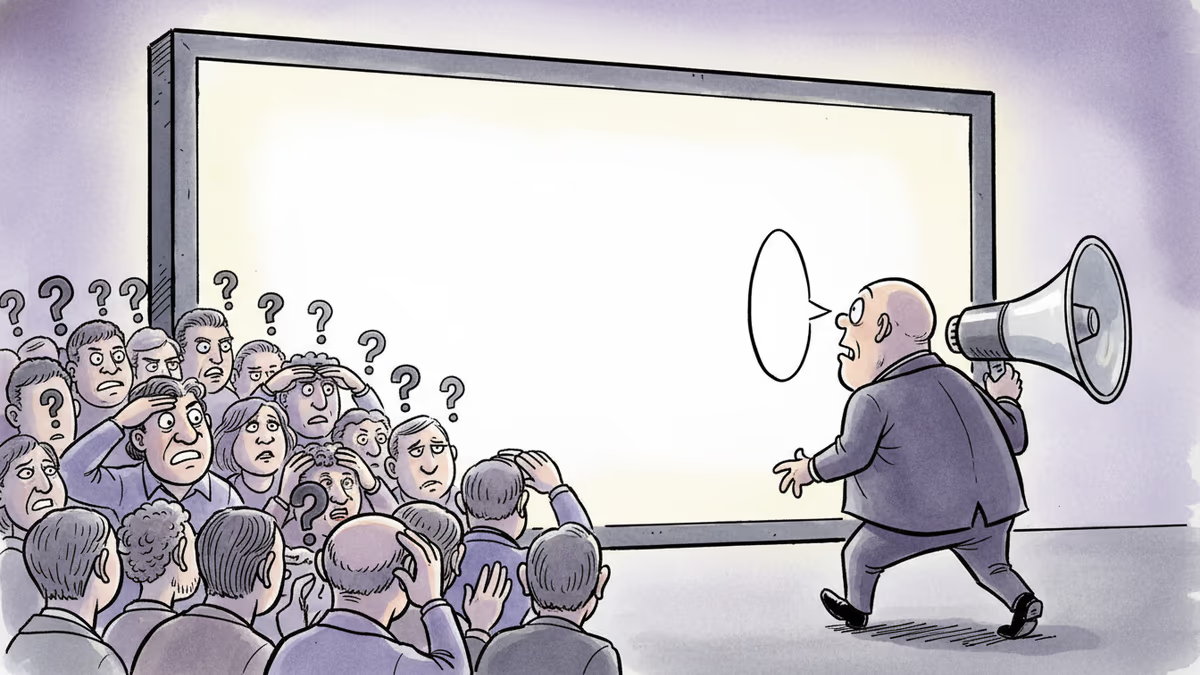
The loudest thing about the Democratic Party's post-2024 transformation is the silence.
An Autopsy That Didn't Cut Deep
After months of pressure, the Democratic National Committee finally released its post-election analysis last week. The report — written by a friend of DNC chair Ken Martin — was immediately disavowed by the party itself. Critics noted it was riddled with errors and conspicuously avoided the most combustible topics: immigration and Israel. It was, in short, a document designed to look like accountability without delivering it.
What's missing is also telling. There's no policy manifesto like Newt Gingrich's 1994 "Contract with America" to unify candidates. No grassroots insurgency resembling the 2010 Tea Party. No high-profile push from party leaders to publicly repudiate Joe Biden's record. The same people are largely still in charge.
And yet, something is shifting — just not in public.
The Consensus Behind Closed Doors
Talk to enough people inside Democratic politics and a quiet agreement emerges: the party drifted too far from the median voter over the past decade, and it needs to come back.
The contours of this consensus are fairly clear. Voters want border security — not Biden-era chaos, but not Trump-era brutality either. They want low energy prices, which means climate messaging should be dialed back in campaigns. And culturally, the "Great Awokening" years on race, gender, and sexuality left Democrats stranded outside the mainstream.
"The big lesson which we've had to relearn is not to get caught in these culture wars," said Elaine Kamarck, a senior fellow at the Brookings Institution with deep roots in Democratic party politics. "But I think there's a lot more discipline this time."

The adjustments are playing out less as dramatic reversals and more as a "vibe shift" — candidates quietly backing away from positions now associated with peak progressive overreach. Zohran Mamdani, running for New York City mayor, walked back his old rhetoric calling police "racist." Texas Senate candidate James Talarico countered a resurfaced clip about his campaign's "non-meat" policy with a photo of himself eating a turkey leg. Virginia Governor Abigail Spanberger stayed deliberately vague on trans student policies in bathrooms and sports, refusing to give her opponent a clean target.
A New York Times/Siena poll this month found that 52% of Democrats and Democratic-leaning independents want the party to move toward the center ahead of 2028, versus only 25% who want it to move left. The base, it seems, is ahead of the leadership on this one.
The Risk of Winning Too Easily
Here's the uncomfortable paradox: the strategy might work — and that could be the problem.
With Trump's approval ratings sliding, Democrats are widely expected to perform well in the 2026 midterms. But a strong midterm result, achieved through cautious repositioning rather than genuine realignment, could cement exactly the wrong lesson.
"To me, the risk is reaching the conclusion that they've done enough," said Matt Yglesias, who has argued loudly for Democratic moderation. "The Biden administration said they were going to put racial equity at the center of everything the federal government does. I haven't heard anything like that from a Democrat in years. But is that just that they've learned to keep this stuff quiet? Or have they actually changed their views on things?"
Lakshya Jain, pollster and data director at The Argument, is similarly skeptical. "There's nothing that has really been done to forcefully move away from what everyone broadly agrees to have been a series of pretty catastrophic mistakes. Instead, the idea is, let's let the shifting issue environment save us."
Tré Easton of the Searchlight Institute puts it plainly: "The Democratic Party does not have an energy policy or an immigration policy right now. That is not sustainable."
The Senate geography makes the longer-term challenge starker. Even if candidates like Talarico put red states in play in a wave year, Yglesias argues the party's "cultural positioning is outside the Overton Window" in enough states to make durable Senate majorities structurally difficult. And on the presidency, Jain notes that no one — not Democratic voters, not swing voters — can articulate what potential 2028 contender Elissa Slotkin stands for that's distinct from Biden. "I don't think there's a plan to address that."
That said, Jain adds a crucial caveat: if Trump's approval stays near 37% through 2028, Democrats may not need a plan. "There's no precedent for the incumbent presidential party winning an election when their president is at 37 percent. So even if the Democrats don't do anything — it might be enough to win."
This content is AI-generated based on source articles. While we strive for accuracy, errors may occur. We recommend verifying with the original source.
Related Articles
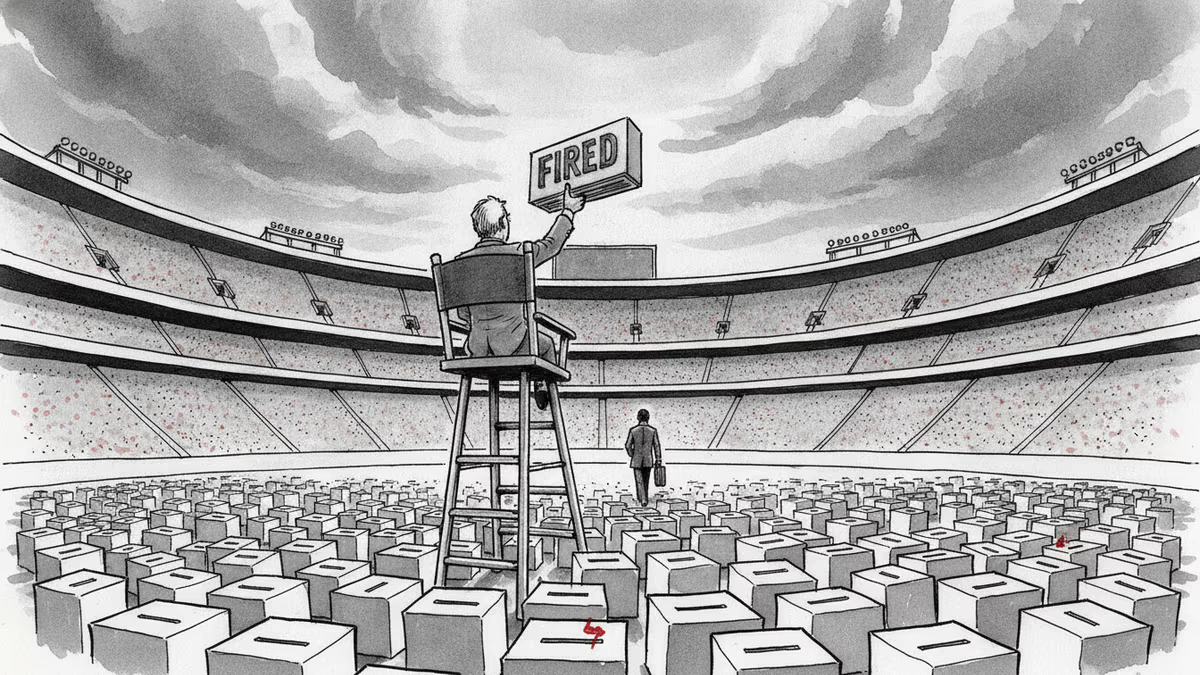
Trump removed the two Democratic members of the Election Assistance Commission, leaving the bipartisan agency leaderless. A Supreme Court ruling made it legal. Here's why a non-crisis can still be a warning sign.
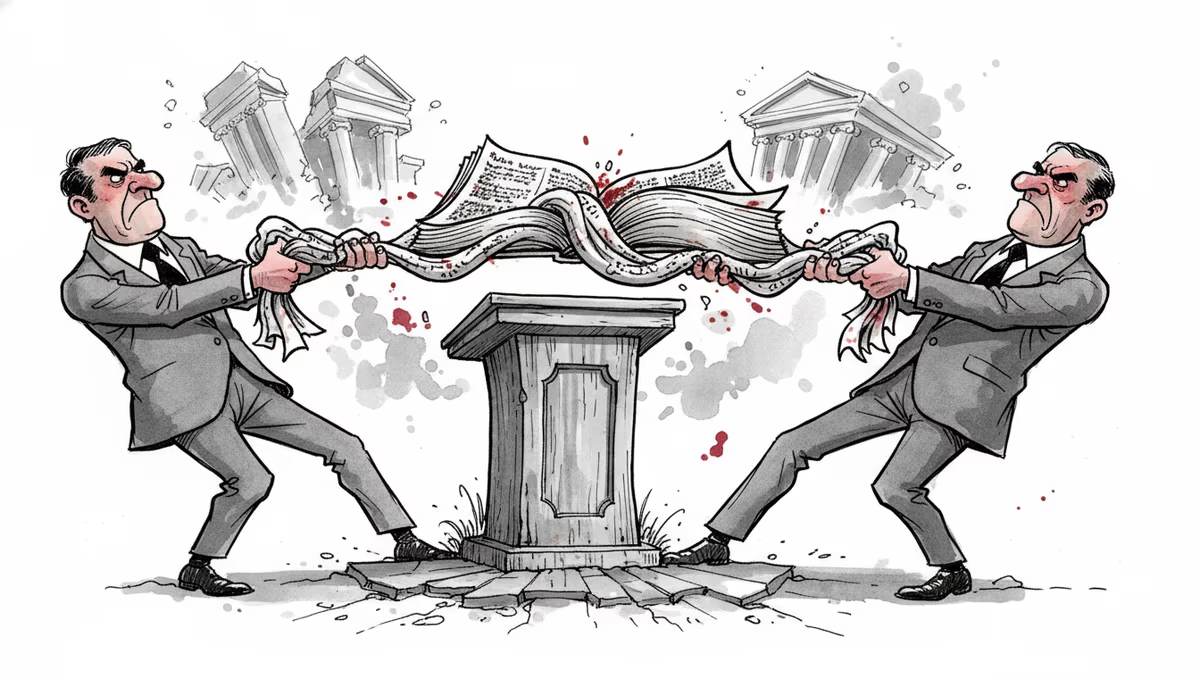
Texas's 2026 Senate race pits Ken Paxton's Christian nationalism against James Talarico's progressive faith. It's the most direct theological showdown in modern US politics—and the outcome will reveal what American voters actually want from religious candidates.
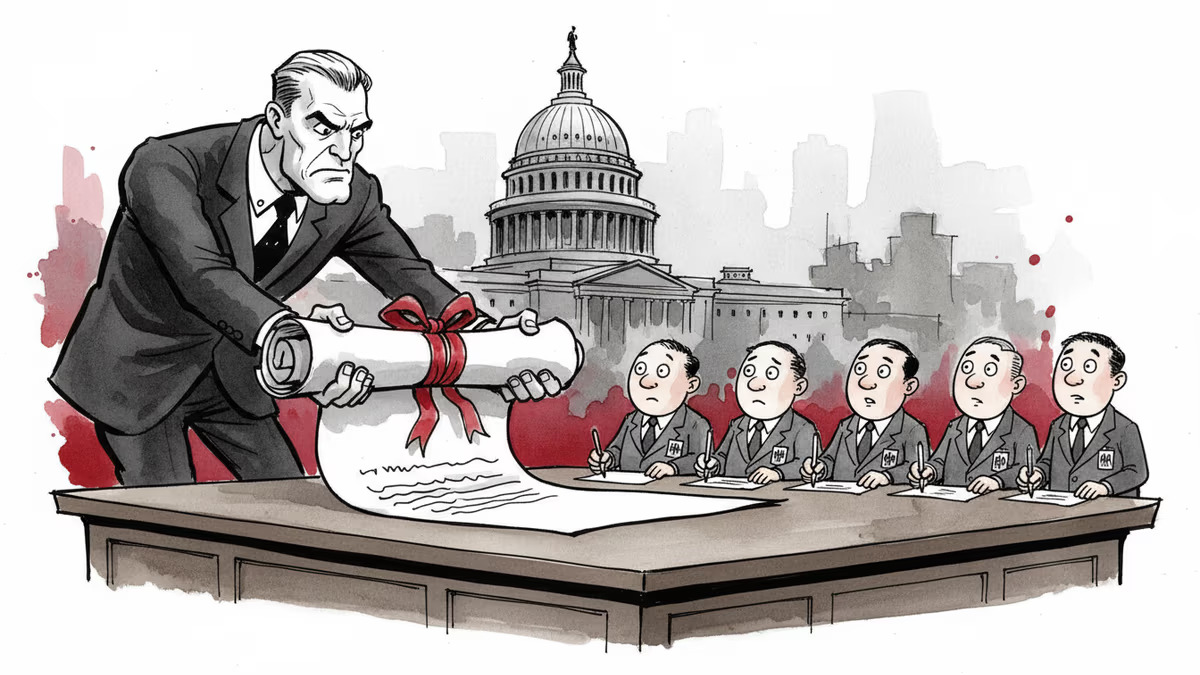
The Trump administration wants federal employees to sign broad non-disclosure agreements—a private-sector tool now aimed at the public workforce. What happens when government runs like a corporation?
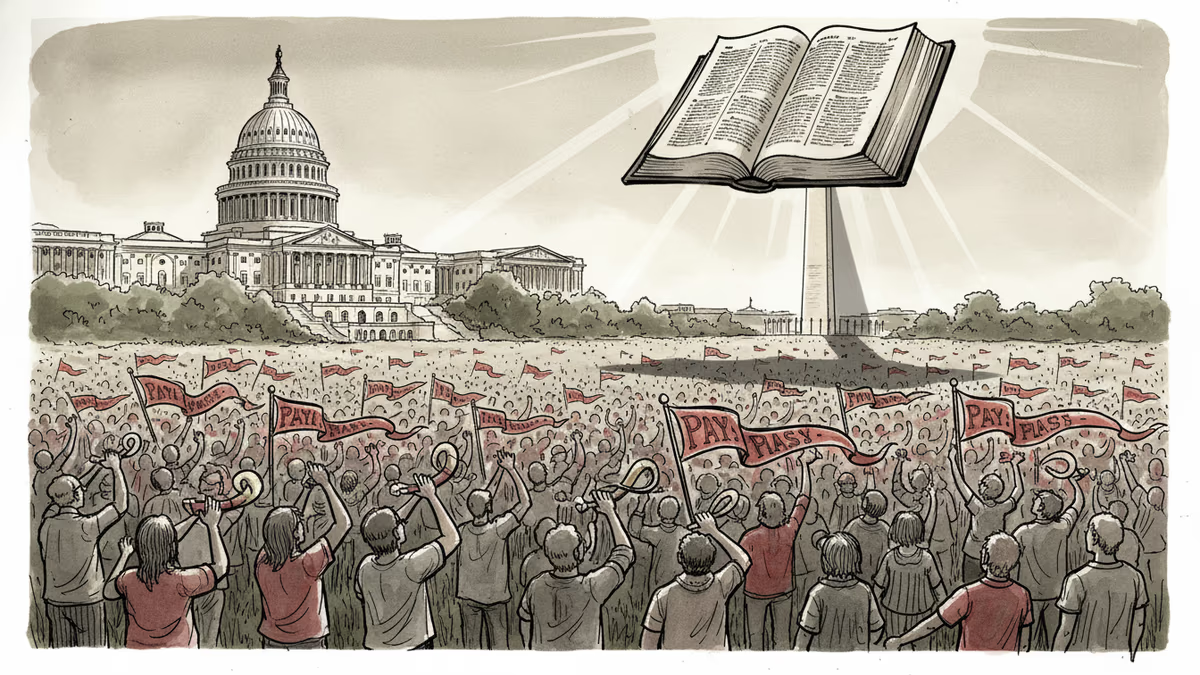
Thousands gathered on the National Mall to 'rededicate America to God,' backed by $150M in federal funds and corporate sponsors. Inside the New Apostolic Reformation's most visible moment yet.
Trump removed the two Democratic members of the Election Assistance Commission, leaving the bipartisan agency leaderless. A Supreme Court ruling made it legal. Here's why a non-crisis can still be a warning sign.
Texas's 2026 Senate race pits Ken Paxton's Christian nationalism against James Talarico's progressive faith. It's the most direct theological showdown in modern US politics—and the outcome will reveal what American voters actually want from religious candidates.
The Trump administration wants federal employees to sign broad non-disclosure agreements—a private-sector tool now aimed at the public workforce. What happens when government runs like a corporation?
Thousands gathered on the National Mall to 'rededicate America to God,' backed by $150M in federal funds and corporate sponsors. Inside the New Apostolic Reformation's most visible moment yet.
Thoughts
Share your thoughts on this article
Sign in to join the conversation