
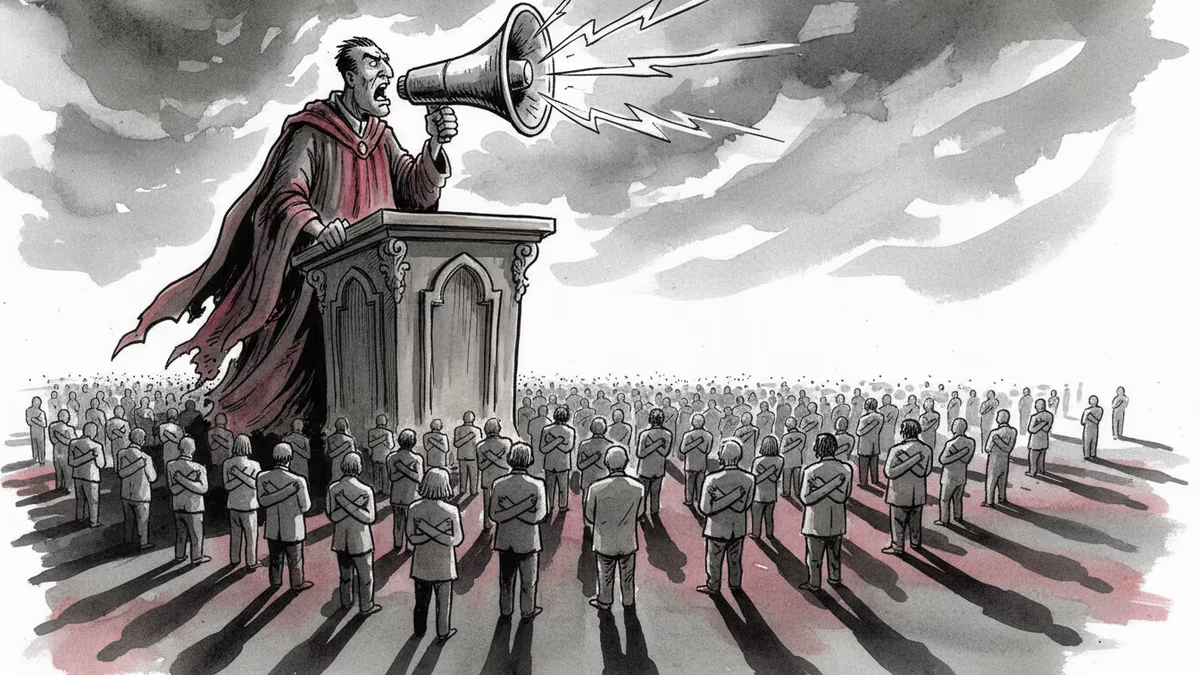
Loud Doesn't Mean Persuasive
A year into Trump's second term, Christian nationalist leaders have the White House's ear. But new Pew Research data shows American public opinion has barely moved. What's happening — and why does it matter?
This weekend, Christian leaders and government officials are gathering on the National Mall in Washington to formally "rededicate" America as "One Nation under God." The event is White House-backed, tied to July 4th celebrations, and very much on-brand for the current moment.
Over the past year, the religious right has operated with unusual confidence. The Secretary of Defense has described military action abroad as divinely sanctioned. Conservative pastors have erected golden statues of Donald Trump — while insisting the parallel to the Old Testament's golden calf is purely coincidental. Trump himself shared AI-generated imagery casting himself in a messianic pose, and his evangelical allies largely stood by him. The line between church and state hasn't just blurred; in some corners, it's been treated as an obstacle to overcome.
So here's the question worth sitting with: after a year of this, have Americans been persuaded?
What the Data Actually Shows
A new report from the Pew Research Center offers a clear answer — and it's more complicated than either side of this debate tends to acknowledge.
On one hand, awareness that religion is gaining influence in public life has surged. The share of Americans who say religion is becoming more influential in public affairs rose 19 percentage points in just two years, reaching a historic high. Overall views of organized religion remain net positive, with roughly 55% of Americans seeing it as a force for good in society.
But here's where the story splits. Recognizing that religion is more visible is not the same as endorsing its most aggressive political agenda. On the specific beliefs that define Christian nationalism — a term that's become common shorthand for a cluster of ideas linking faith, patriotism, and governance — public support has barely budged.
The Public Religion Research Institute (PRRI) defines Christian nationalism through five core beliefs: that American law should be based on Biblical principles; that the federal government should formally declare the US a Christian nation; that Christianity is central to American identity; and that God has a unique mission for America. By these measures, the Trump era has produced no meaningful surge in support.
Pew researchers found that backing for Christian nationalist ideas has remained essentially flat across the last several years. There has been, in their framing, no "Trump bump" for the most conservative Christian political views.
The specifics are worth noting. The share of Americans who would be comfortable with Christianity being declared an official state religion ticked up to 17% in the latest survey, from 13% in 2024 — a small but real shift. Yet that still leaves more than four in five Americans opposed or uncomfortable with the idea. Support for grounding American law primarily in the Bible has shown no statistically significant change over six years. The same is true for the belief that God uniquely favors the United States over other nations.

Meanwhile, a steady majority of Americans continue to say they want churches and houses of worship to stay out of day-to-day politics and refrain from endorsing candidates.
Preaching to the Already Converted
Robert P. Jones, founder and president of PRRI and currently writing a book on this subject, frames the dynamic plainly.
"He's speaking to a group that knows they're in decline, knows their grip on power demographically speaking has been slipping for decades, and he has made the big promise that he's going to bring them back into power," Jones said of Trump's relationship with the evangelical right.
The data, however, suggests that promise isn't translating into broader cultural conversion. "It hasn't resulted in major shifts in the landscape," Jones said. "In other words, they're not pulling people into that worldview. They're basically just appealing to a small subset of Americans who already hold those views and who just happen to be their political base."
This is a meaningful distinction. What looks from the outside like a movement reshaping American culture may be, in polling terms, closer to an existing constituency being activated and amplified — rather than expanded.
Two Ways to Read the Same Moment
There are two genuinely different ways to interpret this data, and both deserve serious consideration.
One reading is reassuring: the constitutional guardrails are holding in public opinion. Americans broadly support the separation of church and state, reject theocratic governance, and haven't been swept up by the louder voices around them. The noise is not the signal.
The other reading is less comfortable. Public opinion and institutional power don't always move together. A motivated, organized minority — particularly one with access to executive appointments, judicial nominations, and administrative rule-making — can reshape policy and institutions in ways that outlast any single election cycle, regardless of what majority opinion surveys show. The history of American politics offers plenty of examples where a well-positioned minority moved faster than public sentiment, in both directions.
The current Christian nationalist alliance with the White House fits a pattern that political scientists call "elite-driven" rather than "mass-driven" mobilization. The energy flows from organized leadership downward, rather than from a groundswell of popular demand upward. That distinction matters for how durable — or brittle — such movements tend to be.
For comparison: the 1980s Moral Majority under Jerry Falwell was also loudly present in Republican politics, claimed cultural dominance, and ultimately saw its specific legislative ambitions largely frustrated by public resistance. Whether the current moment follows a similar arc, or whether the deeper institutional access this time changes the calculus, is a question the data can't yet answer.
This content is AI-generated based on source articles. While we strive for accuracy, errors may occur. We recommend verifying with the original source.
Related Articles
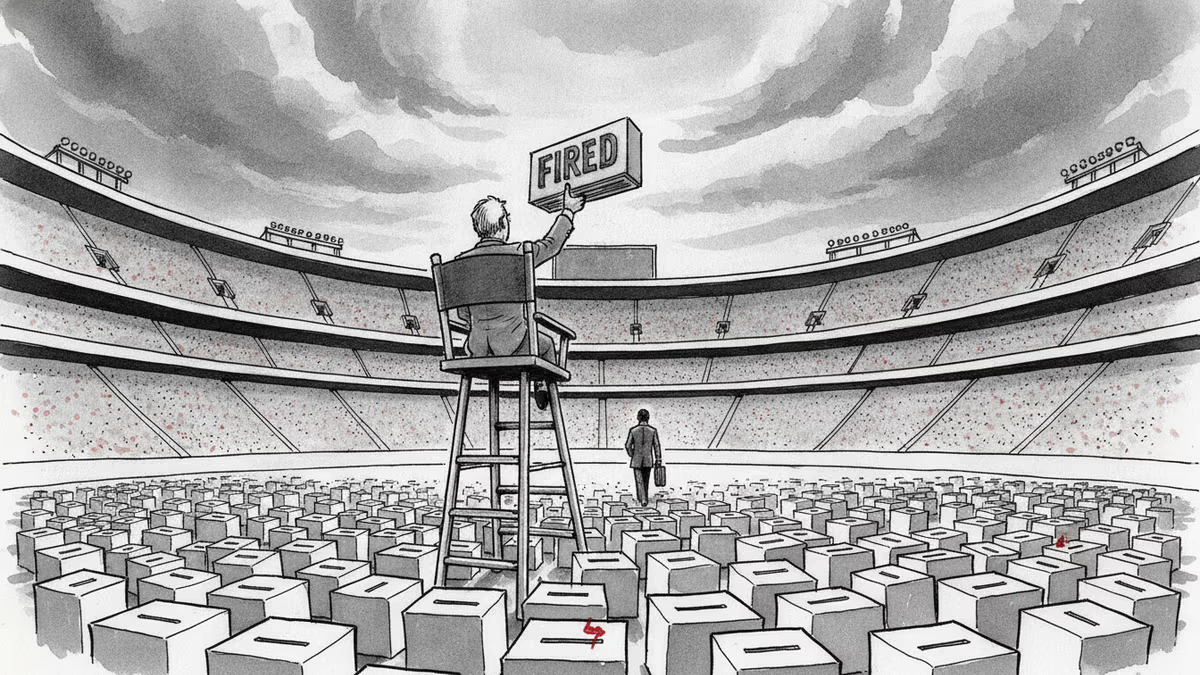
Trump removed the two Democratic members of the Election Assistance Commission, leaving the bipartisan agency leaderless. A Supreme Court ruling made it legal. Here's why a non-crisis can still be a warning sign.
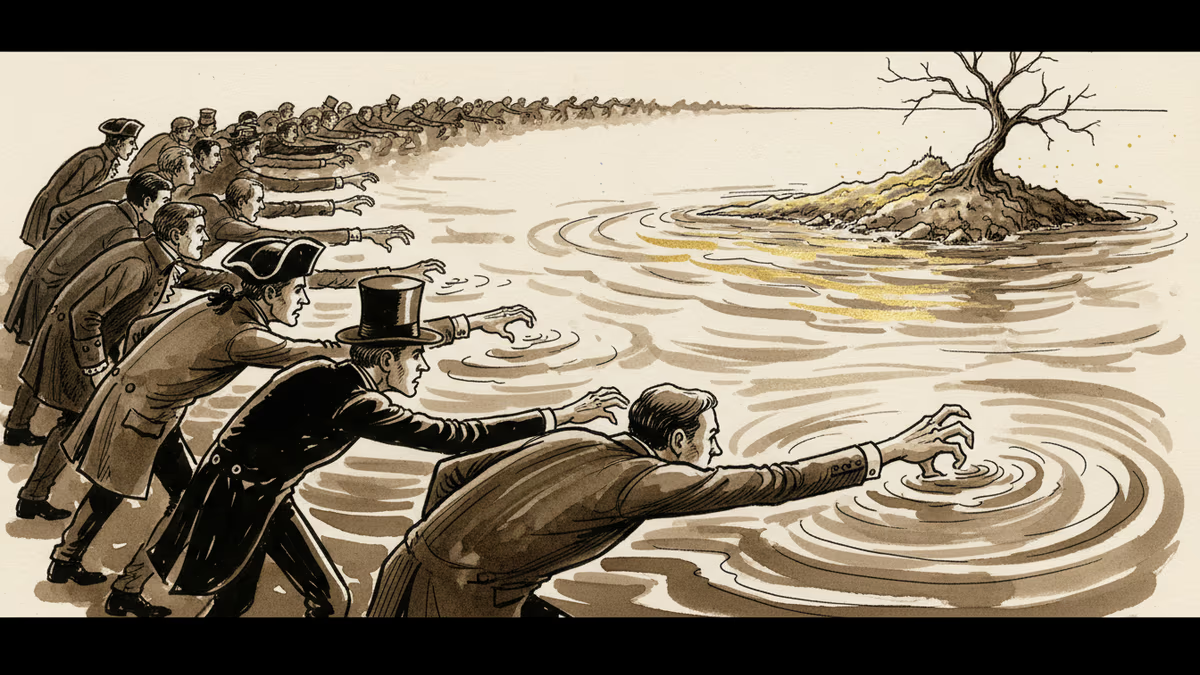
Trump says he wants to 'take' Cuba. But this desire isn't new—it stretches back to Thomas Jefferson. Why this centuries-old obsession is coming to a head right now.
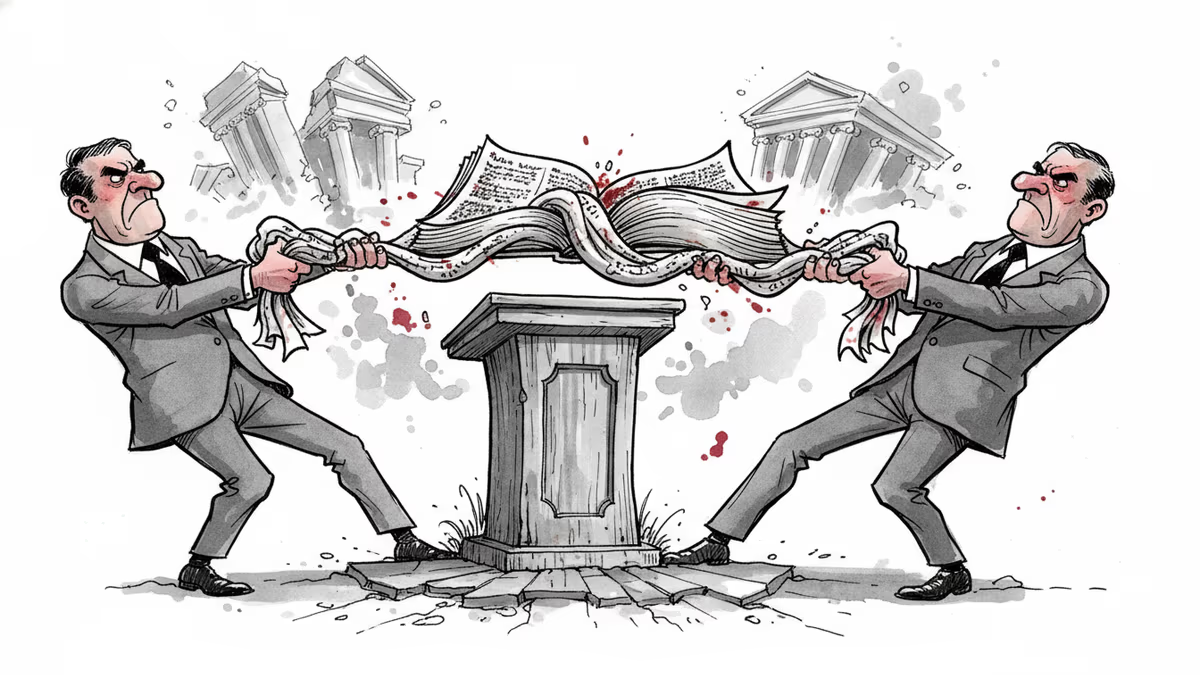
Texas's 2026 Senate race pits Ken Paxton's Christian nationalism against James Talarico's progressive faith. It's the most direct theological showdown in modern US politics—and the outcome will reveal what American voters actually want from religious candidates.
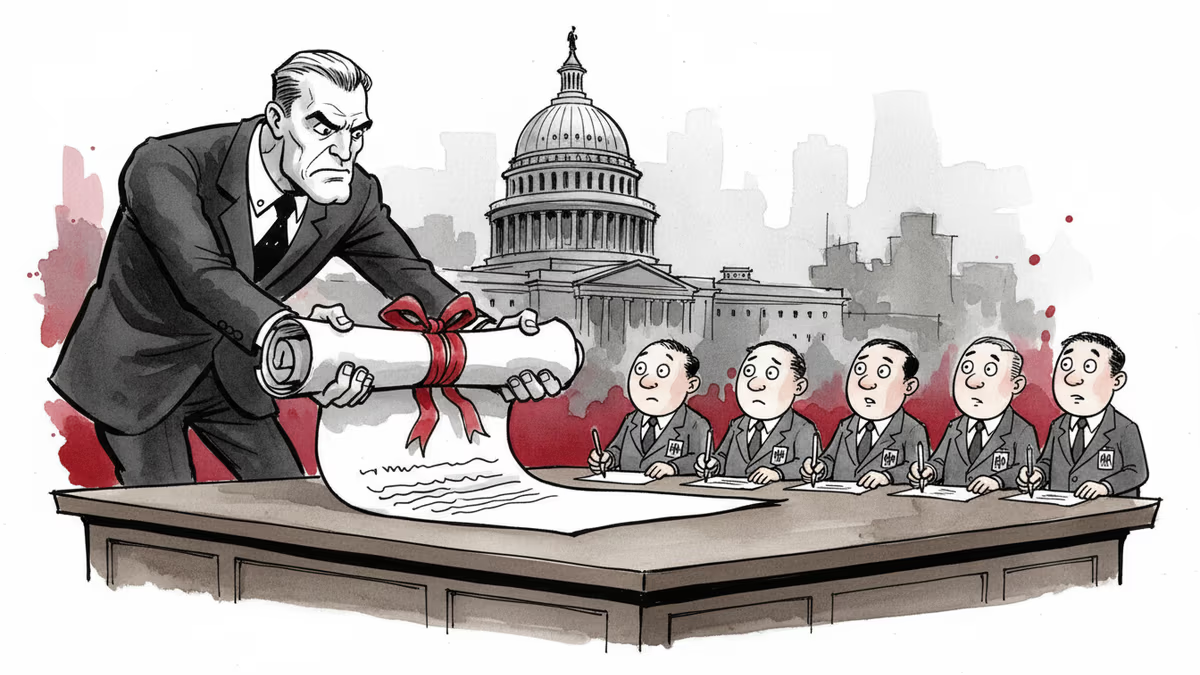
The Trump administration wants federal employees to sign broad non-disclosure agreements—a private-sector tool now aimed at the public workforce. What happens when government runs like a corporation?
Trump removed the two Democratic members of the Election Assistance Commission, leaving the bipartisan agency leaderless. A Supreme Court ruling made it legal. Here's why a non-crisis can still be a warning sign.
Trump says he wants to 'take' Cuba. But this desire isn't new—it stretches back to Thomas Jefferson. Why this centuries-old obsession is coming to a head right now.
Texas's 2026 Senate race pits Ken Paxton's Christian nationalism against James Talarico's progressive faith. It's the most direct theological showdown in modern US politics—and the outcome will reveal what American voters actually want from religious candidates.
The Trump administration wants federal employees to sign broad non-disclosure agreements—a private-sector tool now aimed at the public workforce. What happens when government runs like a corporation?
Thoughts
Share your thoughts on this article
Sign in to join the conversation