
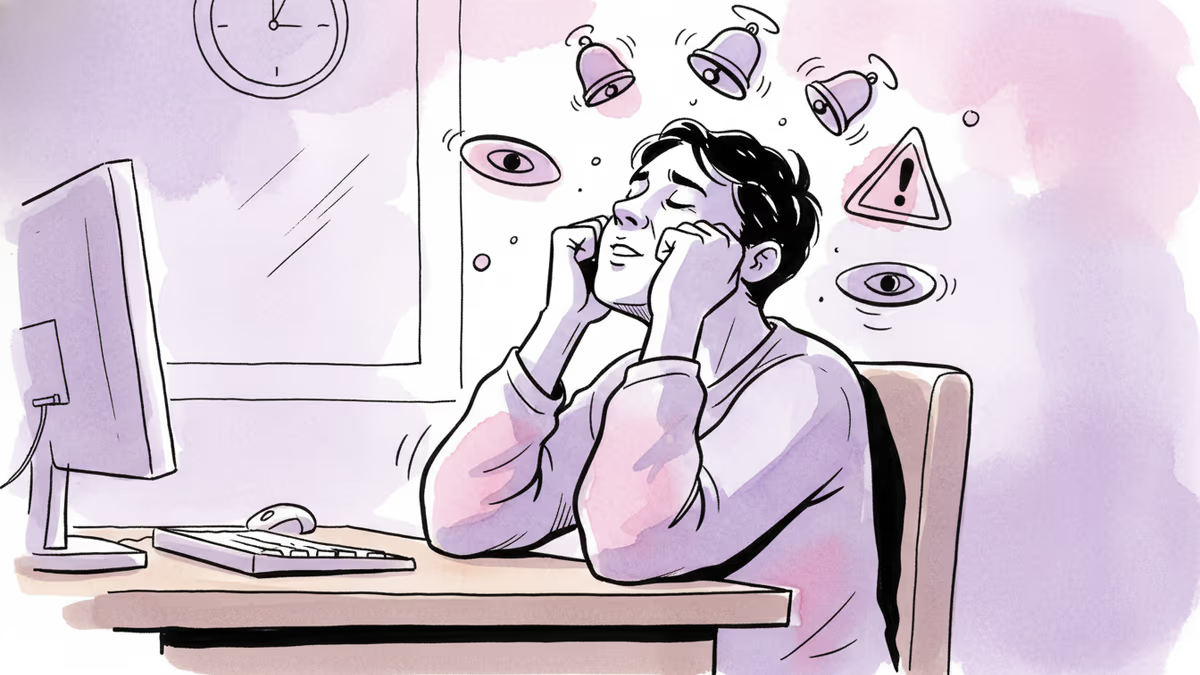
That Eye Itch Feels Good to Scratch — Until It Doesn't
Eye rubbing is one of the most common unconscious habits, but it carries real risks including corneal damage and infection. Here's what's actually happening when you rub, and what to do instead.
You've done it today. Probably more than once. That deep, satisfying press of knuckles against closed eyelids — and for a moment, the itch is gone. But what's actually happening to your eye in that moment is worth knowing.
Why Your Eyes Itch in the First Place
The urge to rub almost always starts with discomfort, and the most common culprit is allergic conjunctivitis — responsible for nearly 50% of all itchy eye cases. When allergens land on the surface of the eye, they bind to cells in the conjunctiva (the thin clear tissue covering the white of the eye) and trigger the release of inflammatory chemicals. The result: redness, swelling, and that maddening itch that seems to demand a response.
Dry eye syndrome and blepharitis (inflammation of the eyelid margins) are close behind. These conditions create a gritty, foreign-body sensation that the brain interprets as something that needs to be rubbed away. The eyelid skin is among the thinnest on the body, making it especially reactive to environmental irritants, contact lenses, or skin conditions like dermatitis that can spread to the eyelid area.
The frustrating irony: rubbing provides momentary relief because the pressure temporarily overrides the itch signal. But it also makes everything worse.
What Rubbing Actually Does to Your Eye
The most serious long-term risk associated with habitual eye rubbing is a condition called keratoconus. In a healthy eye, the cornea — the clear dome at the front — maintains a roughly spherical shape. In keratoconus, repeated mechanical pressure gradually weakens the corneal tissue, causing it to thin and bulge outward into a cone shape. The result is high irregular astigmatism and progressively blurry vision that standard glasses or soft contact lenses can't fully correct.

Keratoconus isn't rare, and it tends to develop slowly over years, often beginning in adolescence. Treatment has improved significantly: a procedure called corneal cross-linking can halt progression in many cases by chemically strengthening the collagen fibers within the cornea. But patients often still need specialized rigid contact lenses for functional vision, and in advanced cases, a corneal transplant becomes necessary.
The more immediate risks are also real. A stray fingernail or aggressive rub can cause a corneal abrasion — a scratch on the corneal surface that is acutely painful, causes blurred vision, and requires antibiotic treatment to prevent infection. Rubbing can also rupture small blood vessels on the eye's surface, producing a subconjunctival hemorrhage: the eye turns dramatically red, alarming to look at but generally harmless, resolving on its own within one to two weeks.
Perhaps the most immediately contagious consequence is conjunctivitis — pink eye. Hands carry viruses and bacteria, and rubbing is an efficient delivery mechanism straight to the eye's mucous membrane. Viral conjunctivitis spreads easily and quickly, which is why eye doctors emphasize hand-washing before touching your face, especially if you've been around someone who's infected.
What to Do Instead
The good news: most of the underlying causes of eye itching are treatable, which means the urge to rub can be reduced significantly.
Artificial tears are the first line of defense for almost every cause — they dilute and flush out allergens, lubricate dry surfaces, and cool irritated tissue. A useful tip from ophthalmologists: keep them in the refrigerator. The cool temperature adds a layer of physical relief that helps suppress the itch reflex.
For allergy-driven itching, minimizing allergen exposure matters as much as medication. Staying indoors on high pollen days, rinsing your face after being outside, and wearing wraparound sunglasses can meaningfully reduce how much allergen reaches your eyes. Cold compresses applied to closed eyelids offer immediate, drug-free relief.
When home remedies aren't enough, over-the-counter allergy eye drops offer real pharmacological help. These come in three main types: antihistamines (which block histamine receptors to reduce the itch signal), mast cell stabilizers (which prevent immune cells from releasing inflammatory chemicals in the first place), and combination drops that do both. For people who also experience sneezing or a runny nose, an oral antihistamine can address all symptoms at once.
If symptoms persist despite these measures, a prescription steroid eye drop — used short-term under medical supervision — can provide more aggressive relief. The key is to address the root cause rather than manage the itch by rubbing.
This content is AI-generated based on source articles. While we strive for accuracy, errors may occur. We recommend verifying with the original source.
Related Articles
One in four adults snore regularly. From CPAP machines to tongue-licking apps, the world of sleep treatment is stranger and more effective than you'd think.

Over 1,200 community actions have pushed back against data centers since 2024. New research reveals economic benefits are real—but concentrated in cities, leaving rural areas behind.
Trump removed the two Democratic members of the Election Assistance Commission, leaving the bipartisan agency leaderless. A Supreme Court ruling made it legal. Here's why a non-crisis can still be a warning sign.

Lebanon and Israel signed a framework agreement in June 2026. Hezbollah rejected it. Israel kept fighting. History suggests this moment is real—and fragile.
One in four adults snore regularly. From CPAP machines to tongue-licking apps, the world of sleep treatment is stranger and more effective than you'd think.
Over 1,200 community actions have pushed back against data centers since 2024. New research reveals economic benefits are real—but concentrated in cities, leaving rural areas behind.
Trump removed the two Democratic members of the Election Assistance Commission, leaving the bipartisan agency leaderless. A Supreme Court ruling made it legal. Here's why a non-crisis can still be a warning sign.
Lebanon and Israel signed a framework agreement in June 2026. Hezbollah rejected it. Israel kept fighting. History suggests this moment is real—and fragile.
Thoughts
Share your thoughts on this article
Sign in to join the conversation