
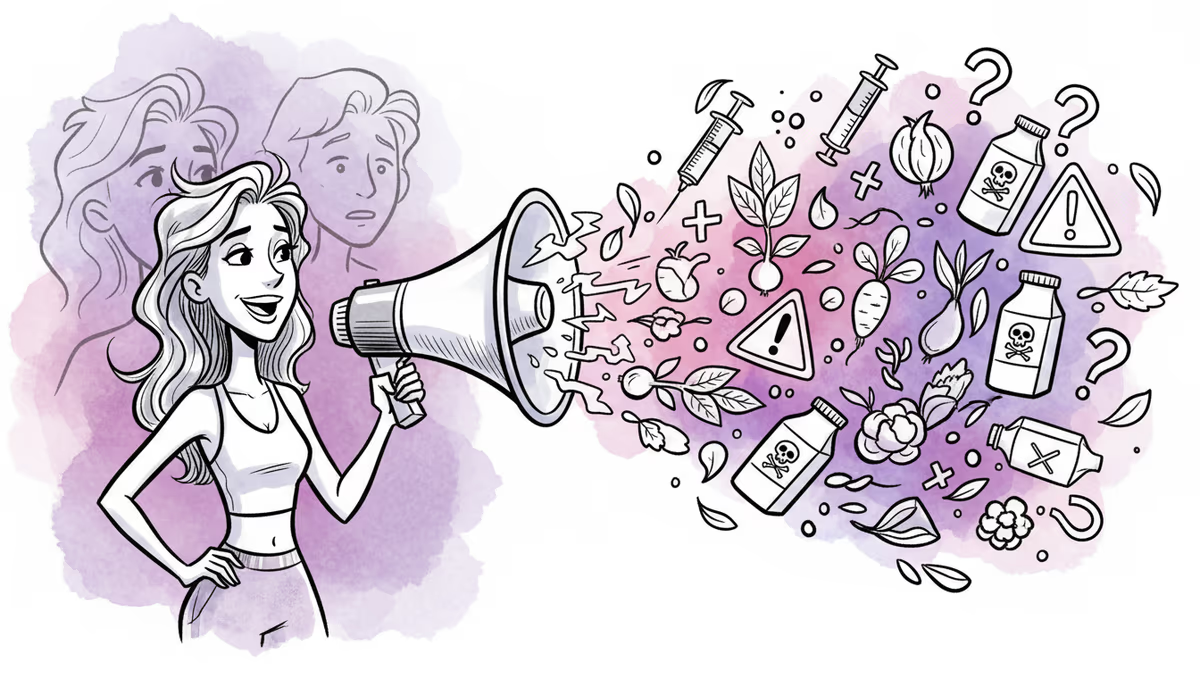
How Wellness Influencers Became Anti-Vaccine Evangelists
The journey from promoting healthy living to spreading medical misinformation reveals a troubling pattern in how selective science and algorithmic amplification create dangerous echo chambers.
One in three Americans now gets health advice from social media influencers rather than healthcare professionals. But how does someone go from promoting green smoothies to denouncing vaccines and advocating beef tallow as sunscreen?
The Selective Science Playbook
Wellness influencers like Casey Means employ a sophisticated strategy that starts with legitimate concerns about healthcare institutions. They point to real problems: pharmaceutical companies prioritizing profits, regulatory capture, the overprescription of medications.
These critiques aren't entirely wrong. But they become dangerous when used as a wedge to discredit all institutional medical knowledge. The logic becomes: if Big Pharma can't be trusted with antidepressants, why trust them with vaccines? If the FDA approved harmful additives, why trust any food safety guidelines?
This "institutional skepticism" creates an opening for alternative authorities – namely, the influencers themselves.
The Algorithm's Role in Radicalization
Social media platforms inadvertently accelerate this journey through their recommendation systems. A user interested in yoga might see content about clean eating, then detox diets, then "natural immunity," and eventually anti-vaccine content.
Each step feels logical because the algorithm presents it as a natural progression. The platforms' engagement-driven model rewards content that provokes strong reactions – and nothing drives engagement quite like content that makes viewers feel they've discovered hidden truths.
Instagram and TikTok are particularly effective at this gradual radicalization because their short-form content doesn't allow for nuanced discussion of complex medical topics.

The Economics of Influence
Behind the wellness-to-conspiracy pipeline lies a lucrative business model. Influencers who promote distrust of mainstream medicine can sell expensive alternatives: $200 supplements, $500 "detox" programs, $50 bottles of raw milk.
The more distrust they sow in conventional medicine, the more valuable their alternatives become. It's not necessarily a conscious conspiracy, but the economic incentives align perfectly with spreading medical misinformation.
Meanwhile, actual healthcare professionals – bound by medical ethics and liability concerns – can't compete with influencers who face no such constraints.
Platform Responsibility vs. Free Speech
Meta, YouTube, and other platforms face a delicate balancing act. They've implemented policies against obvious medical misinformation but struggle with content that presents itself as "alternative perspectives" or "personal experiences."
The challenge is that wellness influencers rarely make explicit false claims. Instead, they use phrases like "do your own research," "listen to your body," and "question everything" – language that's hard to moderate but effectively undermines medical consensus.
The Trust Deficit
Perhaps most troubling is what this phenomenon reveals about public trust in institutions. When people turn to wellness influencers over doctors, it suggests a fundamental breakdown in how medical knowledge is communicated to the public.
The medical establishment's response – fact-checking and debunking – may be missing the point. If people don't trust the source, more facts won't help.
Authors
Related Articles
Karnataka state, home to Bengaluru's tech hub, joins a global wave of social media restrictions for minors. But can these bans actually work?
Disinformation flooded X immediately after Israel-Iran attacks, with false content earning millions of views and potential revenue for premium users spreading misleading information.
Vaccination rates plummet across London and US states as measles outbreaks surge. What happens when herd immunity collapses and childhood diseases return?
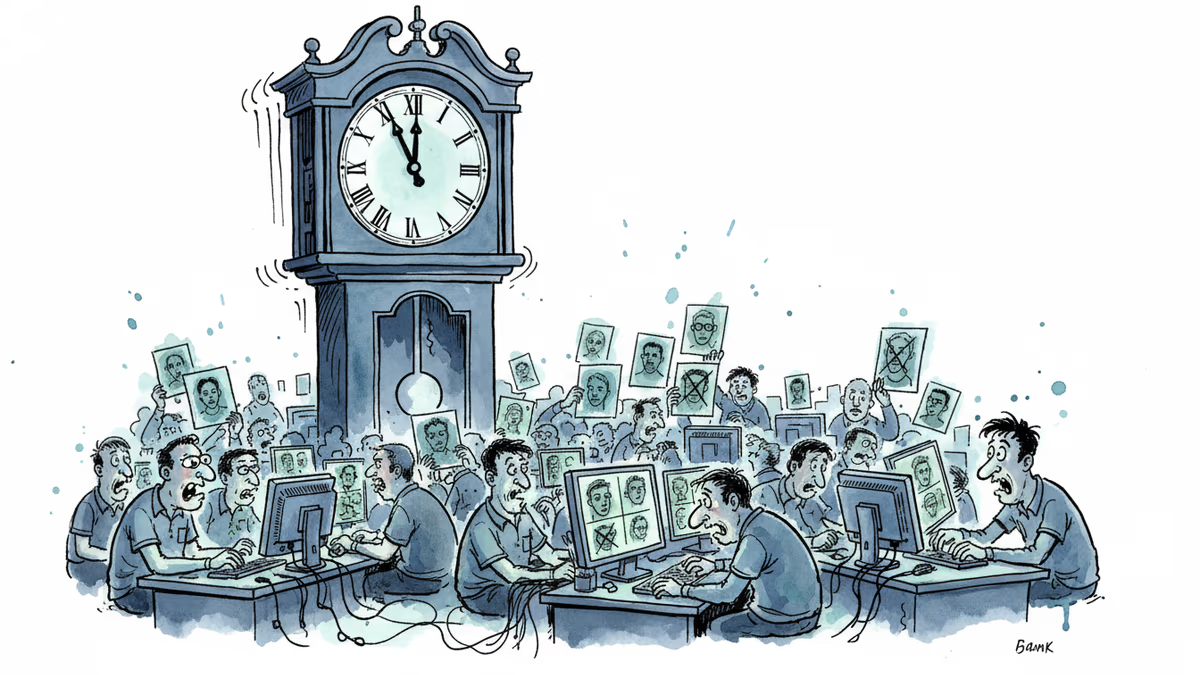
India gives social platforms 9 days to remove illegal AI content and label all synthetic media. Can tech companies meet impossible deadlines in their biggest growth market?
Karnataka state, home to Bengaluru's tech hub, joins a global wave of social media restrictions for minors. But can these bans actually work?
Disinformation flooded X immediately after Israel-Iran attacks, with false content earning millions of views and potential revenue for premium users spreading misleading information.
Vaccination rates plummet across London and US states as measles outbreaks surge. What happens when herd immunity collapses and childhood diseases return?
India gives social platforms 9 days to remove illegal AI content and label all synthetic media. Can tech companies meet impossible deadlines in their biggest growth market?
Thoughts
Share your thoughts on this article
Sign in to join the conversation