
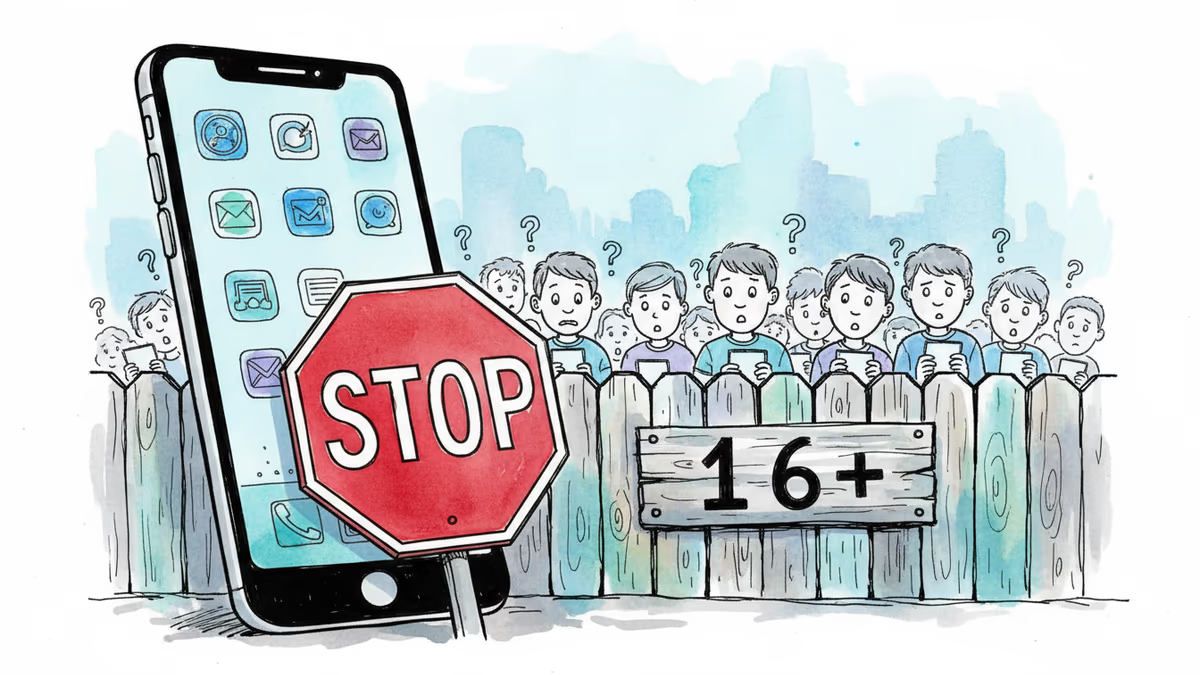
Why India's Silicon Valley Just Banned Social Media for Kids Under 16
Karnataka state, home to Bengaluru's tech hub, joins a global wave of social media restrictions for minors. But can these bans actually work?
The Irony of Tech Hub Bangalore Going Offline
In a move that would make Silicon Valley executives do a double-take, Karnataka state—home to India's tech capital Bengaluru—just announced it's banning social media for anyone under 16 years old. The announcement came during Friday's budget speech, with no details on enforcement. But here's what makes this more than just another policy pronouncement: it's part of a global domino effect that's picking up serious momentum.
Chief Minister Siddaramaiah was direct: "To prevent the adverse effects on children from the use of mobile phones, the use of social media will be prohibited for children under the age of 16." What he didn't mention? How exactly they plan to make this work in a country where shared devices are common and digital literacy varies wildly.
The Global Bandwagon Effect
Karnataka isn't pioneering this path—it's following it. Australia blazed the trail last December, becoming the first country to ban social media for teenagers. Indonesia jumped on board Friday, announcing bans on "high-risk platforms" including YouTube, TikTok, Facebook, Instagram, and Roblox starting March 28. Malaysia's examining similar measures.
Even within India, the momentum's building. Goa and Andhra Pradesh are studying restrictions, the Madras High Court urged federal action, and India's chief economic adviser called social media platforms "predatory." When courts and economists start using the same language, you know the tide's turning.
Big Tech's Careful Pushback

Meta's response reveals the industry's dilemma perfectly. They support giving parents more control but warn against "broad social media bans" that might push teens toward "less safe, unregulated sites." Their argument? Teenagers use around 40 apps weekly on average, so targeting just a handful of platforms won't necessarily improve safety.
It's a sophisticated defense that essentially says: "You can't regulate your way out of this problem." But is that tech companies protecting their business model, or genuine concern about unintended consequences?
The Authority Question Nobody's Asking
Here's where it gets legally messy. Can individual Indian states even enforce such bans? Legal experts are skeptical. Aparajita Bharti from The Quantum Hub points out the "unclear" legislative authority, while Kazim Rizvi from think tank The Dialogue notes that internet policies typically fall under federal jurisdiction.
This raises a fascinating question: What happens when local governments want to act faster than federal ones? Karnataka made this announcement without consulting tech companies first—a sign they're serious, or that they haven't thought through the complexities?
The Enforcement Reality Check
Digital rights advocates are raising uncomfortable questions. The Internet Freedom Foundation warns that enforcement would likely require age-verification systems that create new privacy risks. Worse, broad bans could deepen India's digital gender divide if families use restrictions to keep girls offline entirely.
Their bottom line stings: "Child safety online demands serious, evidence-based policy, not headline-driven prohibitions." That's a direct shot at the announcement's timing and lack of detail.
The answer may determine whether we're witnessing the birth of effective child protection or the beginning of a fragmented, unenforceable digital landscape.
Authors
Related Articles
SolarSquare is raising $55-60M at a $450-500M valuation, more than doubling its worth in 18 months. Here's what's driving investor conviction in India's residential solar market.
Indian venture capital has quietly displaced Silicon Valley in its own backyard. Only one American VC made India's top 10 investor list last year. Here's why that matters beyond India.
India's biggest digital payments platform PhonePe has shelved its IPO amid geopolitical tensions and a 9% market drop—but a quietly revised valuation tells a more complicated story.
Apple has hit 25% iPhone production in India, a milestone years in the making. What it means for supply chains, consumers, and the geopolitics of where things get made.
SolarSquare is raising $55-60M at a $450-500M valuation, more than doubling its worth in 18 months. Here's what's driving investor conviction in India's residential solar market.
Indian venture capital has quietly displaced Silicon Valley in its own backyard. Only one American VC made India's top 10 investor list last year. Here's why that matters beyond India.
India's biggest digital payments platform PhonePe has shelved its IPO amid geopolitical tensions and a 9% market drop—but a quietly revised valuation tells a more complicated story.
Apple has hit 25% iPhone production in India, a milestone years in the making. What it means for supply chains, consumers, and the geopolitics of where things get made.
Thoughts
Share your thoughts on this article
Sign in to join the conversation