
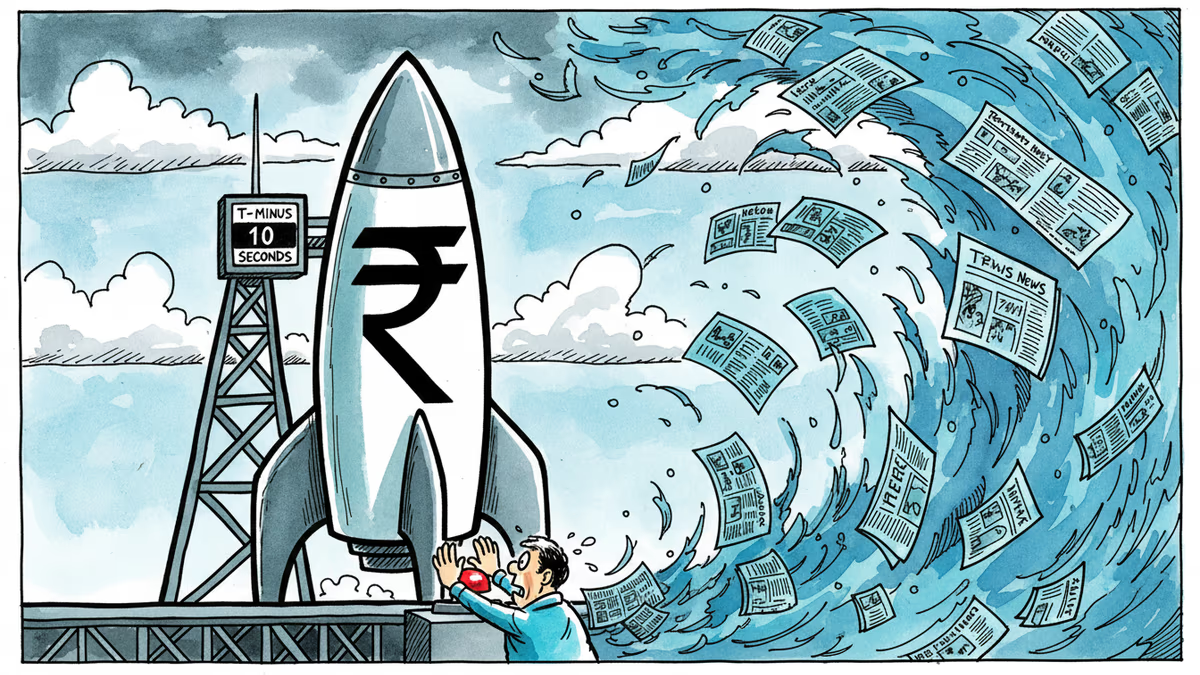
PhonePe Hits Pause: Market Jitters or Valuation Reality Check?
India's biggest digital payments platform PhonePe has shelved its IPO amid geopolitical tensions and a 9% market drop—but a quietly revised valuation tells a more complicated story.
The IPO That Blinked
Two months ago, PhonePe filed an updated prospectus with Indian regulators. The plan: list on Indian stock exchanges, raise up to $1.5 billion, and hand early backers like Tiger Global, Microsoft, and Walmart a long-awaited exit. This week, that plan is on ice.
The Bengaluru-based company—India's dominant digital payments platform—announced Monday it's pausing its IPO process, citing "current market conditions." The official culprit: geopolitical tensions in the Middle East that have rattled global markets since a conflict escalated on February 28. India's benchmark Nifty 50 and BSE Sensex indexes have each fallen roughly 9% in the past month. Hundreds of Indian stocks have logged double-digit declines.
PhonePe's spokesperson was unambiguous: "We paused the process only because of the current market conditions, which are unrelated to PhonePe."
But a single leaked number complicates that clean narrative.
The Valuation Gap Nobody Wants to Talk About
Here's what makes this more than a routine IPO delay. PhonePe was last valued at $12 billion in January 2023. Its IPO targeted a market cap of around $15 billion—a premium on that already-aging number. That's the public story.
The private story, according to two sources familiar with the matter who spoke to TechCrunch: investment bankers advising on the IPO had recently suggested lowering valuation expectations to approximately $9 billion. That's not just below the IPO target. It's below the 2023 funding round valuation. In other words, the company may have been heading toward a down-round IPO—a scenario that's embarrassing for founders and painful for early investors.
PhonePe called any valuation-related explanations "baseless." But the gap between $15 billion (what the company wanted) and $9 billion (what bankers reportedly suggested) is $6 billion. That's not noise. That's a fundamental disagreement about what this business is worth right now.
What PhonePe Actually Is—and Why It Matters

To understand the stakes, you need to understand the scale. PhonePe isn't just a payments app. It's the infrastructure layer of India's digital economy.
In February 2026 alone, the platform processed 9.3 billion transactions worth approximately $141.9 billion—through India's government-backed Unified Payments Interface (UPI) system. Its nearest competitor, Google Pay, handled 6.8 billion transactions worth around $97.8 billion in the same period. PhonePe's lead is substantial and growing.
Founded in 2015 by Sameer Nigam, Rahul Chari, and Burzin Engineer, the company was acquired by Flipkart a year later, then spun out as an independent entity in 2022—with Walmart retaining majority ownership. Since then, it has expanded well beyond payments into stockbroking, mutual fund investments, and even an Android app store designed to compete with Google Play.
The financials, however, tell a more complicated story. In the six months ended September 2025, revenue from operations grew 22% year-over-year to roughly $424 million. But losses widened to $156 million from $130 million a year earlier. The company is growing fast and losing more money as it does.
Three Stakeholders, Three Very Different Problems
For Walmart, this delay is a liquidity problem. The retail giant planned to sell approximately 9% of its stake—around 45.9 million shares—in the IPO while maintaining control. Every quarter the IPO is delayed is another quarter Walmart's capital stays locked in an unlisted Indian fintech. With Walmart's own investors scrutinizing its international portfolio, that's not a comfortable position.
For Tiger Global and Microsoft, the calculus is starker. Both were set to sell their entire stakes in the offering. A pause isn't just inconvenient—it's a full stop on their exit timeline. And if the IPO eventually prices at $9 billion rather than $15 billion, the return profile looks very different from what was projected.
For retail investors watching from the sidelines, the question is different: is this a buying opportunity deferred, or a warning sign about the sustainability of high-volume, low-margin digital payments businesses? PhonePe processes billions of transactions monthly and still bleeds cash. At what point does transaction volume translate into durable profit?
The Bigger Pattern
This isn't an isolated event. It's a data point in a broader reckoning facing fintech platforms globally.
The "grow now, profit later" playbook that powered a generation of payments companies—Stripe, Klarna, Paytm, and others—is being stress-tested by higher interest rates, tighter investor patience, and a market that has grown deeply skeptical of businesses that scale losses alongside revenue. Paytm, PhonePe's Indian rival, listed in 2021 at a $20 billion valuation and has since lost roughly 70% of its market value.
Meanwhile, geopolitics has become an underappreciated variable in emerging market IPO timing. A conflict thousands of miles away from Mumbai can move the Nifty 50 by 9% in a month and derail the listing plans of a company with 9.3 billion monthly transactions. For investors building exposure to India's digital economy—one of the most compelling growth stories in global finance—this interconnectedness is both the opportunity and the risk.
Authors
Related Articles
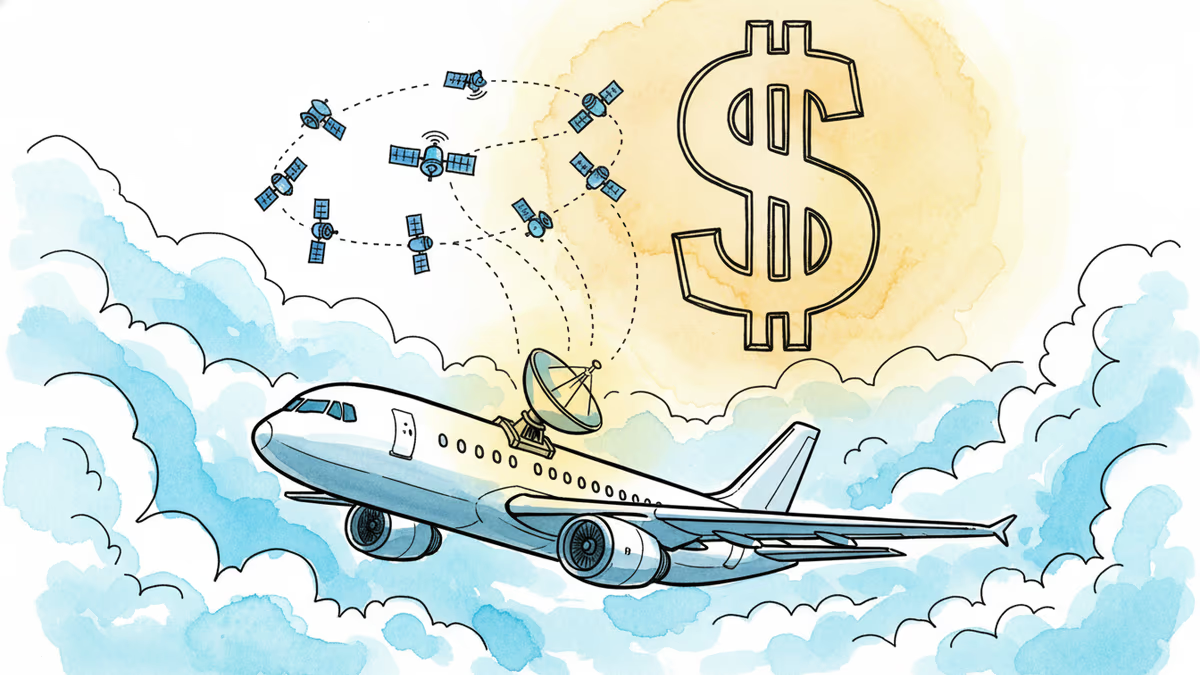
American Airlines just signed Starlink for 500+ aircraft. It's not just about faster inflight internet — it's a calculated move in the run-up to what could be the largest IPO in history.
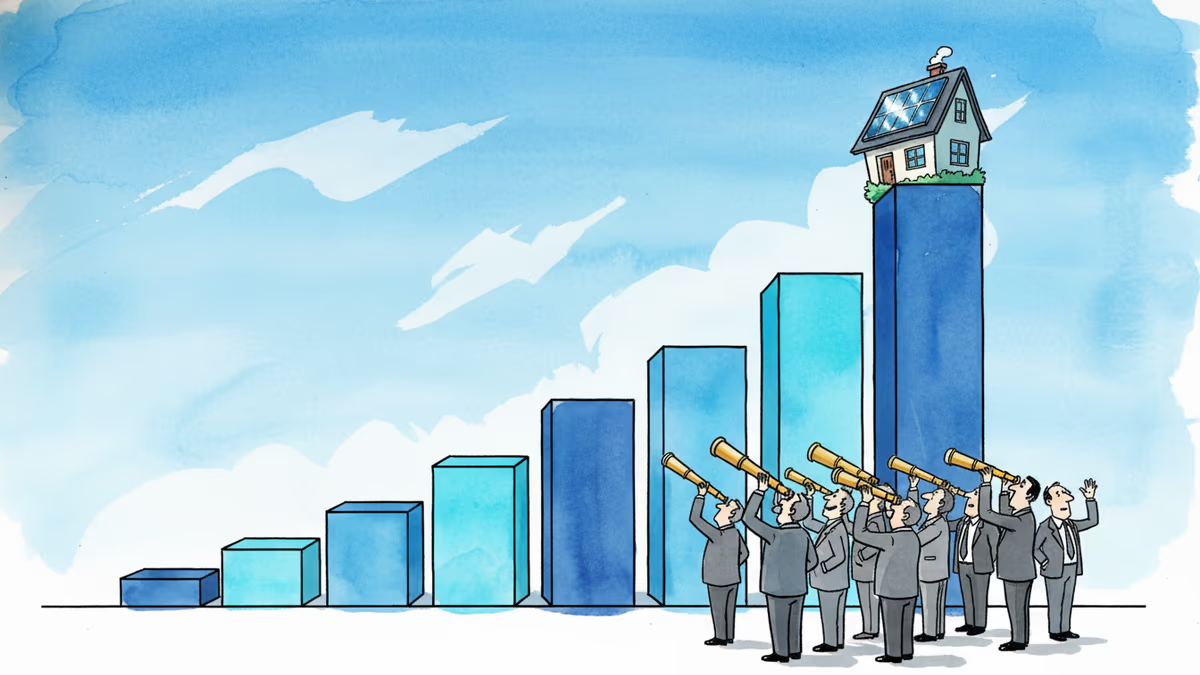
SolarSquare is raising $55-60M at a $450-500M valuation, more than doubling its worth in 18 months. Here's what's driving investor conviction in India's residential solar market.
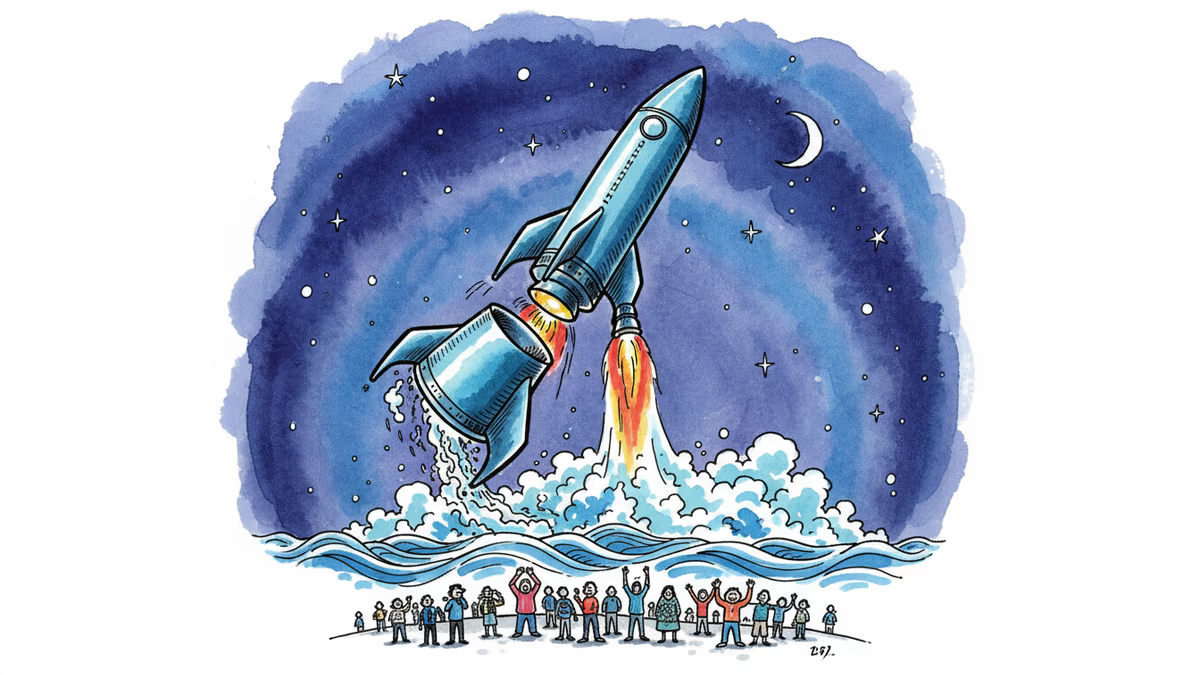
SpaceX's upgraded Starship V3 completed its first test flight, deploying 20 Starlink simulators but losing the Super Heavy booster. With an IPO weeks away, the stakes just got higher.
SpaceX's IPO filing puts AI at the center, claiming a $26.5 trillion market opportunity. But can Grok compete with OpenAI and Anthropic for enterprise customers?
American Airlines just signed Starlink for 500+ aircraft. It's not just about faster inflight internet — it's a calculated move in the run-up to what could be the largest IPO in history.
SolarSquare is raising $55-60M at a $450-500M valuation, more than doubling its worth in 18 months. Here's what's driving investor conviction in India's residential solar market.
SpaceX's upgraded Starship V3 completed its first test flight, deploying 20 Starlink simulators but losing the Super Heavy booster. With an IPO weeks away, the stakes just got higher.
SpaceX's IPO filing puts AI at the center, claiming a $26.5 trillion market opportunity. But can Grok compete with OpenAI and Anthropic for enterprise customers?
Thoughts
Share your thoughts on this article
Sign in to join the conversation