
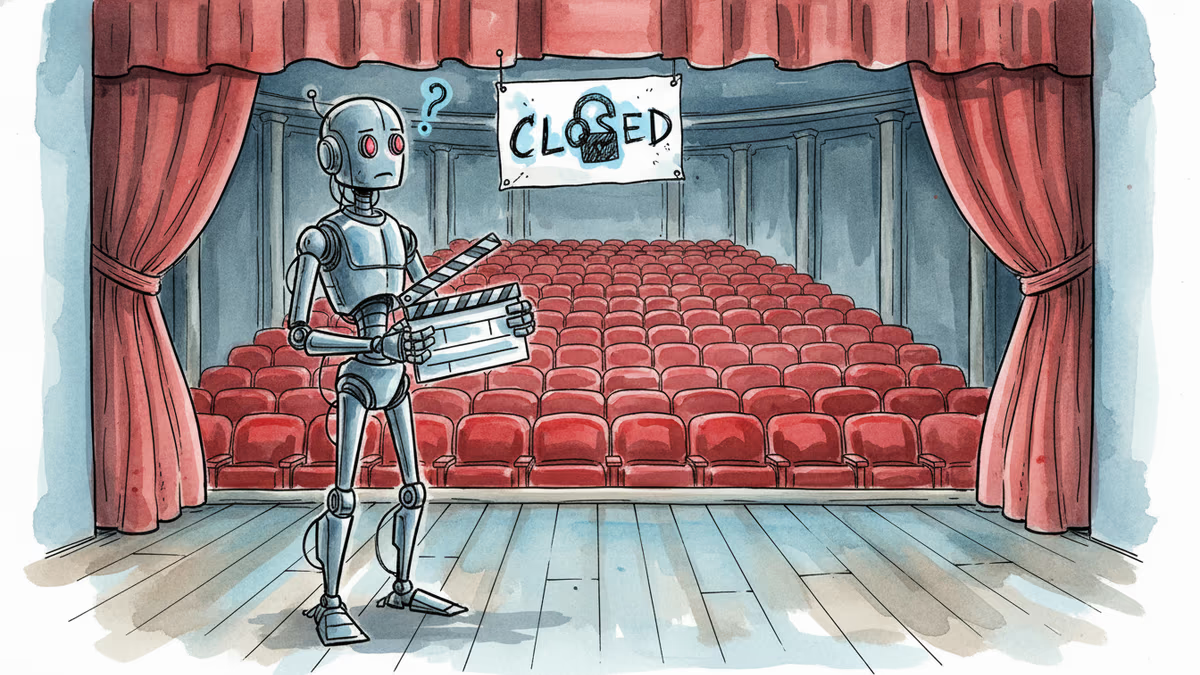
Sora Is Dead. What Did OpenAI Actually Learn?
OpenAI shut down its Sora app just six months after launch. The move signals a strategic pivot toward enterprise — but also raises harder questions about AI video's real-world limits.
Six months. That's how long it took for OpenAI's most cinematic bet to go dark.
Sora, the AI video generator that arrived with Disney partnerships and Hollywood-disruption headlines, has been quietly wound down. The app is gone. The broader video model effort is being shelved. And the company that once implied it could replicate the ChatGPT lightning strike in a new bottle is pivoting hard toward enterprise software and developer tools ahead of a potential IPO.
A Social Network With No People
To understand why Sora failed as a product, it helps to understand what it was trying to be. OpenAI didn't just release a video generation tool — it tried to build a platform. A place where users would share AI-generated clips, browse, interact, create. A social layer on top of the technology.
TechCrunch editor Anthony Ha described it bluntly: "a social network without people — nothing but slop." That's a damning summary, but it captures something real. Social platforms derive their value from human presence, human creativity, human connection. Replacing that substrate with AI-generated content doesn't create a platform. It creates a feed.
The strategic rationale for shutting it down is cleaner: according to The Wall Street Journal, OpenAI is concentrating resources on business products, enterprise tools, and programming infrastructure ahead of what could be a public offering. The timing also coincides with Fidji Simo taking over day-to-day operations — a leadership shift that appears to be reshaping which products survive and which don't.
The Reality Check Nobody Wanted to Say Out Loud

Almost simultaneously, a second signal emerged. ByteDance's Seedance 2.0 — a competing AI video model — has reportedly delayed its global rollout over engineering and legal concerns, specifically around IP protection mechanisms that, apparently, weren't prioritized early enough.
Two companies. Two stumbles. One pattern.
AI video has been running on a narrative of inevitability: the technology improves fast, costs drop, Hollywood better watch its back. But the Sora shutdown and the Seedance delay expose the two walls that narrative keeps running into — consumer indifference and legal exposure. The tools exist. The demand, at scale, doesn't yet. And the legal infrastructure to deploy them commercially is still being built in real time.
The technical gaps are real too. Maintaining consistent characters across scenes, rendering physically plausible motion, sustaining narrative coherence over minutes rather than seconds — these remain genuinely hard problems. The 6-month lifespan of Sora as a consumer product suggests the gap between demo reel and daily use is wider than the launch hype implied.
Three Ways to Read This
For investors, the Sora shutdown is arguably good news. A company that can kill a high-profile, expensive product — including walking away from a reported $1 billion Disney partnership — before an IPO is demonstrating financial discipline. Kirsten Korosec of TechCrunch called it "a sign of maturity that was nice to see in an AI lab." Markets tend to reward that kind of signal.
For Hollywood and creative industries, it's a moment to recalibrate. The loudest voices in the room were saying AI video would replace human storytelling within years. The quieter reality is that the tools are useful for specific, bounded tasks — not for replacing the full creative stack. The threat is real but slower and more specific than the headlines suggested.
For rival AI labs — Google, Meta, Runway, Kling — this is both an opening and a warning. The consumer AI video market is still genuinely up for grabs. But whoever gets there first needs to solve not just the technical problem, but the "why would someone use this every day" problem. That's a harder question.
Authors
Related Articles
American Airlines just signed Starlink for 500+ aircraft. It's not just about faster inflight internet — it's a calculated move in the run-up to what could be the largest IPO in history.
SpaceX's upgraded Starship V3 completed its first test flight, deploying 20 Starlink simulators but losing the Super Heavy booster. With an IPO weeks away, the stakes just got higher.
SpaceX's IPO filing puts AI at the center, claiming a $26.5 trillion market opportunity. But can Grok compete with OpenAI and Anthropic for enterprise customers?
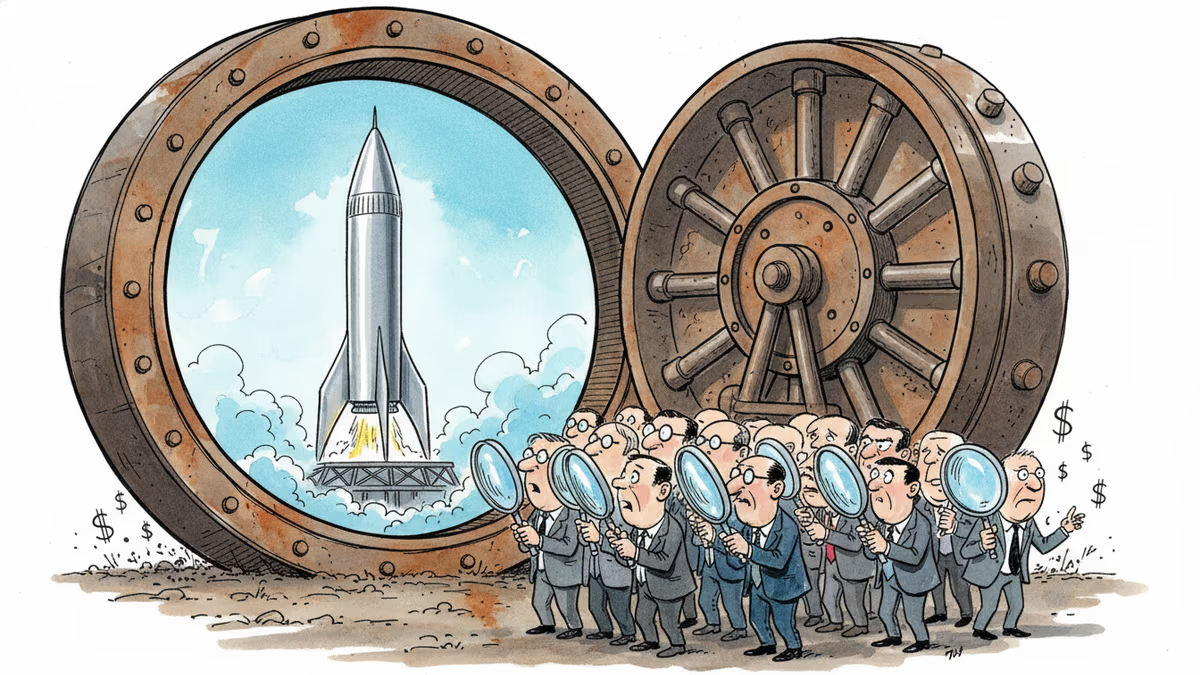
SpaceX filed a nearly 400-page S-1 with the SEC, targeting an IPO as early as June 12. Here's what the filing reveals—and what it doesn't.
American Airlines just signed Starlink for 500+ aircraft. It's not just about faster inflight internet — it's a calculated move in the run-up to what could be the largest IPO in history.
SpaceX's upgraded Starship V3 completed its first test flight, deploying 20 Starlink simulators but losing the Super Heavy booster. With an IPO weeks away, the stakes just got higher.
SpaceX's IPO filing puts AI at the center, claiming a $26.5 trillion market opportunity. But can Grok compete with OpenAI and Anthropic for enterprise customers?
SpaceX filed a nearly 400-page S-1 with the SEC, targeting an IPO as early as June 12. Here's what the filing reveals—and what it doesn't.
Thoughts
Share your thoughts on this article
Sign in to join the conversation