

Nine Days to Fix Deepfakes, No Pressure
India gives social platforms 9 days to remove illegal AI content and label all synthetic media. Can tech companies meet impossible deadlines in their biggest growth market?
1 Billion Users Are Waiting
India just gave social media platforms an ultimatum with a 9-day deadline. Remove illegal AI-generated content immediately and clearly label all synthetic media. The rules take effect February 20th, and this isn't just another regional regulation. With 1 billion internet users who skew young, India represents the most critical growth market for social platforms.
Tech companies have spent years saying they wanted to solve this problem voluntarily. Now they have no choice.
The Technology Reality Check
Current deepfake detection accuracy hovers around 85-90%. Not perfect. The bigger problem? Speed. India's young users upload billions of pieces of content daily. Reviewing and judging all of this within 9 days is nearly impossible with current technology.
Meta and YouTube already run AI-powered detection systems, but false positive rates hit 15-20%. That means they regularly mistake real content for fake, and vice versa. The margin for error is shrinking fast.
Platform Dilemma: "We Can" vs "We Must"

The tech industry's response has been carefully diplomatic. Publicly, companies pledge compliance. Privately, executives worry about technical limitations and costs. One social media executive, speaking anonymously, admitted: "Perfect deepfake detection simply doesn't exist yet."
India's government isn't budging. "Technical difficulties aren't excuses. User protection comes first," officials maintain. With elections approaching, the pressure to prevent misinformation and deepfake-driven chaos has intensified.
The Global Ripple Effect
India's regulations could reshape global content moderation standards. If platforms develop robust detection systems for India's market, those same tools will likely roll out worldwide. This creates opportunities for AI detection startups and pressure on competitors to match the new baseline.
For users globally, this means either stricter content filtering or more sophisticated labeling systems. The question is whether platforms will err on the side of over-blocking or under-detecting.
Investment and Innovation Surge
The regulatory pressure is already driving investment into deepfake detection technology. Startups focused on synthetic media identification are seeing increased funding rounds. Established players like Microsoft and Google are accelerating research into multimodal detection systems.
But the timeline remains brutal. Nine days to implement what the industry has been struggling with for years.
Authors
Related Articles

The journey from promoting healthy living to spreading medical misinformation reveals a troubling pattern in how selective science and algorithmic amplification create dangerous echo chambers.

Karnataka state, home to Bengaluru's tech hub, joins a global wave of social media restrictions for minors. But can these bans actually work?
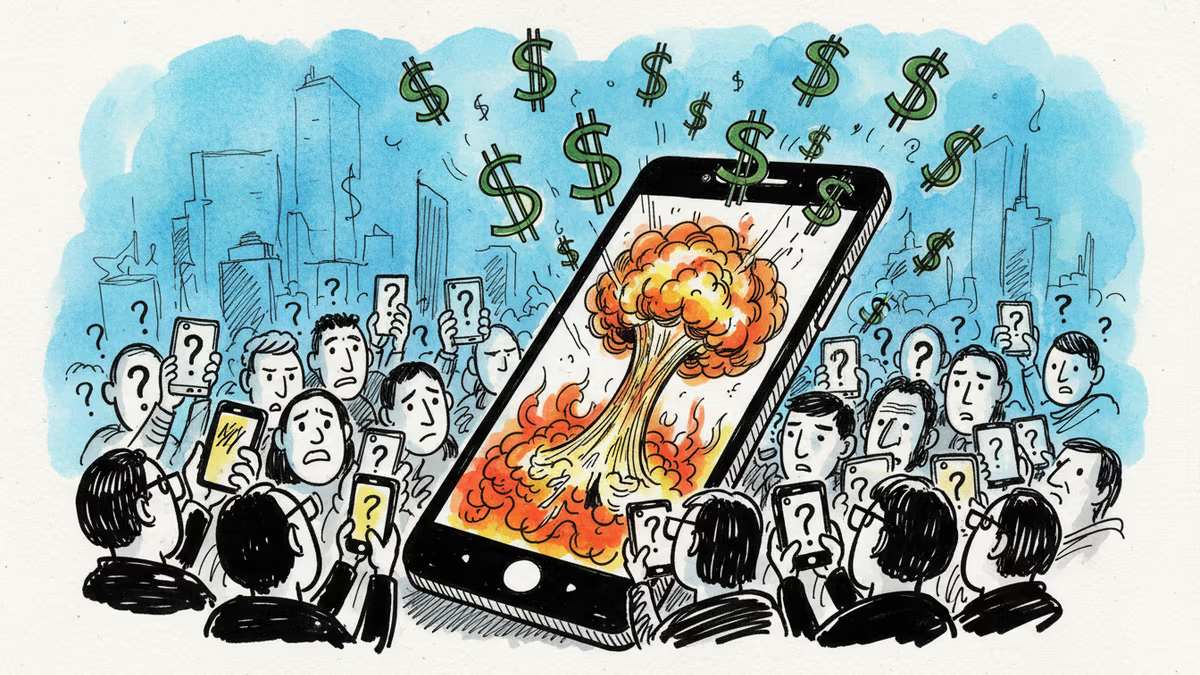
Disinformation flooded X immediately after Israel-Iran attacks, with false content earning millions of views and potential revenue for premium users spreading misleading information.
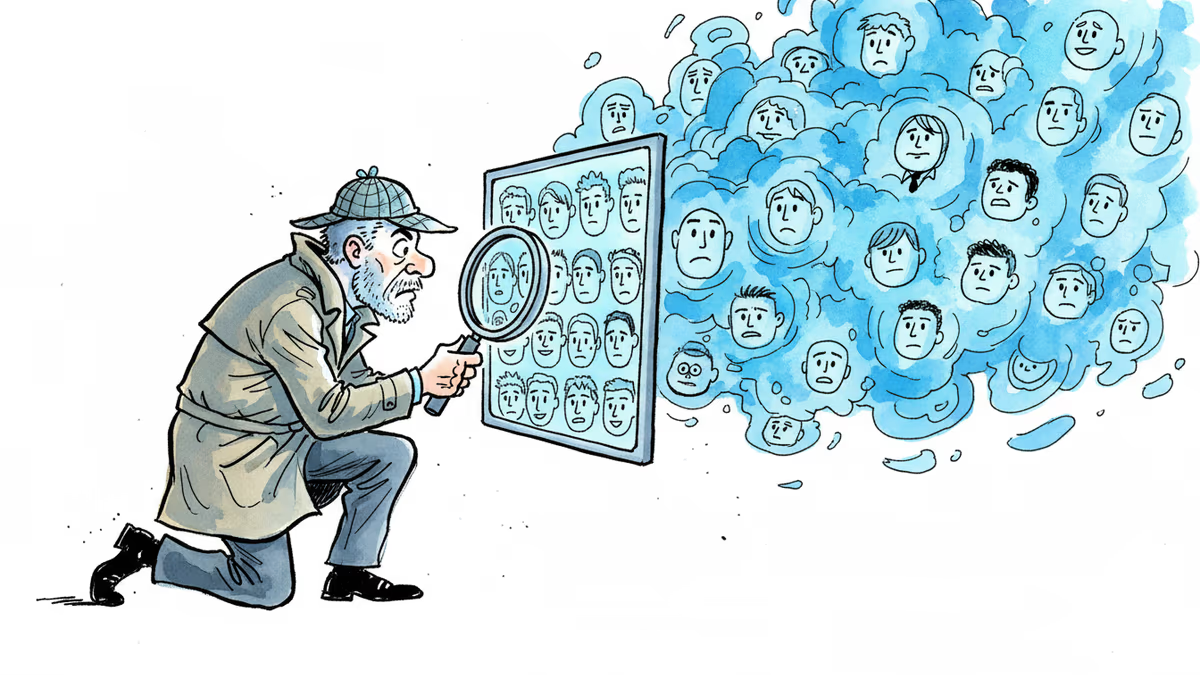
Despite AI companies' promises, progress on reliable deepfake labeling remains sluggish. We examine the real barriers to authentic content verification.
The journey from promoting healthy living to spreading medical misinformation reveals a troubling pattern in how selective science and algorithmic amplification create dangerous echo chambers.
Karnataka state, home to Bengaluru's tech hub, joins a global wave of social media restrictions for minors. But can these bans actually work?
Disinformation flooded X immediately after Israel-Iran attacks, with false content earning millions of views and potential revenue for premium users spreading misleading information.
Despite AI companies' promises, progress on reliable deepfake labeling remains sluggish. We examine the real barriers to authentic content verification.
Thoughts
Share your thoughts on this article
Sign in to join the conversation