
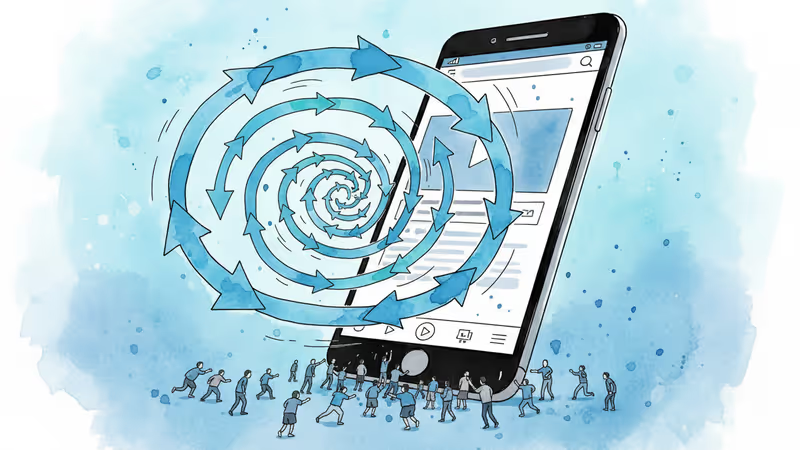
TikTok's 'Addictive Design' Under EU's Regulatory Microscope
EU targets TikTok's infinite scroll and personalized algorithms as 'addictive design' under Digital Services Act. Major fines and service overhaul possible if violations confirmed.
The features that keep you scrolling for hours might soon become illegal in Europe.
The European Commission has declared TikTok's core functionalities—infinite scroll, autoplay, push notifications, and its highly personalized recommendation system—as potentially "addictive design" that violates the Digital Services Act (DSA). If the preliminary findings are confirmed, TikTok faces not just hefty fines but a fundamental overhaul of how its platform operates.
When User Engagement Becomes a Legal Liability
What's striking about this investigation isn't just its target, but its timing. These "addictive" features aren't bugs—they're the carefully engineered foundation of modern social media success. Every major platform uses similar mechanics to maximize user engagement and, consequently, advertising revenue.
The EU's stance represents a seismic shift in how we think about platform design. Features that Silicon Valley has long celebrated as "user engagement optimization" are now being reframed as potentially harmful manipulation, especially when it comes to protecting minors' physical and mental wellbeing.
This isn't just about TikTok. It's about establishing a new regulatory framework that could reshape how every social media platform operates. The question isn't whether other platforms use similar features—they do. It's whether they're prepared for similar scrutiny.
The Ripple Effect Across the Industry
If TikTok is forced to "change the basic design of its service," what would that actually look like? We might see the emergence of "regulation-compliant" social media—platforms with built-in time limits, less aggressive push notifications, or algorithms that prioritize user wellbeing over engagement metrics.

Meta, YouTube, and Twitter/X are undoubtedly watching this case closely. Their business models rely on the same engagement-maximizing features now under EU scrutiny. A precedent set with TikTok could easily extend to other platforms, potentially forcing the entire industry to rethink its fundamental approach to user retention.
The economic implications are staggering. Social media platforms generated over $200 billion in advertising revenue globally last year, much of it driven by the precise targeting and extended user sessions that "addictive design" enables.
A Fragmented Digital Future?
We're witnessing the emergence of a fragmented global internet. While the EU pursues "addictive design" regulations, the US focuses on data privacy and content moderation, and countries like Australia ban social media for users under 16 entirely.
This regulatory divergence creates a complex challenge for global platforms. They may need to operate different versions of their services across different jurisdictions—a "Brussels Effect" for social media design. But unlike privacy settings that can be adjusted behind the scenes, fundamental design changes affect the core user experience.
The irony is palpable: platforms that succeeded by creating seamless, global experiences now face the prospect of becoming increasingly localized and fragmented. This could weaken their primary competitive advantage—the network effects that come from connecting users worldwide.
The Innovation Dilemma
Beyond immediate compliance costs, there's a deeper question about innovation. Many of the features now labeled "addictive" were genuine innovations that improved user experience. Personalized recommendations help users discover relevant content. Push notifications keep people connected to their communities.
The challenge lies in distinguishing between features that enhance user value and those that exploit psychological vulnerabilities. It's a line that's often blurry, subjective, and varies significantly across different user demographics and cultural contexts.
Authors
Related Articles
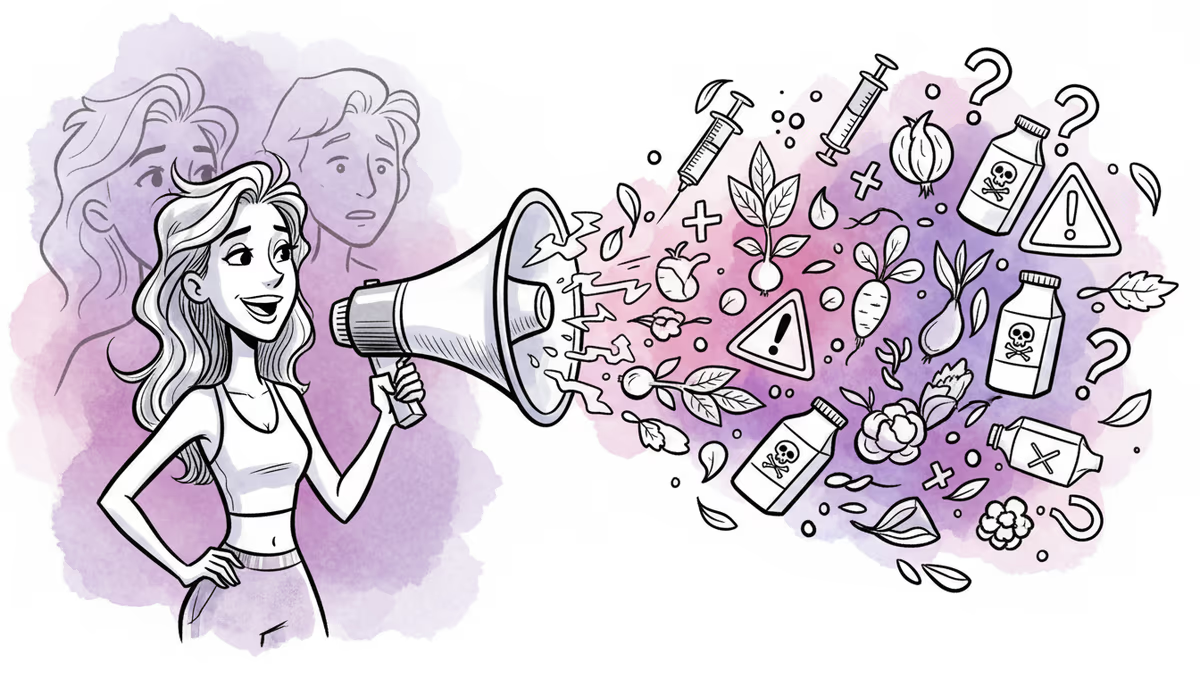
The journey from promoting healthy living to spreading medical misinformation reveals a troubling pattern in how selective science and algorithmic amplification create dangerous echo chambers.
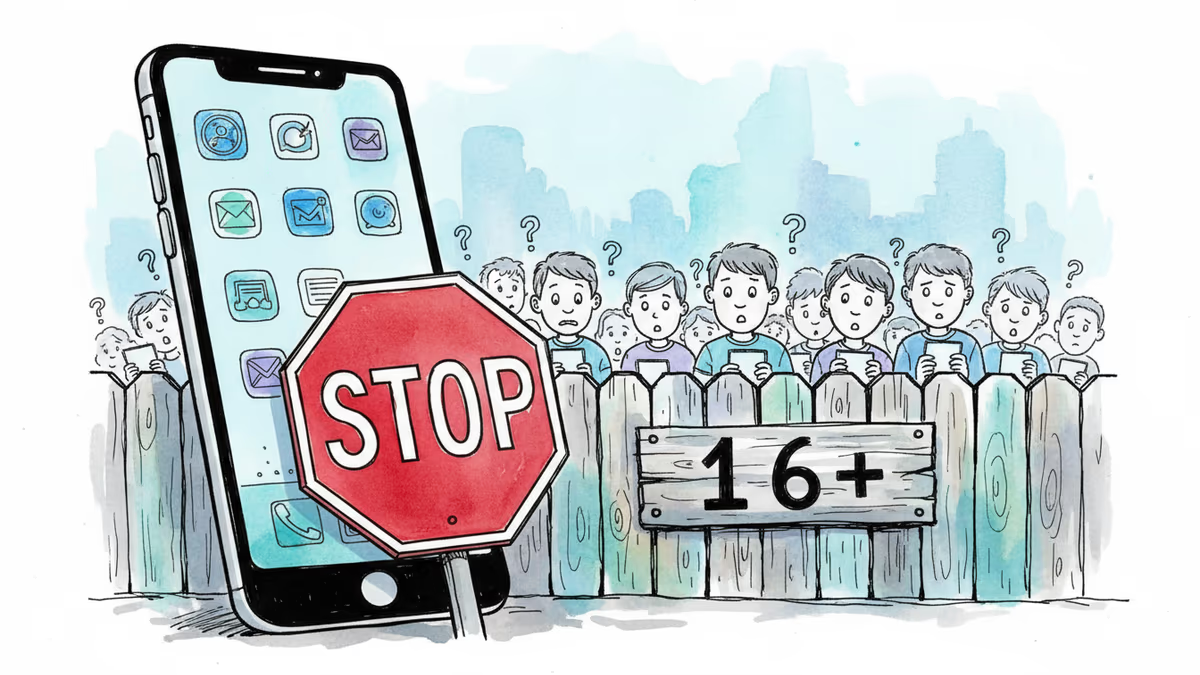
Karnataka state, home to Bengaluru's tech hub, joins a global wave of social media restrictions for minors. But can these bans actually work?
TikTok refuses end-to-end encryption for DMs, citing user safety. But this decision reveals a complex calculation about regulation, competition, and control.
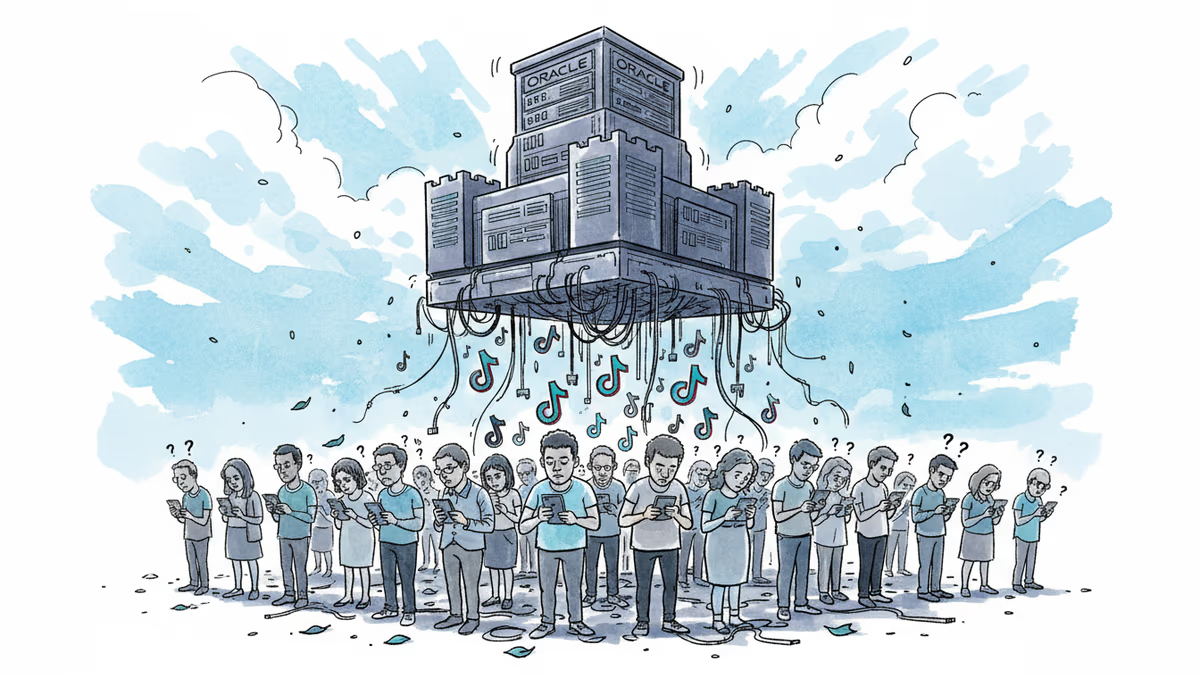
Second major TikTok outage in two months due to Oracle data center issues raises questions about cloud dependency and digital sovereignty in the post-divestiture era.
The journey from promoting healthy living to spreading medical misinformation reveals a troubling pattern in how selective science and algorithmic amplification create dangerous echo chambers.
Karnataka state, home to Bengaluru's tech hub, joins a global wave of social media restrictions for minors. But can these bans actually work?
TikTok refuses end-to-end encryption for DMs, citing user safety. But this decision reveals a complex calculation about regulation, competition, and control.
Second major TikTok outage in two months due to Oracle data center issues raises questions about cloud dependency and digital sovereignty in the post-divestiture era.
Thoughts
Share your thoughts on this article
Sign in to join the conversation