
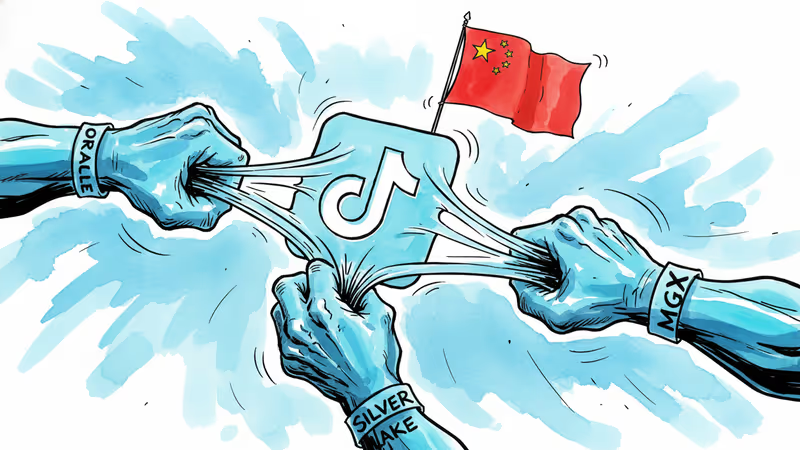
TikTok's $100B Breakup: Who Really Controls America's Favorite App Now?
ByteDance sells 80% of TikTok US to Oracle, Silver Lake, and MGX in a complex deal that raises questions about true independence from Chinese influence. Here's what the new ownership structure really means.
170 million Americans use TikTok daily, but as of this week, they're using an app that's no longer Chinese-owned. Sort of.
ByteDance has officially restructured TikTok's US operations, selling 80% of the American business to a consortium of investors while retaining just 19.9%. The newly formed "TikTok USDS Joint Venture LLC" now independently manages content moderation, data protection, and algorithm security for American users.
This isn't just a business transaction—it's the culmination of a three-year regulatory standoff that could reshape how foreign tech companies operate in America.
The Pressure Campaign That Changed Everything
The writing was on the wall since 2021, when lawmakers began raising alarm bells about potential Chinese government access to American user data. By 2024, Congress had enough, passing legislation that essentially forced ByteDance's hand: sell or be banned.
The new ownership structure reads like a who's who of American power players. Oracle, Silver Lake, and MGX each hold 15% stakes, giving them collective 45% control. The remaining 35% is distributed among smaller investors including Dell Family Office, Revolution, and firms tied to billionaires like Jeff Yass and Yuri Milner.
Meet TikTok's New Power Brokers
Oracle emerges as the most significant player, serving as both investor and security partner. The cloud computing giant already manages TikTok's US user data and will now audit the platform's compliance with American security requirements. Notably, Oracle co-founder Larry Ellison maintains close ties to President Trump—a relationship that could prove crucial as the new administration takes shape.

MGX, the UAE-based AI investment firm, brings Middle Eastern sovereign wealth to the table. Created by Mubadala (Abu Dhabi's sovereign fund) and AI company G42, MGX already backs OpenAI, Anthropic, and Elon Musk's xAI. Their involvement in Trump's $100 billion AI infrastructure initiative alongside Oracle suggests deeper strategic coordination.
Silver Lake, America's premier tech-focused private equity firm, rounds out the trio with its track record of investments in Airbnb, Tesla, and Twitter. Their role appears primarily financial and strategic, providing capital and expertise to guide TikTok's evolution.
Independence or Illusion?
While ByteDance's stake drops to under 20%, the Chinese company retains a crucial lifeline: it still licenses TikTok's recommendation algorithm to the US entity. This means the secret sauce that keeps users scrolling for hours remains, technically, Chinese intellectual property.
The arrangement raises fascinating questions about what constitutes true independence in the digital age. Can an app be considered American-controlled when its core technology still flows from Beijing? The answer may depend less on legal structures and more on practical operational control.
For American users, the immediate impact should be minimal—the same addictive short videos will continue populating their feeds. But behind the scenes, a new governance structure will oversee content policies, data handling, and algorithmic changes that could subtly reshape the platform's direction.
The Broader Battle for Digital Sovereignty
TikTok's restructuring represents more than one company's regulatory compliance—it's a preview of how nations will assert control over digital platforms in an increasingly fragmented internet. Other countries are watching closely, potentially preparing similar demands for platforms operating within their borders.
The investor lineup itself tells a geopolitical story. American tech giants, Middle Eastern sovereign wealth, and Trump-connected billionaires now jointly control a platform that shapes cultural conversations for millions of young Americans. This coalition reflects the complex reality of modern tech governance, where traditional notions of national control intersect with global capital flows.
Authors
Related Articles
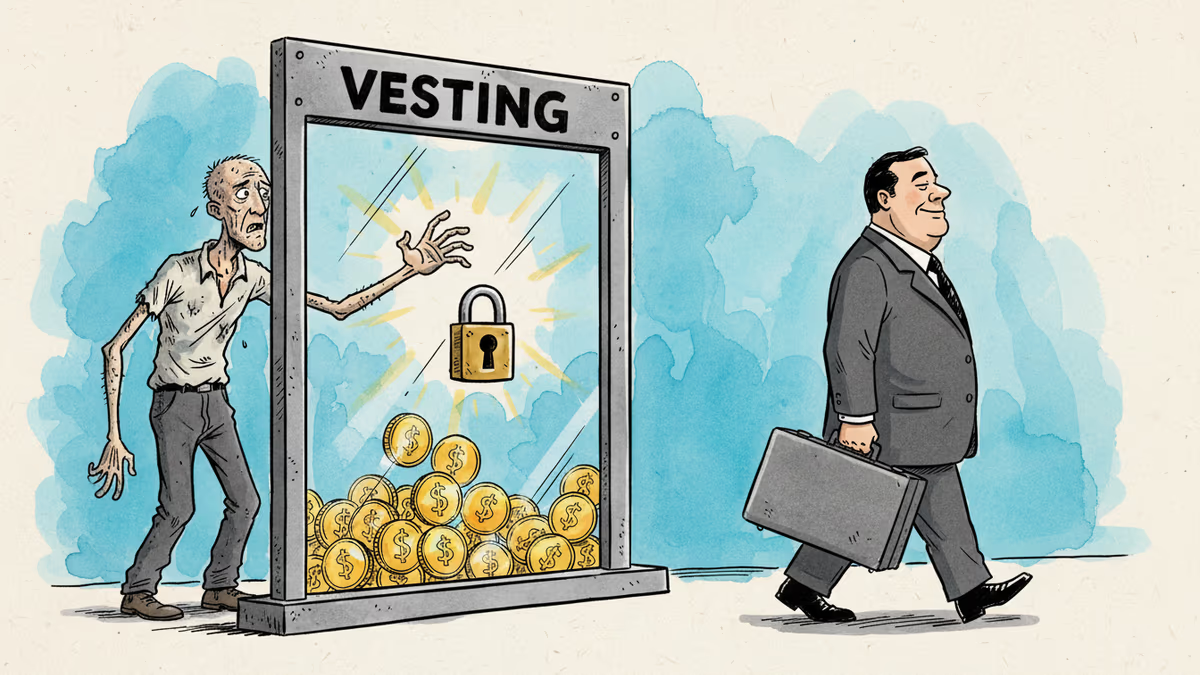
Oracle laid off up to 30,000 workers via email, denied RSU acceleration, and refused to negotiate. What this tells us about tech compensation's hidden power imbalance.
ByteDance's Dreamina Seedance 2.0 is now live in CapCut for seven markets. The US is missing. Here's what that tells us about AI video's biggest unsolved problem — and what it means for creators.
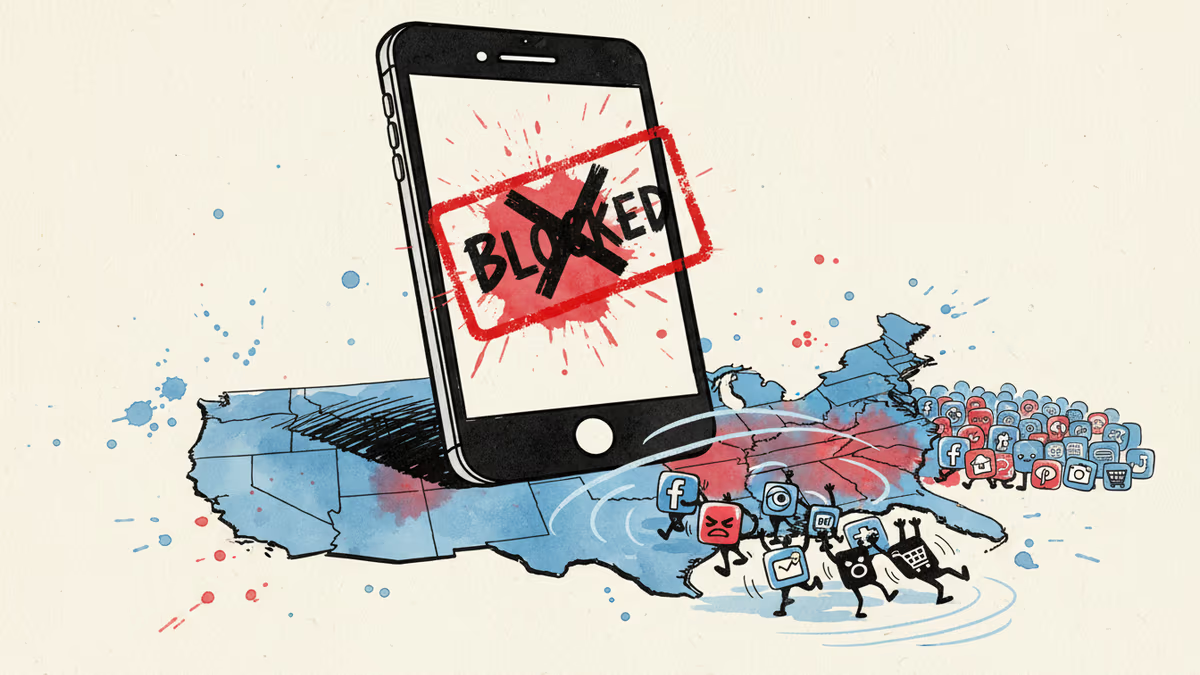
Apple quietly blocks all ByteDance apps for US-based iPhones, even with Chinese App Store accounts. This goes beyond TikTok—it's about platform power in geopolitical conflicts.
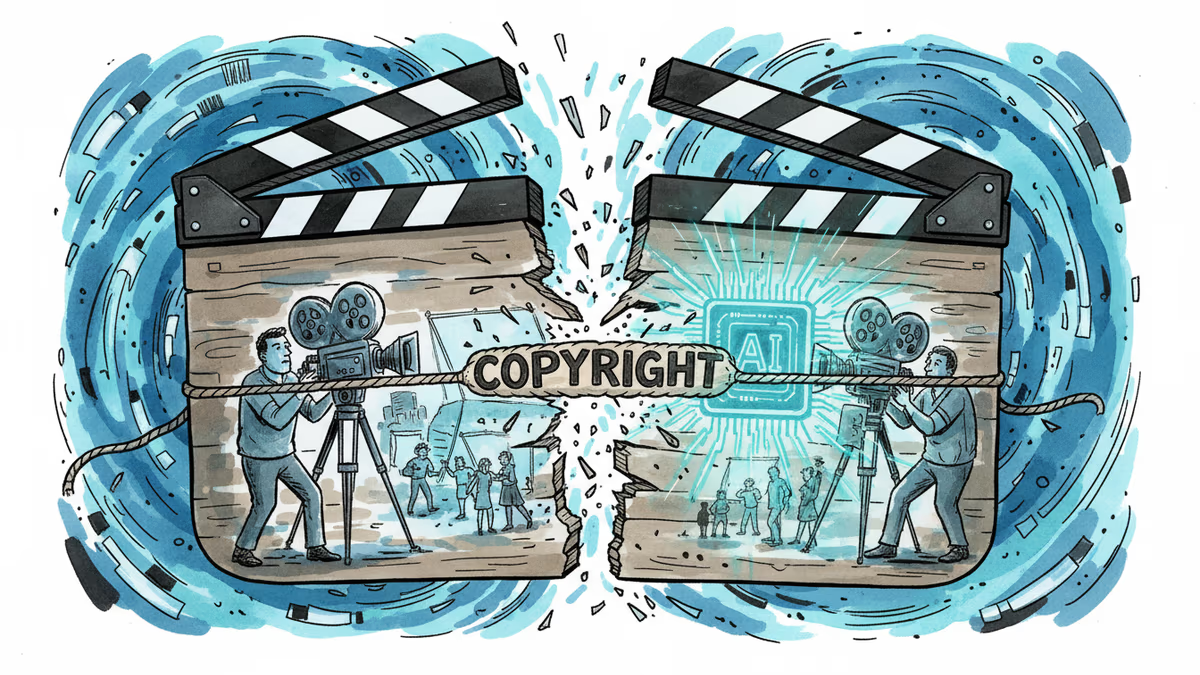
ByteDance's Seedance 2.0 is shocking China's creative industry, but Hollywood studios are fighting back with cease-and-desist letters. What's driving this cultural divide?
Oracle laid off up to 30,000 workers via email, denied RSU acceleration, and refused to negotiate. What this tells us about tech compensation's hidden power imbalance.
ByteDance's Dreamina Seedance 2.0 is now live in CapCut for seven markets. The US is missing. Here's what that tells us about AI video's biggest unsolved problem — and what it means for creators.
Apple quietly blocks all ByteDance apps for US-based iPhones, even with Chinese App Store accounts. This goes beyond TikTok—it's about platform power in geopolitical conflicts.
ByteDance's Seedance 2.0 is shocking China's creative industry, but Hollywood studios are fighting back with cease-and-desist letters. What's driving this cultural divide?
Thoughts
Share your thoughts on this article
Sign in to join the conversation