
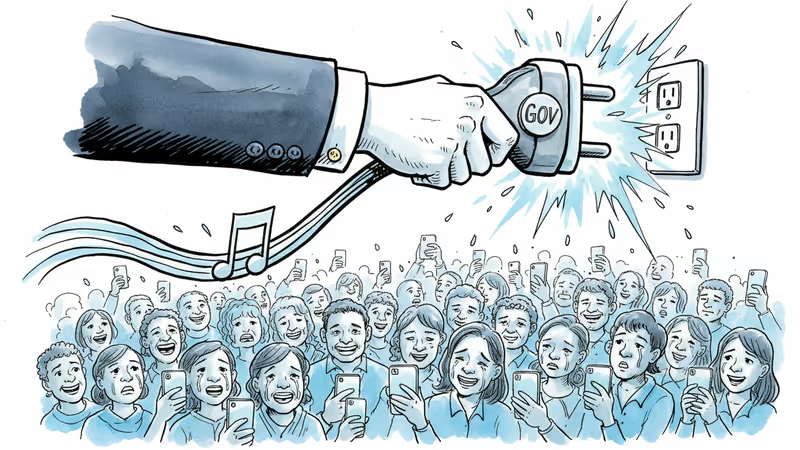
TikTok's Infrastructure Resurrection Raises New Questions
After three days of instability, TikTok's US operations are stabilizing under new management. But who's really in control, and what does this mean for data sovereignty?
Three days into what social media users dubbed the "TikTokalpyse," the platform appears to be clawing its way back from the digital brink. After widespread outages that began early Sunday morning left millions of American users unable to post or view content consistently, TikTok has finally achieved what its new operators call "significant progress" in restoring US infrastructure.
The recovery marks a critical milestone for the embattled platform, which has been operating under the oversight of TikTok USDS – the newly formed entity appointed by the Trump administration to manage the brand's American operations. By Tuesday morning, users could once again publish videos and watch content from creators worldwide, suggesting the platform's technical backbone is stabilizing after days of uncertainty.
The Infrastructure Mystery
What makes this recovery particularly intriguing isn't just the timeline, but the opacity surrounding it. TikTok USDS has been notably vague about the specifics of their "US data center" operations, declining to name the facilities or provide detailed technical explanations for the outages.
This silence raises fundamental questions about digital infrastructure ownership in an era of increasing tech nationalism. When a platform serving over 170 million Americans experiences widespread technical difficulties, the public typically expects transparency about what went wrong and how it's being fixed. Instead, we're getting corporate-speak about "progress" and "recovery" without the technical details that would normally accompany such announcements.
The timing is also suspect. These infrastructure problems emerged just as the platform was transitioning to new management structures designed to address national security concerns. Coincidence? Perhaps. But in the world of tech geopolitics, timing is rarely accidental.
Beyond Technical Glitches

The three-day outage period offers a fascinating glimpse into our digital dependencies. Social media managers scrambled to pivot content strategies. Influencers lost potential revenue during peak engagement hours. Small businesses that relied on TikTok's algorithm for customer discovery found themselves suddenly invisible to their audiences.
But perhaps more significantly, the outage highlighted how little control users – and even advertisers – actually have over platforms they've come to depend on. When TikTok's infrastructure falters, there's no customer service number to call, no service level agreement to invoke. Users simply wait and hope.
This powerlessness extends beyond individual creators to entire industries. Marketing agencies that built their strategies around TikTok's unique algorithm suddenly found themselves explaining to clients why campaigns weren't delivering. The ripple effects of platform instability extend far beyond the app itself.
The Sovereignty Question
The emergence of TikTok USDS as the platform's American operator introduces a new model for tech governance – one that sits uncomfortably between private enterprise and government oversight. While the entity claims to be restoring service, it's unclear who ultimately controls the data flows, content moderation decisions, and algorithmic recommendations that shape what millions of Americans see daily.
This hybrid model could become a template for other foreign-owned platforms facing regulatory pressure. But it also creates unprecedented questions about digital sovereignty. When a social media platform operates under government-appointed management, where does corporate independence end and state influence begin?
International observers are watching closely. If the US can effectively nationalize aspects of a foreign tech platform's operations, what prevents other countries from doing the same to American companies? Meta, Google, and Apple all have significant international operations that could face similar pressures.
Authors
Related Articles
The Trump administration has gutted the DOJ's Voting Section, pushing out two dozen experienced lawyers and replacing them with loyalists. With 2026 midterms approaching, what does this mean for American democracy?
Two days after launching the first crewed lunar mission in over 50 years, the Trump administration proposed cutting NASA's budget by 23%. What does this mean for the future of space exploration?
A humanoid robot walked the White House red carpet with Melania Trump. It's a preview of an ed-tech vision that could reshape — or fracture — how children learn.
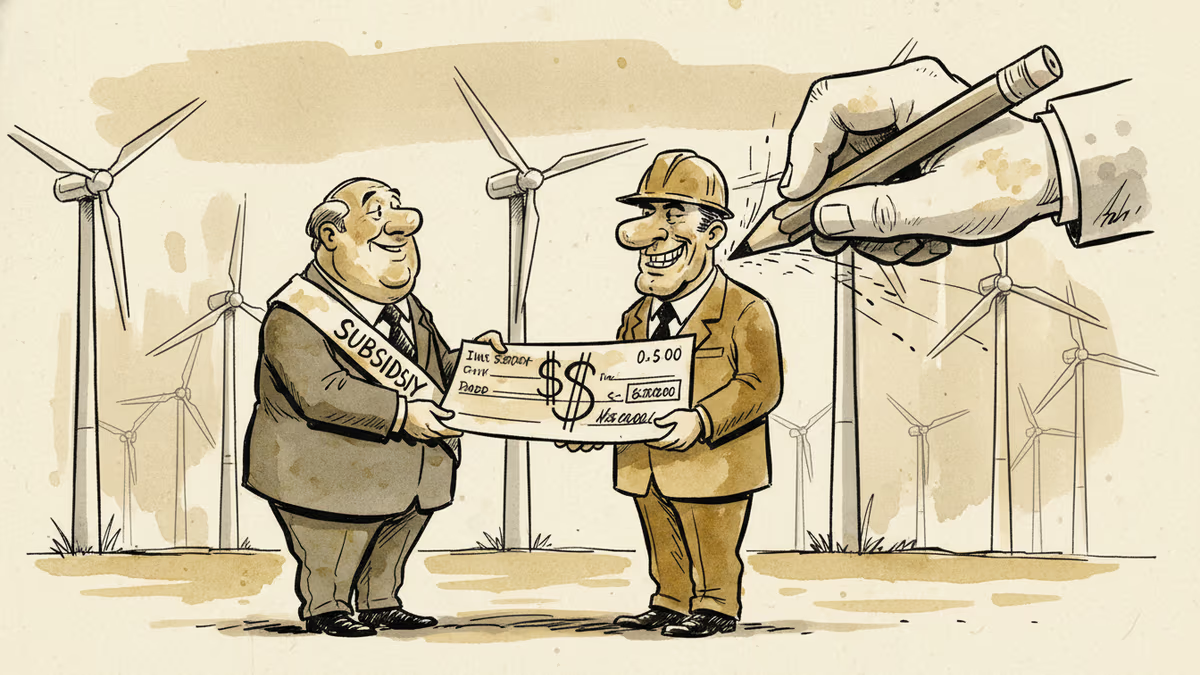
The Trump administration struck a deal to buy back offshore wind leases from TotalEnergies for $1 billion, redirecting that money into fossil fuel projects. What this means for energy markets, grid reliability, and the future of U.S. climate policy.
The Trump administration has gutted the DOJ's Voting Section, pushing out two dozen experienced lawyers and replacing them with loyalists. With 2026 midterms approaching, what does this mean for American democracy?
Two days after launching the first crewed lunar mission in over 50 years, the Trump administration proposed cutting NASA's budget by 23%. What does this mean for the future of space exploration?
A humanoid robot walked the White House red carpet with Melania Trump. It's a preview of an ed-tech vision that could reshape — or fracture — how children learn.
The Trump administration struck a deal to buy back offshore wind leases from TotalEnergies for $1 billion, redirecting that money into fossil fuel projects. What this means for energy markets, grid reliability, and the future of U.S. climate policy.
Thoughts
Share your thoughts on this article
Sign in to join the conversation