
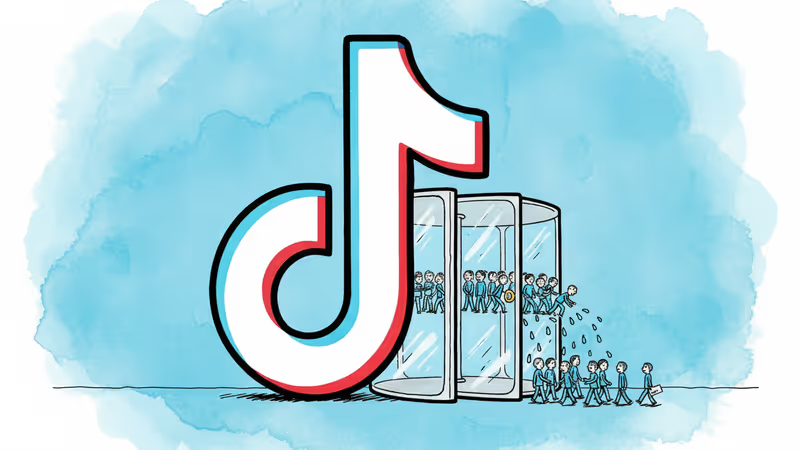
6 Million TikTok Users Left, Then Came Back in 48 Hours
TikTok lost 6 million daily users after ownership change but recovered within 48 hours. Here's why competing apps couldn't keep the momentum.
6 millionTikTok users walked away, then walked right back within 48 hours. In an age where app loyalty seems fleeting, what made them return so quickly?
The Numbers Tell a Story
TikTok's daily active users in the U.S. dropped from a typical 92 million to somewhere between 86-88 million immediately after American investors took control. That's roughly 6.5% of its user base—a significant dip for any platform.
UpScrolled and Skylight Social, two competing video apps, seized the moment. UpScrolled peaked at 138,500 daily active users on January 28th, while Skylight Social hit 81,200. But here's the kicker: both have since dropped to 68,000 and 56,300 respectively. The exodus was real, but so was the return.
Fear Drove the Flight
Contrary to popular belief, users didn't flee because of the ownership change itself. They left because of what came with it—specifically, privacy policy updates that spooked them.
TikTok's new privacy policy included permission to track users' precise GPS location, likely for a "Nearby" feed feature showing local creators. But the timing made users suspicious. Even more alarming was language about collecting users' "immigration status"—though this turned out to be boilerplate legal language required by the California Consumer Privacy Act (CCPA).
The final straw? A multi-day data center outage caused by winter storms that broke search, likes, comments, and the algorithm itself. Users interpreted these glitches as censorship and headed for the exits.
Why Competitors Couldn't Capitalize
UpScrolled and Skylight Social had their moment in the sun, but they couldn't sustain it. The problem wasn't their technology—it was the network effect.

Switching social media platforms isn't like switching email providers. You're not just changing an app; you're abandoning your followers, your carefully curated algorithm, your content history, and your social connections. It's like moving to a new city where you know nobody.
Skylight Social did manage to gain 380,000 total sign-ups by late January, but sign-ups don't equal active users. The gap between trying something new and making it your primary platform remains vast.
The Platform Monopoly Reality
TikTok's quick recovery reveals something uncomfortable about modern social media: platform monopolies are incredibly resilient. Users may complain, they may even leave temporarily, but without a viable alternative that offers the same network effects, they return.
This isn't unique to TikTok. Facebook has weathered countless scandals while maintaining over 3 billion users. Twitter (now X) survived massive changes under Elon Musk's ownership. The pattern is clear: user dissatisfaction alone isn't enough to topple established platforms.
The Slow Decline Question
Similarweb's data reveals a more interesting trend: TikTok's usage has been gradually declining since its peak of 100 million daily active users in mid-2025. The current 90+ million represents a 10% drop over several months—much more significant than the temporary exodus.
This suggests the real threat to TikTok isn't dramatic user revolts but gradual attention drift. Younger users are notoriously fickle, and their interests shift in ways that can't be captured in 48-hour snapshots.
What This Means for Competition
The failed UpScrolled and Skylight Social surge offers lessons for anyone trying to challenge established platforms. Technology alone isn't enough—you need to solve the cold start problem. How do you get creators to post when there are no viewers? How do you get viewers when there's no content?
Successful platform challengers typically need either a fundamentally different value proposition (like how TikTok differentiated from Instagram with short-form video) or a significant catalyst that makes staying on the incumbent platform untenable.
The answer might not lie in building a better TikTok, but in creating something entirely different that users don't even know they want yet.
Authors
Related Articles
The journey from promoting healthy living to spreading medical misinformation reveals a troubling pattern in how selective science and algorithmic amplification create dangerous echo chambers.
Karnataka state, home to Bengaluru's tech hub, joins a global wave of social media restrictions for minors. But can these bans actually work?
TikTok refuses end-to-end encryption for DMs, citing user safety. But this decision reveals a complex calculation about regulation, competition, and control.
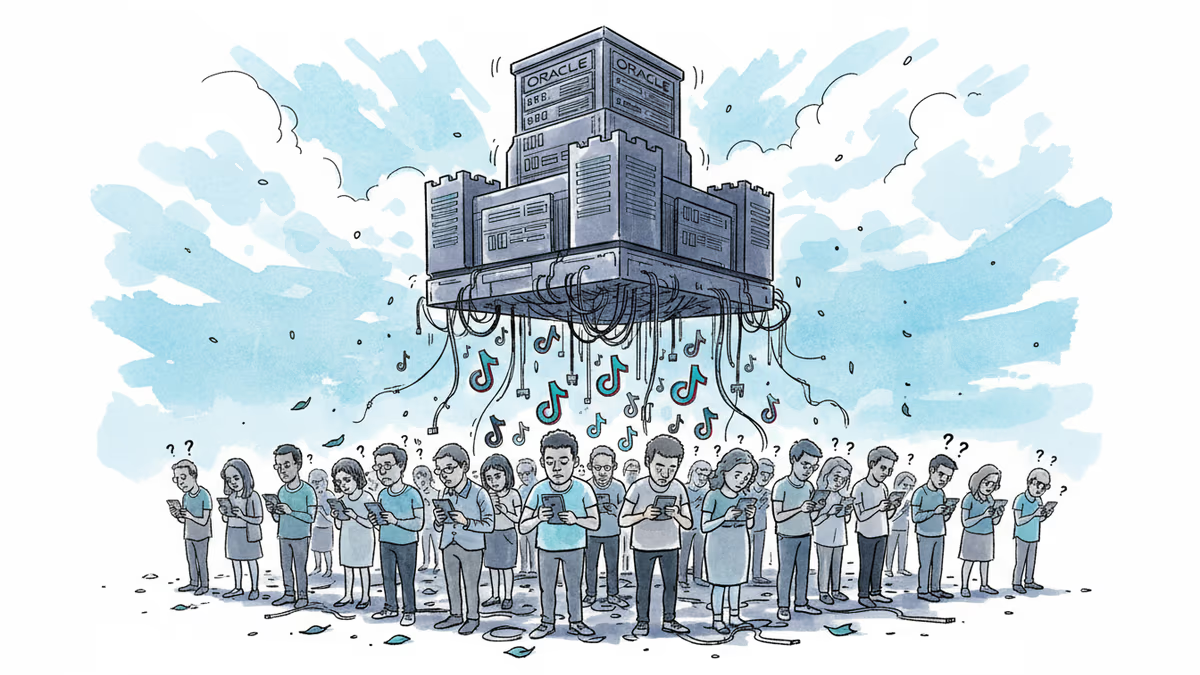
Second major TikTok outage in two months due to Oracle data center issues raises questions about cloud dependency and digital sovereignty in the post-divestiture era.
The journey from promoting healthy living to spreading medical misinformation reveals a troubling pattern in how selective science and algorithmic amplification create dangerous echo chambers.
Karnataka state, home to Bengaluru's tech hub, joins a global wave of social media restrictions for minors. But can these bans actually work?
TikTok refuses end-to-end encryption for DMs, citing user safety. But this decision reveals a complex calculation about regulation, competition, and control.
Second major TikTok outage in two months due to Oracle data center issues raises questions about cloud dependency and digital sovereignty in the post-divestiture era.
Thoughts
Share your thoughts on this article
Sign in to join the conversation