
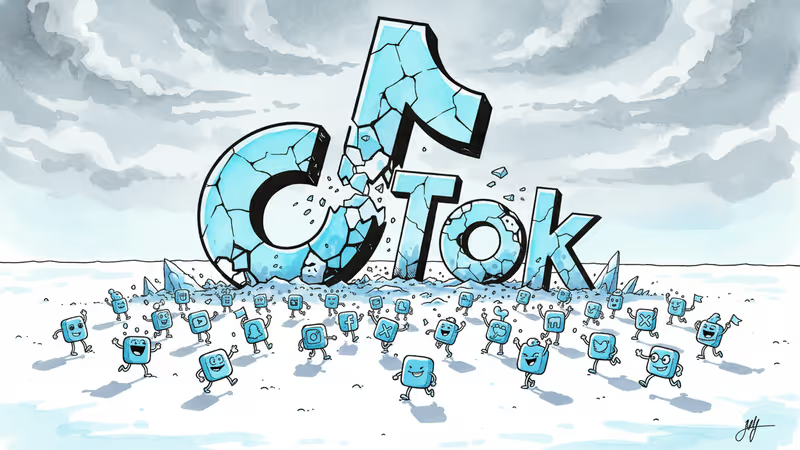
TikTok's Outage Became Rivals' Goldmine
TikTok's massive outage during ownership transition sparked user exodus to competitors like Skylight and Upscrolled, revealing how infrastructure vulnerabilities reshape social media dynamics.
220 million users. One snowstorm. And suddenly, TikTok's competitors had their biggest break in years.
Last week's massive TikTok outage wasn't just a technical hiccup—it was a masterclass in how infrastructure failures can instantly reshape the social media landscape. While TikTok announced Sunday that service has been restored, the ripple effects are still playing out across the industry.
When Perfect Timing Meets Imperfect Infrastructure
The timing couldn't have been worse for TikTok—or better for its rivals. Just as the platform completed its ownership transition in January, with TikTok USDS taking an 80% controlling stake and ByteDance retaining 20%, a winter storm knocked out an Oracle-operated data center that kept TikTok running in the U.S.
The cascade was swift and brutal. Tens of thousands of servers went dark, crippling everything from content posting to real-time view counts. Creators watched their posts register zero views. Users faced endless loading screens and timeout errors. For a platform built on instant gratification and viral moments, it was digital death by a thousand cuts.
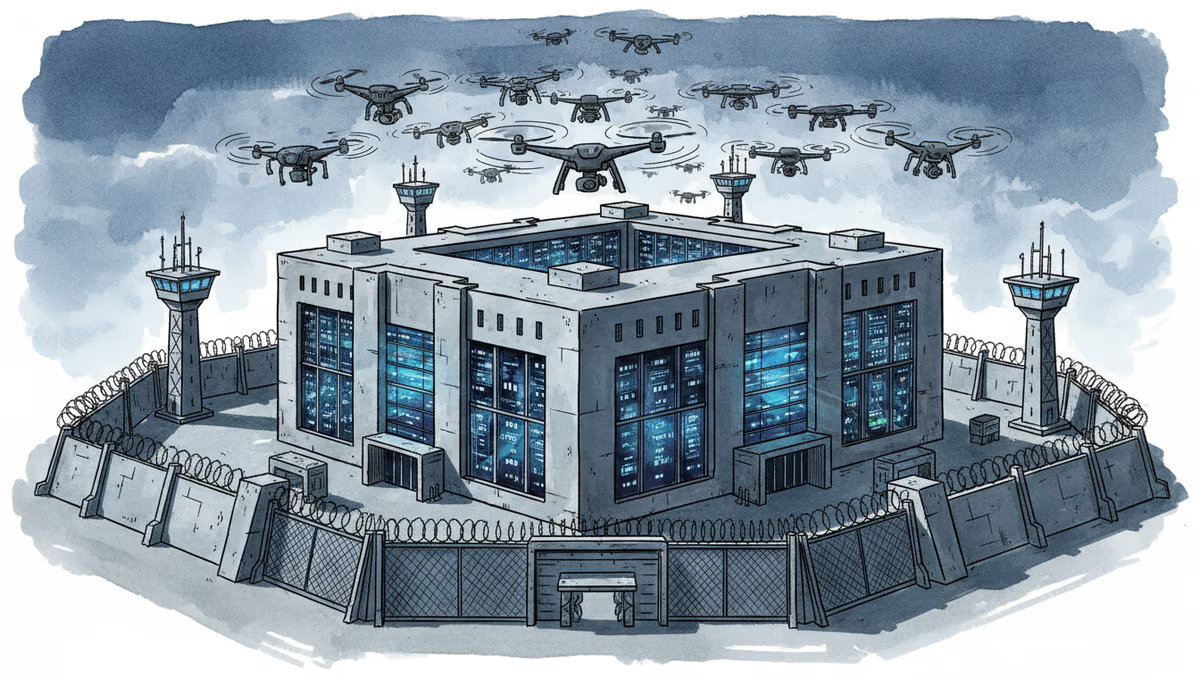
TikTok blamed the weather, but the underlying issue was architectural: over-reliance on a single data center operated by a third party. In the always-on world of social media, that's a fatal flaw competitors were quick to exploit.
The Great Migration
While TikTok users stared at error messages, rival apps watched their download numbers soar. Mark Cuban-backed Skylight, built on the decentralized AT Protocol, saw its user base rocket to over 380,000 during the week of TikTok's ownership deal finalization.

Upscrolled, created by Palestinian-Jordanian-Australian technologist Issam Hijazi, climbed to the second spot in the U.S. App Store's social media category. According to AppFigures, the app was downloaded 41,000 times within days of TikTok's troubles.
These weren't just opportunistic downloads—they represented a fundamental shift in user behavior. When your primary entertainment source goes dark, you don't just wait. You migrate.
The Infrastructure Reality Check
This outage exposed an uncomfortable truth about the social media industry: for all the talk about algorithms, content, and user engagement, success ultimately depends on keeping the lights on. TikTok's stumble revealed how vulnerable even the biggest platforms are to infrastructure failures.
The irony is stark. TikTok spent months navigating complex regulatory hurdles and ownership transitions, only to be brought down by a snowstorm hitting someone else's data center. Meanwhile, newer competitors are building from the ground up with distributed architectures designed to prevent exactly this kind of single-point-of-failure catastrophe.
Skylight's use of the AT Protocol isn't just a technical choice—it's a strategic one. Decentralized systems don't have single data centers that can be knocked offline by weather. They're built to survive exactly the kind of disruption that just handed them their biggest user acquisition win.
The Bigger Game
This incident raises uncomfortable questions for every major social platform. How many are one data center failure away from their own exodus? How many users does it take to lose before temporary becomes permanent?
For TikTok, the challenge isn't just fixing the technical issues—it's rebuilding user trust in an era where alternatives are just a download away. The platform that revolutionized short-form video now faces competitors who learned from its mistakes and built more resilient systems.
The real question isn't whether TikTok will recover—it's whether this outage just accelerated the fragmentation of social media into a more competitive, distributed landscape.
Authors
Related Articles
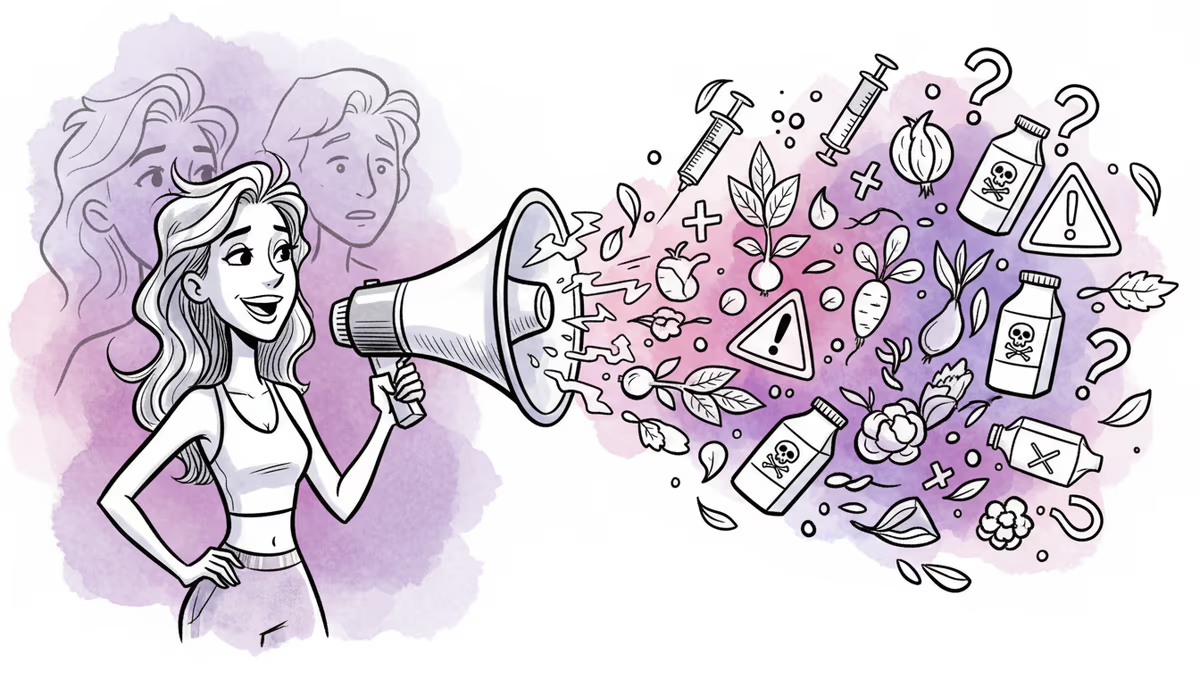
The journey from promoting healthy living to spreading medical misinformation reveals a troubling pattern in how selective science and algorithmic amplification create dangerous echo chambers.
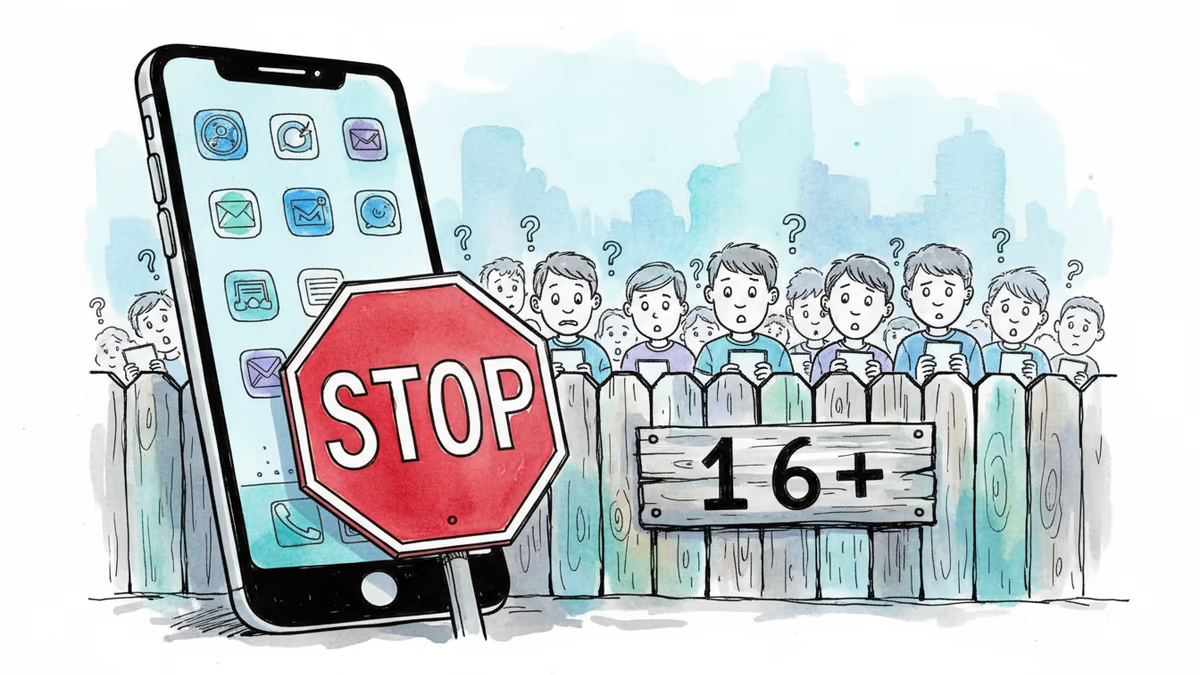
Karnataka state, home to Bengaluru's tech hub, joins a global wave of social media restrictions for minors. But can these bans actually work?
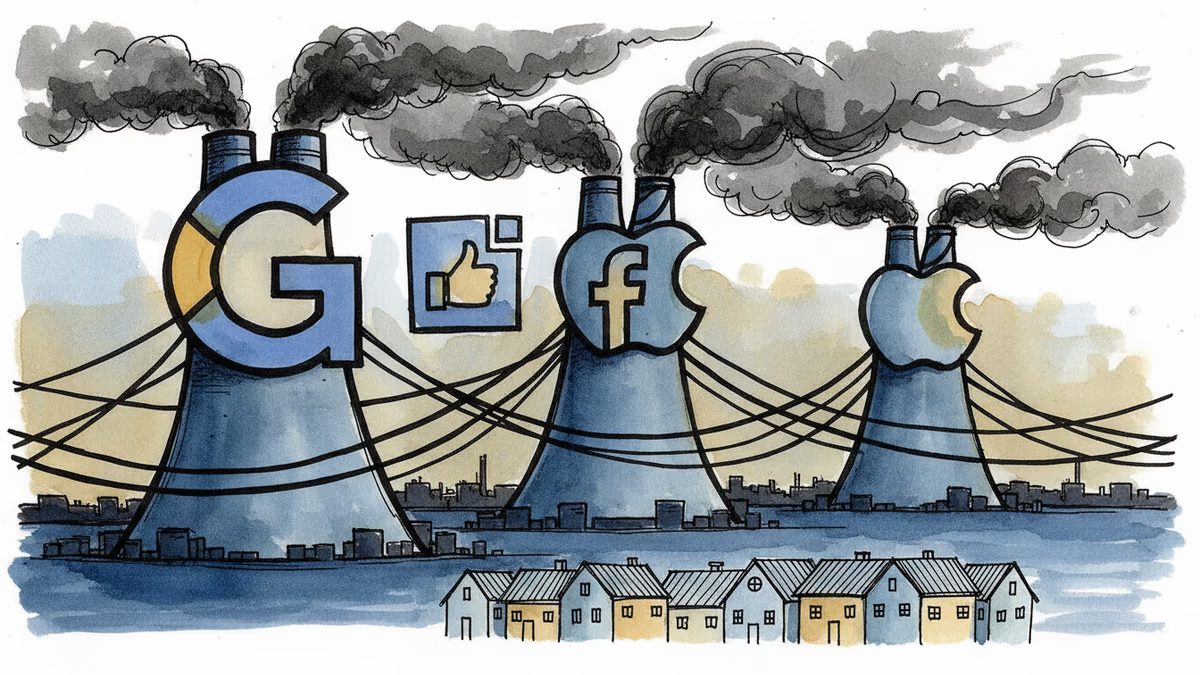
Amazon, Google, Meta and others pledge to pay for their data centers' power infrastructure, but the agreement lacks enforcement and ignores basic economics
Iranian strikes on AWS facilities mark a new era where cloud infrastructure faces physical warfare. How should companies and governments adapt to this reality?
The journey from promoting healthy living to spreading medical misinformation reveals a troubling pattern in how selective science and algorithmic amplification create dangerous echo chambers.
Karnataka state, home to Bengaluru's tech hub, joins a global wave of social media restrictions for minors. But can these bans actually work?
Amazon, Google, Meta and others pledge to pay for their data centers' power infrastructure, but the agreement lacks enforcement and ignores basic economics
Iranian strikes on AWS facilities mark a new era where cloud infrastructure faces physical warfare. How should companies and governments adapt to this reality?
Thoughts
Share your thoughts on this article
Sign in to join the conversation