
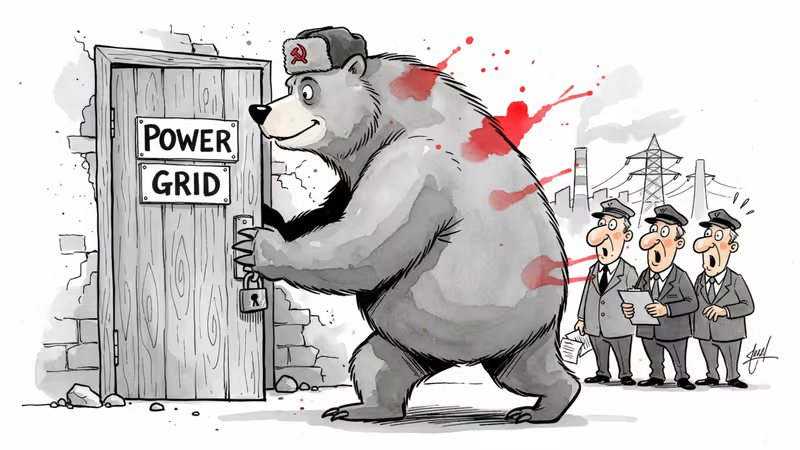
Polish Power Grid Hacked Through Basic Security Failures
Russian hackers breached Poland's energy infrastructure using default passwords and no multi-factor authentication, exposing critical vulnerabilities in national power systems.
Default passwords. No multi-factor authentication. No resistance whatsoever. That's how Russian hackers walked into Poland's wind farms, solar plants, and a heat-and-power facility like they owned the place.
Poland's Computer Emergency Response Team (CERT) released a damning technical report Friday about the December 29 cyberattack that exposed the shocking state of critical infrastructure security. The targeted systems were using factory-default usernames and passwords—security measures so basic that calling them "security" feels generous.
Wiper Malware: Digital Arson
This wasn't a typical data theft operation. The hackers deployed wiper malware designed to completely erase and destroy the systems they infiltrated. Think digital napalm—once it hits, there's nothing left but scorched silicon.
"All of the attacks were purely destructive in nature," the Polish CERT report stated, comparing them to "deliberate acts of arson" in the physical world. The goal appeared to be turning off the lights, though the hackers ultimately failed to disrupt power at any facility.
The malware succeeded at the wind and solar farms, rendering their monitoring and control systems inoperable. The heat-and-power plant managed to stop the attack, but even if all targets had fallen, Poland's power grid stability wouldn't have been affected, according to the report.
Attribution Wars: Sandworm vs. Berserk Bear

Cybersecurity firms ESET and Dragos pointed fingers at Sandworm, Russia's most notorious infrastructure-targeting hacking group. Sandworm has a documented track record of actually turning off the lights in Ukraine during 2015, 2016, and 2022—they're the Michael Jordan of power grid attacks.
But Poland's CERT disagrees, attributing the attacks to Berserk Bear (also known as Dragonfly), a Russian group typically focused on traditional espionage rather than destructive mayhem. It's like debating whether your house was robbed by cat burglars or smash-and-grab artists—either way, your security sucked.
The Embarrassing Truth About Critical Infrastructure
Here's what should keep security professionals awake at night: the hackers didn't need sophisticated zero-day exploits or nation-state resources. They used techniques any script kiddie could deploy—guessing default passwords and exploiting the absence of basic security controls.
This isn't a story about advanced persistent threats or supply chain compromises. It's about facilities responsible for national energy security that apparently never changed their passwords from "admin/admin" or enabled two-factor authentication.
The implications extend far beyond Poland. How many critical facilities worldwide are operating with similarly prehistoric security postures? How many power plants, water treatment facilities, and transportation hubs are one default password away from digital catastrophe?
The Connectivity Paradox
Modern infrastructure increasingly relies on networked systems for efficiency and remote management. Smart grids, industrial IoT sensors, and automated control systems promise better performance and lower costs. But each connection point becomes a potential attack vector.
The Polish incident illustrates a fundamental tension: the same connectivity that enables operational efficiency also exposes critical systems to remote adversaries. When basic security hygiene fails, that connectivity becomes a liability rather than an asset.
Authors
Related Articles
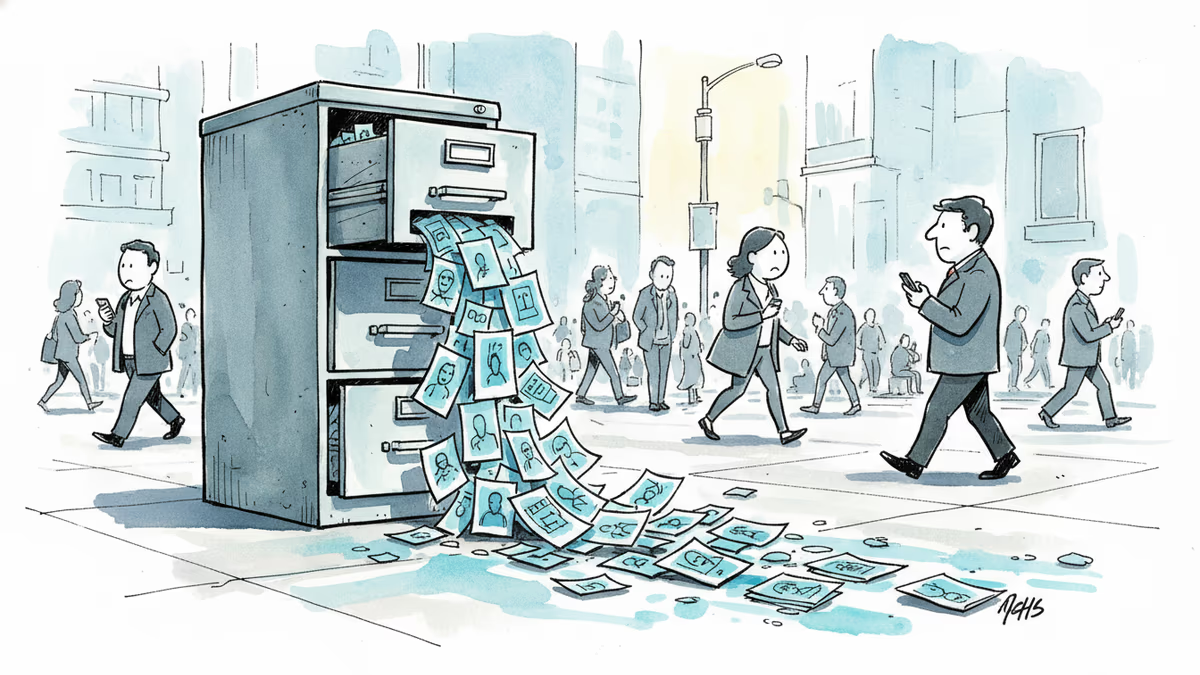
UK Visa Portal, a private immigration service mistaken for an official government site, has been exposing passport scans and selfies of over 100,000 applicants. The breach remains unpatched.
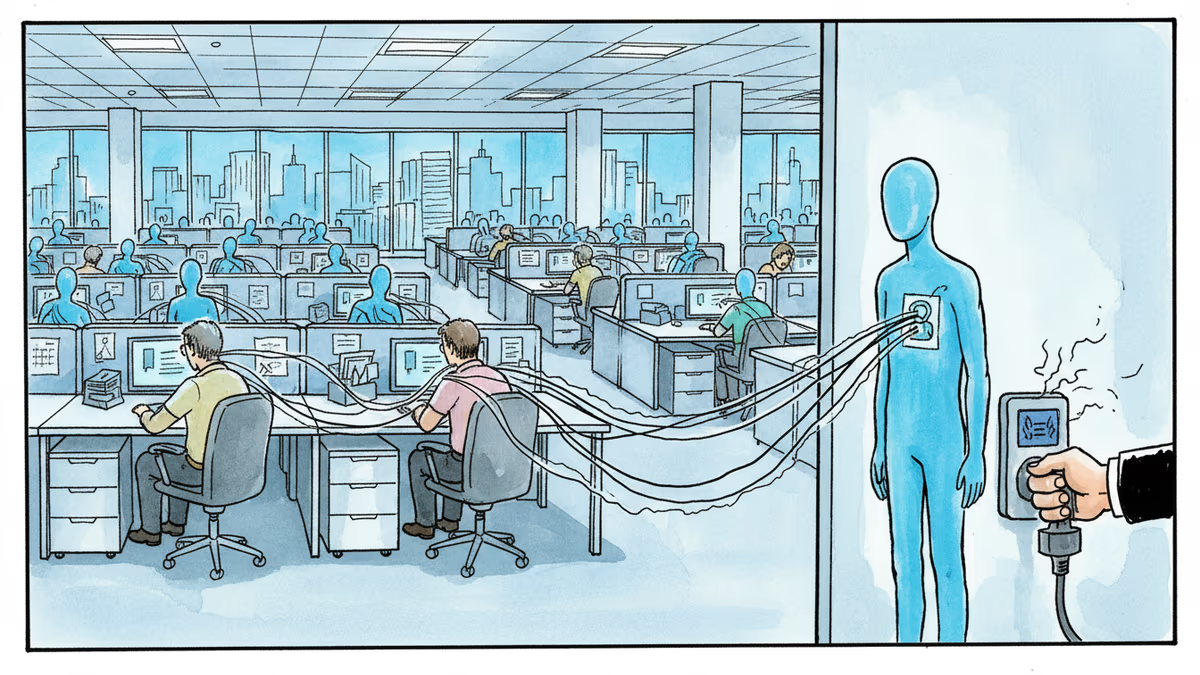
Okta CEO Todd McKinnon on why AI agents need identity management, the SaaSpocalypse threat, and why the kill switch might be the most important button in enterprise tech.
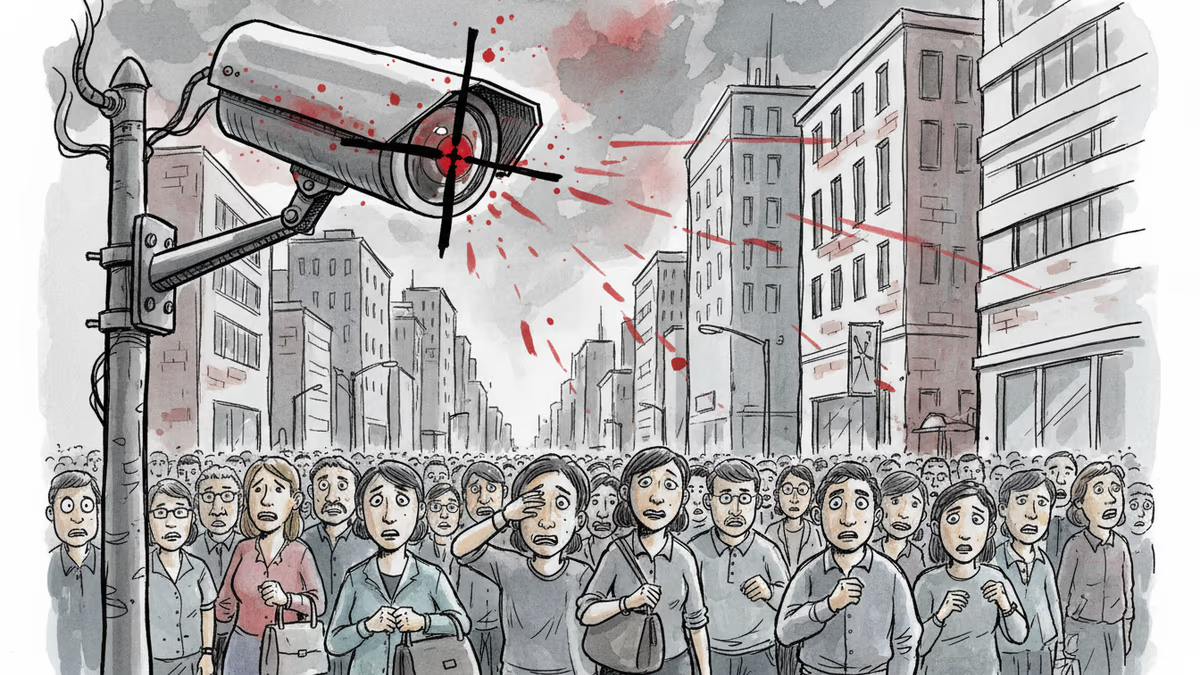
Iran and Israel are hacking civilian security cameras for military reconnaissance. How consumer surveillance devices became weapons of war.
A security researcher discovered he could access 7,000 DJI robot vacuums and peek into strangers' homes. This Valentine's Day revelation exposes the hidden privacy risks of our smart home obsession.
UK Visa Portal, a private immigration service mistaken for an official government site, has been exposing passport scans and selfies of over 100,000 applicants. The breach remains unpatched.
Okta CEO Todd McKinnon on why AI agents need identity management, the SaaSpocalypse threat, and why the kill switch might be the most important button in enterprise tech.
Iran and Israel are hacking civilian security cameras for military reconnaissance. How consumer surveillance devices became weapons of war.
A security researcher discovered he could access 7,000 DJI robot vacuums and peek into strangers' homes. This Valentine's Day revelation exposes the hidden privacy risks of our smart home obsession.
Thoughts
Share your thoughts on this article
Sign in to join the conversation