
FBI Informant Claims Jeffrey Epstein Had a 'Personal Hacker
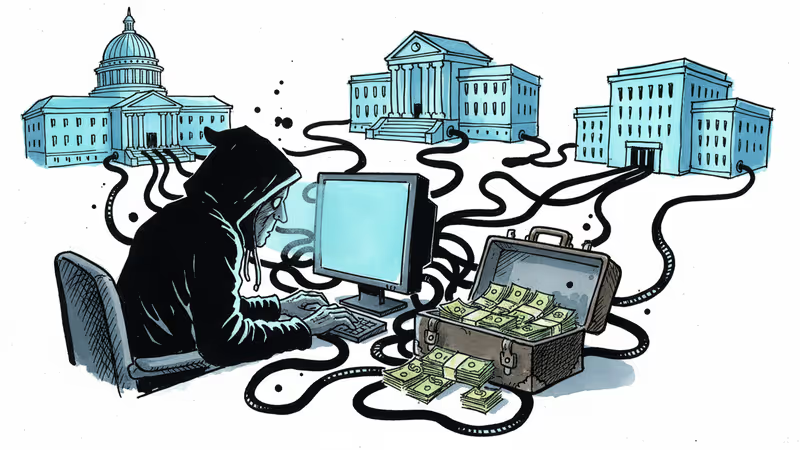
A confidential FBI informant revealed in 2017 that Jeffrey Epstein employed an Italian hacker who developed zero-day exploits and sold cyber weapons to governments and terrorist groups.
$3.5 million pages of documents. That's what the Department of Justice released Friday in its ongoing effort to make public files from the Jeffrey Epstein investigation. But buried in those heavily redacted files was a startling revelation: a confidential FBI informant claimed Epstein had a "personal hacker."
The Italian Connection
In 2017, an FBI informant painted a disturbing picture of Epstein's digital operations. According to the testimony, Epstein employed an Italian-born hacker from the southern region of Calabria who specialized in finding vulnerabilities in iOS, BlackBerry devices, and the Firefox browser.
This wasn't your typical cybercriminal. The alleged hacker developed zero-day exploits and offensive cyber tools, selling them to multiple governments including an unnamed central African nation, the U.K., and the United States. Most alarmingly, the informant claimed the hacker sold a zero-day to Hezbollah, receiving payment in the form of "a trunk of cash."
The informant's assessment was blunt: "He was very good at finding vulnerabilities."
The Gray Market Reality

While these allegations come from a single informant and haven't been independently verified by the FBI, they shed light on a troubling reality in cybersecurity: the thriving gray market for digital weapons.
The existence of government buyers for hacking tools isn't news. What's concerning is the apparent ease with which these tools can flow from legitimate security research to terrorist organizations. The line between ethical hacking and cyber mercenary work has never been blurrier.
Major tech companies like Google and Microsoft run bug bounty programs that pay researchers for finding vulnerabilities. But when nation-states and criminal organizations offer significantly higher payouts, the temptation for talented hackers to cross ethical lines becomes real.
Intelligence Community Implications
For cybersecurity professionals, this revelation raises uncomfortable questions about the ecosystem they operate in. How many other high-profile individuals or organizations maintain relationships with skilled hackers? How do intelligence agencies track and monitor these relationships?
The Epstein case demonstrates how personal networks can intersect with national security concerns in unexpected ways. If a convicted sex offender could maintain access to cutting-edge cyber capabilities, what does that say about oversight in the digital weapons trade?
The timing of this revelation is particularly significant. As governments worldwide grapple with regulating AI and cyber capabilities, the Epstein files remind us that some of the most dangerous digital tools may already be in private hands.
Authors
Related Articles
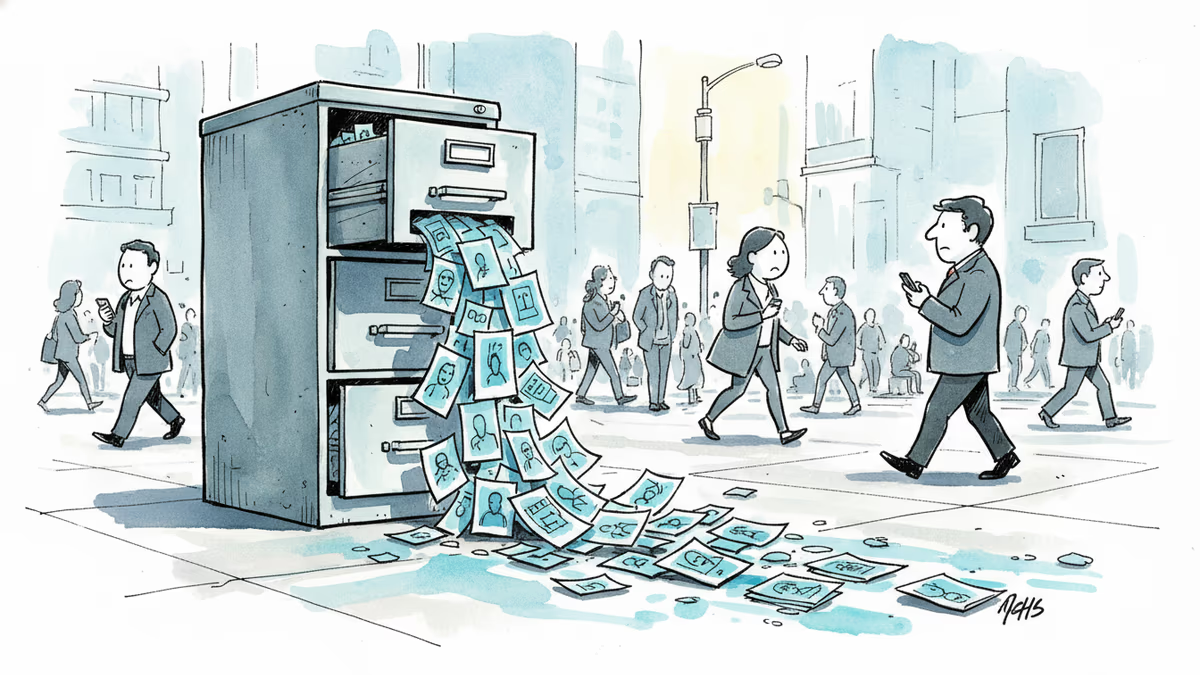
UK Visa Portal, a private immigration service mistaken for an official government site, has been exposing passport scans and selfies of over 100,000 applicants. The breach remains unpatched.
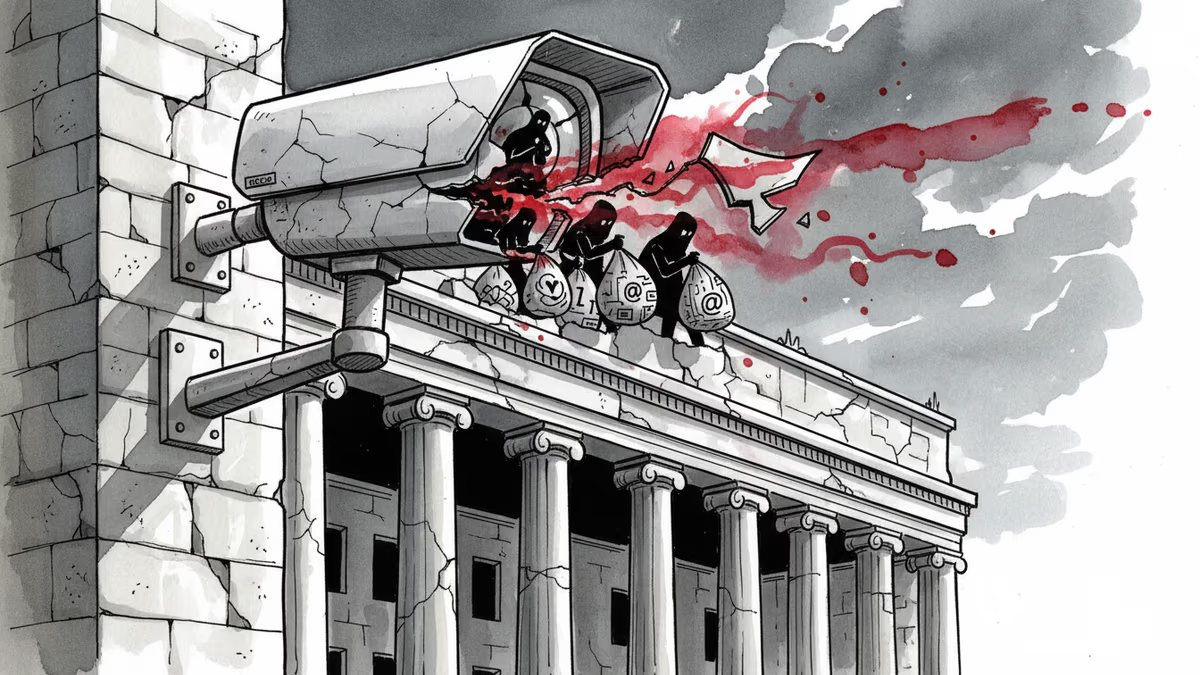
FBI surveillance systems breached, North Korea steals $280M in crypto, Claude Code leaks malware, and a 22-year-old student helps take down a record botnet. This week in cybersecurity.
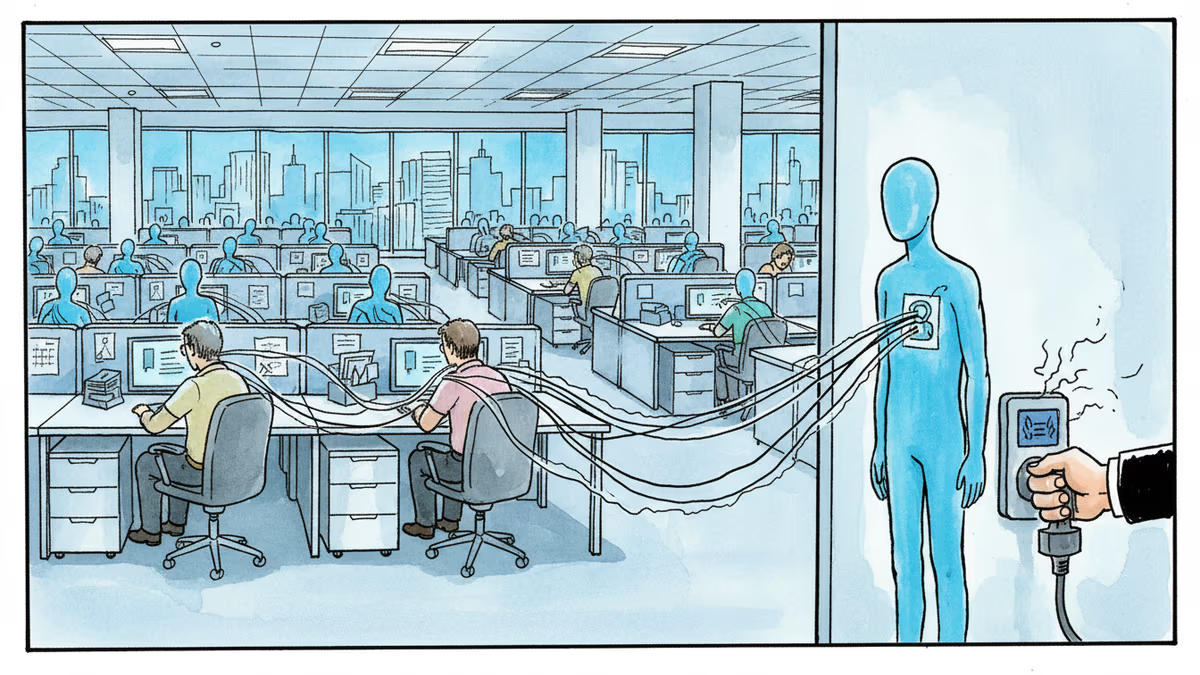
Okta CEO Todd McKinnon on why AI agents need identity management, the SaaSpocalypse threat, and why the kill switch might be the most important button in enterprise tech.
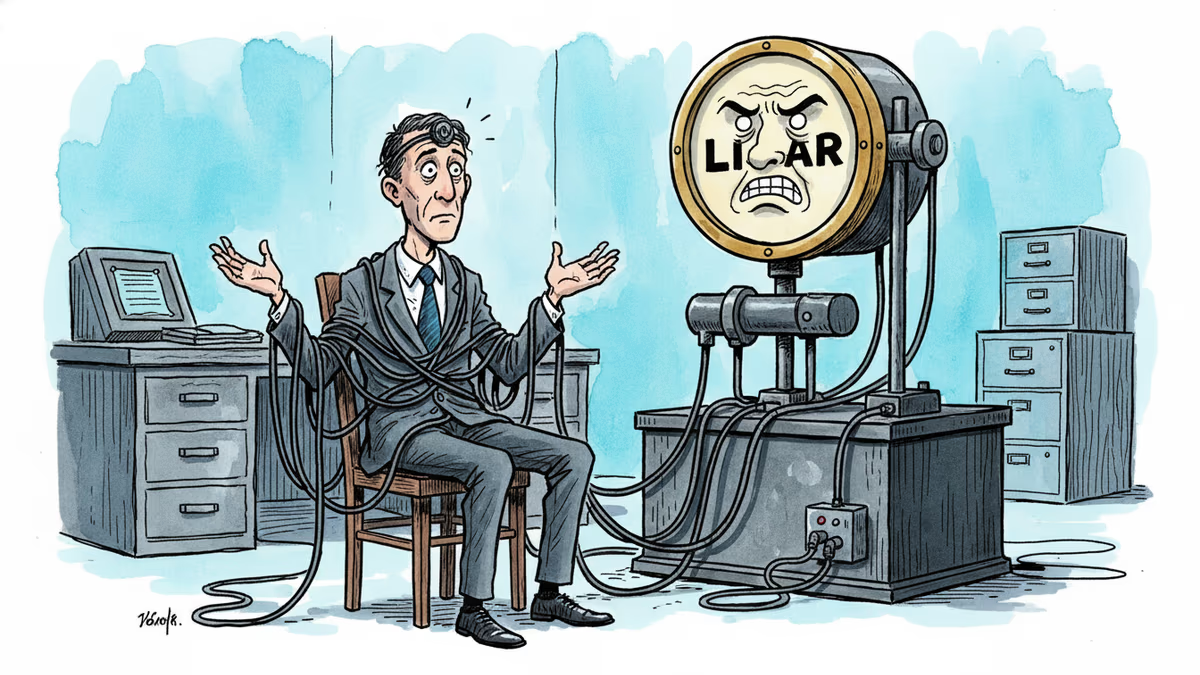
George Maschke passed 11 years of military security clearance, then failed an FBI polygraph. Decades later, the science still doesn't support the test—so why do agencies keep using it?
UK Visa Portal, a private immigration service mistaken for an official government site, has been exposing passport scans and selfies of over 100,000 applicants. The breach remains unpatched.
FBI surveillance systems breached, North Korea steals $280M in crypto, Claude Code leaks malware, and a 22-year-old student helps take down a record botnet. This week in cybersecurity.
Okta CEO Todd McKinnon on why AI agents need identity management, the SaaSpocalypse threat, and why the kill switch might be the most important button in enterprise tech.
George Maschke passed 11 years of military security clearance, then failed an FBI polygraph. Decades later, the science still doesn't support the test—so why do agencies keep using it?
Thoughts
Share your thoughts on this article
Sign in to join the conversation