
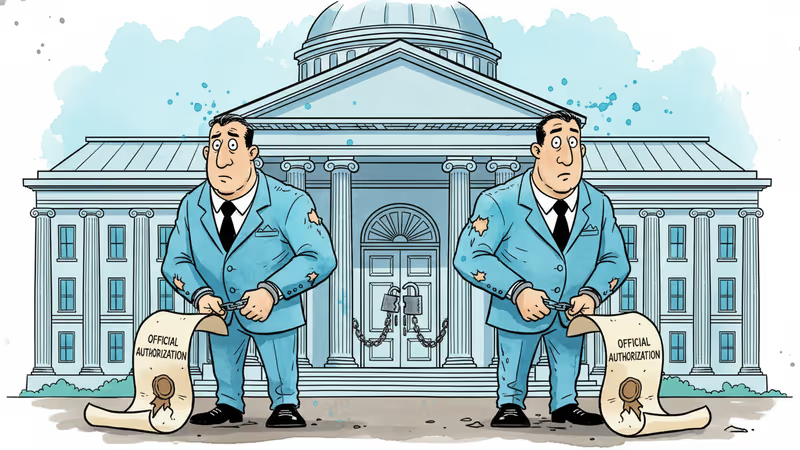
Authorized Hackers Arrested, Then Paid $600K: A Wake-Up Call
Two security professionals received $600K settlement after being arrested during authorized penetration testing. What does this mean for the cybersecurity industry's future?
$600,000. That's what it costs when the line between authorized security testing and criminal activity gets blurred beyond recognition.
Gary DeMercurio and Justin Wynn thought they were doing their job. As penetration testers for Coalfire Labs, they had written authorization from the Iowa Judicial Branch to conduct "red-team" exercises—essentially playing the role of attackers to test the courthouse's defenses. The rules were clear: physical attacks, including lockpicking, were explicitly permitted.
Yet they found themselves in handcuffs.
When Authorization Isn't Enough
The irony is stark. These weren't rogue hackers operating in the shadows. They were cybersecurity professionals with official paperwork, conducting a sanctioned exercise designed to protect the very system they were accused of attacking. The engagement rules specifically allowed the techniques they used, yet local law enforcement saw criminal activity where there should have been professional service.
This disconnect reveals a fundamental problem in how we handle cybersecurity in practice. While organizations increasingly recognize the need for rigorous security testing, the legal and operational frameworks haven't caught up. The result? Professionals operating in a gray area where doing their job correctly can still land them in legal trouble.

The Chilling Effect on Security
The $600,000 settlement isn't just compensation—it's a warning signal to the entire industry. When authorized security professionals face arrest for following approved protocols, it creates a chilling effect that could undermine cybersecurity efforts across the board.
Consider the implications: if penetration testers must worry about criminal charges even with proper authorization, will they be as thorough in their work? Will security firms start avoiding certain types of testing to reduce legal risk? The answers could weaken our collective digital defenses at a time when cyber threats are more sophisticated than ever.
Beyond Black and White
This case highlights the complexity of modern cybersecurity work. The same tools and techniques used by criminal hackers are essential for legitimate security testing. The only difference is intent and authorization—distinctions that can be difficult to communicate in the heat of the moment.
The settlement suggests that organizations need to do more than just provide written authorization. They need to ensure that all relevant parties—from security guards to local law enforcement—understand what authorized testing looks like and how to distinguish it from actual criminal activity.
What safeguards should exist when the line between protection and intrusion becomes this thin?
Authors
Related Articles

UK Visa Portal, a private immigration service mistaken for an official government site, has been exposing passport scans and selfies of over 100,000 applicants. The breach remains unpatched.
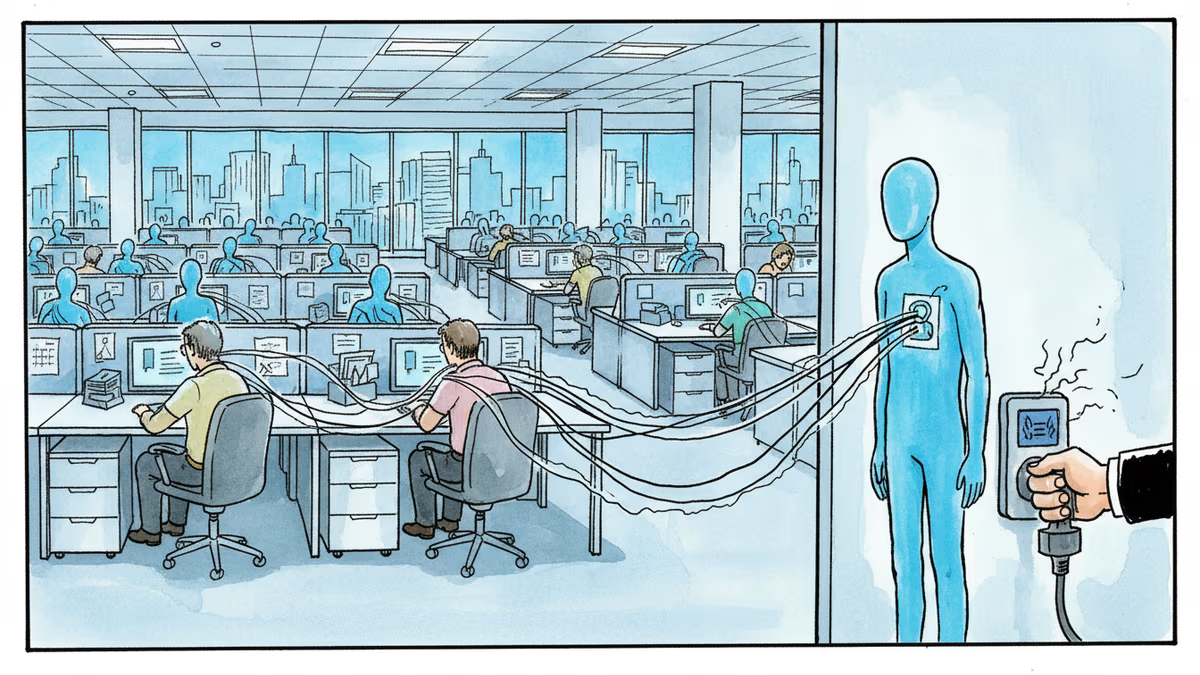
Okta CEO Todd McKinnon on why AI agents need identity management, the SaaSpocalypse threat, and why the kill switch might be the most important button in enterprise tech.
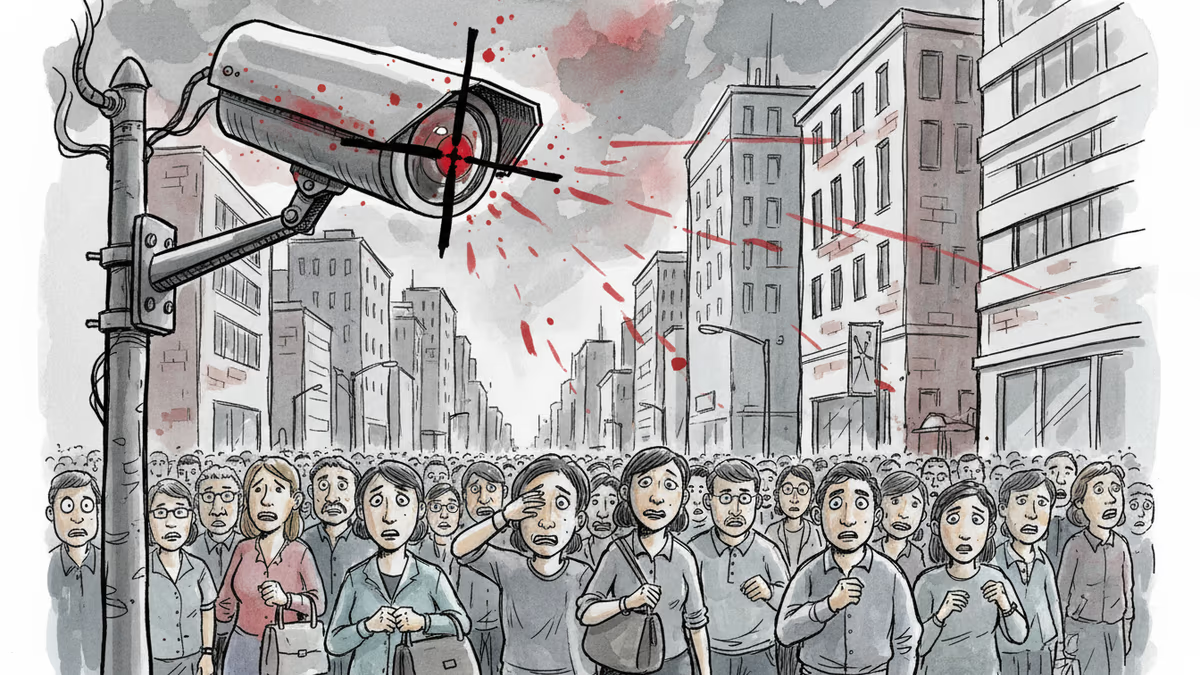
Iran and Israel are hacking civilian security cameras for military reconnaissance. How consumer surveillance devices became weapons of war.

A security researcher discovered he could access 7,000 DJI robot vacuums and peek into strangers' homes. This Valentine's Day revelation exposes the hidden privacy risks of our smart home obsession.
UK Visa Portal, a private immigration service mistaken for an official government site, has been exposing passport scans and selfies of over 100,000 applicants. The breach remains unpatched.
Okta CEO Todd McKinnon on why AI agents need identity management, the SaaSpocalypse threat, and why the kill switch might be the most important button in enterprise tech.
Iran and Israel are hacking civilian security cameras for military reconnaissance. How consumer surveillance devices became weapons of war.
A security researcher discovered he could access 7,000 DJI robot vacuums and peek into strangers' homes. This Valentine's Day revelation exposes the hidden privacy risks of our smart home obsession.
Thoughts
Share your thoughts on this article
Sign in to join the conversation