
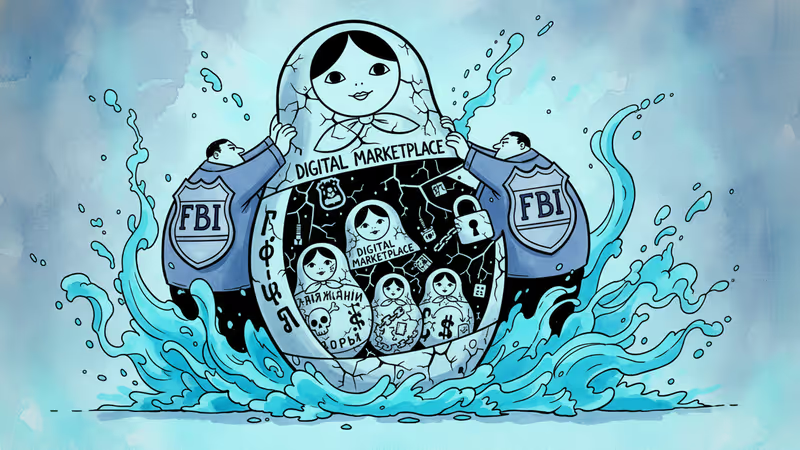
FBI Shuts Down RAMP, Russia's Largest Ransomware Marketplace
The FBI seized RAMP, the predominant Russian-language ransomware marketplace, dealing a blow to cybercriminals but raising questions about the whack-a-mole nature of dark web enforcement.
The "only place ransomware allowed" just got shut down. The FBI seized control of RAMP, the predominant Russian-language cybercrime bazaar that had become a go-to destination for ransomware operators worldwide, marking another significant blow against the infrastructure powering digital extortion.
The Criminal Amazon Goes Dark
Wednesday visitors to RAMP's sites—both its dark web and clear web versions—were greeted with seizure banners bearing the seals of the FBI and Department of Justice. The action, coordinated with the U.S. Attorney's Office for the Southern District of Florida and the Computer Crime and Intellectual Property Section, targeted what had become one of the last major criminal forums operating with relative impunity.
RAMP's prominence grew as other cybercrime forums fell. When Europol arrested the leader of XSS last year, it created a vacuum that RAMP eagerly filled. The platform became the de facto marketplace where ransomware groups, affiliate programs, and individual criminals could buy, sell, and trade everything from encryption tools to victim databases.
More Than Just Another Takedown
This isn't just another law enforcement victory lap. RAMP's seizure represents a strategic strike against the commercialization of ransomware. Unlike traditional organized crime, modern cyber threats operate on a franchise model—where RAMP served as the central hub connecting ransomware-as-a-service providers with affiliates who actually deploy the attacks.
The timing matters too. As critical infrastructure attacks have escalated—from Colonial Pipeline to healthcare systems—governments worldwide have shifted from treating ransomware as a nuisance to recognizing it as a national security threat. The coordination between U.S. agencies suggests this wasn't an opportunistic bust but part of a broader strategy.

The Whack-a-Mole Reality
Here's where it gets complicated. Cybersecurity experts know that shutting down one marketplace rarely eliminates the underlying demand. Criminal entrepreneurs are already working to fill the void, whether by migrating to existing platforms or creating new ones. It's the digital equivalent of closing down a drug corner—the dealers just move to the next block.
What makes RAMP's closure potentially more impactful is its reputation and user base. Building trust in criminal marketplaces takes time. New platforms face the same challenges as any startup: attracting users, establishing credibility, and avoiding law enforcement attention. That friction could temporarily disrupt the ransomware supply chain.
The Bigger Chess Game
RAMP's seizure also reflects the evolving geopolitics of cybercrime. Russian-language forums have long operated with perceived immunity, partly due to geopolitical tensions and jurisdictional challenges. The fact that U.S. authorities could successfully target RAMP suggests either improved international cooperation or enhanced technical capabilities—or both.
For businesses, this creates an interesting dynamic. While RAMP's closure might reduce immediate threats, it also signals that cybercriminals are under increasing pressure. Desperate actors often become more aggressive or less discriminating in their targets, potentially increasing risks in the short term.
The seizure of RAMP marks a significant moment, but it's just one battle in a much longer war. The test will be whether law enforcement can maintain this pressure consistently enough to change the economics of cybercrime itself.
Authors
Related Articles
UK Visa Portal, a private immigration service mistaken for an official government site, has been exposing passport scans and selfies of over 100,000 applicants. The breach remains unpatched.
Okta CEO Todd McKinnon on why AI agents need identity management, the SaaSpocalypse threat, and why the kill switch might be the most important button in enterprise tech.
Iran and Israel are hacking civilian security cameras for military reconnaissance. How consumer surveillance devices became weapons of war.
A security researcher discovered he could access 7,000 DJI robot vacuums and peek into strangers' homes. This Valentine's Day revelation exposes the hidden privacy risks of our smart home obsession.
UK Visa Portal, a private immigration service mistaken for an official government site, has been exposing passport scans and selfies of over 100,000 applicants. The breach remains unpatched.
Okta CEO Todd McKinnon on why AI agents need identity management, the SaaSpocalypse threat, and why the kill switch might be the most important button in enterprise tech.
Iran and Israel are hacking civilian security cameras for military reconnaissance. How consumer surveillance devices became weapons of war.
A security researcher discovered he could access 7,000 DJI robot vacuums and peek into strangers' homes. This Valentine's Day revelation exposes the hidden privacy risks of our smart home obsession.
Thoughts
Share your thoughts on this article
Sign in to join the conversation