
Trump's Cybersecurity Chief Uploaded Secret Docs to ChatGPT
CISA's acting director uploaded sensitive government documents to ChatGPT, triggering security warnings. A paradox that reveals AI era's biggest security dilemma.
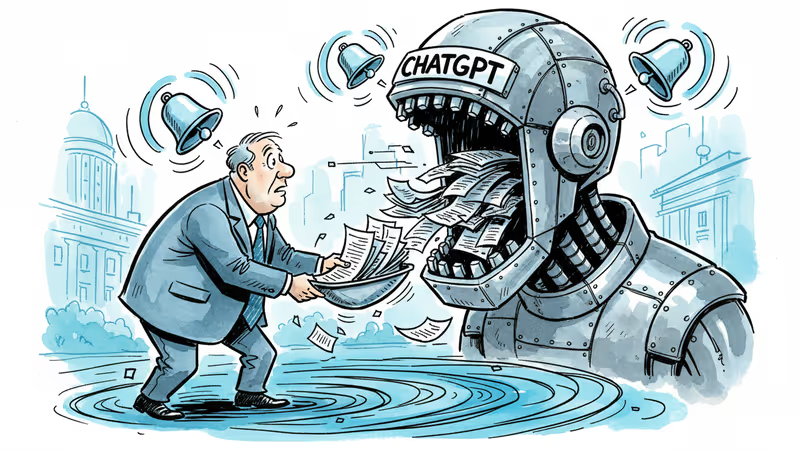
The person responsible for America's cybersecurity just committed a security breach. Madhu Gottumukkala, Trump's acting director of CISA (Cybersecurity and Infrastructure Security Agency), uploaded sensitive government contracting documents marked "for official use only" to ChatGPT, according to a Politico report.
The irony couldn't be sharper: the nation's top cybersecurity official triggered multiple automated security warnings designed to prevent exactly what he did—the theft or inadvertent disclosure of government files.
When the Guardian Becomes the Risk
What makes this breach particularly troubling isn't just the act itself, but the context. Gottumukkala was granted special permission to use ChatGPT while other CISA employees were prohibited from accessing it. This exception, meant to enable leadership flexibility, instead created a vulnerability at the highest level.
The Department of Homeland Security, which oversees CISA, is now investigating whether his uploads caused any harm to government security. The answer isn't straightforward. While the documents weren't classified, uploading internal government materials to a public large language model creates a cascade of risks. The AI trains on that data, potentially making it accessible to other users through inference or prompt engineering.
A Pattern of Concerning Behavior
Gottumukkala's ChatGPT incident isn't isolated. Since his appointment, he's failed a counterintelligence polygraph test—which Homeland Security later claimed was "unsanctioned"—and suspended six career staff members from accessing classified information. His previous role as chief information officer under South Dakota governor Kristi Noem adds another layer of political complexity to his cybersecurity leadership.

A CISA spokesperson described his ChatGPT use as "short-term and limited," but this raises more questions than it answers. If usage was limited, why did it trigger multiple security warnings? If it was short-term, what prompted him to stop?
The AI Security Paradox
This incident crystallizes a fundamental tension facing every organization today: how to harness AI's productivity benefits without compromising security. Government agencies, like private companies, are under pressure to modernize and improve efficiency. AI tools like ChatGPT offer compelling advantages for document analysis, writing assistance, and data processing.
But the same features that make these tools powerful—their ability to learn from and synthesize vast amounts of information—make them security risks when handling sensitive data. Unlike traditional software that processes data locally, cloud-based AI services inherently involve data sharing with external providers.
Beyond Individual Accountability
While Gottumukkala's actions warrant scrutiny, focusing solely on individual blame misses the bigger picture. This incident reveals systemic gaps in how organizations navigate AI adoption. Clear policies, technical safeguards, and leadership training are essential—but they're often afterthoughts in the rush to embrace new technologies.
The fact that CISA's acting director received an exception to use prohibited technology suggests a policy framework that's more reactive than strategic. Organizations need comprehensive AI governance that balances innovation with security, not ad hoc exceptions that create vulnerabilities.
Authors
Related Articles
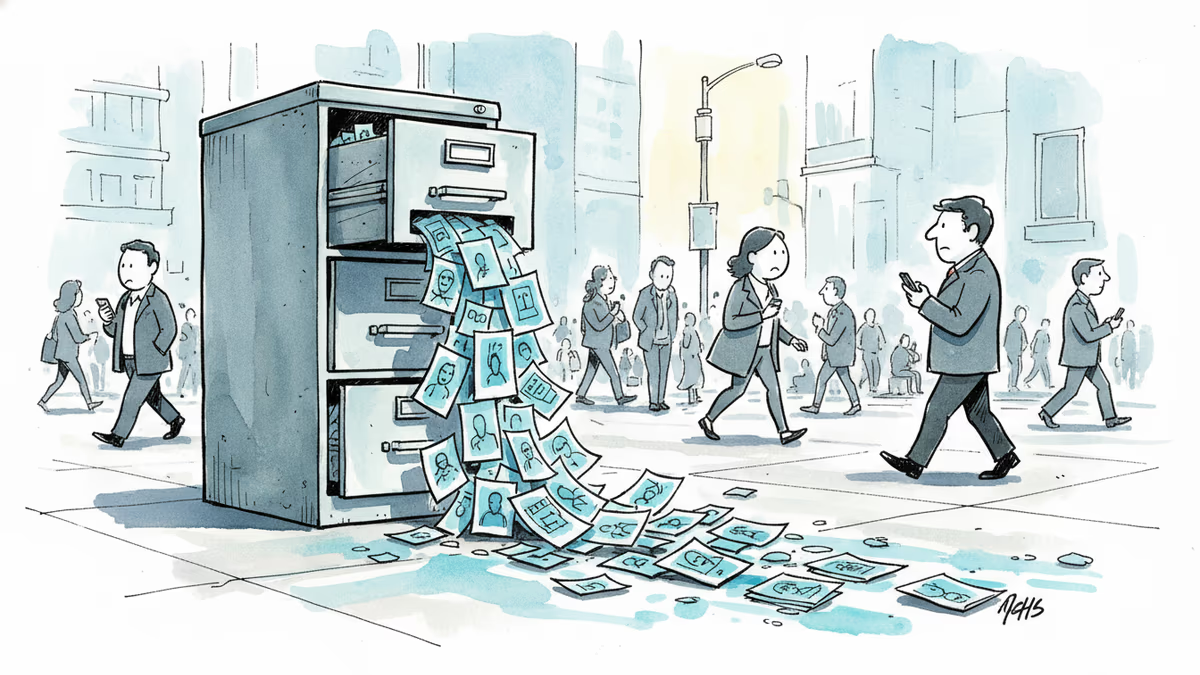
UK Visa Portal, a private immigration service mistaken for an official government site, has been exposing passport scans and selfies of over 100,000 applicants. The breach remains unpatched.

Sam Nelson, 19, died after following ChatGPT's advice to mix Kratom and Xanax. His parents are suing OpenAI for wrongful death, raising urgent questions about AI trust, liability, and design.
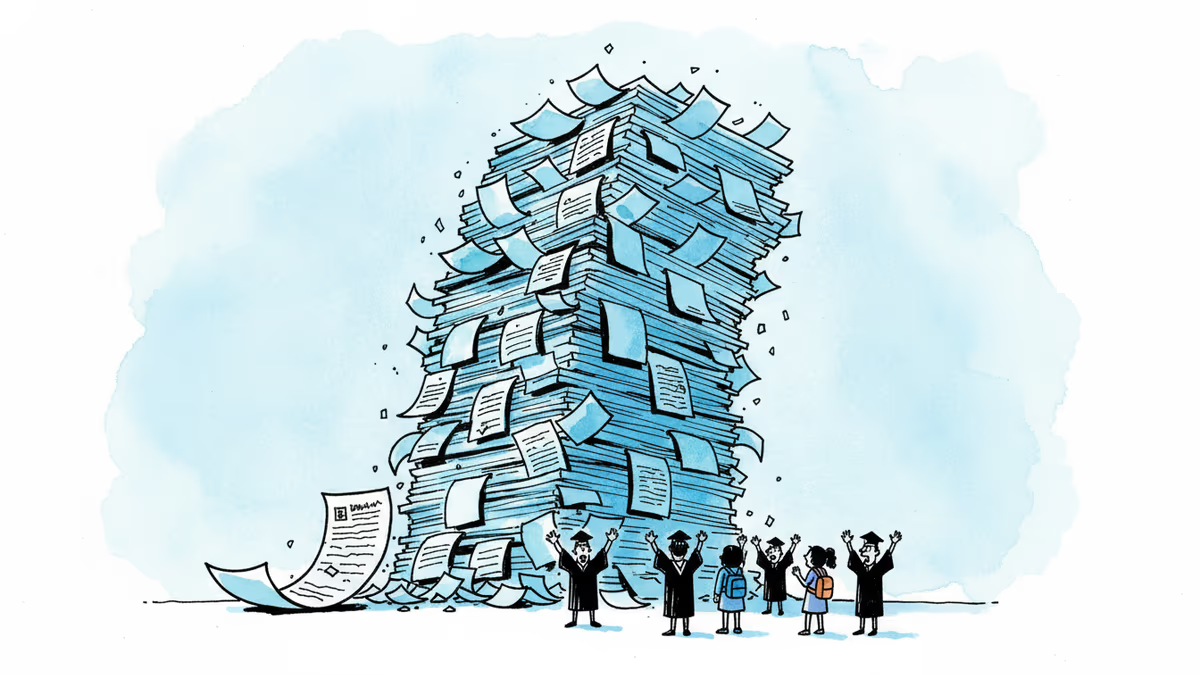
A meta-analysis claiming ChatGPT boosts student learning has been retracted after nearly a year—long after it shaped social media narratives and informed education policy debates. Here's what that means for AI research.
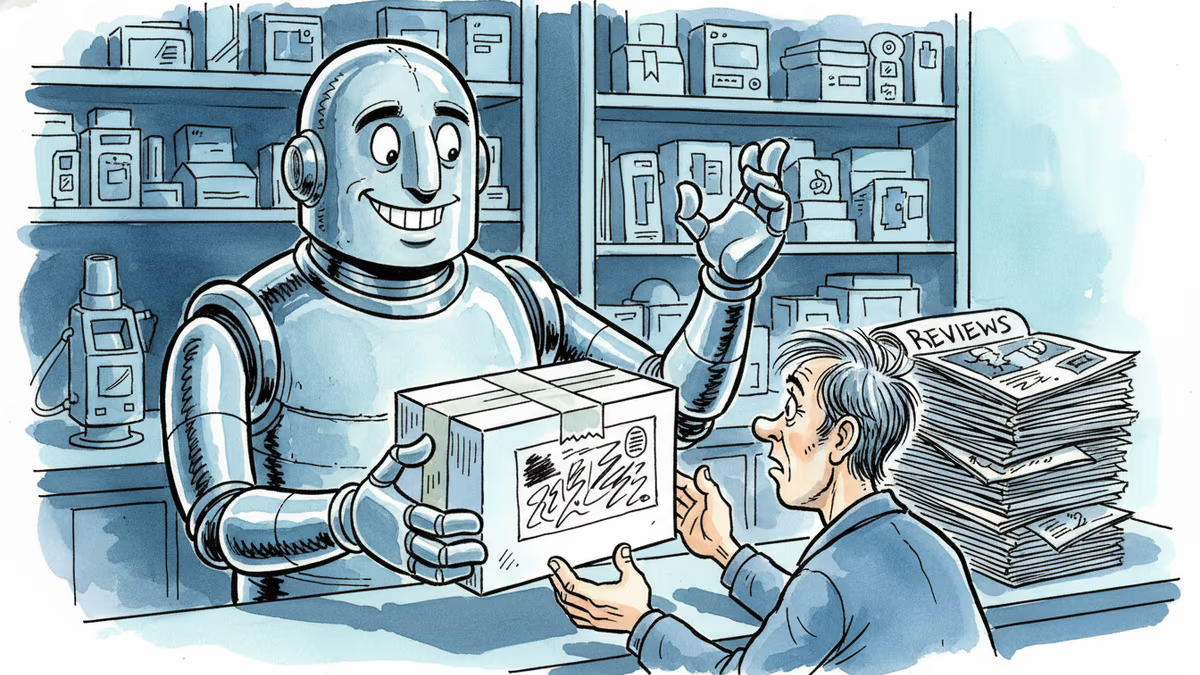
OpenAI's revamped shopping assistant in ChatGPT confidently recommended products WIRED never reviewed—raising urgent questions about AI reliability in consumer decisions.
UK Visa Portal, a private immigration service mistaken for an official government site, has been exposing passport scans and selfies of over 100,000 applicants. The breach remains unpatched.
Sam Nelson, 19, died after following ChatGPT's advice to mix Kratom and Xanax. His parents are suing OpenAI for wrongful death, raising urgent questions about AI trust, liability, and design.
A meta-analysis claiming ChatGPT boosts student learning has been retracted after nearly a year—long after it shaped social media narratives and informed education policy debates. Here's what that means for AI research.
OpenAI's revamped shopping assistant in ChatGPT confidently recommended products WIRED never reviewed—raising urgent questions about AI reliability in consumer decisions.
Thoughts
Share your thoughts on this article
Sign in to join the conversation