
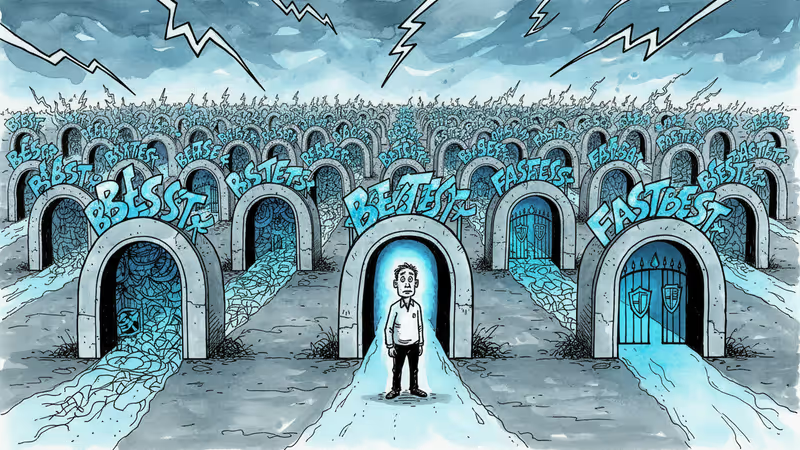
The VPN Truth: Which Services Actually Keep Their Promises?
With hundreds of VPN services claiming to be the best, how many actually deliver on their promises? Expert testing reveals the reality behind VPN marketing claims.
Hundreds of VPN services claim they're the best you can buy. They all boast about having the biggest networks and promise your internet traffic is safe. But here's the uncomfortable truth: only some of them are actually telling it.
VPNs are experiencing unprecedented growth, driven partly by age-verification laws in the UK and several US states. Even if you don't want a VPN, you might need one. But the industry has been swimming in murky waters for years—constantly caught lying about their practices, handing over user data that was never supposed to be logged, and serving as safe havens for cybercriminal organizations.
The Price of Privacy
Most VPN services hover around $10 per month for monthly plans. That number drops significantly with multi-month or multi-year commitments, though recent class-action lawsuits have targeted some providers over their auto-renewal practices. While lawsuits don't necessarily prove illegal behavior, they highlight the importance of reading the fine print.
Free VPNs exist, but approach them with extreme skepticism. Only restrictive free plans from Proton and Windscribe offer genuine value without compromising your privacy.
Services That Actually Deliver
After extensive testing, ProtonVPN emerges as the clear winner. It delivered the fastest speeds across the US and UK, offers a generous free plan, and backs up its promises with unprecedented transparency.
What sets Proton apart isn't just performance—it's accountability. The company has maintained transparency reports since 2017, undergone annual third-party audits since 2022, and open-sourced its applications five years ago. This open-source approach is crucial because security bugs in VPN applications pose real risks, and community oversight helps surface these issues faster.
NordVPN brings a different value proposition with one of the largest networks available—over 7,400 servers—and an extensive feature set. While pricier, its Plus plan includes ad blocking and access to NordPass, one of the market's best password managers. Nord has consistently pushed the boundaries of VPN security and features, though it focuses more on comprehensive security suites rather than Proton's privacy-focused approach.

The Legal Landscape
VPN legality varies dramatically worldwide. They're perfectly legal in the US, UK, Canada, Australia, EU, and most democratic countries. However, authoritarian regimes like North Korea and Turkmenistan ban them outright, while countries like India and Russia demand government compliance, forcing providers like NordVPN to shut down local servers.
The key distinction: using a VPN is legal, but what you do while connected still matters. Illegal activities remain illegal regardless of your VPN status.
Features That Actually Matter
Kill switches prevent data leaks by cutting internet access if your VPN connection drops. Split tunneling lets you choose which apps use the VPN tunnel—useful if you want your browser protected but need direct access for gaming or streaming.
Double-hop connections route traffic through multiple servers for extra privacy, but they'll significantly impact speeds. Most users don't need this level of protection unless they're facing serious surveillance threats.
Advanced features like DAITA (from Mullvad) introduce background noise to combat AI-assisted network analysis, while NetShield (from Proton) blocks ads and trackers at the VPN level.
The Trust Problem
Here's the fundamental challenge: VPN services handle all your internet traffic, making trust absolutely critical. Yet verifying their promises remains difficult. Marketing claims about "military-grade encryption" and "zero-logging policies" are easy to make but hard to verify.
The most reliable indicators of trustworthiness include transparency reports, third-party audits, open-source code, and track records during legal challenges. Proton's commitment to these practices, combined with its Swiss jurisdiction and strong privacy laws, provides more assurance than flashy marketing campaigns.
Authors
Related Articles
UK Visa Portal, a private immigration service mistaken for an official government site, has been exposing passport scans and selfies of over 100,000 applicants. The breach remains unpatched.
Tinder now rewards users who scan their irises at a World orb with free in-app boosts. As AI agents flood dating apps, 'being human' is becoming a verified status — and a business model.
Wisconsin Governor Tony Evers vetoed an age verification bill for adult sites, citing privacy concerns. With 25+ states going the other way, the debate cuts to the heart of online freedom vs. child protection.
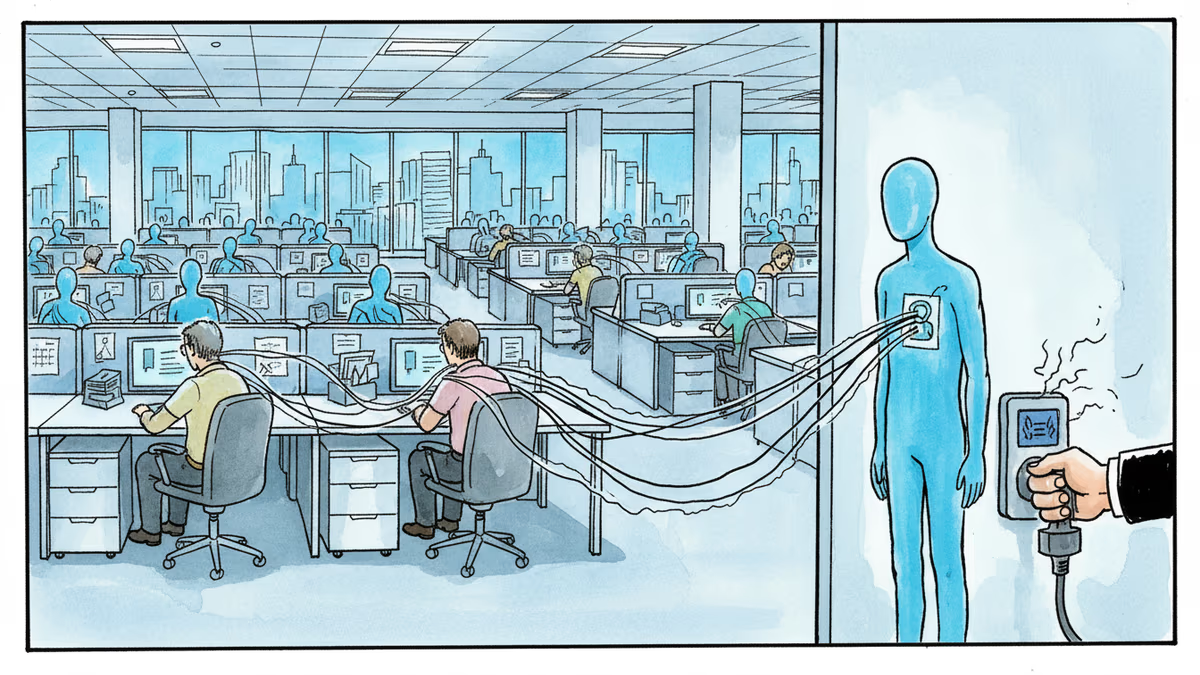
Okta CEO Todd McKinnon on why AI agents need identity management, the SaaSpocalypse threat, and why the kill switch might be the most important button in enterprise tech.
UK Visa Portal, a private immigration service mistaken for an official government site, has been exposing passport scans and selfies of over 100,000 applicants. The breach remains unpatched.
Tinder now rewards users who scan their irises at a World orb with free in-app boosts. As AI agents flood dating apps, 'being human' is becoming a verified status — and a business model.
Wisconsin Governor Tony Evers vetoed an age verification bill for adult sites, citing privacy concerns. With 25+ states going the other way, the debate cuts to the heart of online freedom vs. child protection.
Okta CEO Todd McKinnon on why AI agents need identity management, the SaaSpocalypse threat, and why the kill switch might be the most important button in enterprise tech.
Thoughts
Share your thoughts on this article
Sign in to join the conversation