
America's Top Cybersecurity Official Uploaded Secrets to ChatGPT
CISA acting director accidentally shared sensitive documents on public ChatGPT, triggering multiple security warnings. Exposes gaps in government AI usage policies.
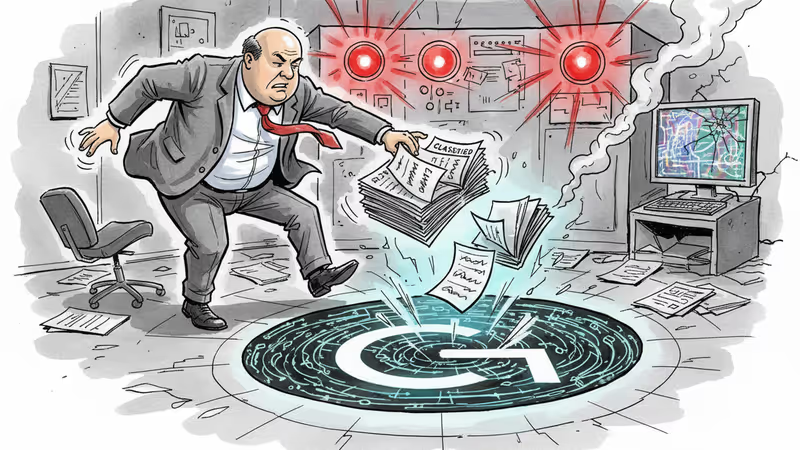
The person responsible for America's cybersecurity just made the kind of mistake that would get most employees fired. In a case of dramatic irony, the acting director of the nation's top cybersecurity agency uploaded sensitive information to the very platform his agency warns others about.
What Actually Happened
Madhu Gottumukkala, acting director of the Cybersecurity and Infrastructure Security Agency (CISA), uploaded sensitive contracting documents to the public version of ChatGPT last summer, according to Politico. The incident was confirmed by four Department of Homeland Security officials with direct knowledge.
The uploads triggered multiple internal cybersecurity warnings—the same systems designed to "stop the theft or unintentional disclosure of government material from federal networks." These weren't minor alerts; they were the digital equivalent of alarm bells specifically created to prevent exactly this type of breach.
The timing makes it even more striking: Gottumukkala had recently joined the agency and had specifically requested special permission to use OpenAI's chatbot, which most DHS staffers are blocked from accessing.
The Government's AI Dilemma
Most DHS employees can't access ChatGPT for a reason. Instead, they're limited to approved AI tools like DHSChat, which "are configured to prevent queries or documents input into them from leaving federal networks," Politico reported.

This creates a fundamental tension. Government agencies recognize AI's potential but fear its risks. They build internal alternatives, but these often lack the sophistication and capabilities of commercial tools. The result? Even cybersecurity leaders seek workarounds.
Beyond Individual Error
This isn't just about one person's mistake. It reveals systemic challenges in how organizations balance innovation with security. If the acting director of America's cybersecurity agency couldn't resist the allure of cutting-edge AI, what does that say about the broader government workforce?
The incident also highlights the inadequacy of permission-based systems. Special access was granted, but without sufficient guardrails or training to prevent misuse. It's a reminder that technology controls are only as strong as the humans operating them.
The Broader Stakes
For cybersecurity professionals, this incident raises uncomfortable questions about internal threats and the challenge of securing organizations against their own employees' well-intentioned mistakes. For policymakers, it underscores the difficulty of crafting AI governance that doesn't stifle innovation while protecting sensitive information.
The private sector faces similar dilemmas. Companies want to harness AI's power but struggle to prevent data leakage. Shadow IT usage—employees using unauthorized tools—remains a persistent challenge across industries.
Perhaps the real question isn't how to prevent all mistakes, but how to build resilience when they inevitably occur.
Authors
Related Articles
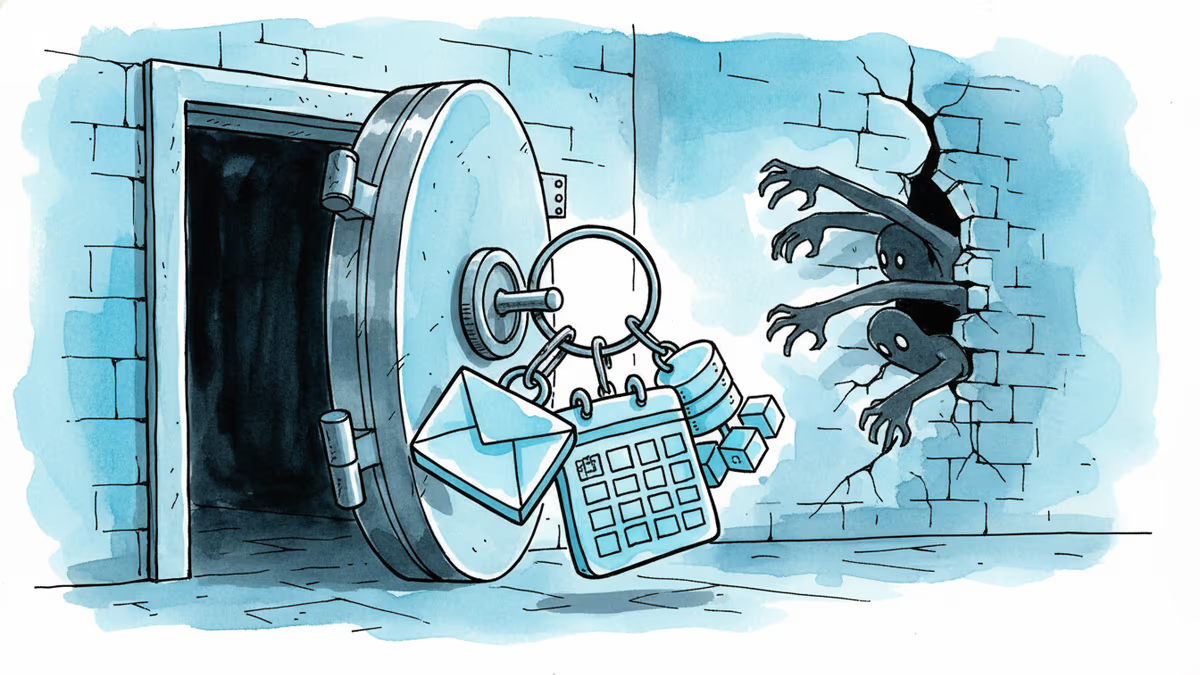
A critical vulnerability in Starlette—downloaded 325 million times per week—puts millions of AI agent servers at risk, exposing stored credentials for email, databases, and third-party services.
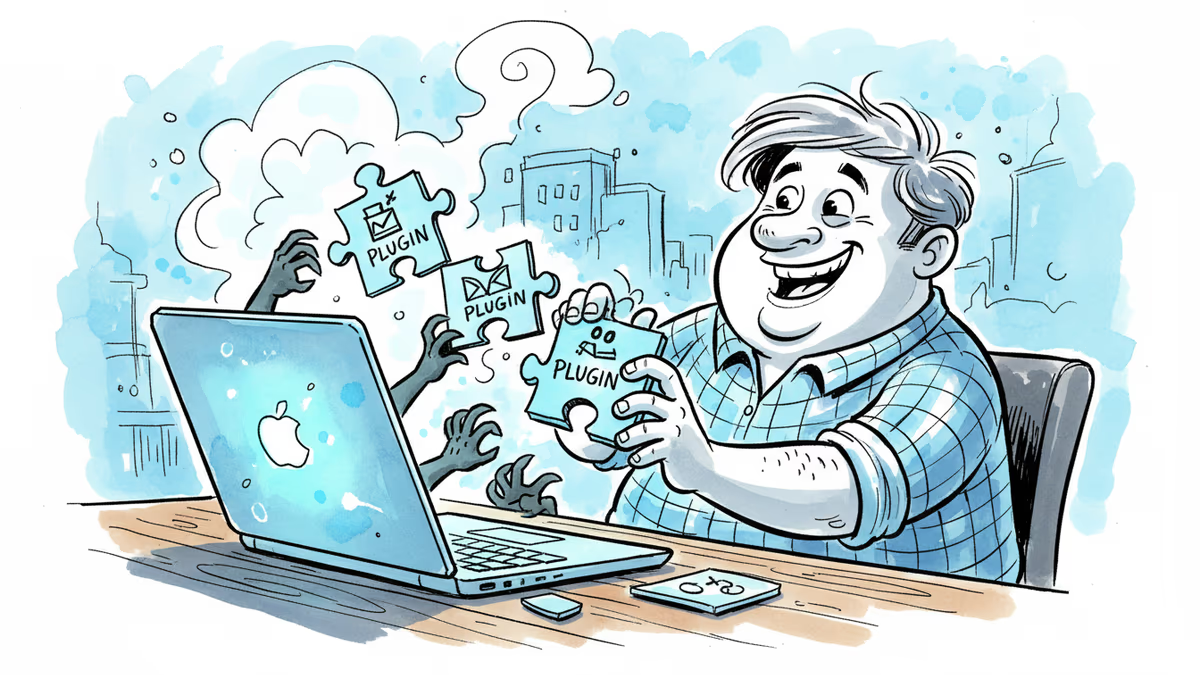
GitHub confirmed hackers stole data from 3,800 internal repositories via a poisoned VS Code extension. Here's why developer tools are now the most dangerous attack surface in tech.
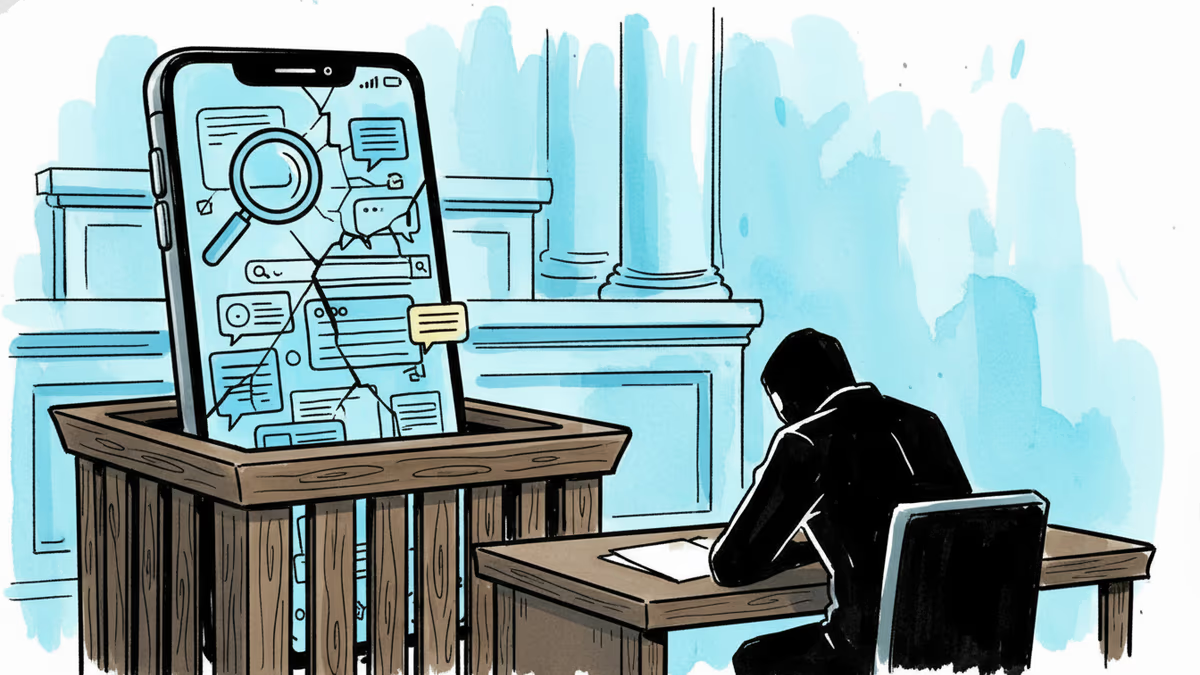
A Utah woman was sentenced to life in prison partly because of her Google searches and deleted texts. The Kouri Richins case reveals how digital footprints have become the courtroom's most reliable witness.
Sam Nelson, 19, died after following ChatGPT's advice to mix Kratom and Xanax. His parents are suing OpenAI for wrongful death, raising urgent questions about AI trust, liability, and design.
A critical vulnerability in Starlette—downloaded 325 million times per week—puts millions of AI agent servers at risk, exposing stored credentials for email, databases, and third-party services.
GitHub confirmed hackers stole data from 3,800 internal repositories via a poisoned VS Code extension. Here's why developer tools are now the most dangerous attack surface in tech.
A Utah woman was sentenced to life in prison partly because of her Google searches and deleted texts. The Kouri Richins case reveals how digital footprints have become the courtroom's most reliable witness.
Sam Nelson, 19, died after following ChatGPT's advice to mix Kratom and Xanax. His parents are suing OpenAI for wrongful death, raising urgent questions about AI trust, liability, and design.
Thoughts
Share your thoughts on this article
Sign in to join the conversation