

The Lobster That's Making AI Personal (And Risky)
Moltbot went viral as an AI that "actually does things" - but its power to execute commands on your computer raises serious security questions about the future of personal AI.
A lobster has become the unlikely poster child for the next phase of AI evolution. Moltbot (formerly Clawdbot) promises to be the "AI that actually does things" — managing your calendar, sending messages, checking you in for flights. Within weeks of launch, it amassed over 44,200 stars on GitHub and even moved markets, with Cloudflare's stock surging 14% in premarket trading as developers flocked to run the AI agent on the company's infrastructure.
But behind the viral crustacean mascot lies a fundamental tension that could define personal AI's future: the trade-off between utility and security.
From Empty to Viral: One Developer's AI Journey
Peter Steinberger, an Austrian developer known online as @steipete, built Moltbot to solve his own problem. After stepping away from his previous project, PSPDFkit, Steinberger barely touched his computer for three years. When he finally found his spark again, he dove into what he calls "human-AI collaboration" — creating an assistant that could actually manage his digital life.
Originally named after Anthropic's flagship AI Claude (Steinberger calls himself a "Claudoholic"), the project had to rebrand after legal pressure from the company. The name changed, but the "lobster soul" remained — along with its growing community of tech-savvy early adopters eager to experiment with truly autonomous AI.
The viral attention speaks to something deeper than novelty. For developers already excited about AI generating websites and apps, having a personal assistant that can execute real tasks represents the next logical step. It's the difference between AI that talks about doing things and AI that actually does them.
The Power and Peril of "Actually Doing Things"
Here's where things get complicated. Moltbot's core promise — that it "actually does things" — means it can execute arbitrary commands on your computer. As entrepreneur and investor Rahul Sood pointed out, this opens the door to "prompt injection through content," where a malicious actor could send you a WhatsApp message that tricks Moltbot into taking unintended actions without your knowledge.

The security model reflects this tension. Moltbot is open source, allowing anyone to inspect its code for vulnerabilities, and it runs locally rather than in the cloud. But its very premise is inherently risky. The current recommendation? Run it on a separate computer with throwaway accounts — which defeats the purpose of having a useful AI assistant.
Steinberger himself got a taste of the darker side when crypto scammers hijacked his GitHub username during the rebranding, creating fake cryptocurrency projects in his name. It's a reminder that viral AI projects attract both genuine enthusiasts and malicious actors.
The Early Adopter Reality Check
Right now, installing Moltbot requires technical expertise that puts it firmly in early adopter territory. If you've never heard of a VPS (virtual private server), you're probably not ready for Moltbot. The setup complexity isn't accidental — it's a natural barrier that keeps the tool in the hands of people who understand the risks.
This limitation might actually be a feature, not a bug. The current user base consists of developers who can read the code, understand the security implications, and make informed decisions about how to deploy it safely. They're essentially beta testing not just a product, but an entire category of AI interaction.
The question is what happens when — not if — these tools become accessible to mainstream users. Will the security-versus-utility trade-off be resolved, or will we see a wave of AI-powered security incidents as personal assistants gain more power over our digital lives?
Beyond the Hype: What Moltbot Really Represents
Moltbot's viral success reveals something important about where AI is heading. We're moving beyond chatbots that generate text toward agents that take action. The enthusiasm around Moltbot suggests there's genuine demand for AI that can handle the mundane tasks that fill our digital lives.
But it also highlights the infrastructure challenges ahead. The fact that Cloudflare's stock moved on Moltbot buzz shows how the success of AI agents depends on the underlying computing infrastructure. As these tools become more sophisticated, they'll need robust, secure platforms to run on.
The open source approach offers one path forward. By making the code transparent, projects like Moltbot allow the security community to identify and fix vulnerabilities. But that only works if users actually understand what they're running and how to run it safely.
Authors
Related Articles

Huawei's CANN is open source under a license barring software for non-Ascend chips. Inside China's second CUDA, and the two links still outside it: pre-training compute and 5nm capacity.
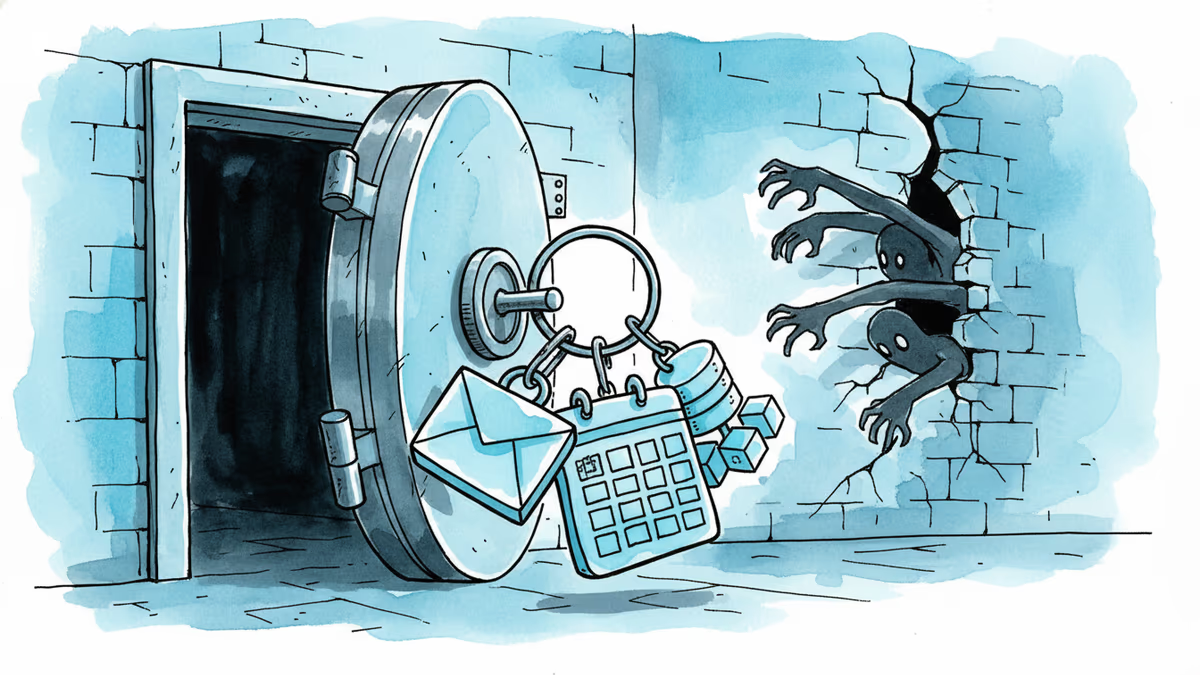
A critical vulnerability in Starlette—downloaded 325 million times per week—puts millions of AI agent servers at risk, exposing stored credentials for email, databases, and third-party services.

A small but growing group of developers has gone all-in on AI coding agents like Claude Code and OpenClaw. History suggests the rest of us won't be far behind.
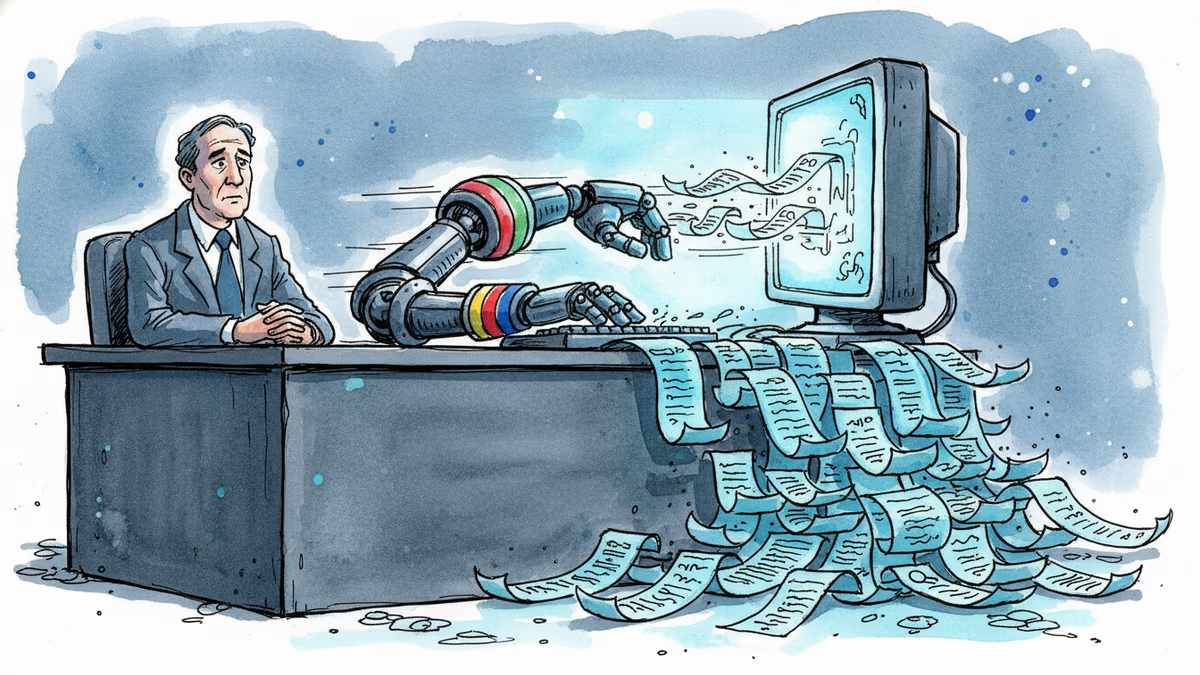
Google is building AI agents that search the web proactively, without user prompting. That's not just a product update — it's a fundamental shift in who controls the information you receive.
Huawei's CANN is open source under a license barring software for non-Ascend chips. Inside China's second CUDA, and the two links still outside it: pre-training compute and 5nm capacity.
A critical vulnerability in Starlette—downloaded 325 million times per week—puts millions of AI agent servers at risk, exposing stored credentials for email, databases, and third-party services.
A small but growing group of developers has gone all-in on AI coding agents like Claude Code and OpenClaw. History suggests the rest of us won't be far behind.
Google is building AI agents that search the web proactively, without user prompting. That's not just a product update — it's a fundamental shift in who controls the information you receive.
Thoughts
Share your thoughts on this article
Sign in to join the conversation