
WhatsApp's Fortress Mode: When Privacy Becomes a Luxury
WhatsApp launches Strict Account Settings for high-risk users like journalists and public figures. But who decides who deserves maximum security?
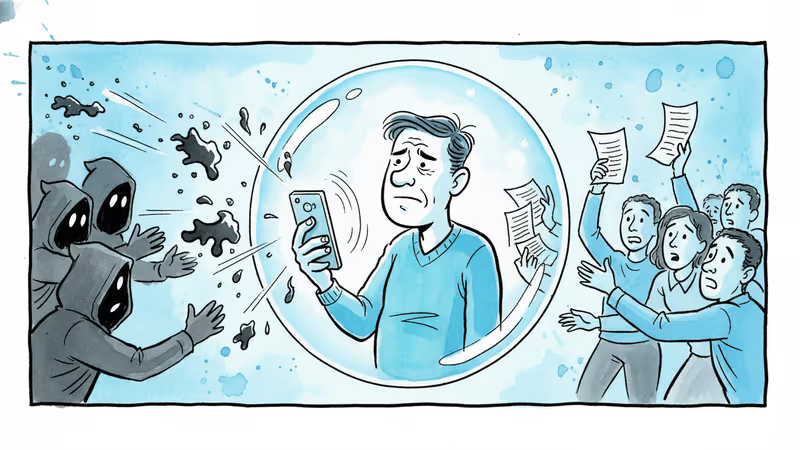
One in four journalists worldwide face digital attacks, yet most messaging apps treat a war correspondent and a teenager the same when it comes to security. WhatsApp is changing that calculus with its new "Strict Account Settings" — a digital fortress mode designed for those who live under constant threat.
The Meta-owned platform is rolling out enhanced protections that automatically block attachments and media from unknown senders, silence calls from non-contacts, and strip away digital breadcrumbs like link previews and online status visibility. It's essentially turning WhatsApp into a locked-down bunker for users who might be targets of "sophisticated cyber campaigns."
The Digital Divide Gets Deeper
But here's where it gets interesting: WhatsApp isn't making these features available to everyone. They're specifically designed for "people at high risk of attacks — such as journalists or public figures." This creates an uncomfortable question: who decides who deserves maximum security?
The feature set reads like a paranoia checklist. Unknown contacts can't see your profile photo, "about" details, or when you were last online. Group additions require your explicit permission. Link previews — those helpful snippets that show you what a URL contains — are completely disabled to prevent potential exploits.
For a Reuters correspondent in a conflict zone or a human rights activist in an authoritarian regime, these restrictions might be lifesaving. But they come at a cost: the very connectivity that makes messaging apps valuable gets systematically dismantled.
The Usability Trade-Off

WhatsApp's approach reflects a broader tension in cybersecurity: the inverse relationship between security and convenience. Every wall you build to keep threats out also makes legitimate communication harder.
Consider the ripple effects. When link previews are disabled, sharing news articles becomes clunky. When unknown callers are automatically silenced, sources trying to reach journalists face new barriers. When group additions require permission, organizing rapid responses to breaking news gets complicated.
This isn't necessarily bad — it's a calculated trade-off. But it highlights how security often becomes a luxury good, available to those who can afford the friction it creates in their digital lives.
The Bigger Picture: Tiered Internet
WhatsApp's move signals something larger: the emergence of a tiered internet where your threat level determines your user experience. We're seeing this across platforms — Twitter offers different verification tiers, LinkedIn provides premium security features, and now WhatsApp is creating security classes.
The implications extend beyond individual users. If high-profile figures retreat into increasingly isolated digital bubbles, what happens to the cross-pollination of ideas that social networks were supposed to enable? When journalists operate in locked-down modes, how does that affect their ability to receive tips from unexpected sources?
There's also the question of threat assessment. WhatsApp doesn't specify how users qualify for these high-risk protections or who makes that determination. Are we moving toward a world where platforms decide who deserves premium privacy?
Authors
Related Articles
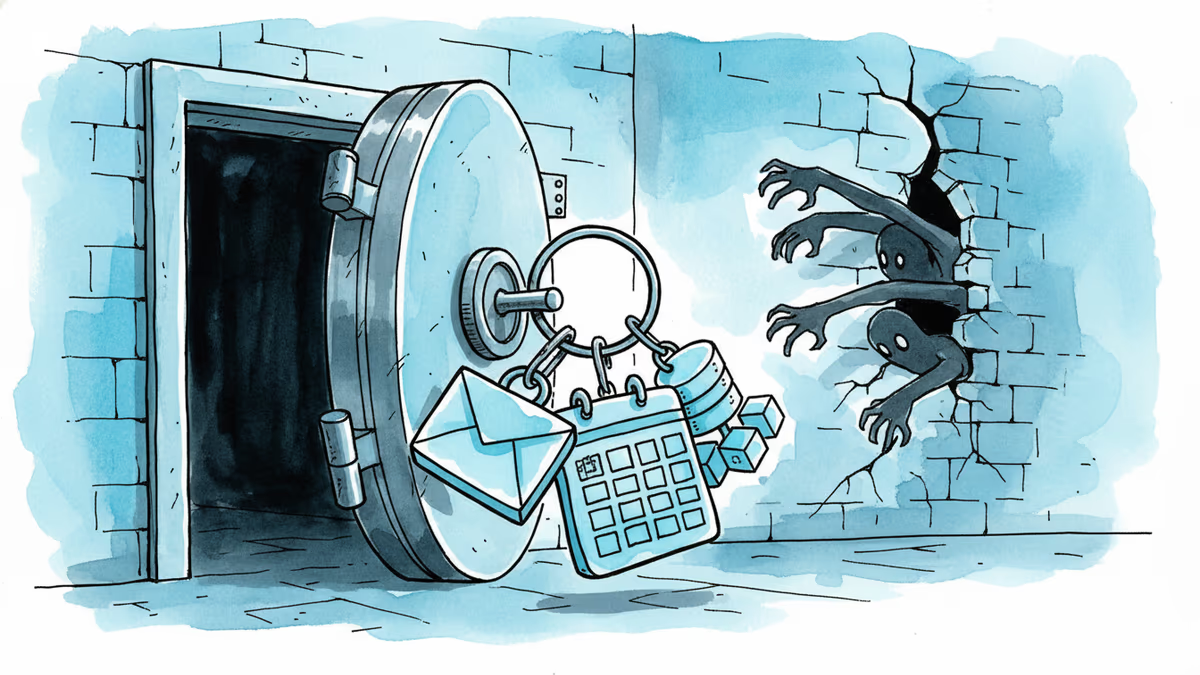
A critical vulnerability in Starlette—downloaded 325 million times per week—puts millions of AI agent servers at risk, exposing stored credentials for email, databases, and third-party services.
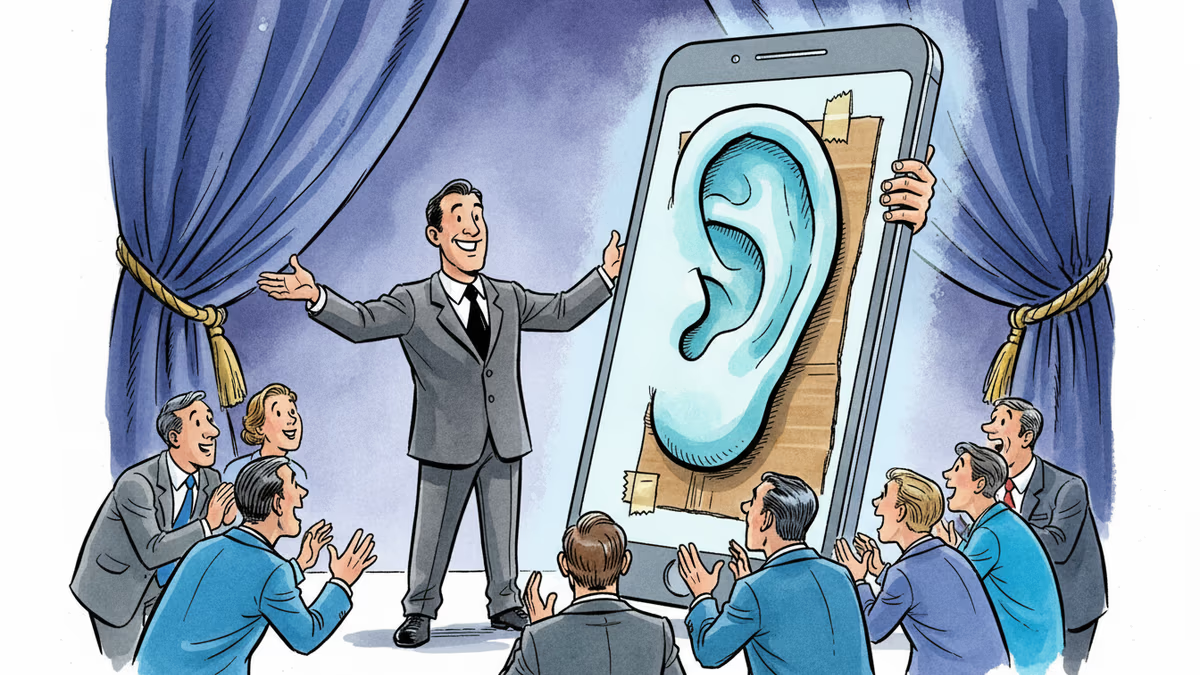
The FTC fined Cox Media and two ad firms $930,000 — not for actually eavesdropping on users, but for falsely claiming they could. The case raises uncomfortable questions about surveillance capitalism.
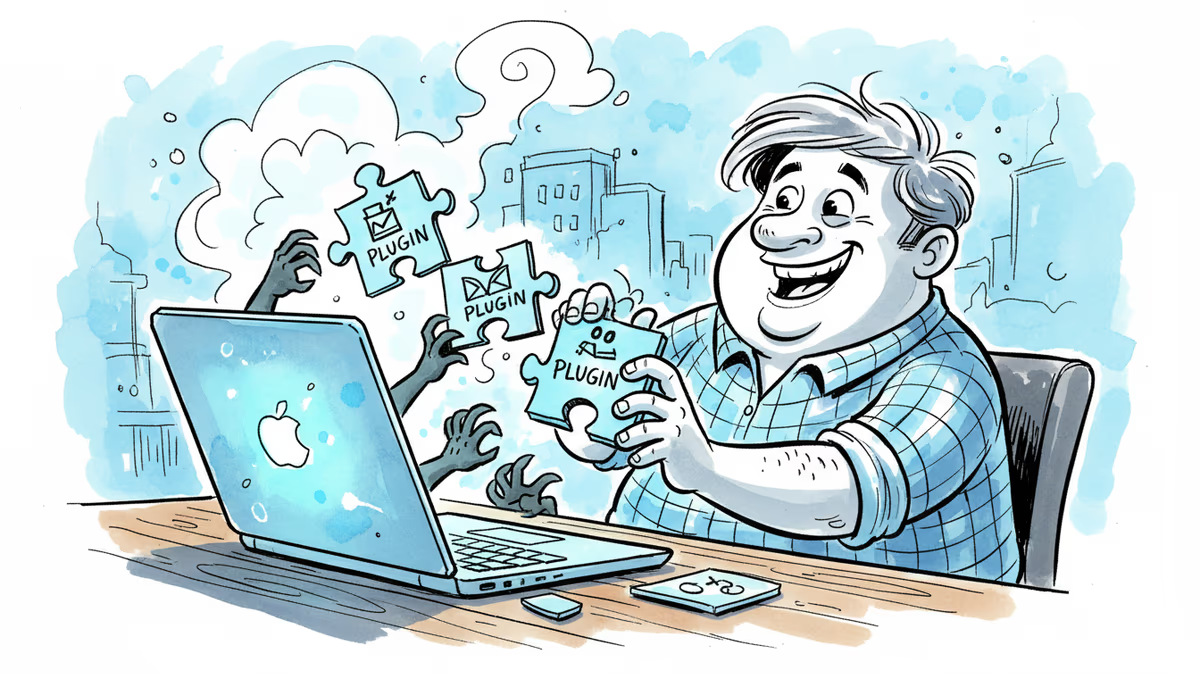
GitHub confirmed hackers stole data from 3,800 internal repositories via a poisoned VS Code extension. Here's why developer tools are now the most dangerous attack surface in tech.
A Utah woman was sentenced to life in prison partly because of her Google searches and deleted texts. The Kouri Richins case reveals how digital footprints have become the courtroom's most reliable witness.
A critical vulnerability in Starlette—downloaded 325 million times per week—puts millions of AI agent servers at risk, exposing stored credentials for email, databases, and third-party services.
The FTC fined Cox Media and two ad firms $930,000 — not for actually eavesdropping on users, but for falsely claiming they could. The case raises uncomfortable questions about surveillance capitalism.
GitHub confirmed hackers stole data from 3,800 internal repositories via a poisoned VS Code extension. Here's why developer tools are now the most dangerous attack surface in tech.
A Utah woman was sentenced to life in prison partly because of her Google searches and deleted texts. The Kouri Richins case reveals how digital footprints have become the courtroom's most reliable witness.
Thoughts
Share your thoughts on this article
Sign in to join the conversation