

Google Pays $68M for Assistant's Secret Listening Habits
Google settles $68M class-action lawsuit over voice assistant illegally recording users without consent. Why are privacy violations becoming so costly for Big Tech?
What if your smart speaker was recording your private conversations without you ever saying "Hey Google"?
Google has agreed to pay $68 million to settle claims that its voice assistant illegally spied on users, according to Reuters. The tech giant didn't admit wrongdoing in the class-action settlement, but the hefty payout signals just how seriously courts are taking privacy violations in the age of always-listening devices.
The Case of the Overeager Assistant
At the heart of the lawsuit were "false accepts" — instances where Google Assistant allegedly activated and recorded users' conversations without being prompted by a wake word like "OK Google." Think of it as your digital assistant having overly sensitive ears, picking up conversations it was never meant to hear.
The plaintiffs accused Google of "unlawful and intentional interception and recording of individuals' confidential communications without their consent and subsequent unauthorized disclosure of those communications to third parties." More troubling, they claimed this secretly gathered information was "wrongly transmitted to third parties for targeted advertising and for other purposes."
This wasn't just about accidental eavesdropping — it was about turning private moments into commercial data points. Your kitchen conversation about weekend plans could have become part of an advertising algorithm.
A Pattern Emerges
Google's settlement isn't an isolated incident. In 2021, Apple paid $95 million to resolve similar claims about Siri recording conversations without user prompts. The pattern suggests this isn't about one company's technical glitch, but potentially an industry-wide issue with how voice assistants operate.

Google has faced mounting privacy-related litigation recently. Last year, the company agreed to pay $1.4 billion to Texas over violations of the state's data privacy laws. These aren't small fines or slaps on the wrist — they're substantial financial consequences that suggest regulatory attitudes are shifting.
The settlements validate what many Americans have long suspected: their devices might be listening more than they realize. What once seemed like paranoid speculation is increasingly backed by legal findings and corporate admissions (or at least, expensive non-admissions).
The Economics of Privacy Violations
These massive settlements raise an uncomfortable question: are privacy violations simply becoming a cost of doing business for Big Tech? $68 million sounds enormous, but for a company like Google with annual revenues exceeding $300 billion, it's roughly equivalent to 6 hours of revenue.
The math might be even more concerning when you consider the potential value of the data collected. Voice recordings contain incredibly rich information — not just what people say, but how they say it, who they're with, and what their daily routines look like. This data can inform everything from product development to advertising targeting.
For users, the trade-off isn't always clear. We get convenience — the ability to control smart homes, get quick answers, set timers hands-free. But we might be paying with more privacy than we realized we were giving up.
What This Means for Voice Technology
The settlement could reshape how voice assistants operate. Companies might need to implement stricter activation protocols, provide clearer consent mechanisms, or offer more granular privacy controls. Some might shift toward on-device processing to reduce data transmission concerns.
For consumers, this case highlights the importance of understanding what "always listening" really means. Voice assistants don't record everything all the time, but the line between listening for wake words and actually recording can be blurrier than many users realize.
Authors
Related Articles
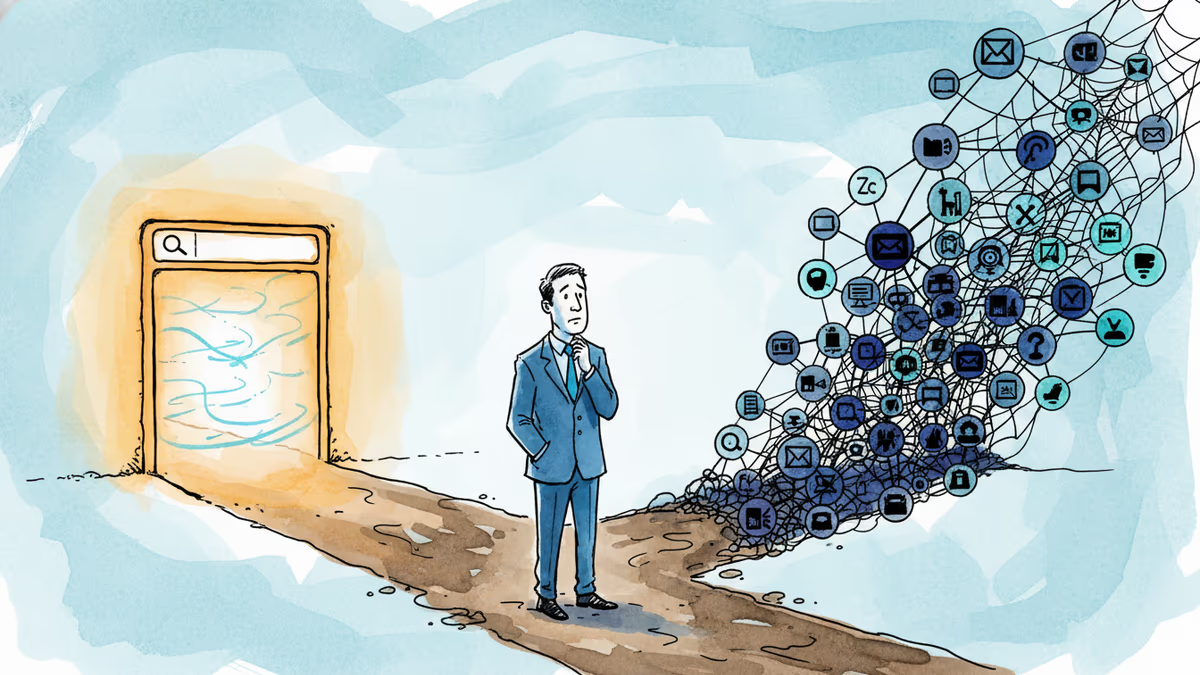
In a post-Google I/O interview, Sundar Pichai acknowledged flawed search results, real AI anxiety, and an AGI timeline that makes the label irrelevant. Here's what he said — and what it means.
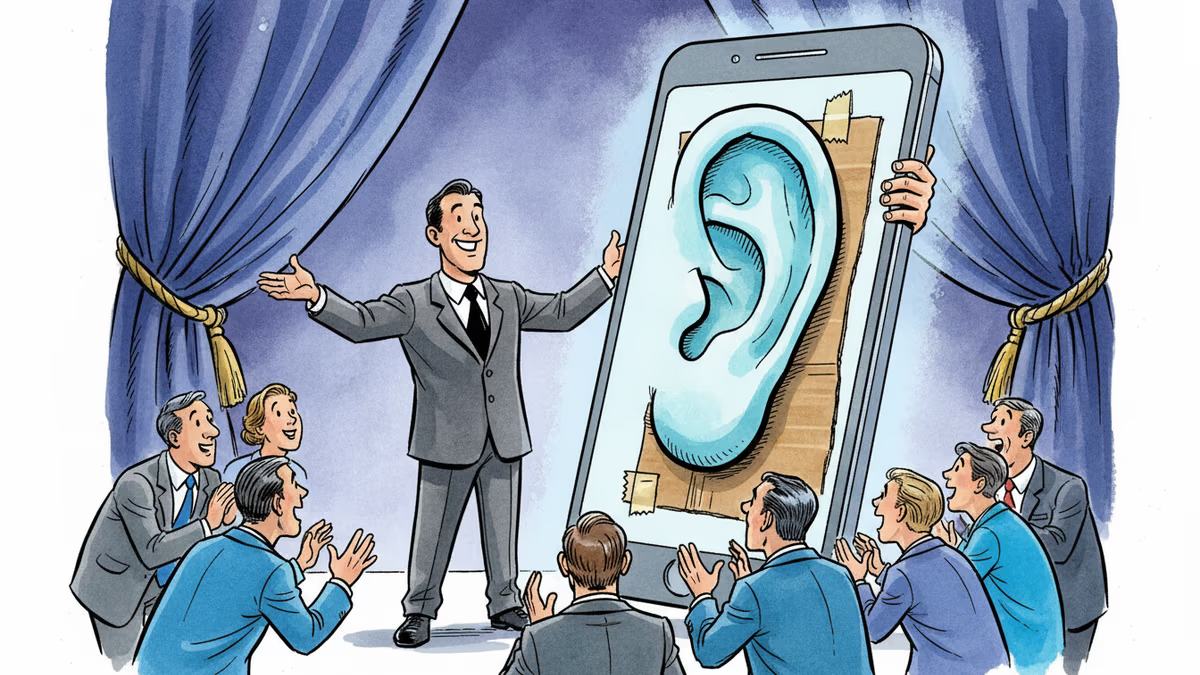
The FTC fined Cox Media and two ad firms $930,000 — not for actually eavesdropping on users, but for falsely claiming they could. The case raises uncomfortable questions about surveillance capitalism.
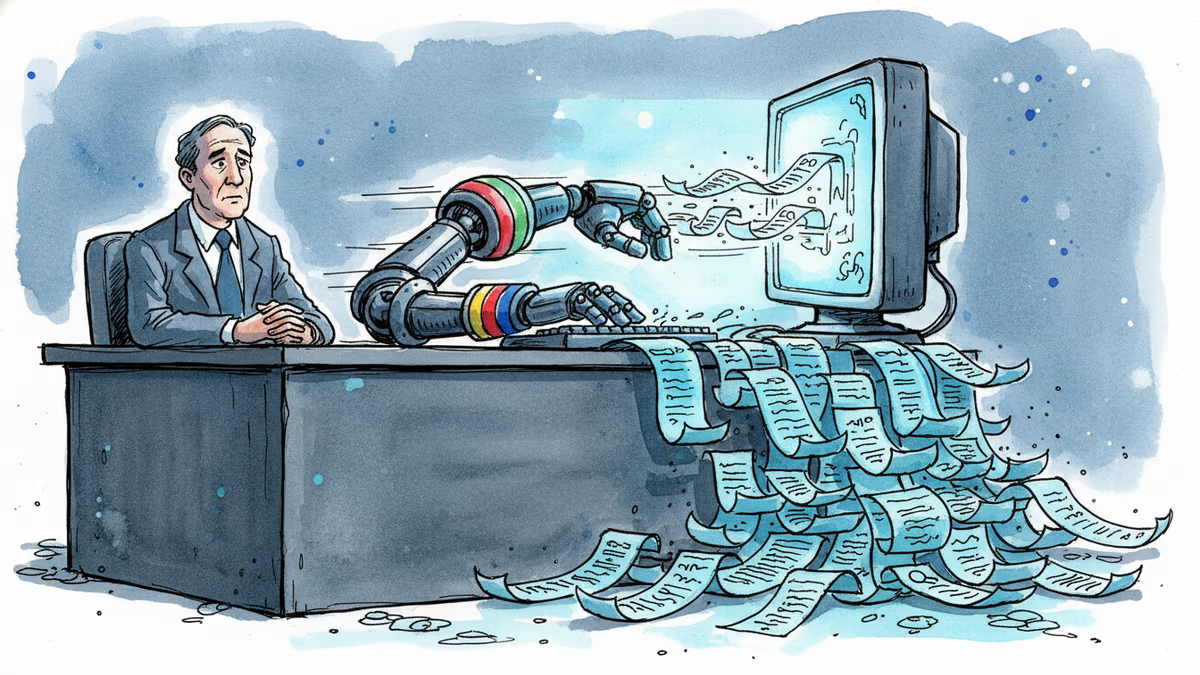
Google is building AI agents that search the web proactively, without user prompting. That's not just a product update — it's a fundamental shift in who controls the information you receive.
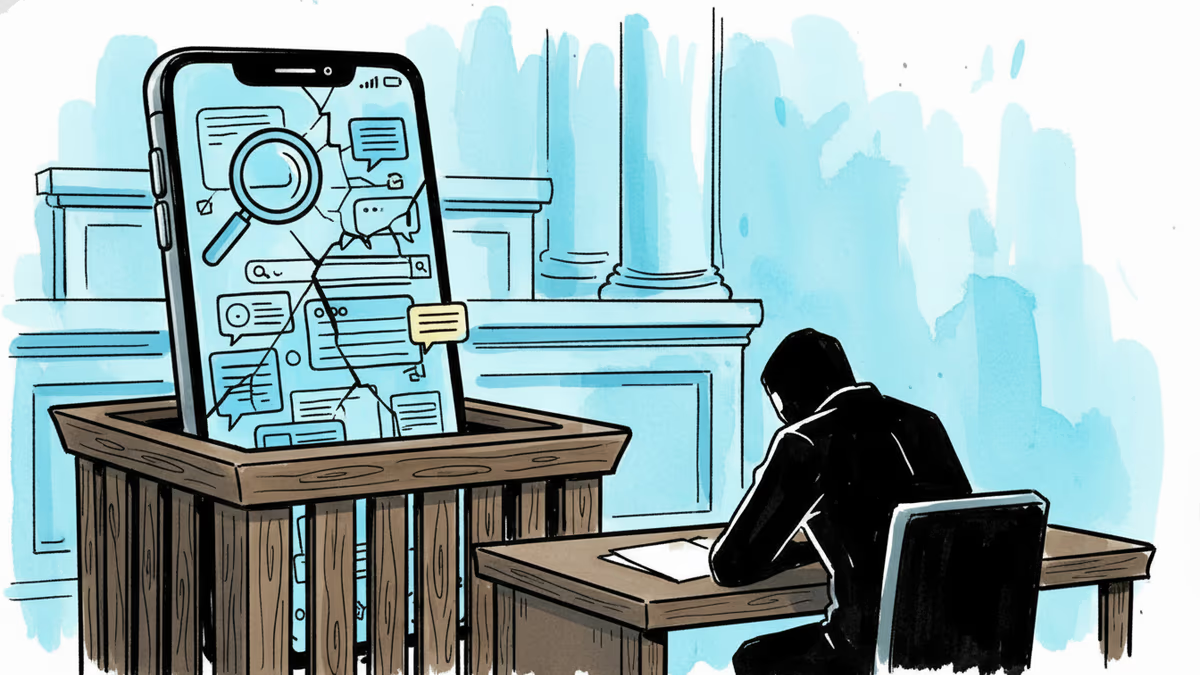
A Utah woman was sentenced to life in prison partly because of her Google searches and deleted texts. The Kouri Richins case reveals how digital footprints have become the courtroom's most reliable witness.
In a post-Google I/O interview, Sundar Pichai acknowledged flawed search results, real AI anxiety, and an AGI timeline that makes the label irrelevant. Here's what he said — and what it means.
The FTC fined Cox Media and two ad firms $930,000 — not for actually eavesdropping on users, but for falsely claiming they could. The case raises uncomfortable questions about surveillance capitalism.
Google is building AI agents that search the web proactively, without user prompting. That's not just a product update — it's a fundamental shift in who controls the information you receive.
A Utah woman was sentenced to life in prison partly because of her Google searches and deleted texts. The Kouri Richins case reveals how digital footprints have become the courtroom's most reliable witness.
Thoughts
Share your thoughts on this article
Sign in to join the conversation