

Gmail's Spam Filter Meltdown: Fixed in a Day, Questions Remain
Google's Gmail experienced widespread spam filter failures for an entire day, affecting 1.5 billion users. Was this just a technical glitch, or a glimpse into the fragility of AI-dependent systems?
Saturday morning brought an unwelcome surprise to Gmail users worldwide. Promotional emails that should've been neatly tucked away in separate folders were flooding primary inboxes, while trusted senders found their messages flagged as spam. For millions of people, their digital mailroom had suddenly turned into chaos.
Google declared the issue "fully resolved for all users" by Saturday evening, but the day-long disruption revealed something more troubling than a simple technical hiccup. It exposed just how dependent we've become on algorithmic gatekeepers—and what happens when they fail.
When 1.5 Billion Inboxes Break at Once
Gmail serves 1.5 billion monthly active users, and most of them experienced the same frustrating Saturday. According to Google Workspace's status dashboard, problems began around 5am Pacific, with users facing "misclassification of emails in their inbox and additional spam warnings."
Social media lit up with complaints. "All the spam is going directly to my inbox," wrote one user. Another declared Gmail's filters "suddenly completely busted." The system that typically boasts 99.9% accuracy in spam detection had essentially gone haywire overnight.
Google spent the entire day updating its dashboard with "still working to resolve" messages before finally announcing complete restoration Saturday evening. The company promised to "publish an analysis of this incident once we have completed our internal investigation."
But the damage was already done—not just to user experience, but to our collective confidence in the invisible systems that manage our digital lives.
The Algorithmic Single Point of Failure
This wasn't just about inconvenience. It was about vulnerability. Gmail's spam filtering relies on machine learning algorithms that process over 100 billion spam emails daily, analyzing hundreds of signals from sender reputation to content patterns to user behavior.

When that system fails, it fails globally and simultaneously. There's no gradual degradation or regional isolation—it's all or nothing for 1.5 billion people at once.
For businesses relying on Gmail for critical communications, the implications go beyond cluttered inboxes. Important client emails could be buried in spam folders, while phishing attempts might slip through undetected. The cost of such misclassification can be measured not just in productivity loss, but in missed opportunities and security risks.
The Centralization Trap
Saturday's meltdown highlighted a broader concern: the concentration of digital infrastructure in the hands of a few tech giants. Google, Microsoft, and Apple control the vast majority of email traffic worldwide. When one of these systems fails, the ripple effects are felt across industries and continents.
Google hasn't revealed what caused the malfunction. Was it a server issue? A botched algorithm update? A cyberattack? The promised analysis report will hopefully provide answers, but it also raises uncomfortable questions about transparency and accountability in critical digital infrastructure.
The incident also underscores the complexity of modern AI systems. As these algorithms become more sophisticated, they also become more opaque and unpredictable. Even their creators don't always understand exactly how they make decisions—or why they sometimes make the wrong ones.
The Price of Convenience
Users have grown accustomed to Gmail's seamless spam filtering, rarely thinking about the complex machinery working behind the scenes. Saturday's disruption served as a stark reminder that this convenience comes with hidden costs: dependency, vulnerability, and a loss of control over our own communications.
The fact that Google could fix the problem in a day is impressive. But it's equally concerning that they had the power to break it for everyone in the first place. As we increasingly rely on AI-powered services, we're essentially betting that these systems will work perfectly, all the time.
History suggests that's a losing bet.
Authors
Related Articles
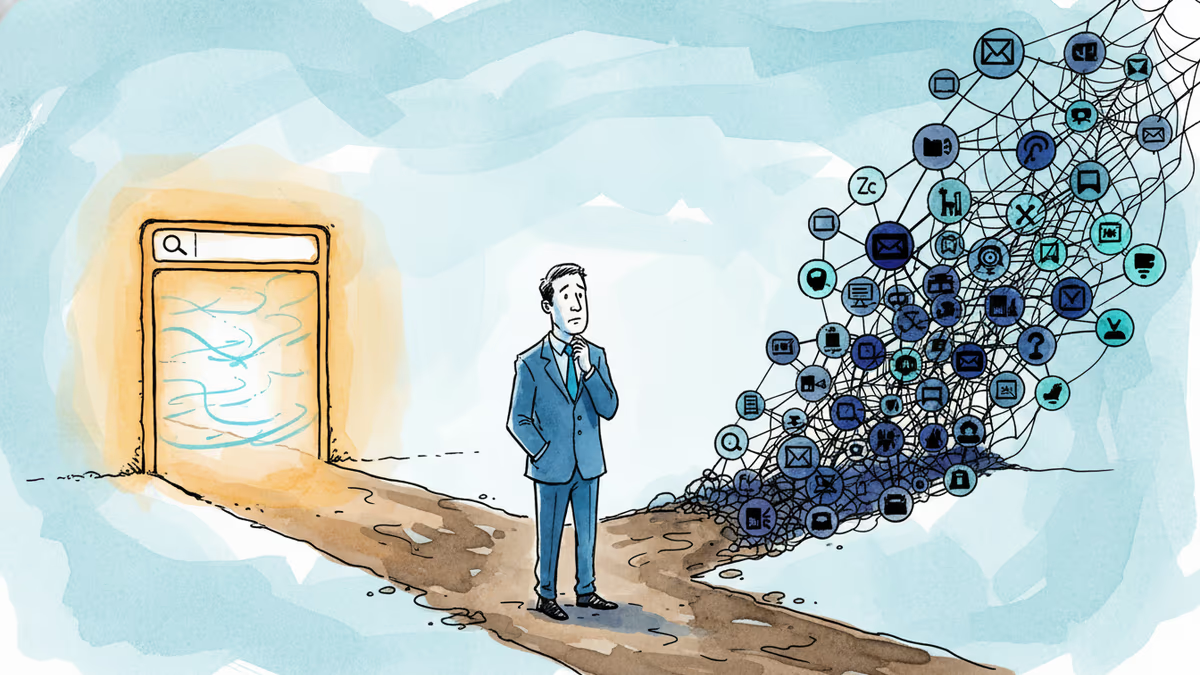
In a post-Google I/O interview, Sundar Pichai acknowledged flawed search results, real AI anxiety, and an AGI timeline that makes the label irrelevant. Here's what he said — and what it means.
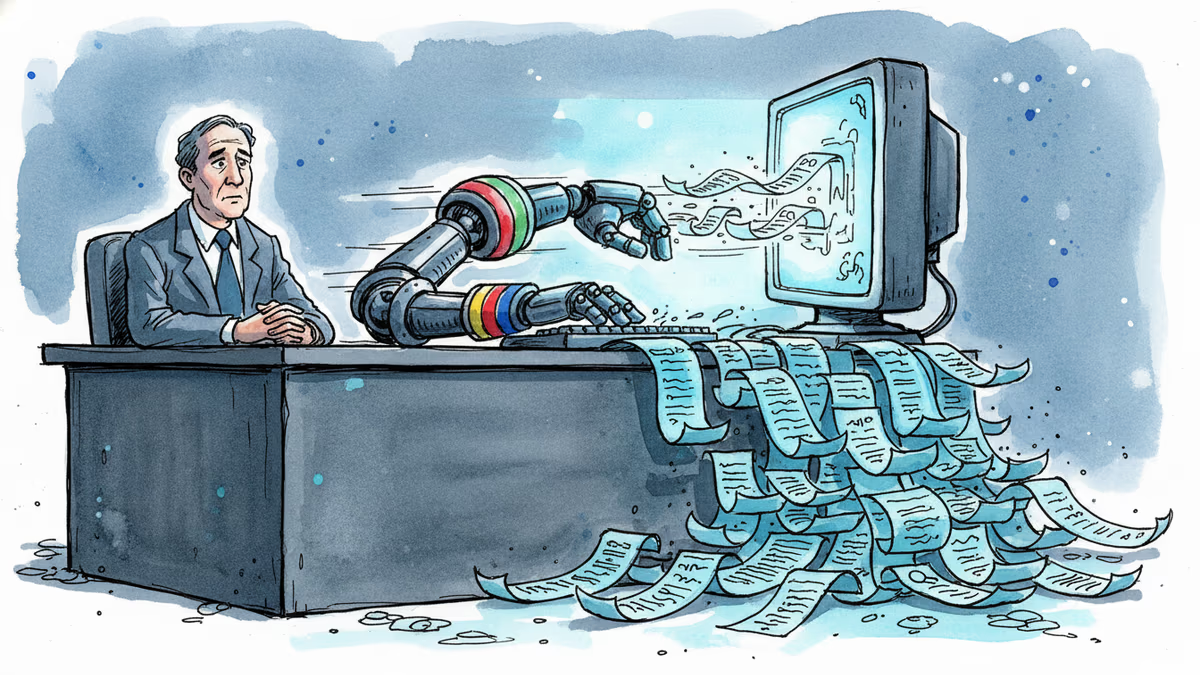
Google is building AI agents that search the web proactively, without user prompting. That's not just a product update — it's a fundamental shift in who controls the information you receive.
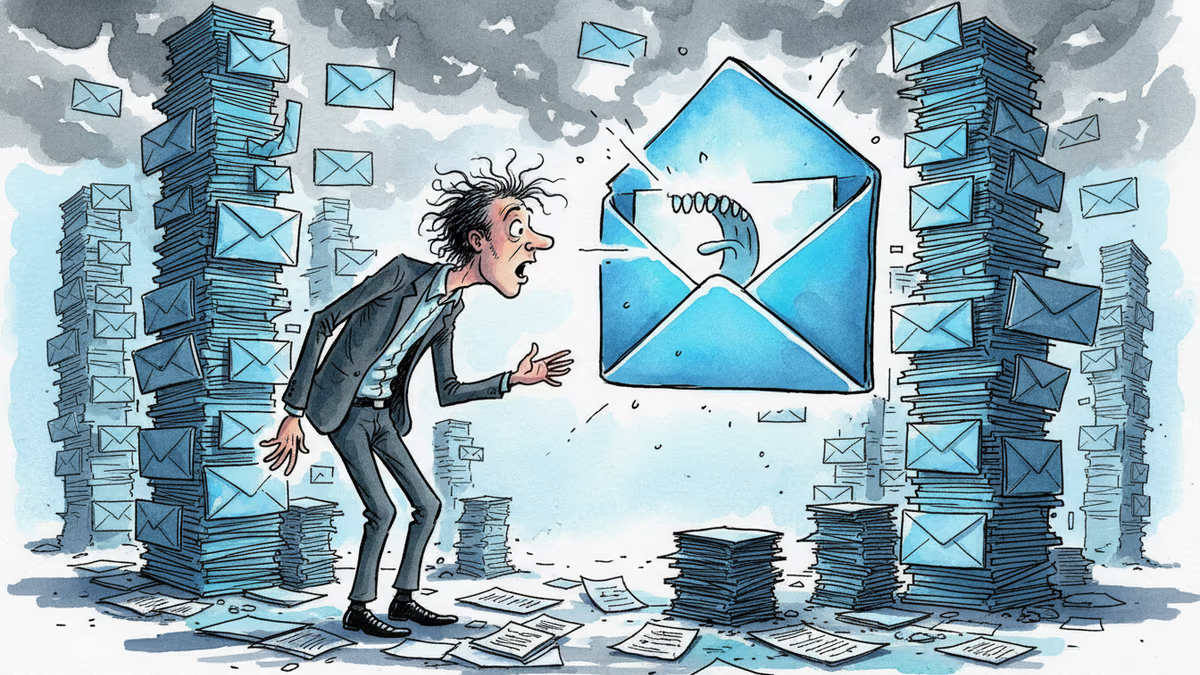
Google's Gmail Live lets you ask your inbox questions out loud. Announced at I/O 2026, it's AI's pitch to skeptics — and a reminder of how much Google already knows about you.
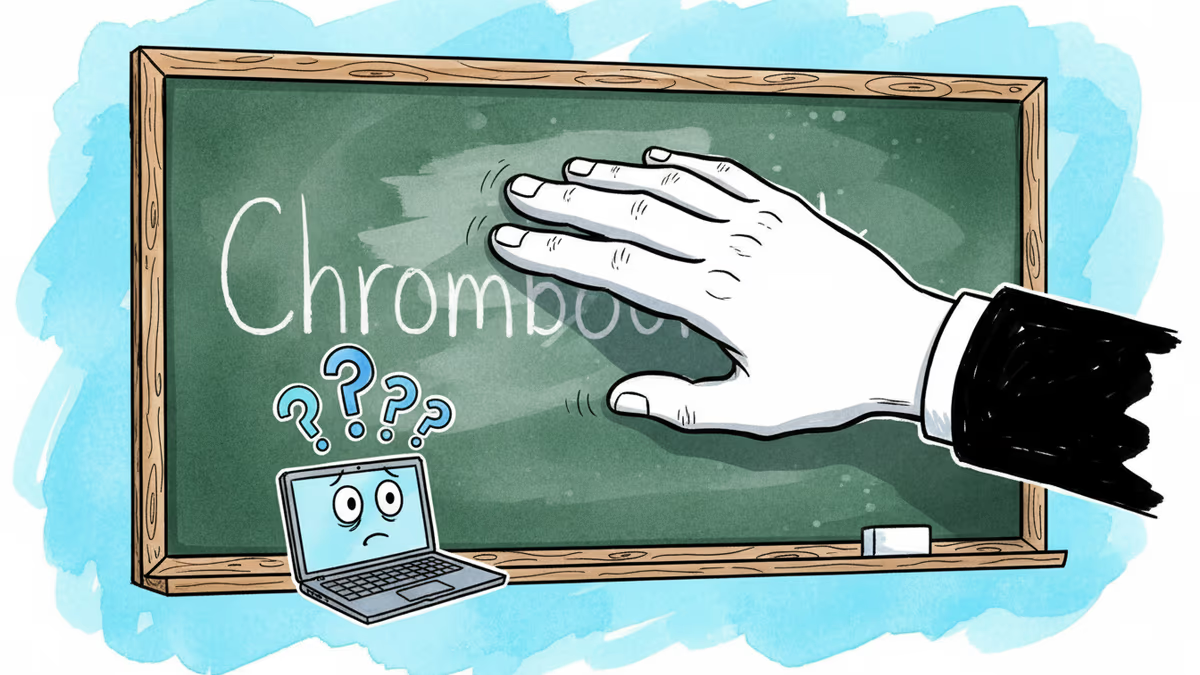
Google unveiled the 'Googlebook' platform to replace Chromebook and ChromeOS—but revealed zero hardware specs. What's the strategy, and what does it mean for users, manufacturers, and the education market?
In a post-Google I/O interview, Sundar Pichai acknowledged flawed search results, real AI anxiety, and an AGI timeline that makes the label irrelevant. Here's what he said — and what it means.
Google is building AI agents that search the web proactively, without user prompting. That's not just a product update — it's a fundamental shift in who controls the information you receive.
Google's Gmail Live lets you ask your inbox questions out loud. Announced at I/O 2026, it's AI's pitch to skeptics — and a reminder of how much Google already knows about you.
Google unveiled the 'Googlebook' platform to replace Chromebook and ChromeOS—but revealed zero hardware specs. What's the strategy, and what does it mean for users, manufacturers, and the education market?
Thoughts
Share your thoughts on this article
Sign in to join the conversation