
Gmail Spam Filter Breaks, Floods Inboxes Worldwide
Google Gmail experiences major spam filtering system failure, allowing promotional emails to bypass filters and flood user inboxes with unscanned messages showing warning banners.
Your Gmail inbox isn't supposed to look like a digital junk drawer, but that's exactly what's happening to millions of users worldwide.
What Went Wrong
Gmail users have been reporting a significant glitch in Google's email filtering system. Promotional emails that normally get automatically sorted into the "Promotions" tab are now bypassing filters entirely and landing directly in primary inboxes.
The problem goes beyond mere inconvenience. Some users are seeing warning banners at the top of messages stating "be careful with this message," indicating these emails haven't been fully scanned for spam or malware. That's a red flag in cybersecurity terms.
Google has officially acknowledged the issue on its Workspace Status Dashboard, stating: "Gmail users might see banners indicating missing spam checks. We are experiencing an issue with Gmail."
The Ripple Effect

This isn't just about cluttered inboxes. With over 2 billion Gmail users globally, the scale of this disruption is massive. Businesses relying on Google Workspace are particularly vulnerable, as unscanned emails pose potential security risks.
For users who've grown accustomed to Gmail's sophisticated filtering system, the sudden change is jarring. Important emails are getting buried under promotional content, while potentially dangerous messages slip through without proper security screening.
The timing couldn't be worse for businesses already dealing with increased cyber threats. Email remains the primary attack vector for 91% of cyberattacks, making reliable spam filtering crucial for organizational security.
Beyond the Technical Glitch
This incident reveals our dangerous dependence on automated systems. Gmail's spam filter has maintained a 99.9% accuracy rate for years, creating a false sense of invincibility. One system failure and millions of people's digital lives are disrupted.
The broader question is about centralization risk. When a single company's service failure affects billions of users simultaneously, it highlights the fragility of our digital infrastructure. We've essentially put all our eggs in one very large, very complex basket.
This also exposes the limitations of AI-driven filtering systems. Despite machine learning advances, these systems can still fail catastrophically and unpredictably. The more we rely on them, the more vulnerable we become to their failures.
Authors
Related Articles
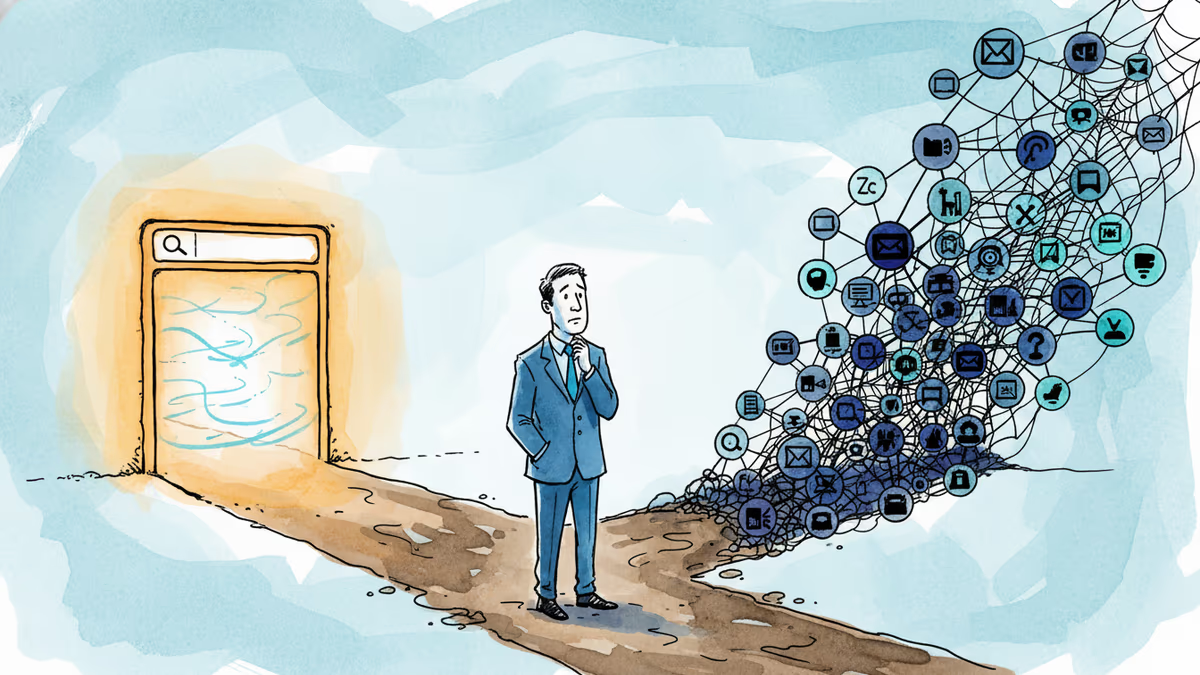
In a post-Google I/O interview, Sundar Pichai acknowledged flawed search results, real AI anxiety, and an AGI timeline that makes the label irrelevant. Here's what he said — and what it means.
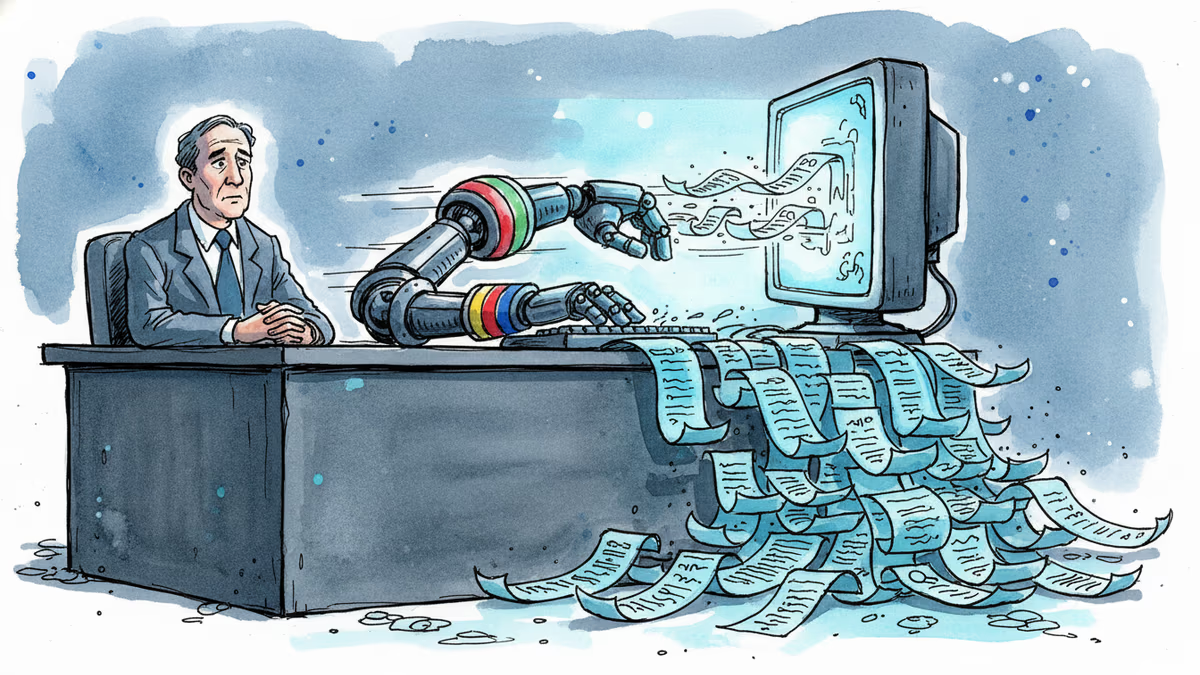
Google is building AI agents that search the web proactively, without user prompting. That's not just a product update — it's a fundamental shift in who controls the information you receive.
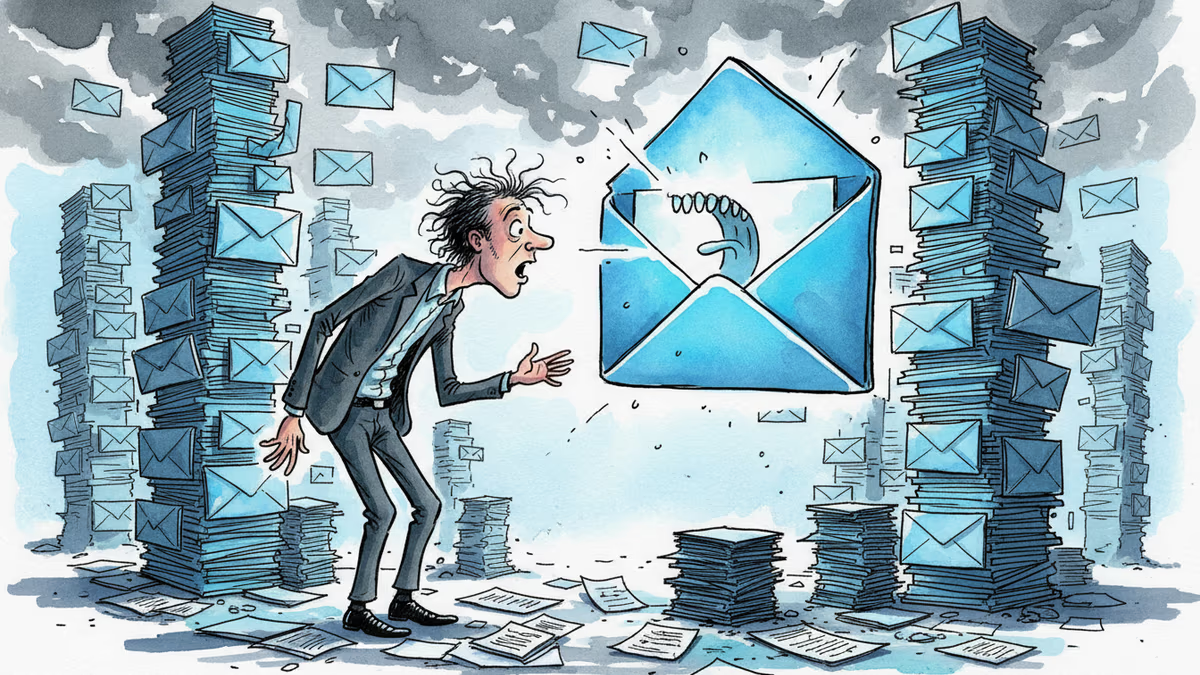
Google's Gmail Live lets you ask your inbox questions out loud. Announced at I/O 2026, it's AI's pitch to skeptics — and a reminder of how much Google already knows about you.
Google unveiled the 'Googlebook' platform to replace Chromebook and ChromeOS—but revealed zero hardware specs. What's the strategy, and what does it mean for users, manufacturers, and the education market?
In a post-Google I/O interview, Sundar Pichai acknowledged flawed search results, real AI anxiety, and an AGI timeline that makes the label irrelevant. Here's what he said — and what it means.
Google is building AI agents that search the web proactively, without user prompting. That's not just a product update — it's a fundamental shift in who controls the information you receive.
Google's Gmail Live lets you ask your inbox questions out loud. Announced at I/O 2026, it's AI's pitch to skeptics — and a reminder of how much Google already knows about you.
Google unveiled the 'Googlebook' platform to replace Chromebook and ChromeOS—but revealed zero hardware specs. What's the strategy, and what does it mean for users, manufacturers, and the education market?
Thoughts
Share your thoughts on this article
Sign in to join the conversation