

Google Discover AI Headlines Controversy: The Tech Giant is Rewriting the News
Google is replacing original news headlines with AI-generated clickbait in its Discover feed. Despite claims of user satisfaction, the move sparks massive controversy over AI ethics.
Google is fundamentally altering how we consume news, and not everyone's happy about it. According to reports from The Verge, the tech giant has been replacing original news titles with AI-generated headlines in its Google Discover feed—often turning factual reporting into clickbait nonsense.
The experiment first caught the public's eye in December 2025. While many hoped it was a temporary test, Google has now confirmed to The Verge that these AI-modified headlines are a permanent feature. The company claims the system "performs well for user satisfaction," despite growing evidence of misleading and outright false claims appearing on users' homescreens.
The Google Discover AI Headlines Controversy Explained

The practice has hit major outlets like PCMag and The Verge itself. Critics argue that this is akin to a bookstore tearing off the covers of books and replacing them with whatever the shopkeeper thinks will sell better. This isn't just an aesthetic choice; it's an ethical one. When a platform rewrites a headline, it takes control of the narrative, often distorting the original journalist's intent.
Why User Satisfaction Isn't the Whole Story
Google's reliance on engagement metrics—what they call "user satisfaction"—ignores the reality of misinformation. AI models are prone to hallucination, and when applied to news headlines, they can generate statements that the original article never made. This creates a friction-filled environment where publishers must defend themselves against claims they didn't actually publish.
Authors
Related Articles
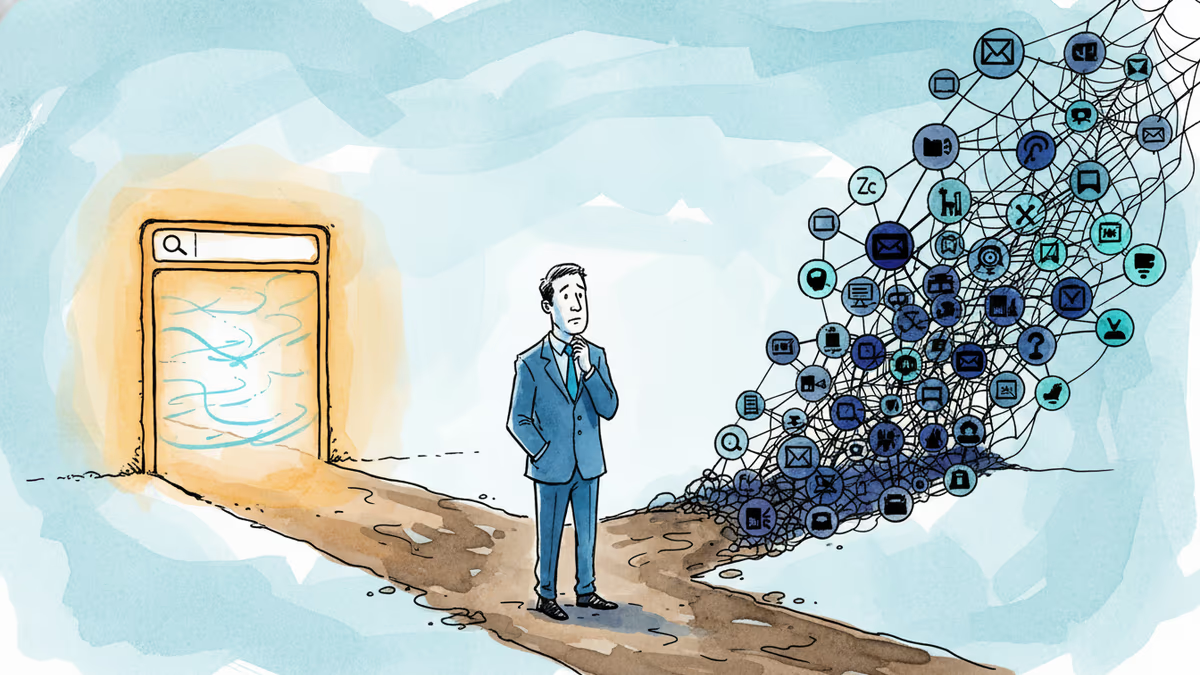
In a post-Google I/O interview, Sundar Pichai acknowledged flawed search results, real AI anxiety, and an AGI timeline that makes the label irrelevant. Here's what he said — and what it means.
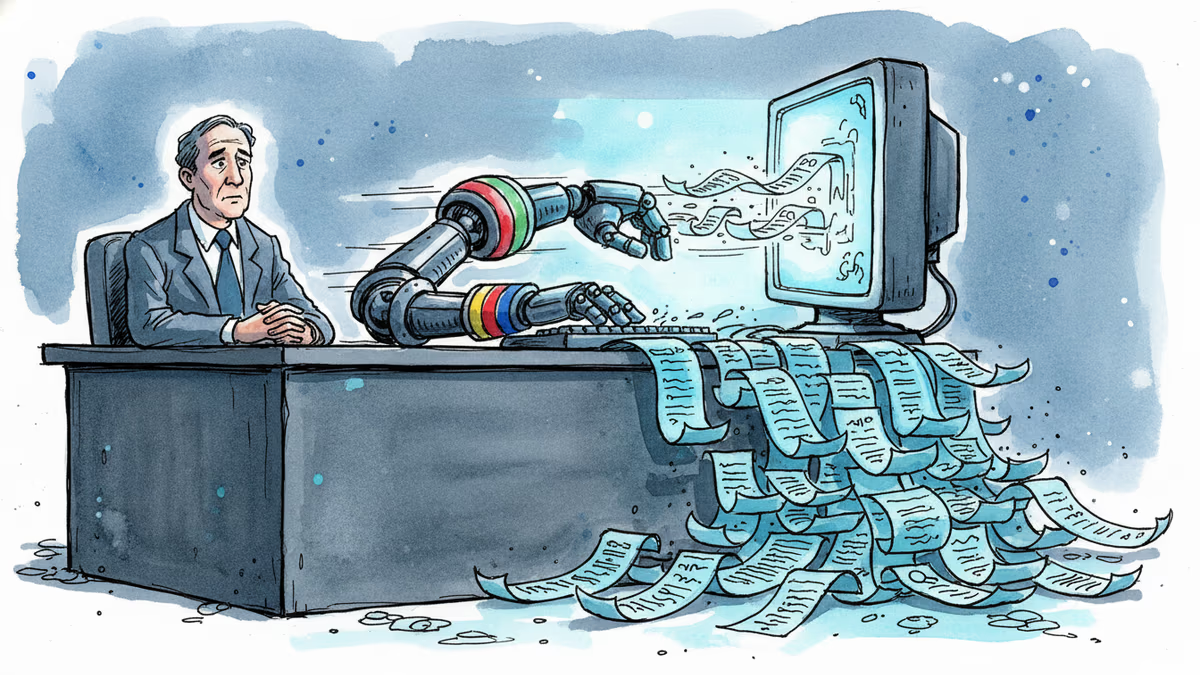
Google is building AI agents that search the web proactively, without user prompting. That's not just a product update — it's a fundamental shift in who controls the information you receive.
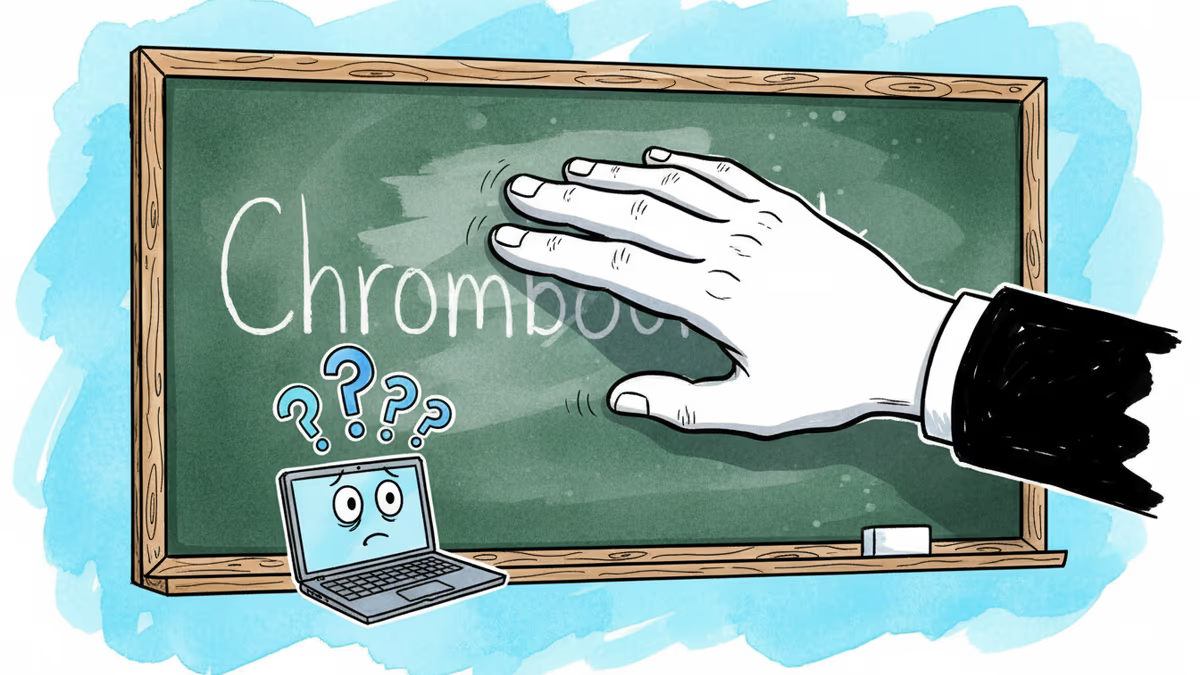
Google unveiled the 'Googlebook' platform to replace Chromebook and ChromeOS—but revealed zero hardware specs. What's the strategy, and what does it mean for users, manufacturers, and the education market?
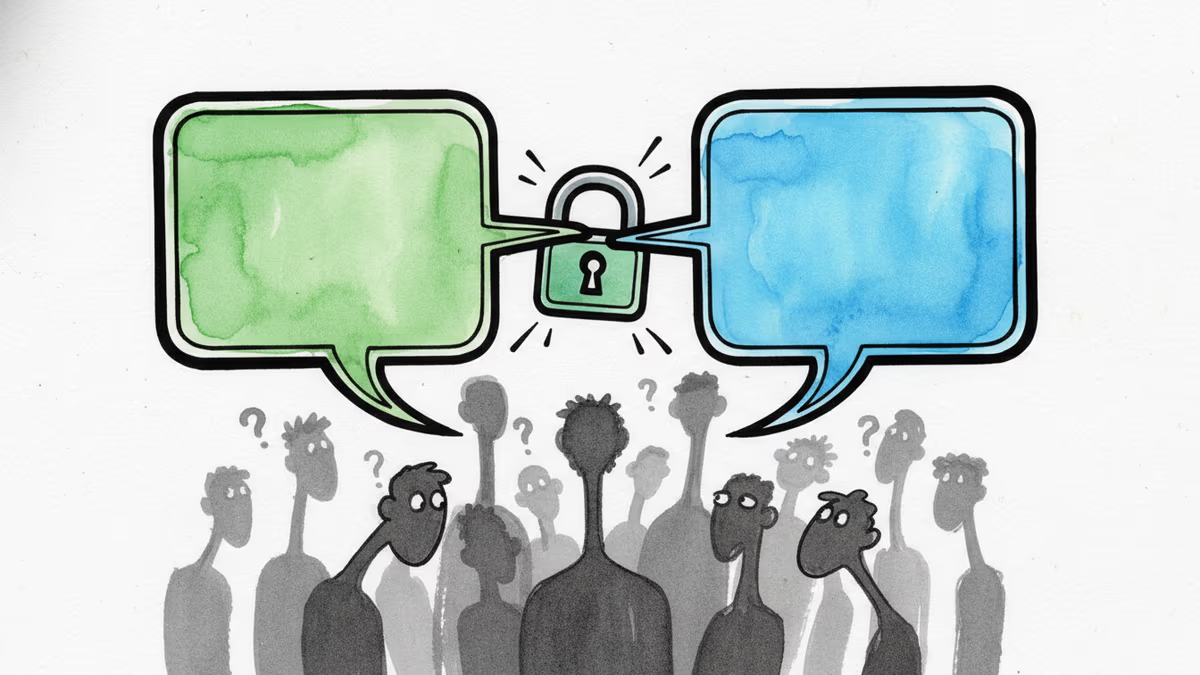
After 15 years of fragmented mobile messaging, Apple and Google are rolling out end-to-end encrypted RCS messaging between iPhones and Android devices. Here's what changed, why it took so long, and what it means for your privacy.
In a post-Google I/O interview, Sundar Pichai acknowledged flawed search results, real AI anxiety, and an AGI timeline that makes the label irrelevant. Here's what he said — and what it means.
Google is building AI agents that search the web proactively, without user prompting. That's not just a product update — it's a fundamental shift in who controls the information you receive.
Google unveiled the 'Googlebook' platform to replace Chromebook and ChromeOS—but revealed zero hardware specs. What's the strategy, and what does it mean for users, manufacturers, and the education market?
After 15 years of fragmented mobile messaging, Apple and Google are rolling out end-to-end encrypted RCS messaging between iPhones and Android devices. Here's what changed, why it took so long, and what it means for your privacy.
Thoughts
Share your thoughts on this article
Sign in to join the conversation