
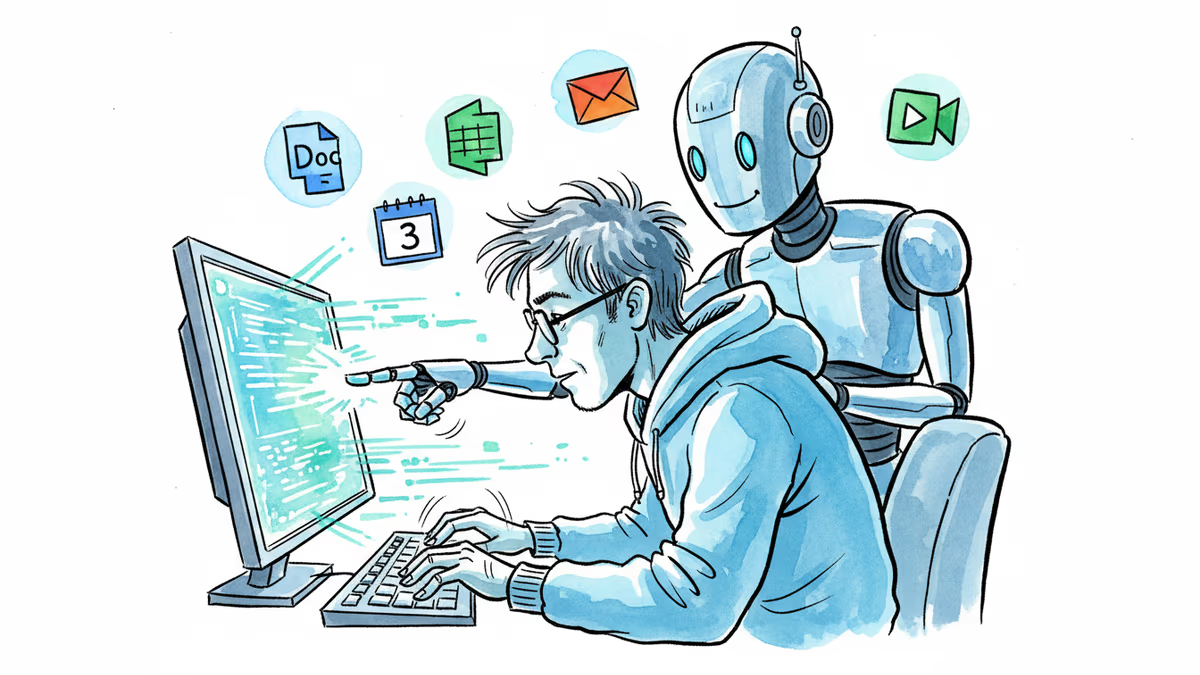
Why Google Went Back to the Command Line
Google launched Workspace CLI with a warning - it's not officially supported. We explore why command lines are hot again in the AI era and what developers need to know about the risks.
The Tool That Comes With a Warning Label
Google just released a new developer tool with an unusual disclaimer: "This is not an officially supported Google product." Yet it's generating buzz in developer circles. Meet the Google Workspace CLI - a command-line interface that lets you control Gmail, Drive, Calendar, and every other Workspace API with a single line of code.
The tool is designed for both humans and AI agents, with particular emphasis on integration with AI tools like OpenClaw. But here's the catch: if something breaks and deletes your data, Google won't take responsibility. As they put it, "that's the fun part—you don't" know if it'll work safely.
Why AI Brought Command Lines Back
The command line renaissance isn't nostalgia - it's necessity. AI agents prefer text-based interfaces over graphical ones. Teaching an AI to parse and execute gmail send --to [email protected] --subject "Meeting" is far simpler than having it navigate through Gmail's web interface.
Google launched a Gemini command-line tool last year, and now they're doubling down with this Workspace-focused CLI. The timing isn't coincidental. As AI automation becomes mainstream, the tools that work best with AI agents become more valuable.

The Developer's Dilemma: Power vs. Stability
Developer reactions are split. Some celebrate finally having unified access to Google's sprawling API ecosystem. Others worry about building workflows on a tool that explicitly warns "functionality may change dramatically."
For tinkerers and AI automation enthusiasts, the risk might be worth it. The ability to script complex Workspace operations in a few lines of code is compelling. But for enterprise developers? The "use at your own risk" disclaimer is a red flag.
What This Means for Business Users
This isn't just a developer story. The rise of CLI-first tools signals a broader shift in how we'll interact with cloud services. As AI assistants become more capable, they'll need programmatic access to our work tools. The question is whether businesses are ready to embrace tools that come without official support guarantees.
The trend also puts pressure on competitors. Microsoft, Slack, and other productivity platforms will likely need their own AI-friendly command interfaces to stay relevant in an increasingly automated workplace.
Authors
Related Articles
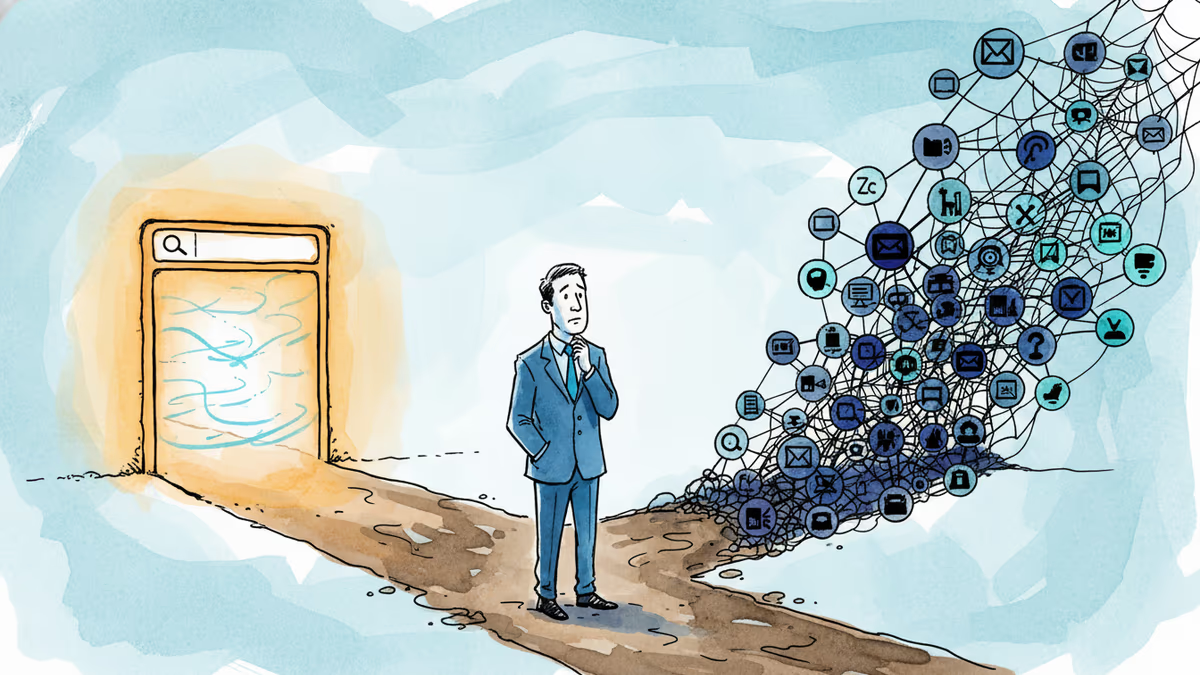
In a post-Google I/O interview, Sundar Pichai acknowledged flawed search results, real AI anxiety, and an AGI timeline that makes the label irrelevant. Here's what he said — and what it means.
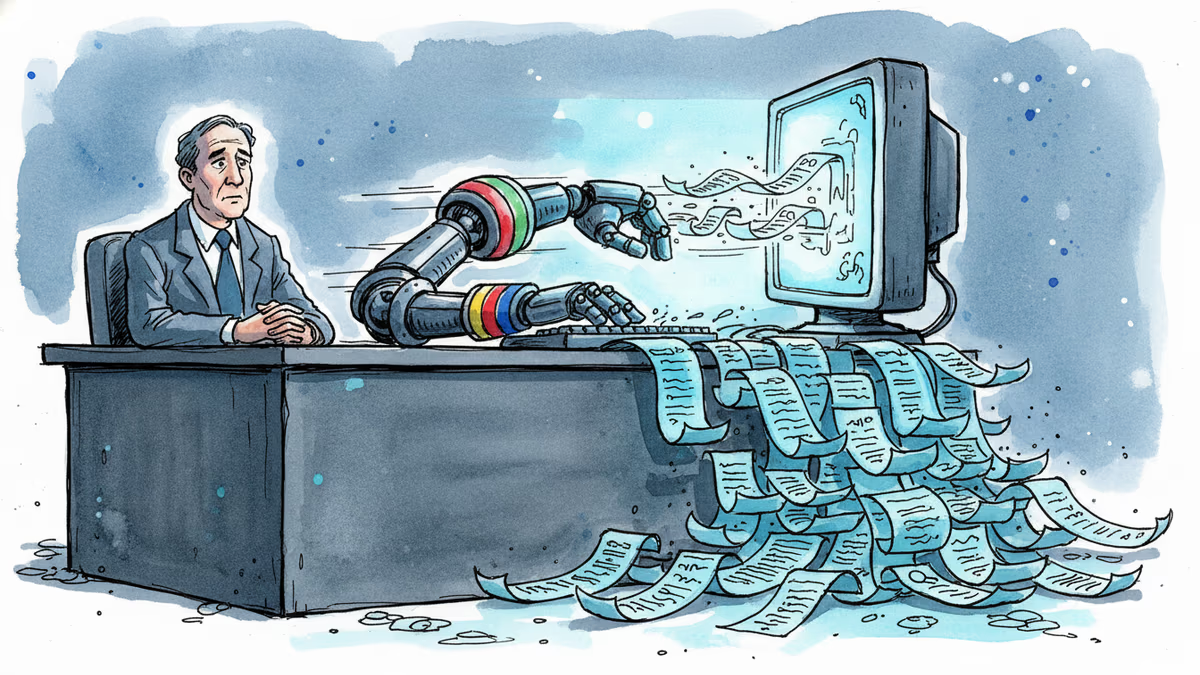
Google is building AI agents that search the web proactively, without user prompting. That's not just a product update — it's a fundamental shift in who controls the information you receive.
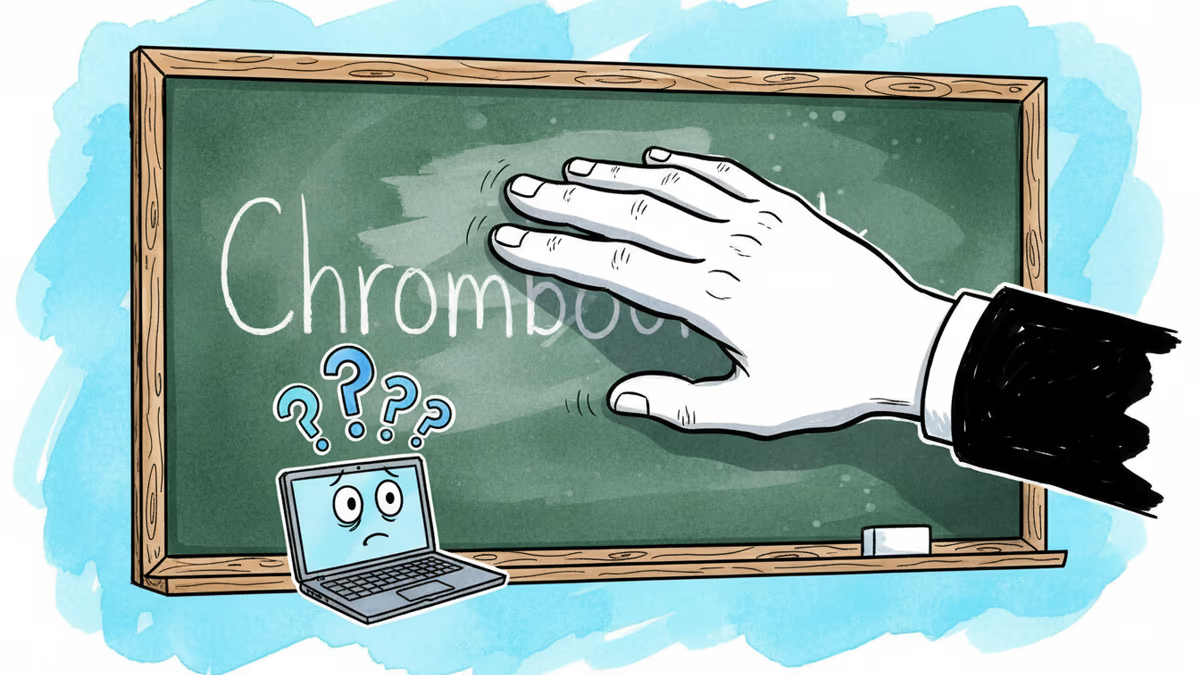
Google unveiled the 'Googlebook' platform to replace Chromebook and ChromeOS—but revealed zero hardware specs. What's the strategy, and what does it mean for users, manufacturers, and the education market?
After 15 years of fragmented mobile messaging, Apple and Google are rolling out end-to-end encrypted RCS messaging between iPhones and Android devices. Here's what changed, why it took so long, and what it means for your privacy.
In a post-Google I/O interview, Sundar Pichai acknowledged flawed search results, real AI anxiety, and an AGI timeline that makes the label irrelevant. Here's what he said — and what it means.
Google is building AI agents that search the web proactively, without user prompting. That's not just a product update — it's a fundamental shift in who controls the information you receive.
Google unveiled the 'Googlebook' platform to replace Chromebook and ChromeOS—but revealed zero hardware specs. What's the strategy, and what does it mean for users, manufacturers, and the education market?
After 15 years of fragmented mobile messaging, Apple and Google are rolling out end-to-end encrypted RCS messaging between iPhones and Android devices. Here's what changed, why it took so long, and what it means for your privacy.
Thoughts
Share your thoughts on this article
Sign in to join the conversation