
What Sundar Pichai Actually Admitted
In a post-Google I/O interview, Sundar Pichai acknowledged flawed search results, real AI anxiety, and an AGI timeline that makes the label irrelevant. Here's what he said — and what it means.
He looked at the phone screen, paused, and said it was "more opinionated than it should be."
That's Sundar Pichai, CEO of Google and Alphabet, reacting to a live search result for "best Chromebook" — a query that returned an AI overview pushing one answer, a Reddit thread suggesting another, and a New York Times article pointing somewhere else entirely. The person holding the phone was The Verge's editor-in-chief Nilay Patel, who has been running this same test on Pichai for years.
This moment, tucked inside a wide-ranging post-Google I/O interview, captures something the polished keynote didn't: a CEO willing to sit with the uncomfortable parts of what his company is building.
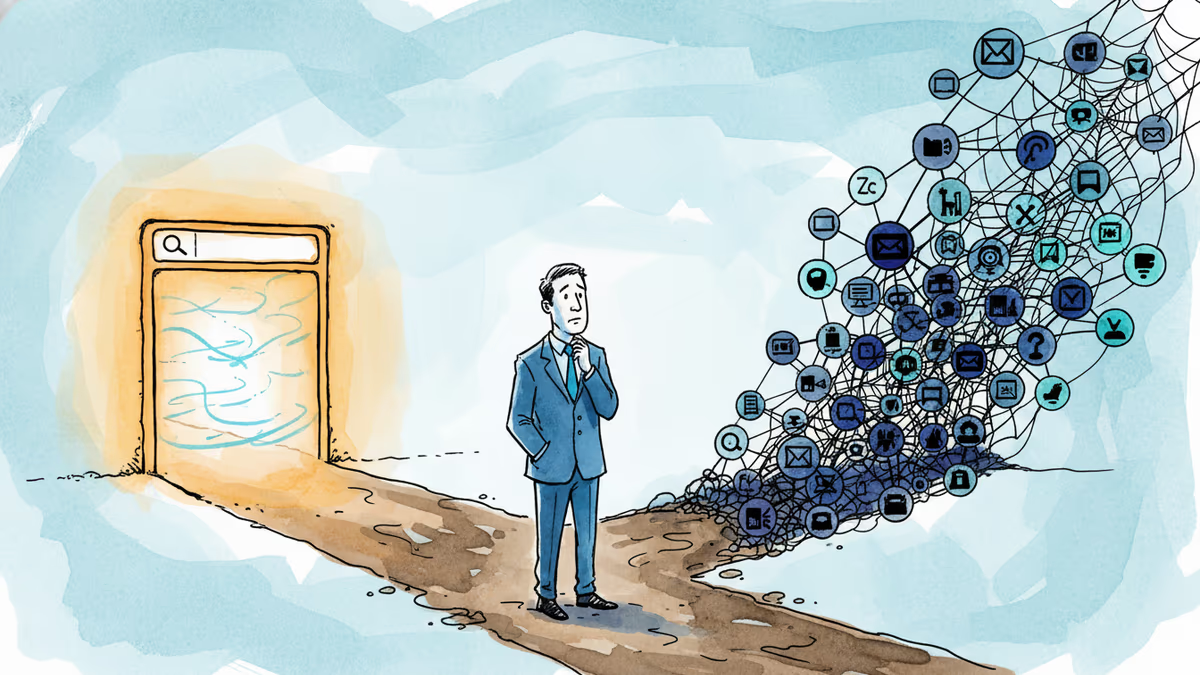
Google Zero Is No Longer a Theory
A few years ago, Patel coined the term Google Zero — the idea that Google would eventually answer so many queries directly that traffic to external websites would fall to zero. Pichai waved it off. Then, last week, Roger Lynch, CEO of Condé Nast — the company behind Vogue, GQ, and The New Yorker — said this in a public interview: "Every year our search traffic was down more than we had forecast, so last year I told our teams, 'Assume there is no search. You have to have your businesses planned as if search is zero.'"
Pichai's response was careful. He said publishers understand their own businesses, that high-quality content would still be reflected in Google's products, and that the information ecosystem is broader than Google alone. He also noted that Google has been adding more links back to sources since launching AI Overviews, and that a new feature now surfaces subscribed publications as preferred sources.
What he didn't say: that the trend Lynch is describing is reversing.
The UK lawsuit with the News Media Association is escalating. Google called the publishers' proposed compensation model a "free rider charter." The NMA fired back: "If the value were really all on Google's side, they would simply allow publishers to opt out." Pichai acknowledged opt-out options exist via Google-Extended, and said conversations with publishers are ongoing. The gap between those conversations and what publishers are actually planning for speaks for itself.
The Agent Convergence Nobody Is Saying Out Loud
At I/O, Google announced Gemini Spark — an agent platform that can go book you a flight, not just tell you about flights. It announced a new intelligent search box that can trigger tasks. It announced Canvas, which builds you a custom app if you're planning a wedding or a trip. And it announced Antigravity, an agentic coding environment already being used internally by Google's own engineers.
Pichai admitted what the product lineup already implies: "You're right — those should converge into one product." The vision is a single interface where a query can resolve as information, as software, or as a completed real-world task, depending on what's needed.

Here's the tension that didn't get much airtime during the keynote: if an agent books your flight, completes your purchase, and summarizes the review — all without you visiting a single external website — the web traffic problem for publishers and creators doesn't just persist. It compounds. Pichai said agents represent "the next evolution of the web." That may be true. It's also possible that the next evolution of the web involves far fewer humans actually visiting it.
YouTube creators are next in line to feel this. Google is training its models on YouTube videos and rebuilding YouTube search to drop users directly into relevant moments via AI summaries. Pichai was asked directly: are you ready to fight the same battles with YouTubers that you're currently fighting with publishers? His answer pointed to evolving laws and courts. Not exactly a reassurance.
The AGI Timeline That Makes the Label Irrelevant
Google DeepMind CEO Demis Hassabis closed the I/O keynote with a line that's been circulating ever since: "When we look back at this time, I think we will realize that we were standing in the foothills of the singularity."
Pichai was asked for a number. Three years? Five years to AGI?
His answer was more interesting than a number: "Whether you and I call it AGI in three years doesn't matter, because it'll be very, very powerful, and we have to prepare for it."
This is a meaningful reframe. The industry debates AGI definitions obsessively — does it require general reasoning, does it need to make novel scientific discoveries, does consciousness matter? Pichai is essentially saying the definitional argument is a distraction. The capability curve is what matters, and by the time the debate is settled, the systems will already be operating at a level that demands preparation regardless of what we call them.
He added that across frontier labs, there's broad consensus: AGI is coming sooner rather than later. The quibble is over whether it's three years or somewhat more.
The Anxiety Problem Isn't Marketing
Eric Schmidt, Google's former CEO, was booed at a college commencement speech. 7 in 10 Americans oppose new data center construction. Young people, when polled, express consistent dislike of AI. Pichai was asked whether this is a marketing problem — a framing some of his peers in Big Tech have used.
He pushed back. "I think it makes sense why people would feel concerns. People are standing and talking about how AI could make a lot of jobs go away. Why wouldn't you feel a sense of anxiety about it?" He framed it as a multilayered social issue — energy costs, workforce disruption, the pace of change outrunning human adaptation — rather than a perception gap that better messaging could close.
What's notable is what this implies for the industry's default response. If the anxiety is legitimate and structural, then the answer isn't a better ad campaign or a smoother onboarding flow. It's something harder: actual engagement with the economic disruption the technology is producing, at a pace that societies haven't had time to process.
Pichai pointed to the rate-payer pledge signed by major tech companies on energy costs, called for more workforce skilling investment, and acknowledged that democratic societies have a right to have a voice in how consequential technology gets deployed. Whether those commitments match the speed of deployment is a different question.
This content is AI-generated based on source articles. While we strive for accuracy, errors may occur. We recommend verifying with the original source.
Related Articles
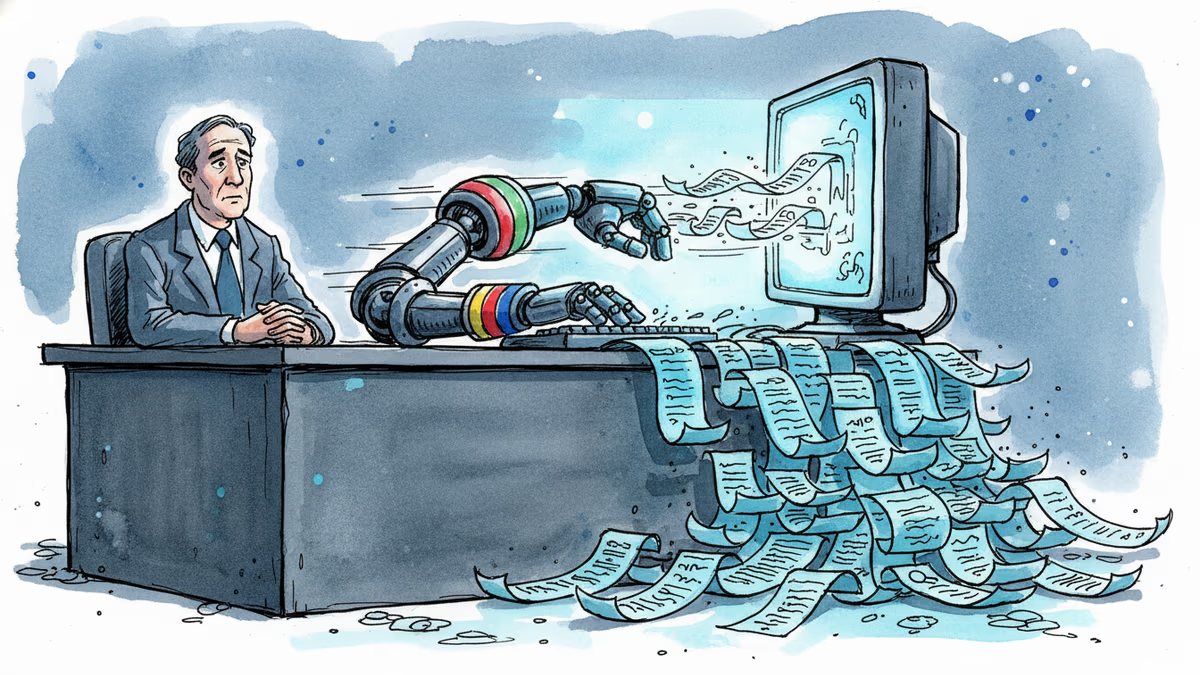
Google is building AI agents that search the web proactively, without user prompting. That's not just a product update — it's a fundamental shift in who controls the information you receive.

Google unveiled the 'Googlebook' platform to replace Chromebook and ChromeOS—but revealed zero hardware specs. What's the strategy, and what does it mean for users, manufacturers, and the education market?
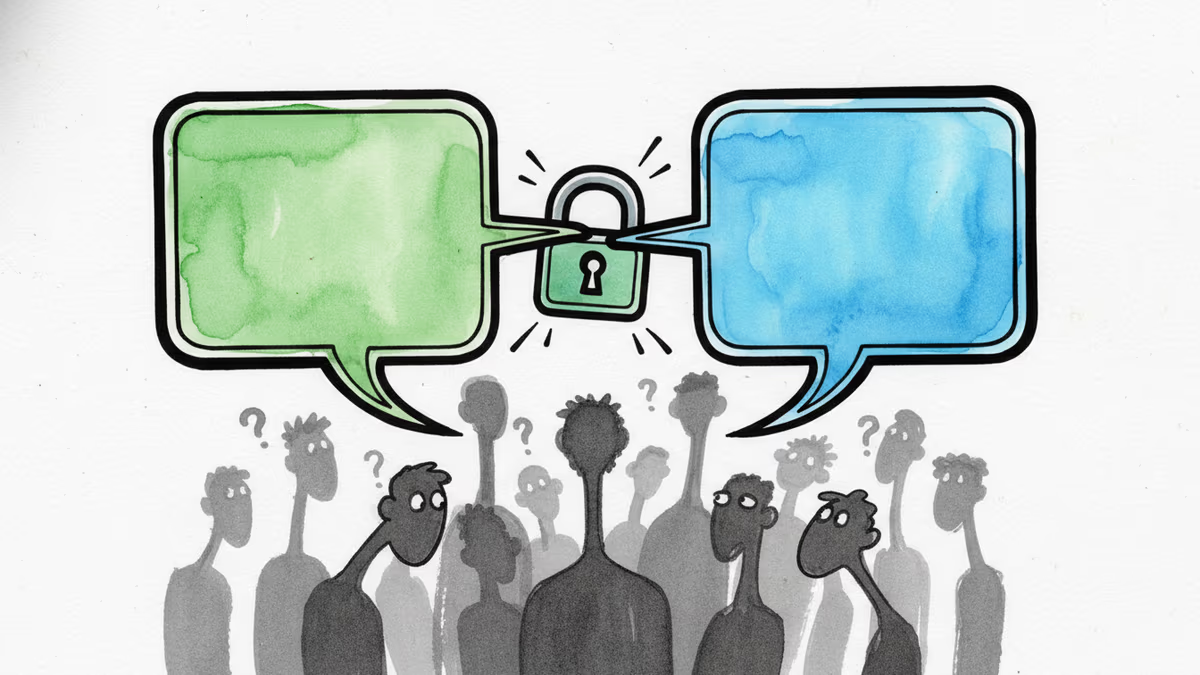
After 15 years of fragmented mobile messaging, Apple and Google are rolling out end-to-end encrypted RCS messaging between iPhones and Android devices. Here's what changed, why it took so long, and what it means for your privacy.
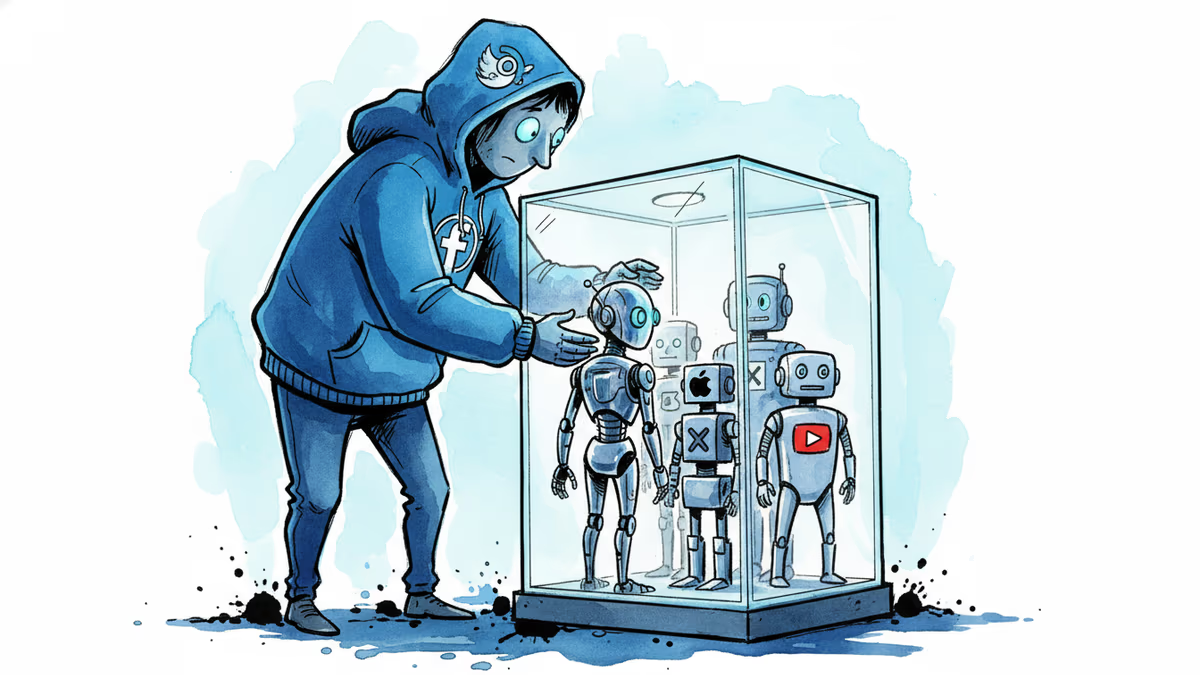
Meta acquired humanoid robotics startup ARI, adding to a Big Tech arms race in physical AI. The real prize isn't a robot product — it's a new way to train intelligence.
Google is building AI agents that search the web proactively, without user prompting. That's not just a product update — it's a fundamental shift in who controls the information you receive.
Google unveiled the 'Googlebook' platform to replace Chromebook and ChromeOS—but revealed zero hardware specs. What's the strategy, and what does it mean for users, manufacturers, and the education market?
After 15 years of fragmented mobile messaging, Apple and Google are rolling out end-to-end encrypted RCS messaging between iPhones and Android devices. Here's what changed, why it took so long, and what it means for your privacy.
Meta acquired humanoid robotics startup ARI, adding to a Big Tech arms race in physical AI. The real prize isn't a robot product — it's a new way to train intelligence.
Thoughts
Share your thoughts on this article
Sign in to join the conversation