
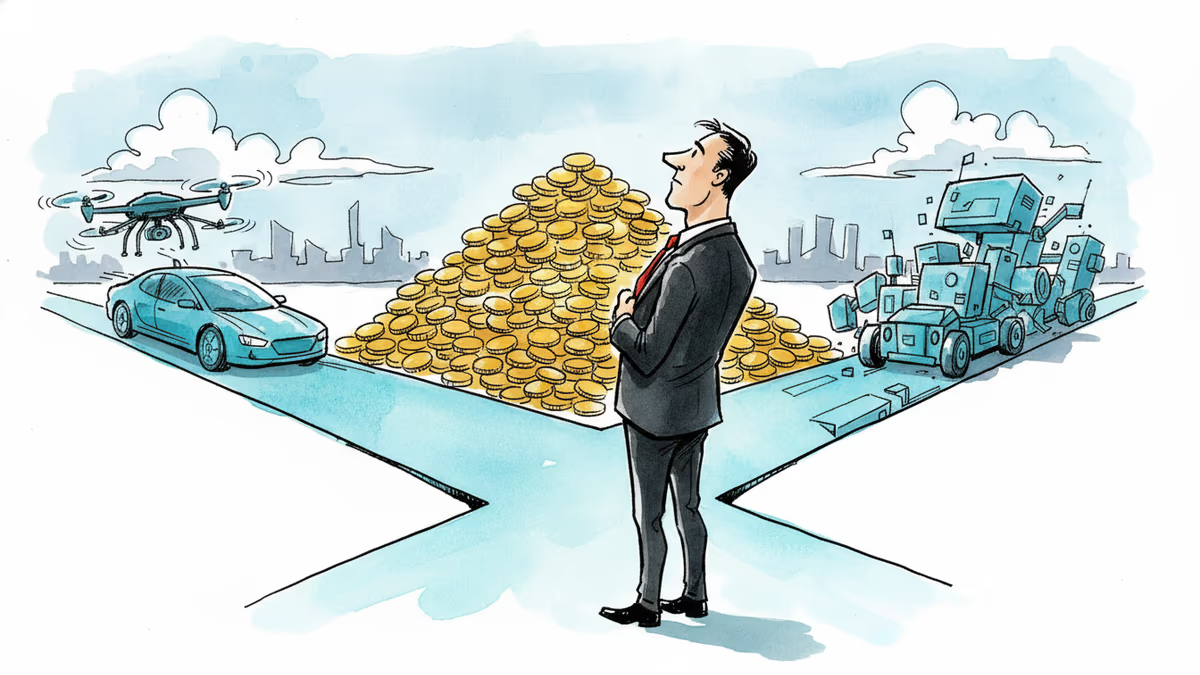
Pichai's $692M Package Is a Strategy Memo in Disguise
Alphabet's new pay deal for Sundar Pichai links his compensation to Waymo and Wing performance—signaling where Google is placing its biggest bets. Here's what investors should actually read into it.
The number is $692 million. But the number isn't really the story.
Alphabet quietly filed the details of Sundar Pichai's new three-year compensation package on March 7th—and buried inside the disclosure is something more revealing than the headline figure: a chunk of that pay is tied not to Google's overall stock performance, but specifically to the fortunes of Waymo, its autonomous vehicle unit, and Wing, its drone delivery venture. That's unusual. And it's deliberate.
What the Package Actually Says
The structure matters more than the total. Most of the $692 million is performance-based equity, meaning Pichai doesn't simply collect it for showing up. He earns it as Waymo and Wing hit milestones. For a CEO whose core business—search and advertising—still prints money reliably, tying his upside to two unproven bets is a pointed signal from the board.
Waymo has been expanding its robotaxi service across US cities, but profitability remains elusive. Wing has commercial drone delivery operations in select markets, but scale is limited. Neither has cracked the code on sustainable revenue at volume. By linking Pichai's compensation to these units, Alphabet's board is effectively saying: we need you personally invested in making these work.
For shareholders, it's a governance message as much as a compensation decision. Pichai now has direct financial skin in the game on the company's longest-range bets.
The Quiet Billionaire Next Door

What's striking about Pichai's profile—beyond the numbers—is how little noise he makes relative to his wealth. Larry Page and Sergey Brin, currently the second- and fourth-richest people on the planet, have been dominating headlines lately for buying up Miami real estate at a pace that reads less like lifestyle upgrades and more like a coordinated tax strategy.
Page reportedly dropped over $173 million on two mansions in Coconut Grove, Florida. Brin followed with a $51 million megamansion nearby, on top of $92 million in earlier Florida purchases. The backdrop: California's proposed Billionaire Tax Act, a ballot initiative that would hit the state's roughly 200 billionaires with a one-time 5% levy on net worth above $1 billion.
Pichai, by all accounts, is still in Los Altos, California. He's a billionaire too—his accumulated stock is worth nearly $500 million, with an estimated $650 million already sold by last summer, per Bloomberg. He's just not making a show of it.
Three Ways to Read This
From an investor's lens, the Waymo-linked incentives are worth watching closely. If Pichai now has a personal financial stake in Waymo's growth trajectory, expect more aggressive capital allocation toward autonomous vehicle expansion—potentially including international markets. That changes the competitive calculus for Tesla, Uber, and a dozen mobility startups.
From a governance perspective, the structure is defensible but not without risk. Tying CEO pay to pre-profit business units creates pressure to hit targets that may not yet be well-defined. How Alphabet designs those performance metrics—and whether they're disclosed transparently—will matter enormously to anyone trying to evaluate whether this is pay-for-performance or pay-for-narrative.
From a cultural standpoint, the contrast between Pichai's low profile and the Page-Brin real estate spectacle raises a quieter question about what kind of tech executive commands trust in 2026. One who buys mansions in Florida to dodge taxes, or one who stays put and takes a performance-linked deal tied to moonshots?
Authors
Related Articles
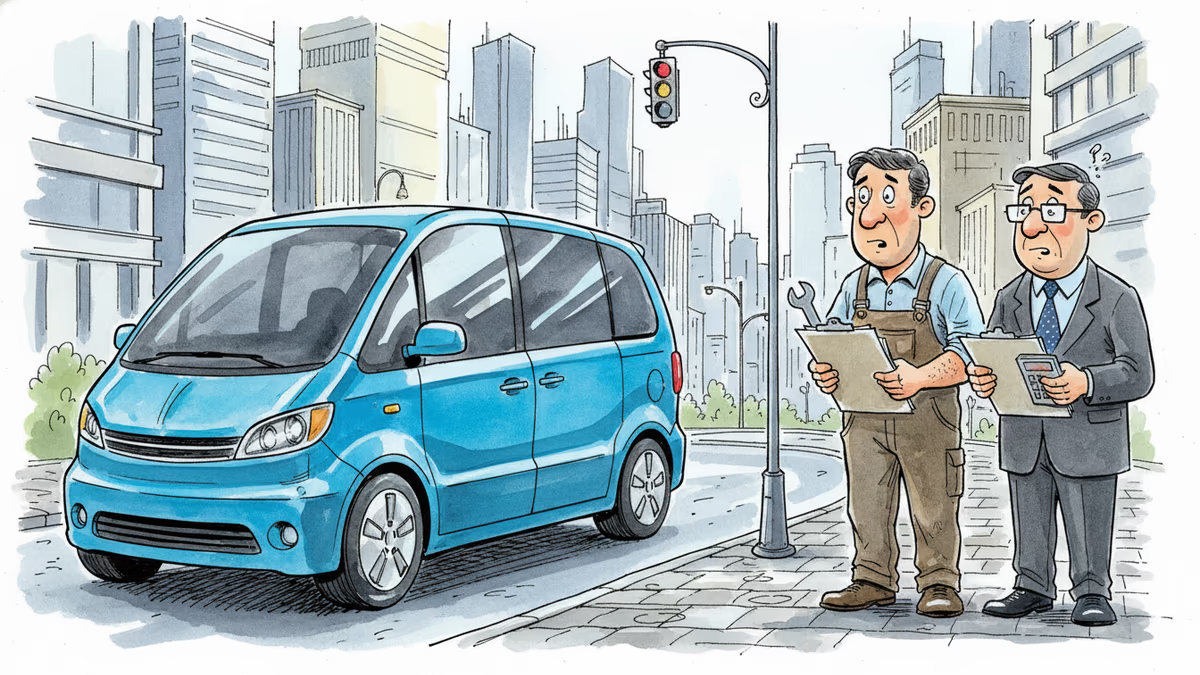
Waymo's new Ojai robotaxi isn't just a vehicle upgrade. It's the company's most serious attempt yet at cracking the cost problem that has kept autonomous vehicles from scaling. Here's what's really at stake.
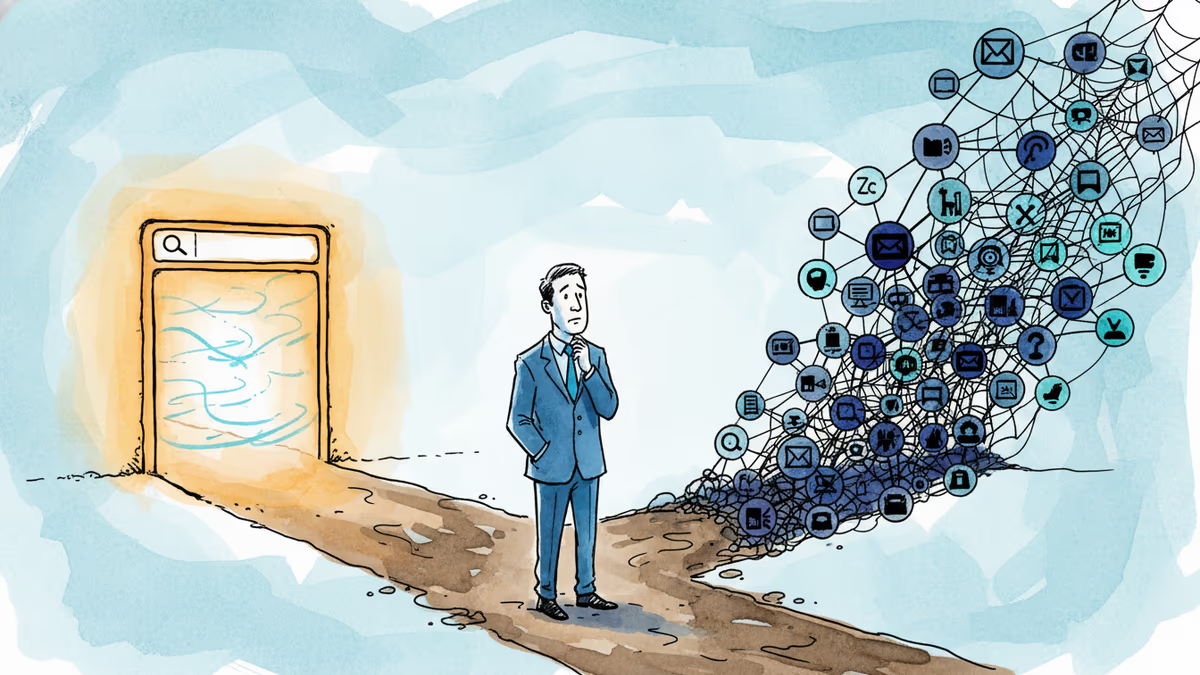
In a post-Google I/O interview, Sundar Pichai acknowledged flawed search results, real AI anxiety, and an AGI timeline that makes the label irrelevant. Here's what he said — and what it means.
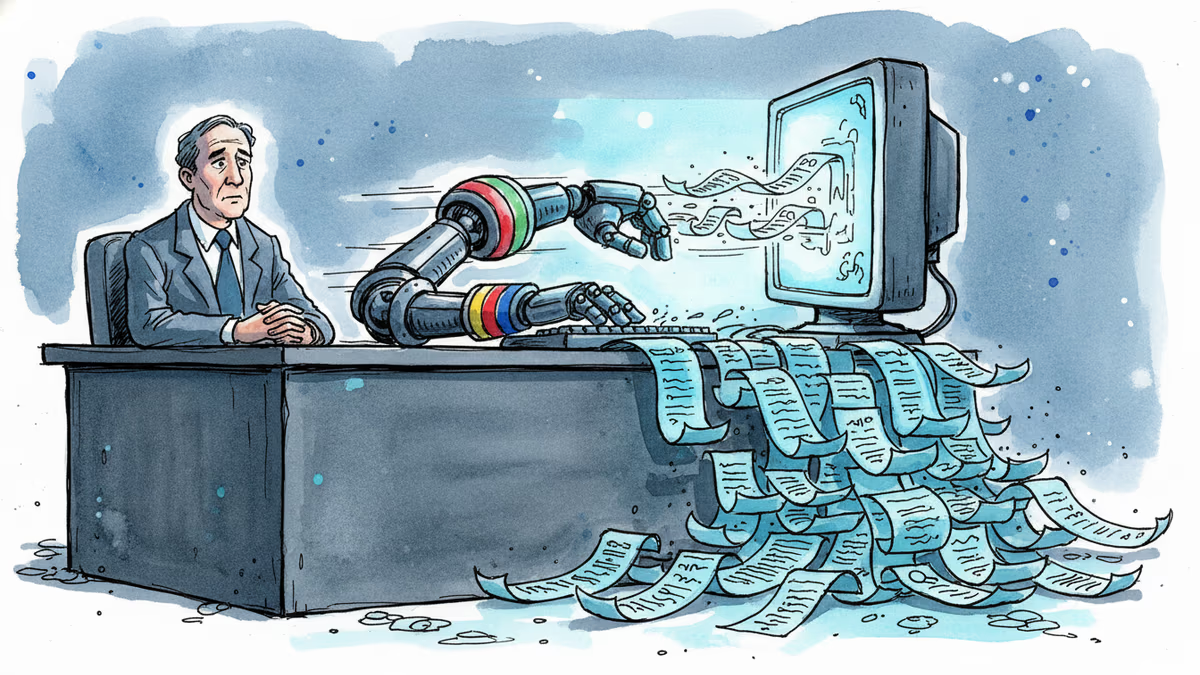
Google is building AI agents that search the web proactively, without user prompting. That's not just a product update — it's a fundamental shift in who controls the information you receive.
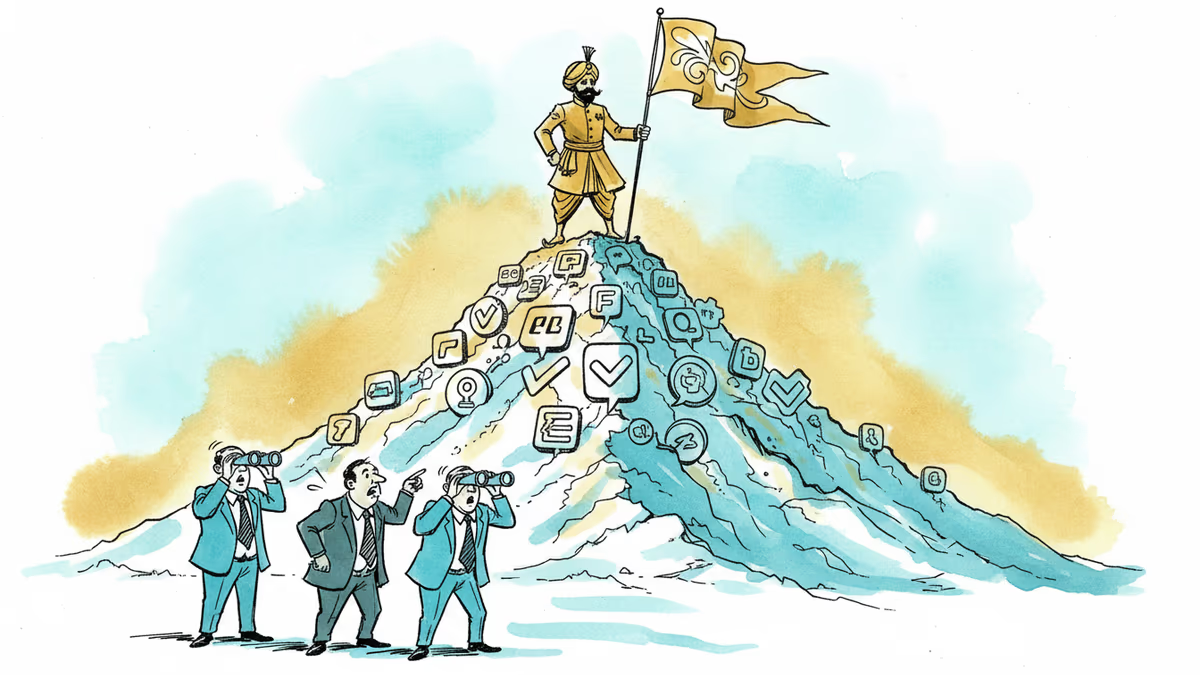
Indian venture capital has quietly displaced Silicon Valley in its own backyard. Only one American VC made India's top 10 investor list last year. Here's why that matters beyond India.
Waymo's new Ojai robotaxi isn't just a vehicle upgrade. It's the company's most serious attempt yet at cracking the cost problem that has kept autonomous vehicles from scaling. Here's what's really at stake.
In a post-Google I/O interview, Sundar Pichai acknowledged flawed search results, real AI anxiety, and an AGI timeline that makes the label irrelevant. Here's what he said — and what it means.
Google is building AI agents that search the web proactively, without user prompting. That's not just a product update — it's a fundamental shift in who controls the information you receive.
Indian venture capital has quietly displaced Silicon Valley in its own backyard. Only one American VC made India's top 10 investor list last year. Here's why that matters beyond India.
Thoughts
Share your thoughts on this article
Sign in to join the conversation