
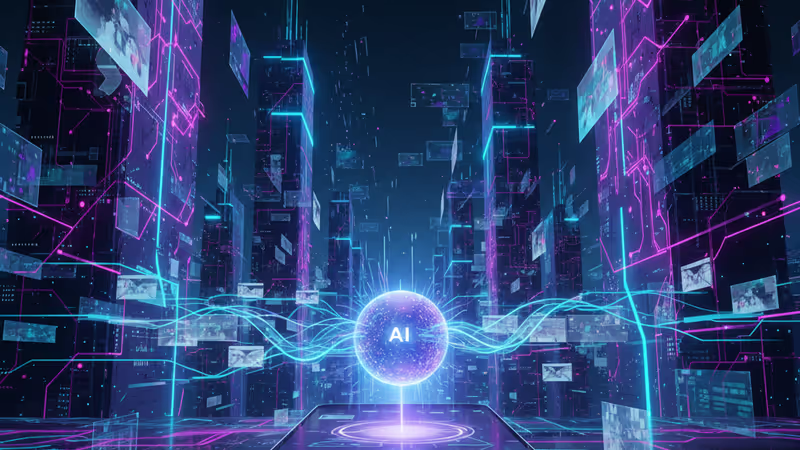
Google AI Search Personal Intelligence Update 2026
Google launches 'Personal Intelligence' in AI Mode, allowing the search bot to access Gmail and Photos for tailored results. Available now for AI Pro/Ultra subscribers.
Your search engine is getting to know you on a first-name basis. Google is doubling down on its vision for the future of search by integrating "Personal Intelligence" into its AI Mode. As of January 22, 2026, the tech giant has begun rolling out a feature that transforms the search bot into a personalized assistant capable of understanding your unique life context.
Tailored Context with Google AI Mode Personal Intelligence
According to Google, this update makes the AI's answers significantly more useful by scanning Gmail and Google Photos data. While traditional search results are adjusted based on usage history, Personal Intelligence goes a step further. By accessing confirmation emails and visual memories, the AI can provide specific answers about your upcoming travel plans or past events recorded in your media library.
The integration aims to provide answers that are not just factually correct, but personally relevant to the individual user.

Availability for AI Pro and AI Ultra Subscribers
The feature is currently available as part of Google Labs, meaning it's an opt-in experience. It's rolling out today to all users subscribed to Google AI Pro or AI Ultra tiers. While it remains a paid exclusive for now, Google is known for eventually expanding new AI tools to free accounts after the initial testing phase.
Authors
Related Articles
In a post-Google I/O interview, Sundar Pichai acknowledged flawed search results, real AI anxiety, and an AGI timeline that makes the label irrelevant. Here's what he said — and what it means.
Google is building AI agents that search the web proactively, without user prompting. That's not just a product update — it's a fundamental shift in who controls the information you receive.
Google unveiled the 'Googlebook' platform to replace Chromebook and ChromeOS—but revealed zero hardware specs. What's the strategy, and what does it mean for users, manufacturers, and the education market?
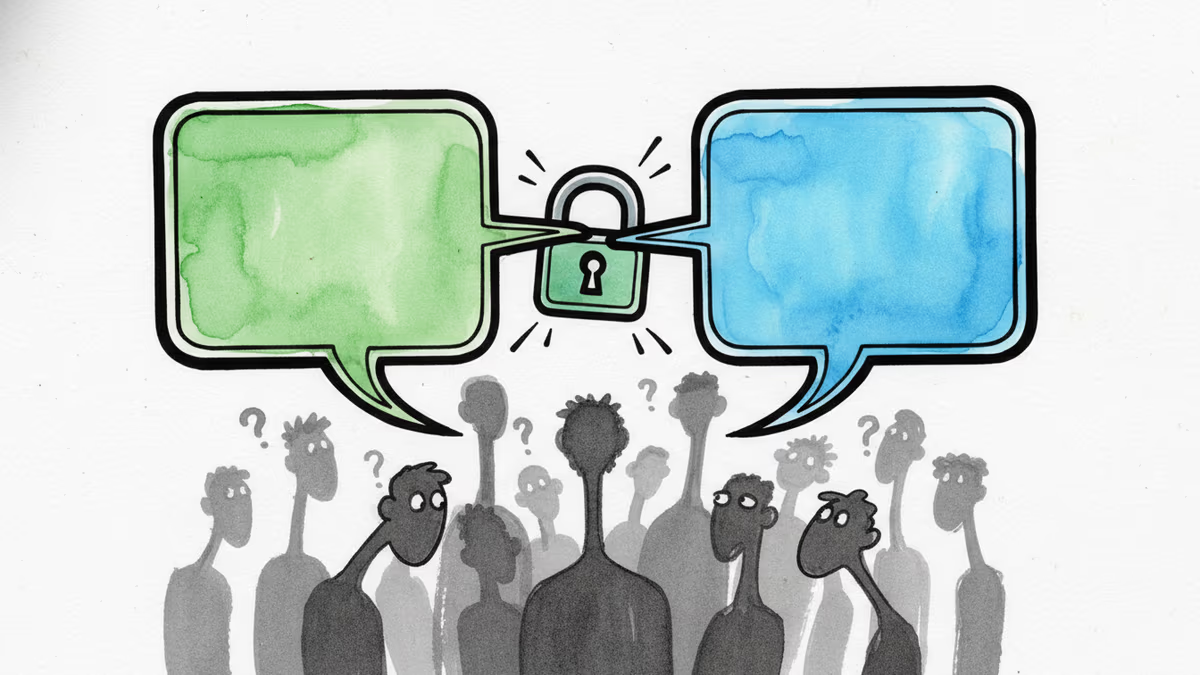
After 15 years of fragmented mobile messaging, Apple and Google are rolling out end-to-end encrypted RCS messaging between iPhones and Android devices. Here's what changed, why it took so long, and what it means for your privacy.
In a post-Google I/O interview, Sundar Pichai acknowledged flawed search results, real AI anxiety, and an AGI timeline that makes the label irrelevant. Here's what he said — and what it means.
Google is building AI agents that search the web proactively, without user prompting. That's not just a product update — it's a fundamental shift in who controls the information you receive.
Google unveiled the 'Googlebook' platform to replace Chromebook and ChromeOS—but revealed zero hardware specs. What's the strategy, and what does it mean for users, manufacturers, and the education market?
After 15 years of fragmented mobile messaging, Apple and Google are rolling out end-to-end encrypted RCS messaging between iPhones and Android devices. Here's what changed, why it took so long, and what it means for your privacy.
Thoughts
Share your thoughts on this article
Sign in to join the conversation