
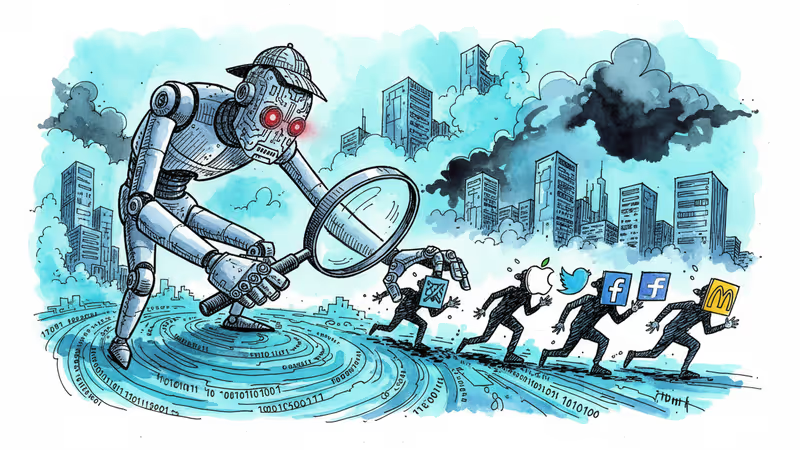
When Microsoft's CEO Bets on Your Startup, You're Onto Something Big
Outtake raises $40M Series B to automate digital identity fraud detection with AI. Why tech giants like Microsoft CEO Satya Nadella are personally investing.
When Microsoft CEO Satya Nadella writes you a personal check, you know you're solving a real problem. That's exactly what happened to Outtake, a cybersecurity startup that just closed a $40 million Series B round with an investor lineup that reads like a tech industry hall of fame.
The Problem That Keeps CEOs Up at Night
Outtake tackles something every major company faces but few talk about: digital impersonation at scale. Fake social media accounts, malicious domains mimicking your brand, rogue mobile apps, fraudulent ads—the list goes on. Until now, stopping these required armies of analysts manually hunting down imposters, a process about as effective as playing whack-a-mole with a blindfold.
Alex Dhillon, a former Palantir engineer who founded the company in 2023, saw AI making the problem worse. "Attackers are getting more convincing and faster thanks to AI," he explains. His solution? Fight fire with fire—use AI to automate what humans couldn't keep up with.
Murali Joshi from Iconiq, who led the funding round, admits he was initially skeptical. "We kept hearing whispers about an AI company finally solving digital misrepresentation at scale. Honestly, we were doubtful." But after seeing the product in action and talking to customers, he became a believer. "They've turned a 'human problem' into a 'software problem.'"
The Numbers Don't Lie
Outtake's customer roster tells the story: OpenAI, Pershing Square, AppLovin, and federal agencies. OpenAI even featured the company as a prime example of an agentic startup built on its reasoning models.

The growth metrics are equally impressive. Annual recurring revenue jumped sixfold year-over-year, while the customer base expanded more than tenfold. Last year alone, Outtake's systems scanned 20 million potential cyberattacks.
Why This Matters Beyond Tech Circles
This isn't just another cybersecurity story. It's a glimpse into how AI is reshaping the fundamental economics of digital trust. Traditional brand protection required massive human resources—expensive, slow, and ultimately ineffective against the speed of modern digital fraud.
Outtake's approach flips the script. Instead of humans chasing AI-powered fraudsters, AI hunts AI. The implications ripple far beyond cybersecurity budgets. Companies can now protect their digital presence without building entire departments around it. Smaller businesses, previously unable to afford comprehensive brand protection, suddenly have access to enterprise-grade defense.
But there's a darker side to consider. As AI makes both attack and defense more automated, we're entering an arms race where the quality of algorithms matters more than the size of security teams. The winners will be those with better data, smarter models, and faster adaptation cycles.
The Venture Capital Tea Leaves
The investor lineup reveals something fascinating about where smart money sees the future heading. When you have Palo Alto Networks CEO Nikesh Arora, Palantir CTO Shyam Sankar, and former OpenAI VP Bob McGrew all betting on the same company, they're not just investing in a product—they're investing in a thesis about AI's role in cybersecurity.
These aren't passive financial investors. They're operators who understand the technical challenges and market dynamics firsthand. Their participation signals that AI-native security solutions aren't just nice-to-have anymore—they're becoming table stakes.
Authors
Related Articles

Samsung and SK unveiled a chip and AI investment package worth thousands of trillions of won on June 29. The headline number swings wildly by outlet, but the real contest isn't capital — it's water and power.
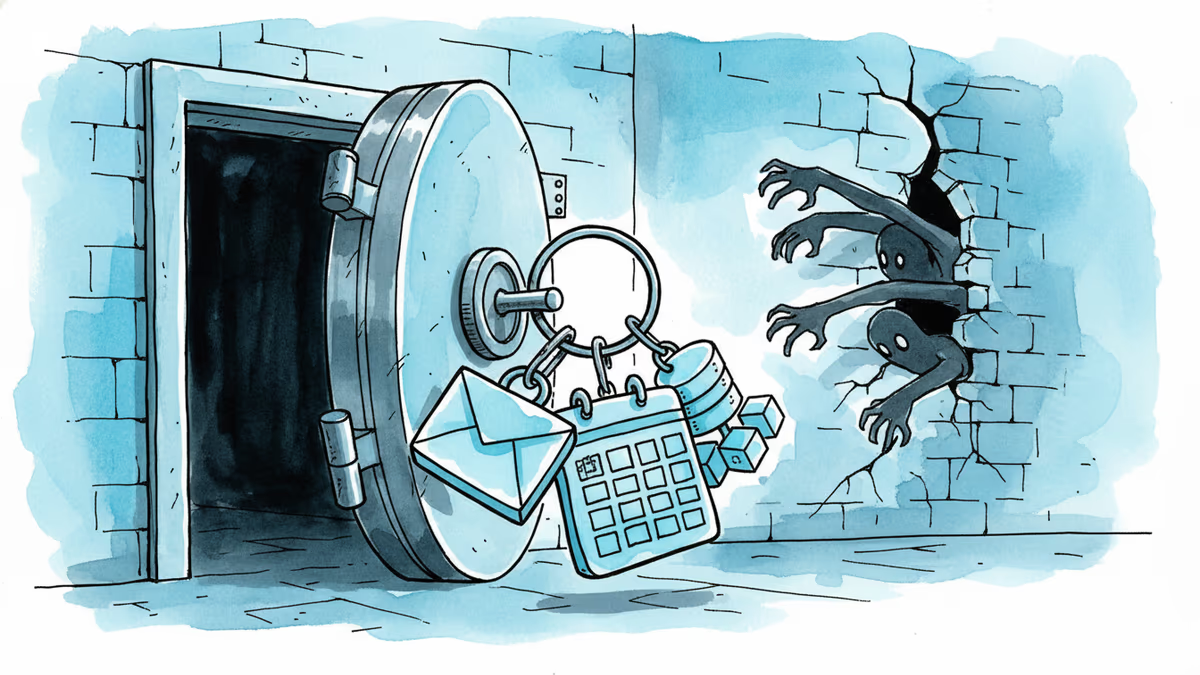
A critical vulnerability in Starlette—downloaded 325 million times per week—puts millions of AI agent servers at risk, exposing stored credentials for email, databases, and third-party services.
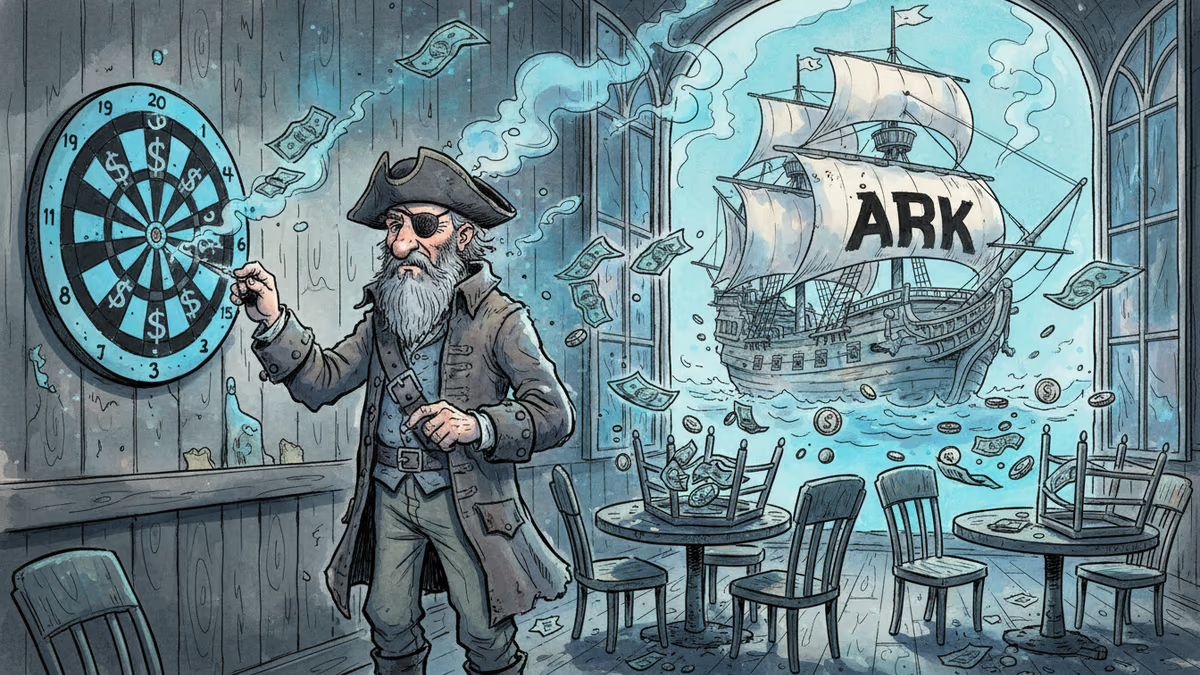
Lucra Sports CEO Dylan Robbins landed Cathie Wood's ARK Invest as a Series B lead without building AI. The story behind his unconventional fundraising playbook.

Viral videos show 2026 graduates jeering executives who praise AI at commencement ceremonies. It's not just rudeness — it's a signal about who pays for technological optimism.
Samsung and SK unveiled a chip and AI investment package worth thousands of trillions of won on June 29. The headline number swings wildly by outlet, but the real contest isn't capital — it's water and power.
A critical vulnerability in Starlette—downloaded 325 million times per week—puts millions of AI agent servers at risk, exposing stored credentials for email, databases, and third-party services.
Lucra Sports CEO Dylan Robbins landed Cathie Wood's ARK Invest as a Series B lead without building AI. The story behind his unconventional fundraising playbook.
Viral videos show 2026 graduates jeering executives who praise AI at commencement ceremonies. It's not just rudeness — it's a signal about who pays for technological optimism.
Thoughts
Share your thoughts on this article
Sign in to join the conversation