

Google's AI Now Browses the Web for You in Chrome
Google integrates Gemini AI deeper into Chrome with Auto Browse feature, allowing AI to handle web tasks autonomously while raising questions about digital autonomy.
90% of all web browsing happens through Chrome, and now Google's putting an AI agent in the driver's seat. The search giant just turbocharged its Gemini integration with Chrome, introducing Auto Browse—a feature that doesn't just answer questions but actually surfs the web for you.
When AI Takes the Wheel
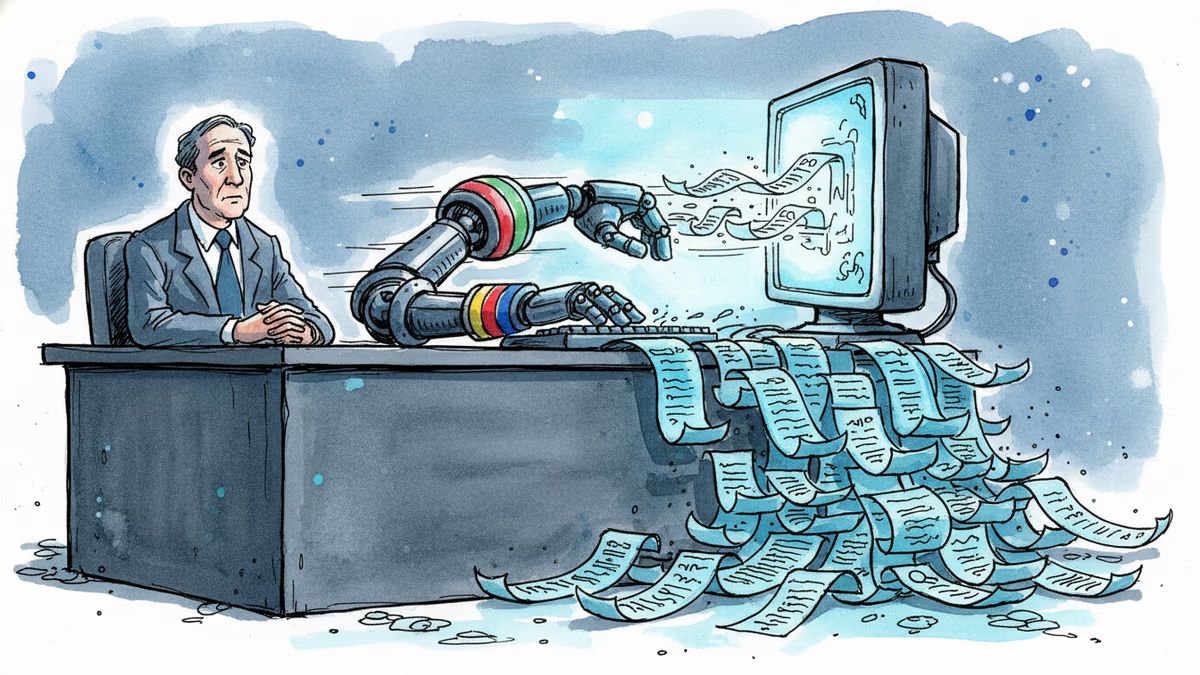
Google's Auto Browse represents a fundamental shift in how we interact with the internet. Instead of clicking through airline websites to compare flights, you simply tell Gemini what you need, and it handles the legwork. The AI navigates pages, compares prices, fills out forms, and presents you with organized results.
This isn't just about convenience—it's about delegation. Similar to OpenAI's Atlas, Auto Browse transforms your browser from a tool you operate into an assistant that operates for you. The implications stretch far beyond saving a few clicks.
The rollout began quietly last week, defaulting to a split-screen "Sidepanel" view instead of the previous pop-up window. This gives Gemini persistent presence alongside your browsing, making AI assistance feel less like an interruption and more like a copilot.
The Google Ecosystem Tightens Its Grip
Perhaps more significant than Auto Browse is Gemini's direct integration with Google's service portfolio. From Chrome's AI panel, you can now access Gmail, Calendar, YouTube, Maps, Google Shopping, and Google Flights without opening separate tabs or apps.
This creates a seamless experience that keeps users within Google's walled garden. Need restaurant recommendations? Gemini pulls from Maps and reviews. Planning a trip? It coordinates between Flights, Calendar, and Gmail. The friction between services disappears, but so does the natural opportunity to explore alternatives.

For the 2.6 billion Chrome users worldwide, this integration promises efficiency. But it also represents Google's most ambitious attempt yet to become the single interface for all digital activities.
The New Battleground for Digital Attention
Google's move comes as the browser wars enter an AI phase. Microsoft has armed Edge with Copilot, while OpenAI develops standalone browsing agents. But Google's advantage lies in Chrome's massive user base and the behavioral data it generates.
When AI browses on your behalf, it creates an unprecedented data feedback loop. Google doesn't just know what you search for—it knows how you make decisions, what you prioritize, and how you navigate choices. This intelligence becomes the foundation for more sophisticated AI services and, inevitably, more targeted advertising.
The competitive implications are stark. If users rely on Gemini to handle routine web tasks, they're less likely to discover competing services organically. The AI becomes a filter that could inadvertently—or deliberately—favor Google's ecosystem.
The Autonomy Question
Auto Browse raises fundamental questions about digital agency. When AI handles our browsing, we gain efficiency but potentially lose serendipity—those unexpected discoveries that come from exploring the web ourselves. There's also the question of bias: whose priorities guide the AI's choices when it's browsing on our behalf?
Regulators are already scrutinizing Google's market dominance. The integration of AI into Chrome could intensify these concerns, especially if competitors struggle to offer equivalent experiences without Google's scale and data advantages.
Yet for many users, the trade-offs may seem worthwhile. Auto Browse promises to eliminate digital drudgery—the repetitive clicking, comparing, and form-filling that consumes hours of our online time.
Authors
Related Articles

Samsung and SK unveiled a chip and AI investment package worth thousands of trillions of won on June 29. The headline number swings wildly by outlet, but the real contest isn't capital — it's water and power.

In a post-Google I/O interview, Sundar Pichai acknowledged flawed search results, real AI anxiety, and an AGI timeline that makes the label irrelevant. Here's what he said — and what it means.
Google is building AI agents that search the web proactively, without user prompting. That's not just a product update — it's a fundamental shift in who controls the information you receive.

Viral videos show 2026 graduates jeering executives who praise AI at commencement ceremonies. It's not just rudeness — it's a signal about who pays for technological optimism.
Samsung and SK unveiled a chip and AI investment package worth thousands of trillions of won on June 29. The headline number swings wildly by outlet, but the real contest isn't capital — it's water and power.
In a post-Google I/O interview, Sundar Pichai acknowledged flawed search results, real AI anxiety, and an AGI timeline that makes the label irrelevant. Here's what he said — and what it means.
Google is building AI agents that search the web proactively, without user prompting. That's not just a product update — it's a fundamental shift in who controls the information you receive.
Viral videos show 2026 graduates jeering executives who praise AI at commencement ceremonies. It's not just rudeness — it's a signal about who pays for technological optimism.
Thoughts
Share your thoughts on this article
Sign in to join the conversation