

Chrome's AI Can Now Browse the Web for You
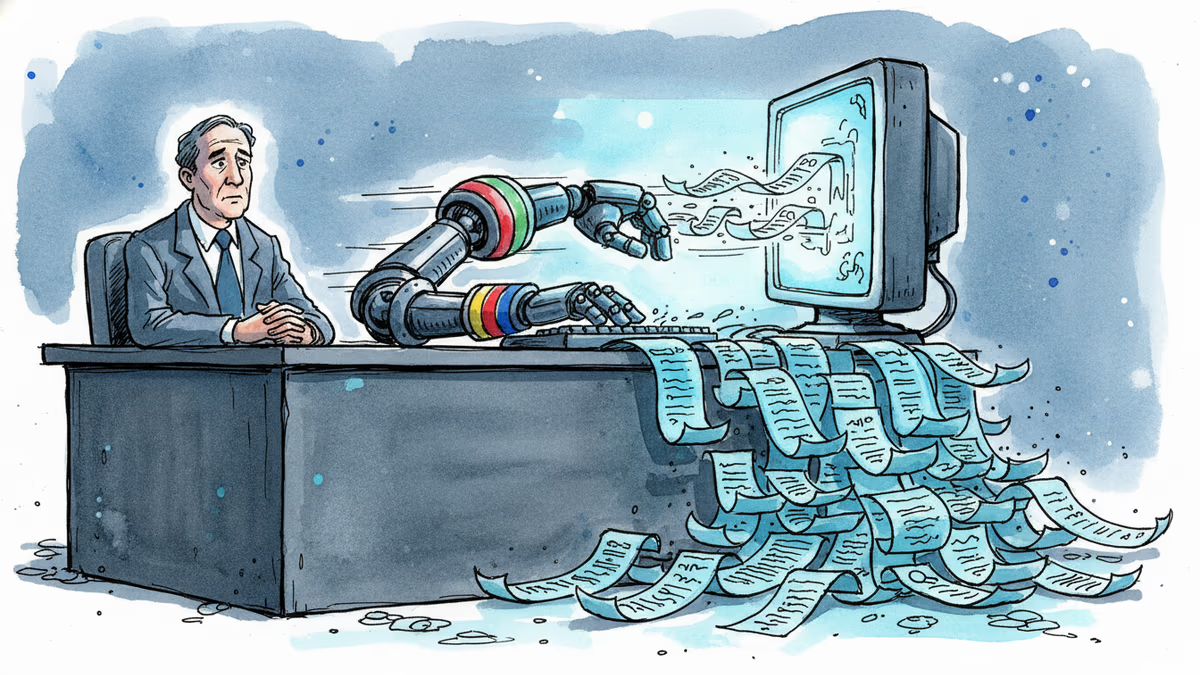
Google launches auto-browse feature in Chrome, powered by Gemini AI. It can research hotels, book flights, and fill forms automatically. But convenience comes with new questions about digital autonomy.
What if your browser could handle your most tedious online tasks while you sleep? Google's new "auto browse" feature in Chrome makes that scenario a reality, marking a significant shift in how we interact with the web.
Beyond Browsing: AI That Actually Acts
The Gemini AI-powered capability is rolling out to Google AI Pro and Ultra subscribers in the US first. Unlike traditional browser assistants that simply answer questions or summarize content, this feature performs multi-step actions across websites.
It can research hotel and flight costs, schedule appointments, fill out online forms, and manage subscriptions—essentially handling the repetitive digital grunt work that consumes hours of our daily lives. This represents a major evolution from Chrome's existing Gemini integration, which previously focused on comparing products across tabs and recalling browsing history.
The technology builds on Google's broader push to embed AI deeper into everyday tools. But this time, instead of just providing information, the AI is taking action on behalf of users.
The Convenience-Control Trade-off
For busy professionals and frequent travelers, the time-saving potential is enormous. Imagine having an AI agent that continuously monitors flight prices for your upcoming trip or automatically fills out repetitive forms for various services. The productivity gains could be substantial.

However, this convenience comes with new complexities. The AI needs access to personal preferences, browsing patterns, and potentially sensitive information to function effectively. Questions arise about data privacy, the accuracy of AI decisions, and what happens when the system makes mistakes—like booking the wrong hotel or submitting incorrect information.
There's also the broader question of digital dependency. As AI handles more of our online interactions, are we gaining time and efficiency, or are we gradually losing the ability to navigate the digital world independently?
Market Implications and Competitive Response
Google's move puts pressure on other browser makers and AI companies. Microsoft's integration of Copilot into Edge, Apple's AI initiatives, and emerging players in the browser space will likely accelerate their own automation features.
For businesses, this could reshape customer acquisition strategies. If AI agents are making purchasing decisions or managing subscriptions on behalf of users, companies may need to optimize their websites and services for AI interaction rather than human browsing patterns.
The feature also raises regulatory questions. As AI agents become more autonomous in making decisions that affect users' finances and personal data, regulators may need to establish new frameworks for accountability and transparency.
The Future of Human-Web Interaction
This development signals a fundamental shift from passive web consumption to active AI agency. We're moving toward a model where AI doesn't just help us find information—it acts on that information according to our preferences and goals.
The implications extend beyond individual productivity. If successful, this technology could influence how we design websites, structure online services, and even conceive of digital literacy. The skills needed to thrive online may shift from knowing how to navigate websites to knowing how to effectively direct AI agents.
Authors
Related Articles

Samsung and SK unveiled a chip and AI investment package worth thousands of trillions of won on June 29. The headline number swings wildly by outlet, but the real contest isn't capital — it's water and power.

In a post-Google I/O interview, Sundar Pichai acknowledged flawed search results, real AI anxiety, and an AGI timeline that makes the label irrelevant. Here's what he said — and what it means.
Google is building AI agents that search the web proactively, without user prompting. That's not just a product update — it's a fundamental shift in who controls the information you receive.

Viral videos show 2026 graduates jeering executives who praise AI at commencement ceremonies. It's not just rudeness — it's a signal about who pays for technological optimism.
Samsung and SK unveiled a chip and AI investment package worth thousands of trillions of won on June 29. The headline number swings wildly by outlet, but the real contest isn't capital — it's water and power.
In a post-Google I/O interview, Sundar Pichai acknowledged flawed search results, real AI anxiety, and an AGI timeline that makes the label irrelevant. Here's what he said — and what it means.
Google is building AI agents that search the web proactively, without user prompting. That's not just a product update — it's a fundamental shift in who controls the information you receive.
Viral videos show 2026 graduates jeering executives who praise AI at commencement ceremonies. It's not just rudeness — it's a signal about who pays for technological optimism.
Thoughts
Share your thoughts on this article
Sign in to join the conversation