
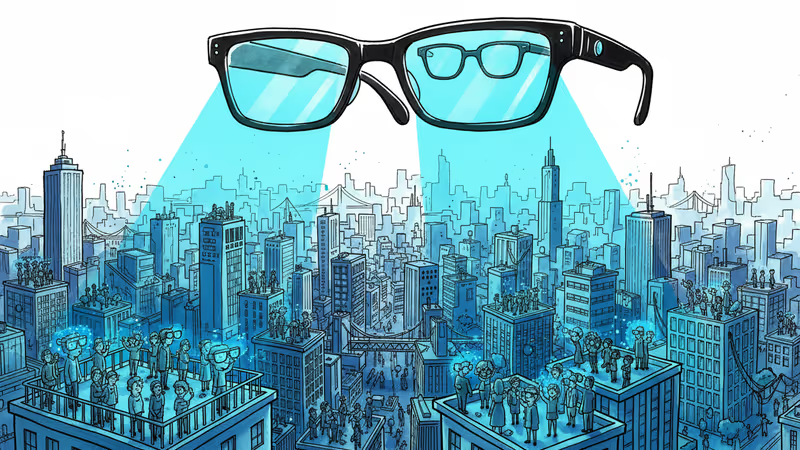
The Smart Glasses Gold Rush: Why Big Tech Sees Your Face as the Final Frontier
Mark Zuckerberg predicts all glasses will become AI glasses, as Google, Apple, and Snap race to claim the next computing platform after smartphones.
Billions of people wear glasses or contacts for vision correction. According to Mark Zuckerberg, they'll all be wearing AI glasses soon. It's just a matter of time, he says—like when flip phones inevitably became smartphones.
During Meta's Q4 2025 earnings call, Zuckerberg painted a future where "it's hard to imagine a world in several years where most glasses that people wear aren't AI glasses." His confidence stems from impressive numbers: Meta's smart glasses sales tripled in the last year, making them "some of the fastest growing consumer electronics in history," according to the CEO.
The Big Tech Convergence
Zuckerberg's bold prediction might sound like typical Silicon Valley hyperbole, but the industry's collective behavior suggests otherwise. Google is preparing to launch smart glasses this year following a $150 million deal with Warby Parker. Apple has reportedly shifted staff from its lighter Vision Pro project to focus on smart glasses, planning an unveiling within the next two years.
Snap made its intentions clear Tuesday by spinning its AR glasses, Specs, into a separate subsidiary for "greater operational focus and alignment." Even OpenAI, despite having zero hardware experience, is exploring AI wearables—though more focused on pins or earbuds rather than glasses.
This isn't just about following trends. These companies are betting that the next major computing platform will sit on our faces, not in our pockets.
Beyond the Metaverse Pivot

Meta's glasses push represents a significant strategic shift. After pouring billions into the metaverse with limited consumer adoption, the company has pivoted its Reality Labs investments toward AI wearables. The move makes practical sense: glasses solve real problems like hands-free computing and augmented information overlay, unlike the metaverse's promise of virtual hangouts.
Meta's current lineup includes Oakley smart glasses designed for exercise—arguably the most compelling use case for these devices so far. When you're running or cycling, voice commands and audio feedback feel natural rather than gimmicky.
The Smartphone Moment Question
Zuckerberg's smartphone analogy raises intriguing questions about adoption patterns. Smartphones succeeded because they consolidated multiple devices—phone, camera, music player, GPS—into one superior experience. Can smart glasses achieve similar consolidation?
The value proposition remains unclear for most consumers. Unlike smartphones, which offered obvious improvements over flip phones, smart glasses must compete with regular glasses that work perfectly well for their intended purpose. The added functionality needs to be compelling enough to justify higher costs, shorter battery life, and privacy concerns.
Market Realities and Skepticism
Zuckerberg's track record on predictions gives pause. His conviction about metaverse adoption—complete with legless avatars—didn't materialize as expected. The question isn't whether AI glasses will improve, but whether they'll achieve the ubiquity he envisions.
Current smart glasses face significant limitations: battery life measured in hours, not days; bulky designs that scream "tech product"; and privacy concerns that make many people uncomfortable. These aren't insurmountable problems, but they represent real barriers to mass adoption.
Authors
Related Articles

Samsung and SK unveiled a chip and AI investment package worth thousands of trillions of won on June 29. The headline number swings wildly by outlet, but the real contest isn't capital — it's water and power.

Viral videos show 2026 graduates jeering executives who praise AI at commencement ceremonies. It's not just rudeness — it's a signal about who pays for technological optimism.
A law firm marketing itself on AI-powered legal success submitted fake citations in a federal appeal. Now its lawyers face sanctions — and the broader AI legal industry faces a credibility crisis.
Filipino virtual assistants using AI to ghost-manage LinkedIn profiles for executives is now a structured industry. 30 comments a day, fake engagement rings, and a platform struggling to tell real from fabricated.
Samsung and SK unveiled a chip and AI investment package worth thousands of trillions of won on June 29. The headline number swings wildly by outlet, but the real contest isn't capital — it's water and power.
Viral videos show 2026 graduates jeering executives who praise AI at commencement ceremonies. It's not just rudeness — it's a signal about who pays for technological optimism.
A law firm marketing itself on AI-powered legal success submitted fake citations in a federal appeal. Now its lawyers face sanctions — and the broader AI legal industry faces a credibility crisis.
Filipino virtual assistants using AI to ghost-manage LinkedIn profiles for executives is now a structured industry. 30 comments a day, fake engagement rings, and a platform struggling to tell real from fabricated.
Thoughts
Share your thoughts on this article
Sign in to join the conversation