
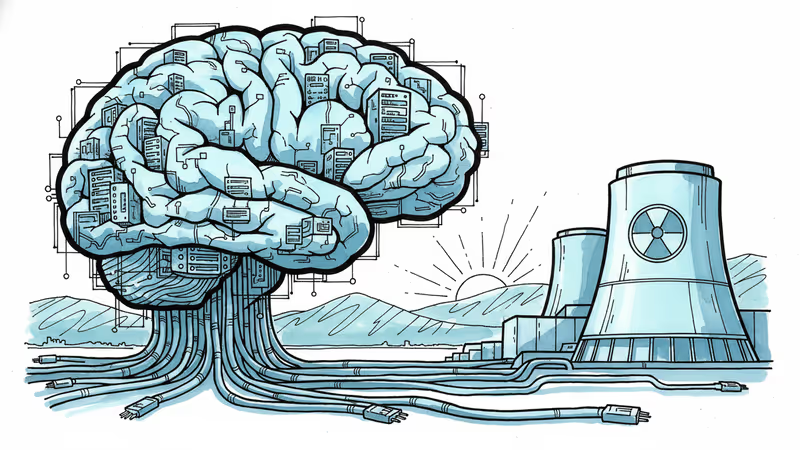
When AI Meets Nuclear: The Power Partnership Reshaping Tech
MIT's 2026 breakthrough technologies spotlight hyperscale AI data centers and next-gen nuclear reactors. Here's why these two innovations are inseparable.
Every time you ask ChatGPT a question, it consumes enough electricity to power 10 light bulbs for 20 minutes. As AI becomes ubiquitous, this seemingly small energy footprint is multiplying into one of the biggest infrastructure challenges of our time.
MIT Technology Review's selection of both hyperscale AI data centers and next-generation nuclear reactors for its 2026 Breakthrough Technologies list isn't coincidental. These two innovations represent both sides of AI's greatest paradox: unprecedented computational power demands meeting the urgent need for clean, reliable energy.
The AI Energy Crisis Nobody Talks About
While everyone marvels at GPT-4's capabilities or Google's latest AI breakthrough, few consider the massive energy infrastructure humming behind these services. Current data centers consume 1-2% of global electricity, but experts predict this could surge to 3-8% by 2030 as AI adoption accelerates.
The math is staggering. Training GPT-4 required approximately 25,000 high-performance GPUs running for months—equivalent to the annual electricity consumption of a small city. And that's just training; inference (actually running the AI) requires constant power as millions of users interact with these systems daily.
Microsoft recently signed a 20-year power purchase agreement specifically for AI workloads, while Google acknowledged that its AI services have prevented the company from reaching its carbon neutrality goals. The message is clear: AI's energy appetite is outpacing traditional power solutions.
Why Next-Gen Nuclear Makes Sense
Traditional nuclear plants cost $15-20 billion and take 10-15 years to build. Small Modular Reactors (SMRs) promise to change this equation entirely. These factory-built, truck-sized reactors can be deployed in 3-5 years at 30-50% lower costs than conventional plants.
More importantly, they're designed for the AI era. Unlike solar or wind, nuclear provides 24/7 baseload power—exactly what data centers need. A single SMR can generate 50-300 megawatts, enough to power a hyperscale data center while maintaining the grid stability that AI workloads demand.

Safety improvements are equally impressive. Modern SMRs use "walk-away safe" designs that automatically shut down without human intervention or external power. Companies like TerraPower (backed by Bill Gates) and NuScale Power have received regulatory approval and are moving toward commercial deployment.
The Tech Giants' Nuclear Pivot
Microsoft made headlines by partnering with Constellation Energy to restart the Three Mile Island nuclear plant specifically for AI workloads. Amazon acquired a data center campus directly connected to a nuclear plant in Pennsylvania. Google signed agreements with multiple SMR developers for future clean energy supply.
This isn't just about corporate responsibility—it's strategic necessity. As AI models grow larger and more complex, the companies that control reliable, clean power will have a massive competitive advantage. OpenAI's Sam Altman has repeatedly emphasized that energy constraints, not just compute, will determine AI's future development.
The Reality Check
But challenges remain substantial. The first commercial SMR project in the US was recently canceled due to cost overruns, highlighting the gap between promise and reality. Regulatory approval processes remain lengthy and complex, even for "simplified" reactor designs.
Public acceptance varies dramatically by region. While some communities welcome the economic benefits of nuclear facilities, others remain skeptical after decades of safety concerns. The proximity of nuclear reactors to population centers—necessary for data center integration—adds another layer of complexity.
Then there's the timeline mismatch. AI's energy needs are growing now, while most next-gen nuclear projects won't come online until the early 2030s. This gap forces companies to rely on interim solutions that may not align with long-term sustainability goals.
Beyond the Hype: What This Really Means
The convergence of AI and nuclear represents more than just a power solution—it's reshaping how we think about technological infrastructure. Countries and regions with advanced nuclear capabilities may find themselves with unexpected advantages in the AI race.
For investors, this creates new categories of infrastructure plays. Nuclear technology companies, specialized construction firms, and even uranium mining operations could see renewed interest. Conversely, regions that can't solve the AI energy equation may find themselves sidelined in the global tech economy.
The environmental implications are equally complex. While nuclear power is carbon-free during operation, the full lifecycle includes uranium mining, waste storage, and eventual decommissioning. Whether this trade-off makes sense depends largely on how quickly renewable alternatives can scale to meet AI's demanding requirements.
Authors
Related Articles
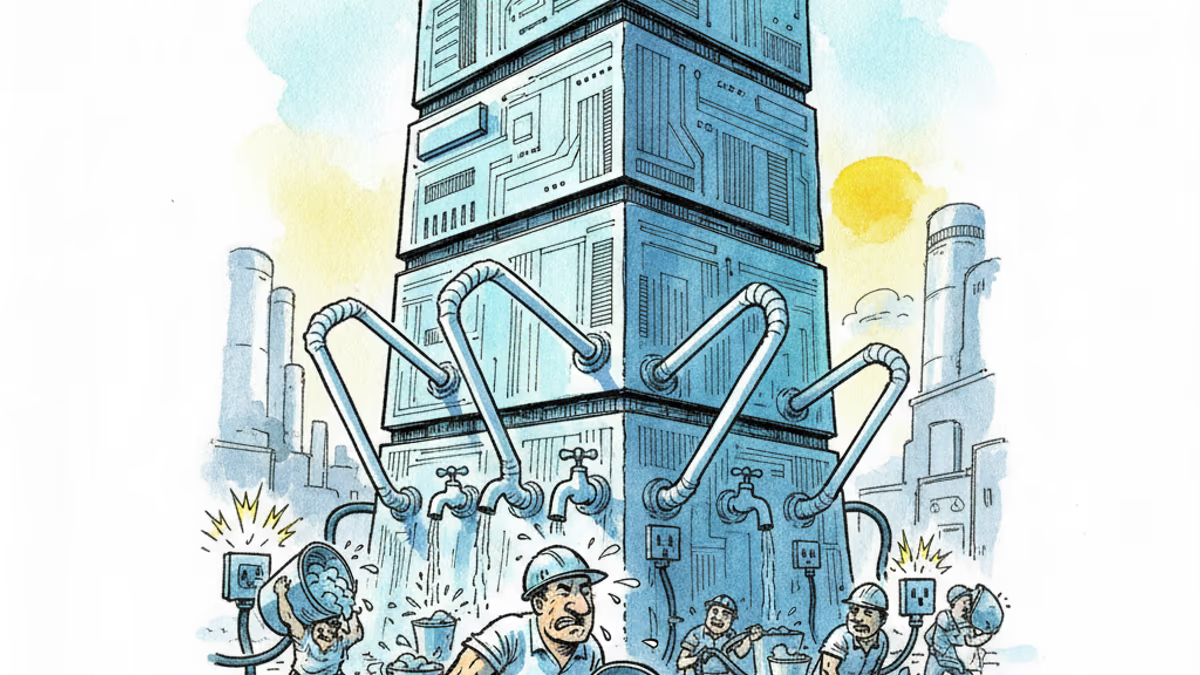
Samsung and SK unveiled a chip and AI investment package worth thousands of trillions of won on June 29. The headline number swings wildly by outlet, but the real contest isn't capital — it's water and power.
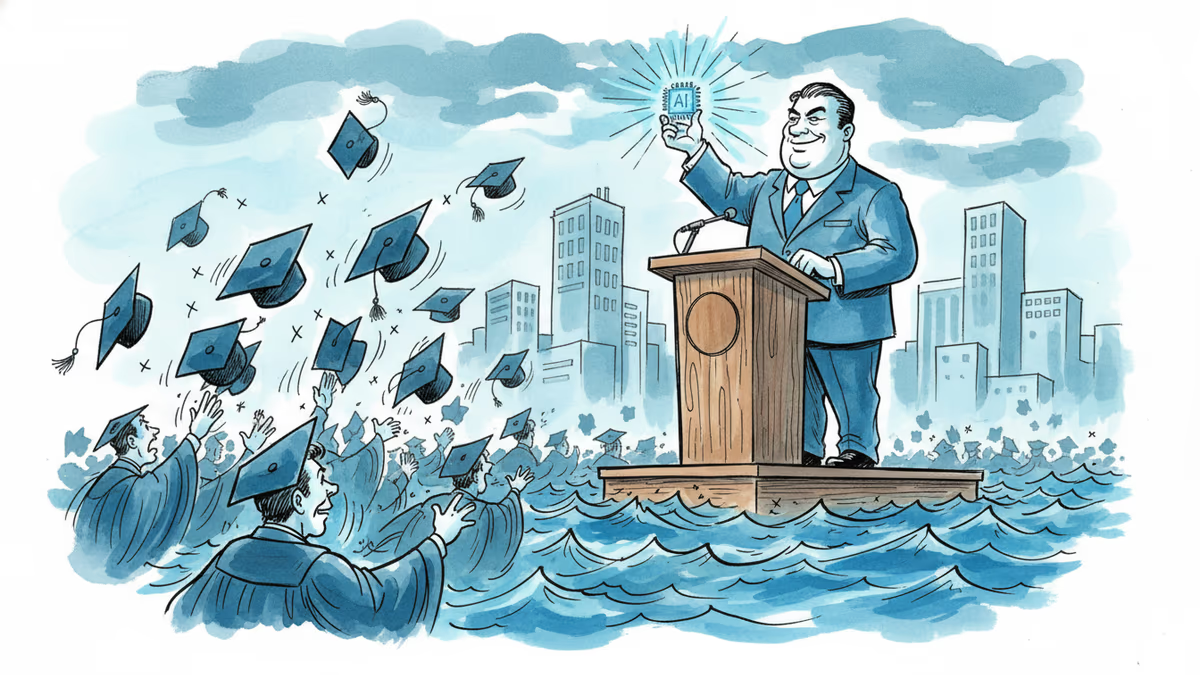
Viral videos show 2026 graduates jeering executives who praise AI at commencement ceremonies. It's not just rudeness — it's a signal about who pays for technological optimism.

Filipino virtual assistants using AI to ghost-manage LinkedIn profiles for executives is now a structured industry. 30 comments a day, fake engagement rings, and a platform struggling to tell real from fabricated.
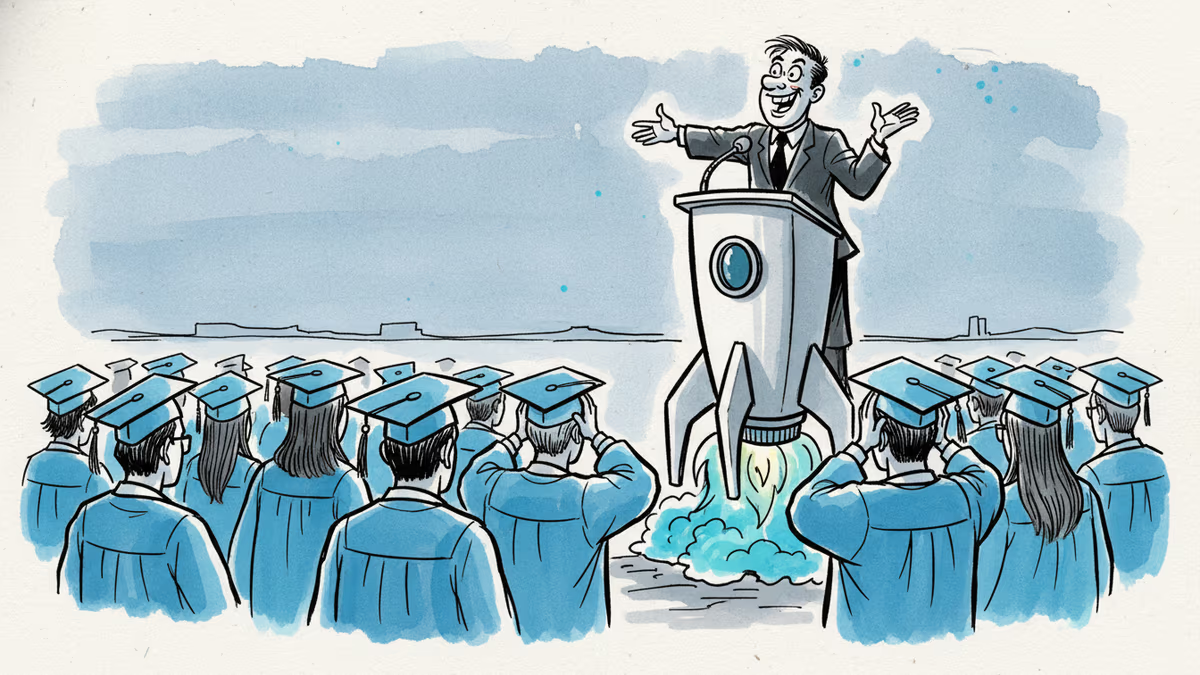
Two commencement speakers learned the hard way that AI enthusiasm doesn't land well with today's graduates. The backlash reveals a widening gap between tech optimism and Gen Z's economic reality.
Samsung and SK unveiled a chip and AI investment package worth thousands of trillions of won on June 29. The headline number swings wildly by outlet, but the real contest isn't capital — it's water and power.
Viral videos show 2026 graduates jeering executives who praise AI at commencement ceremonies. It's not just rudeness — it's a signal about who pays for technological optimism.
Filipino virtual assistants using AI to ghost-manage LinkedIn profiles for executives is now a structured industry. 30 comments a day, fake engagement rings, and a platform struggling to tell real from fabricated.
Two commencement speakers learned the hard way that AI enthusiasm doesn't land well with today's graduates. The backlash reveals a widening gap between tech optimism and Gen Z's economic reality.
Thoughts
Share your thoughts on this article
Sign in to join the conversation