
No Code, No Problem: AI Builds Your Smart Home
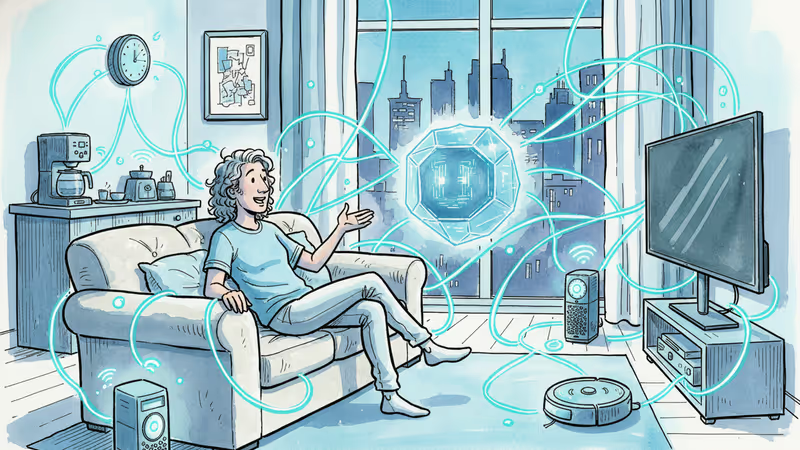
Claude Code enables anyone to create custom smart home dashboards without coding knowledge. Tech reviewers and DIYers are building sophisticated home automation systems through natural language commands.
Ten years of reviewing smart home devices, but zero coding skills. That didn't stop The Verge's tech reviewer from building his own smart home dashboard this month, thanks to Claude Code. The gap between "I wish this existed" and "I built it myself" has suddenly become remarkably narrow.
The Rise of Vibe Coding
Social media feeds are flooded with "vibe-coded" smart home projects. From master command centers built on Lutron systems to AI-controlled smart ovens, regular people are creating sophisticated home automation tools that would normally take professional developers weeks to build.
The magic lies in natural language programming. Instead of learning complex syntax or hiring expensive developers, users simply describe what they want in plain English. The AI translates those desires into functional code, democratizing a skill that once required years of training.
Beyond Basic Automation
The reviewer's dashboard goes far beyond simple light switches. It unifies disparate smart home apps into a single, coherent interface that learns from daily routines and preferences. This addresses one of smart home's biggest pain points: the fragmentation of control across multiple apps and ecosystems.

Personalization is everything. While commercial smart home solutions cater to generic use cases, AI-powered coding enables truly customized experiences. Night owls and early risers can have completely different automation patterns, each optimized for their unique lifestyle.
The Democratization Effect
This shift extends far beyond smart homes. When technical barriers crumble, innovation accelerates. We're witnessing the emergence of "citizen developers" – people who can solve their own problems with custom digital tools, no computer science degree required.
For the tech industry, this represents both disruption and opportunity. Simple coding tasks may become automated, but complex problem-solving and creative system design remain distinctly human domains. The question isn't whether AI will replace programmers, but how the role will evolve.
Market Implications
Traditional smart home companies might find their one-size-fits-all solutions challenged by infinitely customizable AI-generated alternatives. Consumers who once settled for "good enough" can now demand "exactly what I need."
This could accelerate the smart home adoption curve. Many potential users have been deterred by complexity and incompatibility issues. If AI can eliminate those friction points, we might see mainstream adoption finally take off.
Authors
Related Articles
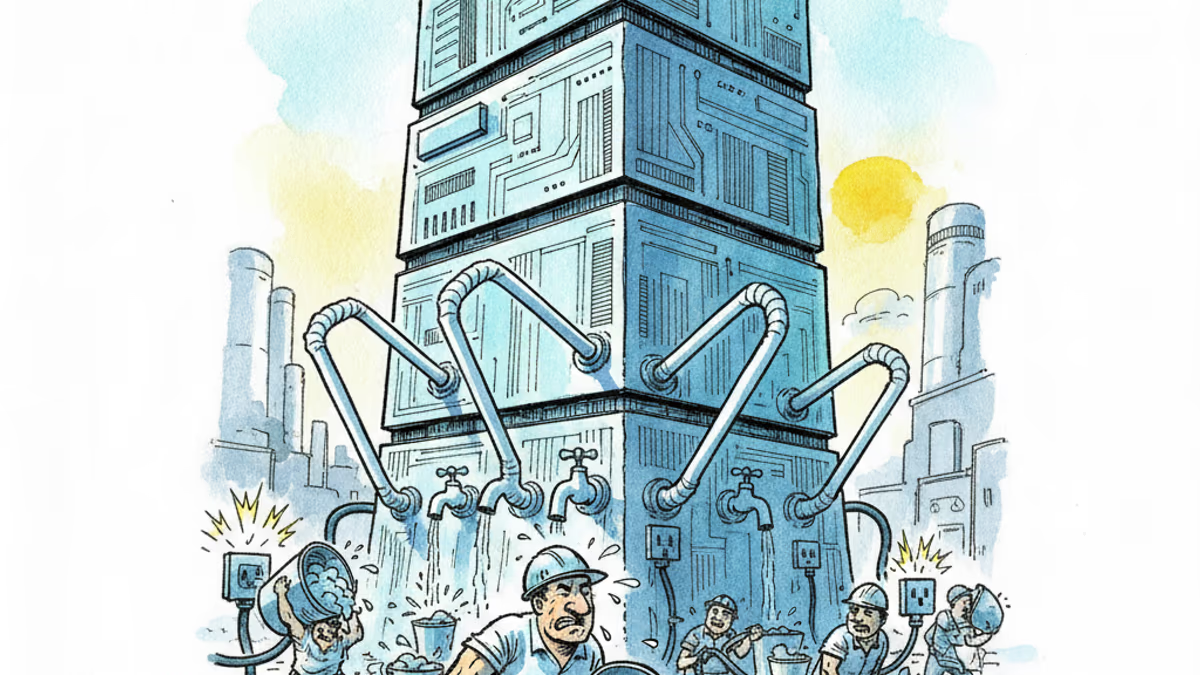
Samsung and SK unveiled a chip and AI investment package worth thousands of trillions of won on June 29. The headline number swings wildly by outlet, but the real contest isn't capital — it's water and power.

Viral videos show 2026 graduates jeering executives who praise AI at commencement ceremonies. It's not just rudeness — it's a signal about who pays for technological optimism.
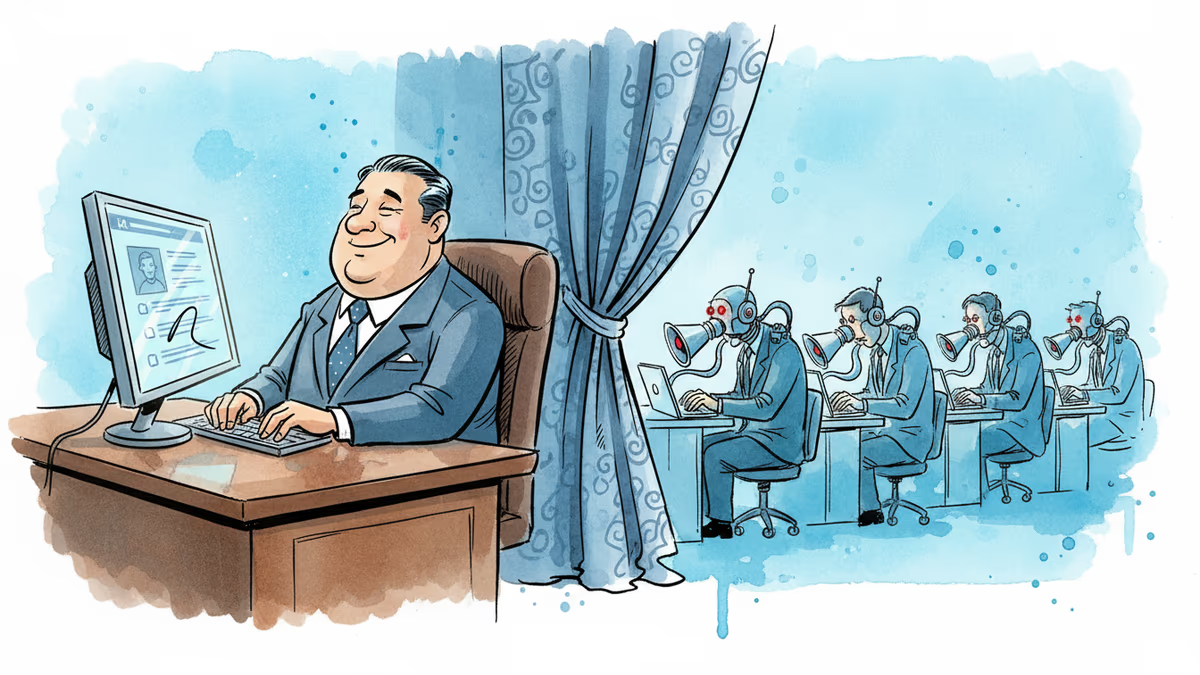
Filipino virtual assistants using AI to ghost-manage LinkedIn profiles for executives is now a structured industry. 30 comments a day, fake engagement rings, and a platform struggling to tell real from fabricated.
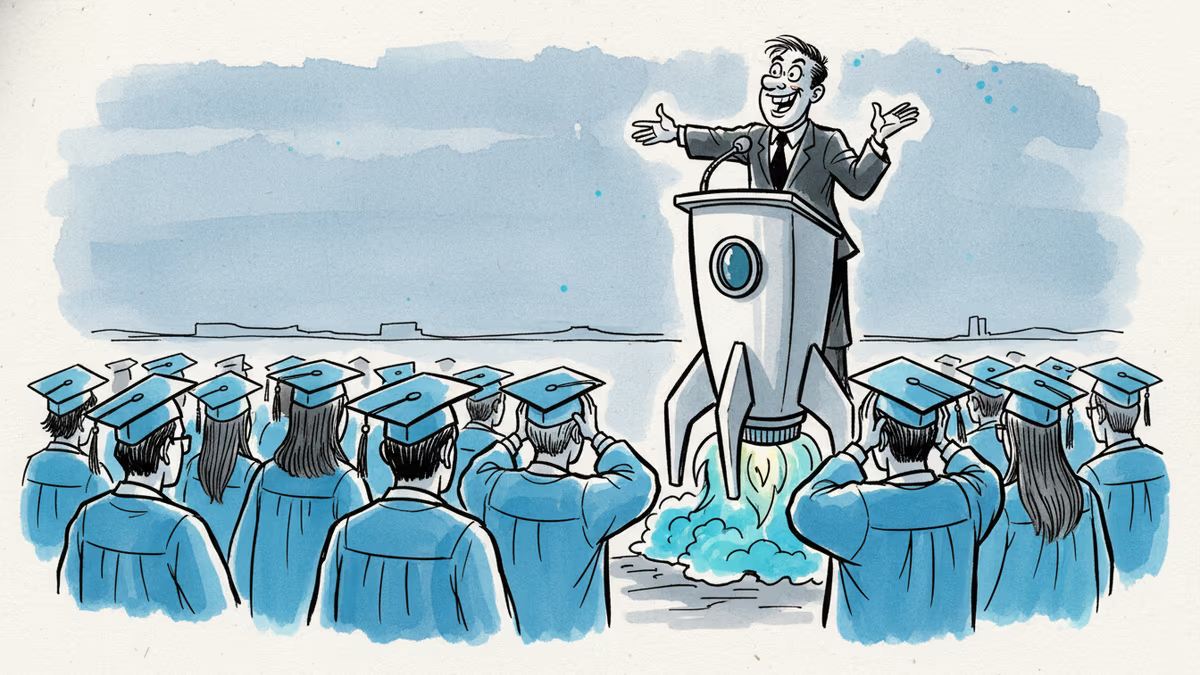
Two commencement speakers learned the hard way that AI enthusiasm doesn't land well with today's graduates. The backlash reveals a widening gap between tech optimism and Gen Z's economic reality.
Samsung and SK unveiled a chip and AI investment package worth thousands of trillions of won on June 29. The headline number swings wildly by outlet, but the real contest isn't capital — it's water and power.
Viral videos show 2026 graduates jeering executives who praise AI at commencement ceremonies. It's not just rudeness — it's a signal about who pays for technological optimism.
Filipino virtual assistants using AI to ghost-manage LinkedIn profiles for executives is now a structured industry. 30 comments a day, fake engagement rings, and a platform struggling to tell real from fabricated.
Two commencement speakers learned the hard way that AI enthusiasm doesn't land well with today's graduates. The backlash reveals a widening gap between tech optimism and Gen Z's economic reality.
Thoughts
Share your thoughts on this article
Sign in to join the conversation