

Google's $8 AI Plus Plan Goes Global in Battle for Casual Users
Google expands its $7.99 AI Plus plan to 35 countries, targeting casual AI users with affordable access to Gemini Pro and creative tools in competition with OpenAI.
What if the biggest barrier to AI adoption isn't technology, but a $12 monthly price difference? Google's expansion of its AI Plus plan to 35 new countries at $7.99 per month suggests the company believes that's exactly the case.
The $8 Sweet Spot Strategy
Google announced Tuesday that its more affordable AI Plus plan is now available globally, including in the U.S. where it costs $7.99 monthly. The expansion brings the lower-cost option to markets that previously only had access to the $20AI Pro plan or free basic services.
The plan includes access to Gemini 3 Pro and Nano Banana Pro, Flow's AI filmmaking tools, research assistance in NotebookLM, plus 200GB of storage and family sharing for up to five members. Existing Google One Premium 2TB subscribers will automatically receive these benefits.
What's particularly telling is Google's regional pricing strategy. While Americans pay $7.99, users in India pay just ₹399 (about $4.44). This isn't just currency conversion—it's deliberate market positioning based on local purchasing power.
The $8 Battleground with OpenAI
That $8 price point isn't coincidental. OpenAI'sChatGPT Go plan costs exactly the same in the U.S. Both companies are fighting for what we might call the "AI-curious" segment—users who want more than free access but aren't ready to commit $20+ monthly.

This represents a fundamental shift in AI market strategy. Previously, the market was binary: free users and power users paying premium prices. The $8 tier creates a new category targeting casual users who might use AI for occasional writing help, research, or creative projects but don't need enterprise-level features.
Google's current 50% discount for the first two months further reduces friction, making the initial commitment just $4 monthly—less than a coffee subscription.
The Emerging Market Laboratory
Google's strategy reveals something crucial about AI adoption: emerging markets aren't just cost-sensitive—they're innovation laboratories. The AI Plus plan launched in Indonesia last September, allowing Google to test pricing models and feature sets before bringing them to developed markets.
This approach suggests that the future of AI isn't being written in Silicon Valley boardrooms, but in markets where $5 monthly represents a significant decision. These users are developing different usage patterns and expectations that could reshape how AI companies design their products globally.
Beyond the Price War
While the focus is on pricing, the real competition is about ecosystem lock-in. Google isn't just selling AI access—it's bundling storage, family sharing, and creative tools to create switching costs. Users who integrate these services into their workflows become harder for competitors to poach.
The timing is also strategic. As AI capabilities rapidly commoditize, user experience and ecosystem integration become the primary differentiators. A $8 plan that works seamlessly across Google's suite of services might offer more value than a $20 standalone AI tool.
Authors
Related Articles
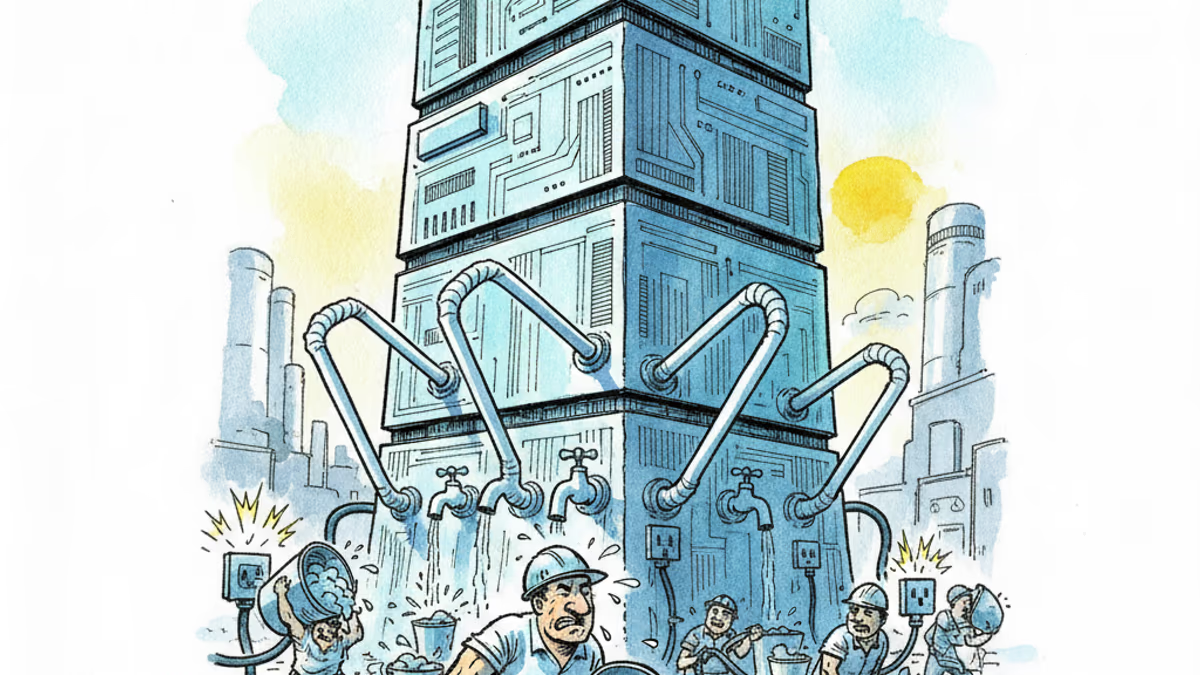
Samsung and SK unveiled a chip and AI investment package worth thousands of trillions of won on June 29. The headline number swings wildly by outlet, but the real contest isn't capital — it's water and power.

In a post-Google I/O interview, Sundar Pichai acknowledged flawed search results, real AI anxiety, and an AGI timeline that makes the label irrelevant. Here's what he said — and what it means.
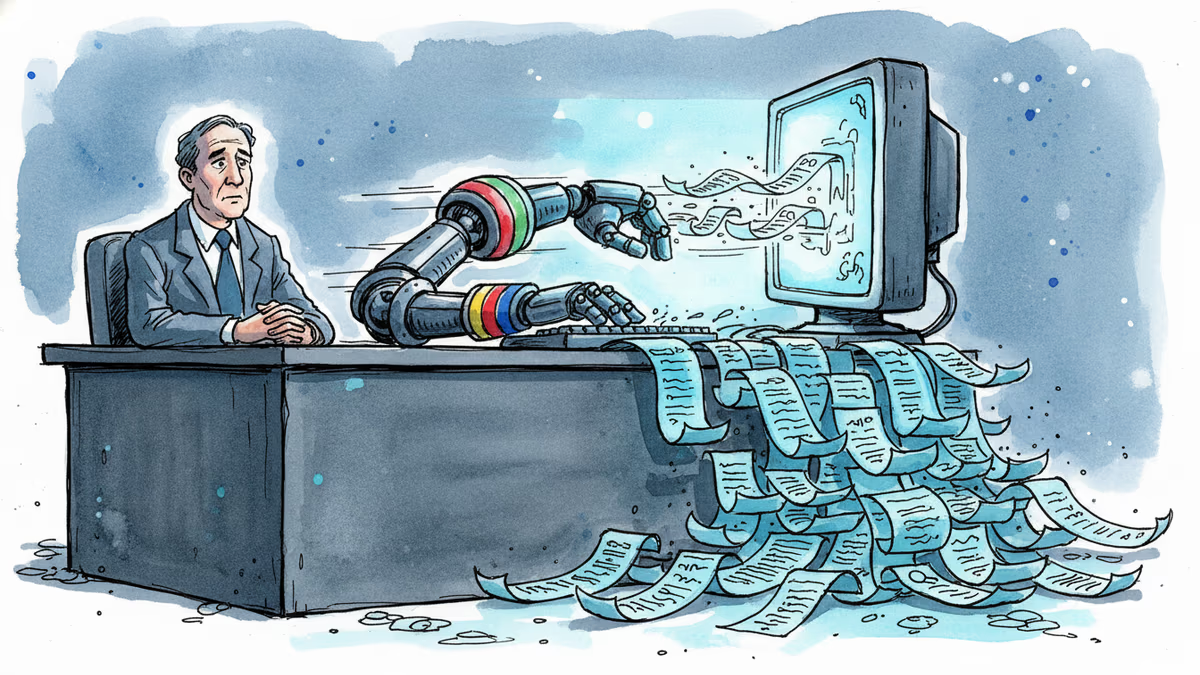
Google is building AI agents that search the web proactively, without user prompting. That's not just a product update — it's a fundamental shift in who controls the information you receive.

Viral videos show 2026 graduates jeering executives who praise AI at commencement ceremonies. It's not just rudeness — it's a signal about who pays for technological optimism.
Samsung and SK unveiled a chip and AI investment package worth thousands of trillions of won on June 29. The headline number swings wildly by outlet, but the real contest isn't capital — it's water and power.
In a post-Google I/O interview, Sundar Pichai acknowledged flawed search results, real AI anxiety, and an AGI timeline that makes the label irrelevant. Here's what he said — and what it means.
Google is building AI agents that search the web proactively, without user prompting. That's not just a product update — it's a fundamental shift in who controls the information you receive.
Viral videos show 2026 graduates jeering executives who praise AI at commencement ceremonies. It's not just rudeness — it's a signal about who pays for technological optimism.
Thoughts
Share your thoughts on this article
Sign in to join the conversation