
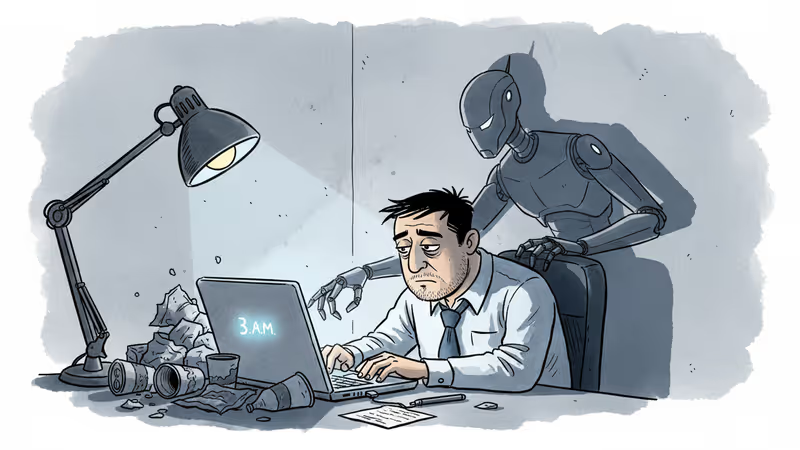
India's Tech Workers Are Breaking—What It Means for AI's Future
With 83% of Indian IT workers facing burnout and rising suicide rates, the crisis reveals what happens when AI disruption meets human limits.
83% of India's tech workers suffer from burnout. One in four works over 70 hours a week. Many fear losing their jobs to AI—so they work unpaid overtime, hoping to prove their worth to algorithms that may replace them anyway.
Last May, 24-year-old machine learning engineer Nikhil Somwanshi sent his roommate a WhatsApp message: tell his family that what was about to happen next was an accident. He worked at Krutrim, a billion-dollar AI startup. His $41,000 salary was nearly 10 times his farming family's income. Banners celebrating his success went up in his village. His parents built a small temple with his first paycheck.
But Somwanshi was working 15 hours a day. The job "broke his spirit," his cousin said. He doubted he'd even make it home for Diwali, India's most important family holiday. His body was later found at a lake in Bengaluru.
227 Deaths, One Industry Crisis
A Rest of World analysis found 227 reported suicides among Indian tech workers between 2017 and 2025. A 48-year-old software manager jumped from his office building due to work pressure. A 38-year-old engineer electrocuted himself after complaining of "depression due to work pressure." A 23-year-old sent his mother a video saying he could no longer handle job stress, then jumped from his apartment.
While suicides have multiple causes, employees and union leaders see these cases as evidence of an industry in crisis. "We are locked in the glass door, suppressing on a daily basis," one major outsourcing firm employee told Rest of World. "Our reality is very harsh."
The numbers paint a grim picture: In Karnataka state, tech workers account for 20% of patients seeking organ transplants due to organ failure. A study in Hyderabad found 84% of IT workers had liver disease linked to long hours of sedentary work and high stress.
AI Accelerates the Anxiety
The rise of AI is making everything worse. Stanford researchers analyzed millions of American payroll records and found a "13% relative decline in employment for early-career workers in the most AI-exposed jobs"—software engineering and customer service topping the list.
India's IT industry is particularly vulnerable. For decades, U.S. companies have used outsourced Indian workers for data analysis and entry-level programming—exactly the jobs AI can now handle. Cornell University's Aditya Vashistha warns that "traditional consulting roles in the service industry" will be hit much harder than product development companies.
The timing couldn't be worse. President Trump has hiked H-1B visa prices, making it harder for Indian talent to reach the U.S. Meanwhile, only 10% of India's 1.5 million engineering graduates in 2024 were likely to find jobs.

A Global Reckoning
This isn't just India's problem. The U.S. tech sector announced 150,000 job cuts in 2025—the sharpest loss in the economy. Tech job postings dropped 36% compared to early 2020. Intel, Microsoft, and Meta laid off tens of thousands.
But India's crisis offers a preview of what's coming globally. The country's massive pool of outsourced tech workers has powered global tech giants for decades—the U.S. accounts for 62% of India's IT outsourcing revenue. As AI threatens these jobs and efficiency demands rise, an industry known for 24/7 schedules is reaching a breaking point.
The human cost is becoming clear. In Karnataka, tech workers represent a "starkly disproportionate" share of organ failure patients. Workers describe mounting anxiety, little time for family, and constant fear of layoffs. Most worry conditions will only worsen with AI.
The Efficiency Trap
Some Indian tech leaders are making things worse by advocating 70-hour or even 90-hour workweeks—far above the national legal maximum of 48 hours. They frame this as necessary for competing with AI and global rivals.
But this creates a vicious cycle: overworked humans trying to outpace machines designed to work 24/7. As one worker put it, "My mind is always online."
The pandemic accelerated this trend. Remote work blurred professional boundaries further into personal lives. Job insecurity worsened with AI automating lower-level tasks. Workers now face "huge uncertainty about their jobs," says Jayanta Mukhopadhyay, a professor at IIT Kharagpur.
What This Means for Everyone
India's tech worker crisis matters globally because it shows what happens when AI disruption meets human limits. The country's 5 million tech workers have been the backbone of global digital infrastructure. If they're breaking under pressure, what does that mean for the rest of us?
The crisis reveals three uncomfortable truths about AI's impact on work:
First, AI doesn't just replace jobs—it intensifies pressure on remaining workers to prove their worth. Second, the benefits of AI-driven efficiency aren't automatically shared with the workers who make it possible. Third, the human cost of technological progress often becomes visible only when it's too late.
As AI reshapes industries worldwide, India's experience offers a stark warning: efficiency gains mean little if they come at the cost of human dignity and mental health.
Authors
Related Articles
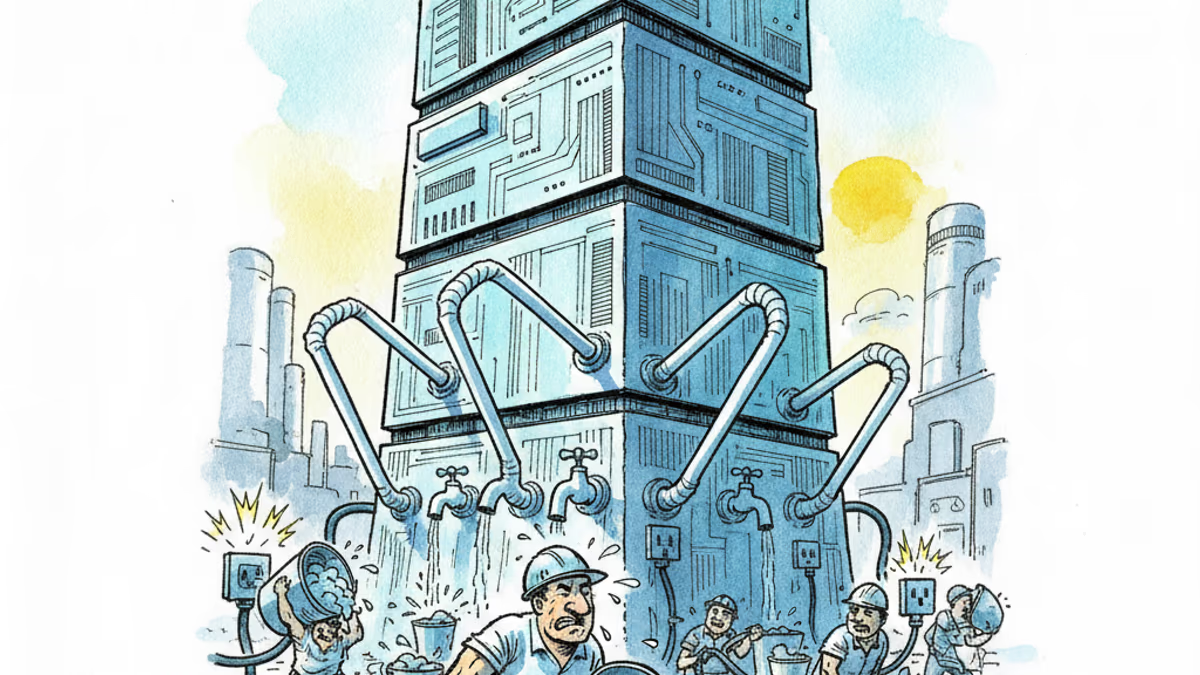
Samsung and SK unveiled a chip and AI investment package worth thousands of trillions of won on June 29. The headline number swings wildly by outlet, but the real contest isn't capital — it's water and power.
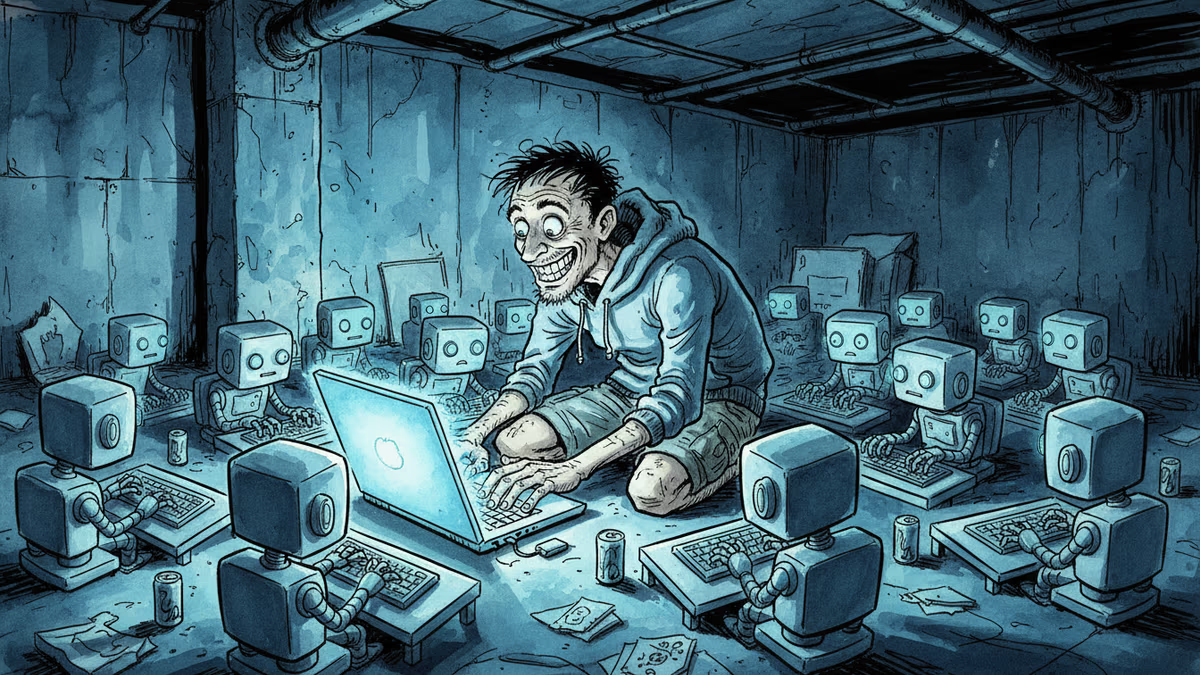
A small but growing group of developers has gone all-in on AI coding agents like Claude Code and OpenClaw. History suggests the rest of us won't be far behind.
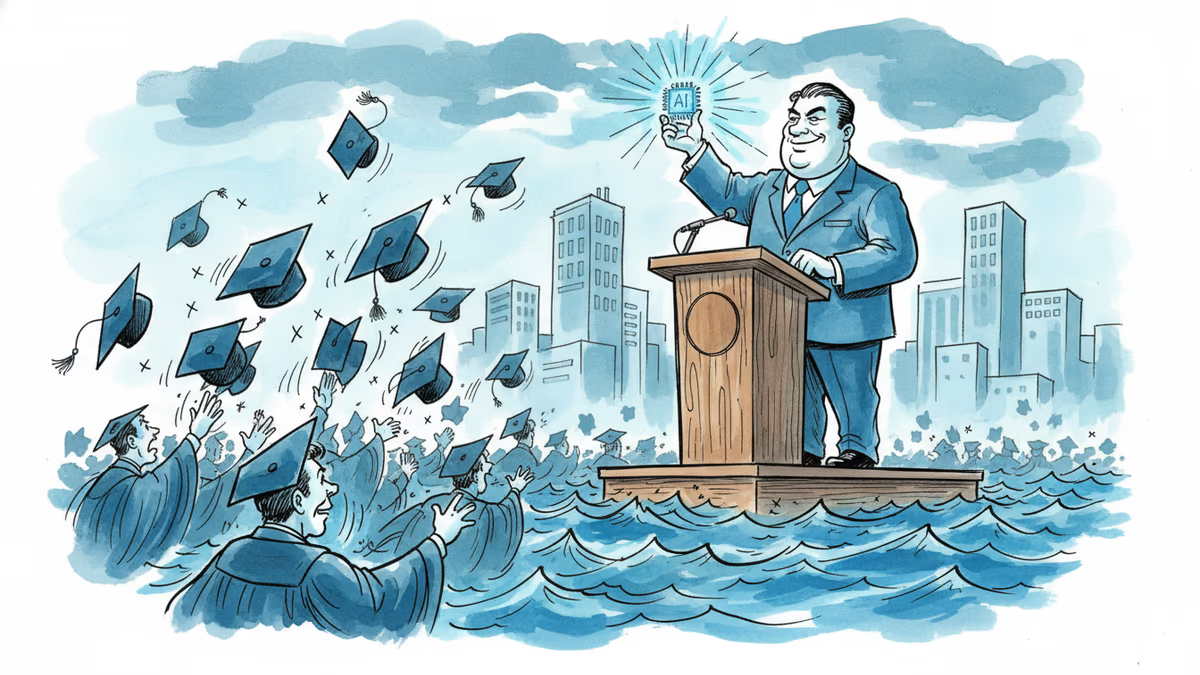
Viral videos show 2026 graduates jeering executives who praise AI at commencement ceremonies. It's not just rudeness — it's a signal about who pays for technological optimism.
Filipino virtual assistants using AI to ghost-manage LinkedIn profiles for executives is now a structured industry. 30 comments a day, fake engagement rings, and a platform struggling to tell real from fabricated.
Samsung and SK unveiled a chip and AI investment package worth thousands of trillions of won on June 29. The headline number swings wildly by outlet, but the real contest isn't capital — it's water and power.
A small but growing group of developers has gone all-in on AI coding agents like Claude Code and OpenClaw. History suggests the rest of us won't be far behind.
Viral videos show 2026 graduates jeering executives who praise AI at commencement ceremonies. It's not just rudeness — it's a signal about who pays for technological optimism.
Filipino virtual assistants using AI to ghost-manage LinkedIn profiles for executives is now a structured industry. 30 comments a day, fake engagement rings, and a platform struggling to tell real from fabricated.
Thoughts
Share your thoughts on this article
Sign in to join the conversation