
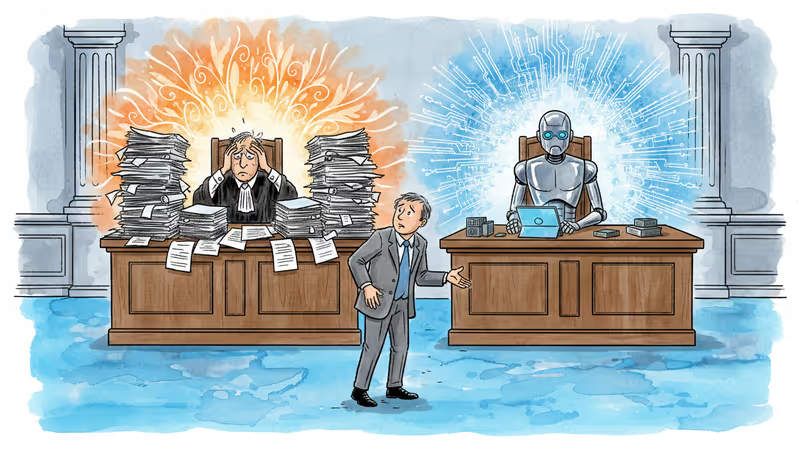
When AI Takes the Bench: Justice by Algorithm or Human Touch?
Former Michigan Supreme Court Chief Justice develops AI judges to solve court backlogs. Can artificial intelligence deliver fairer justice than overworked human judges?
For 30 years, Bridget McCormack corrected judges' mistakes as Michigan's Supreme Court Chief Justice. Now she's building a judge that won't make those mistakes—and it's not human.
McCormack is developing an AI judge that, like its human counterparts, might err in judgment. But unlike many overworked judges, it won't be buried under impossible caseloads. It would transparently show its reasoning, verify that both sides understood the facts, and rule on every issue without exception.
Why Courts Are Embracing Silicon Justice
America's courts are drowning in cases. Federal judges handle over 700 cases annually on average—a 40% increase from two decades ago, according to the American Bar Association. Judges routinely make decisions without adequate time for thorough review, creating a justice system running on fumes.
McCormack isn't chasing AI perfection—she's after consistency. Human judges get tired, emotional, and biased. AI applies the same standards uniformly. For routine civil disputes and traffic violations, this could revolutionize case processing.
But resistance runs deep. The New York State Judges Association argues that "legal judgment requires human experience and intuition." Complex family court cases and serious criminal trials, they contend, demand the nuanced understanding only humans possess.
The Algorithm's Blind Spots
The promise is compelling: faster decisions, transparent reasoning, reduced bias. Yet Stanford Law School's AI research team warns that "AI can reduce certain biases while creating entirely new ones." Training data reflects historical prejudices embedded in past judicial decisions.

Consider this: if an AI learns from decades of sentencing data that systematically disadvantaged certain communities, it might perpetuate those patterns with mathematical precision. The bias becomes invisible, coded into algorithms that appear objective.
Legal Aid Society advocates worry about another issue—the "digital divide" in legal representation. Wealthy defendants might afford lawyers skilled in "prompt engineering" to communicate effectively with AI judges, while public defenders struggle with this new technological barrier.
Global Implications
Other nations are watching closely. Singapore's courts already use AI for case scheduling and document review. Estonia pilots AI-powered small claims resolution. China's internet courts handle millions of cases with AI assistance.
The question isn't whether AI will enter courtrooms—it's how quickly and extensively. McKinsey estimates AI could automate 23% of current judicial tasks within five years, potentially saving the US justice system $12 billion annually.
But efficiency gains might come at a cost. Critics argue that justice isn't just about correct outcomes—it's about being heard, understood, and judged by peers. Can an algorithm provide the human dignity that courtroom proceedings traditionally offer?
The Human Element
McCormack insists AI judges would supplement, not replace, human judgment. But that distinction might blur as AI capabilities advance. If an AI consistently makes faster, more consistent decisions than human judges, economic pressures could drive broader adoption.
The legal profession faces a fundamental question: Is justice about applying rules correctly, or understanding human complexity? Perhaps it's both—and finding that balance will define the next chapter of legal history.
Authors
Related Articles
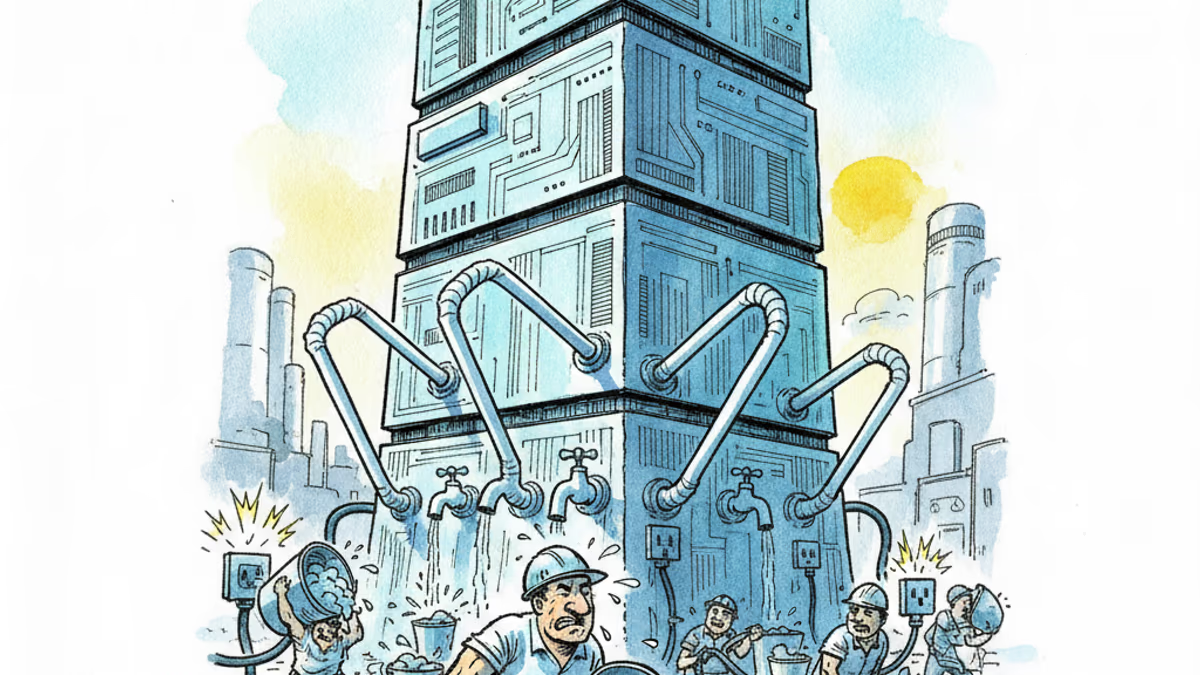
Samsung and SK unveiled a chip and AI investment package worth thousands of trillions of won on June 29. The headline number swings wildly by outlet, but the real contest isn't capital — it's water and power.
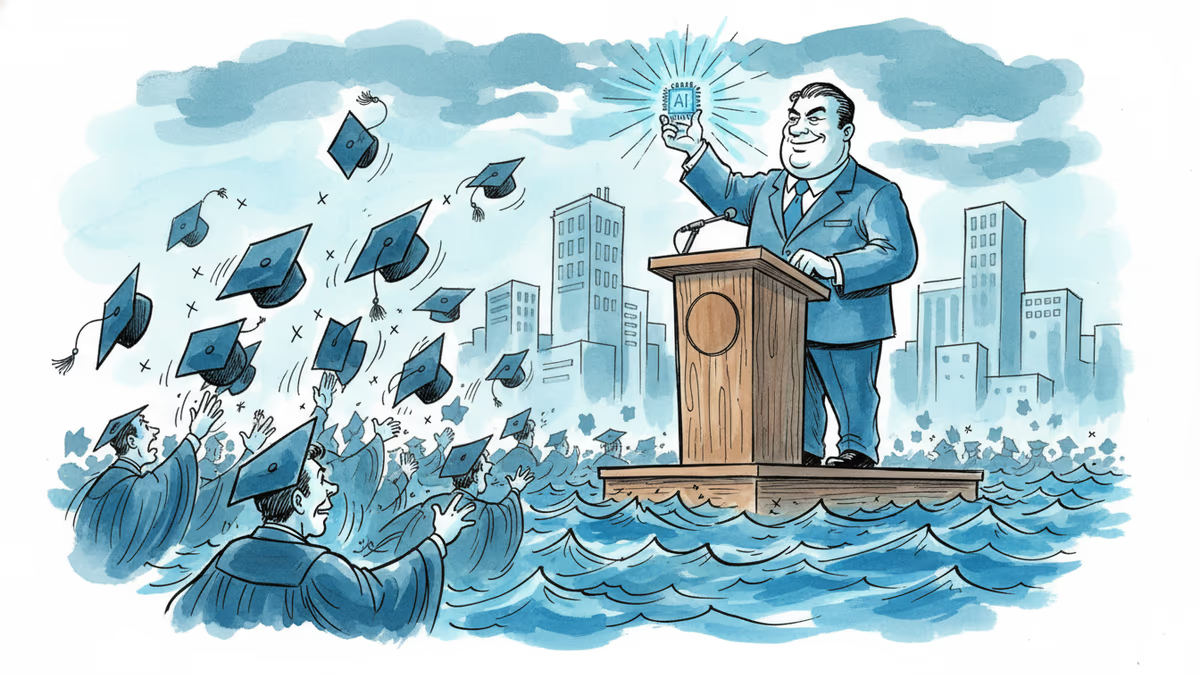
Viral videos show 2026 graduates jeering executives who praise AI at commencement ceremonies. It's not just rudeness — it's a signal about who pays for technological optimism.
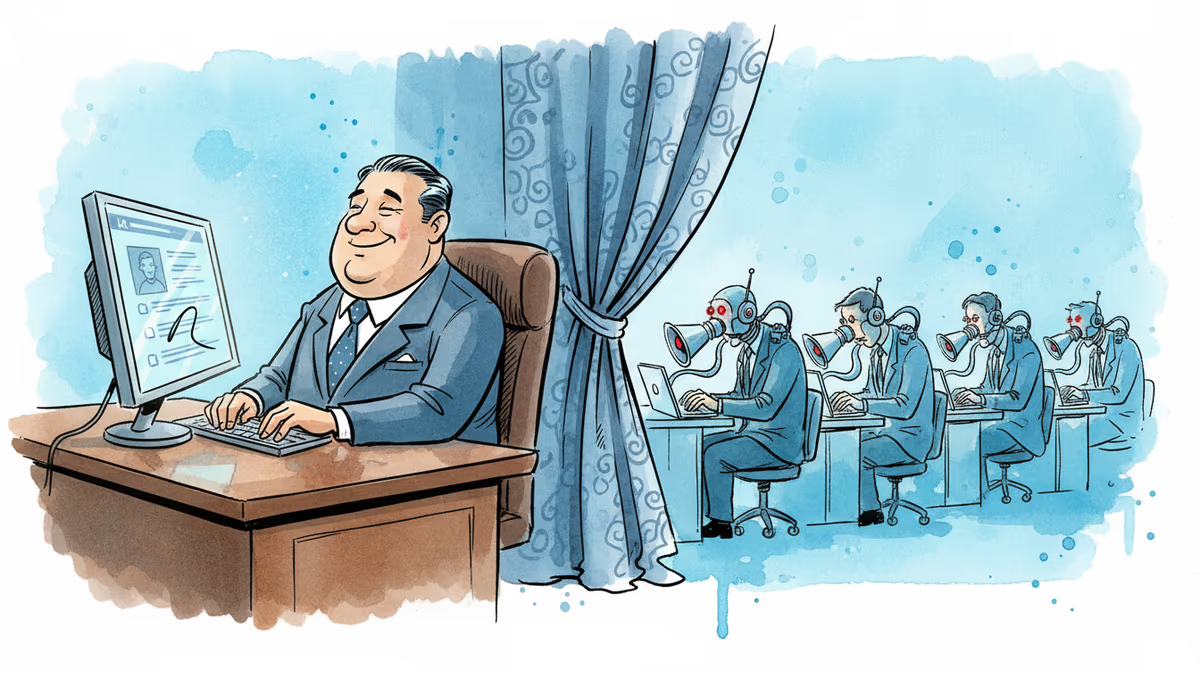
Filipino virtual assistants using AI to ghost-manage LinkedIn profiles for executives is now a structured industry. 30 comments a day, fake engagement rings, and a platform struggling to tell real from fabricated.
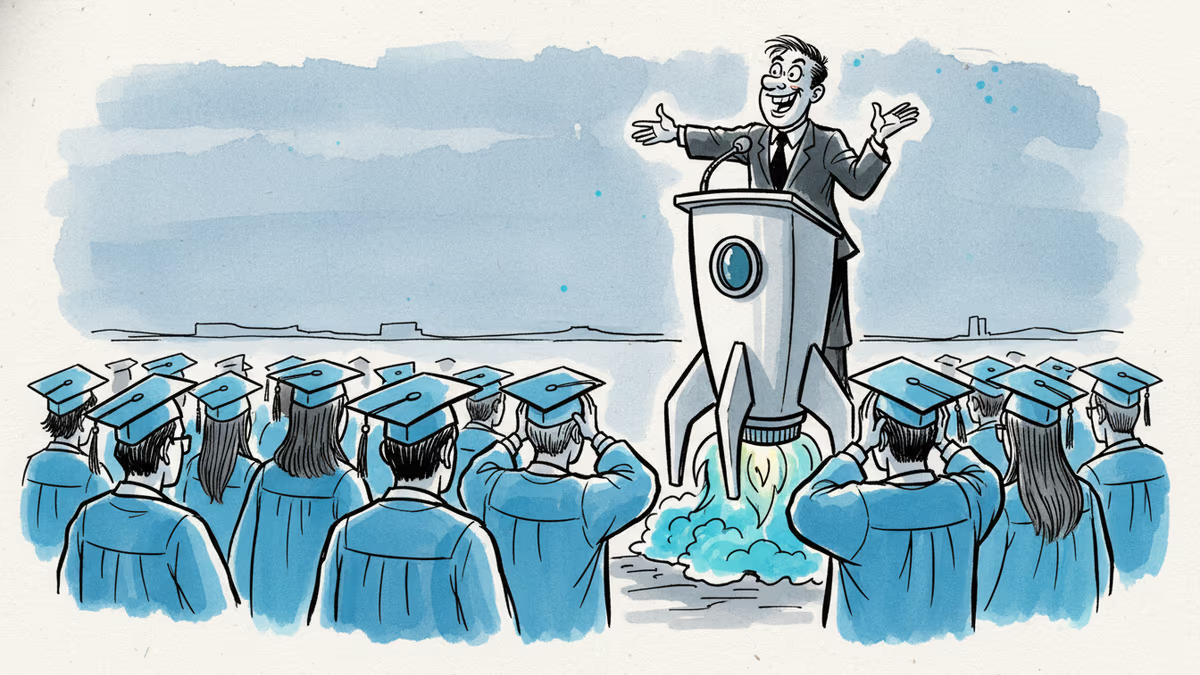
Two commencement speakers learned the hard way that AI enthusiasm doesn't land well with today's graduates. The backlash reveals a widening gap between tech optimism and Gen Z's economic reality.
Samsung and SK unveiled a chip and AI investment package worth thousands of trillions of won on June 29. The headline number swings wildly by outlet, but the real contest isn't capital — it's water and power.
Viral videos show 2026 graduates jeering executives who praise AI at commencement ceremonies. It's not just rudeness — it's a signal about who pays for technological optimism.
Filipino virtual assistants using AI to ghost-manage LinkedIn profiles for executives is now a structured industry. 30 comments a day, fake engagement rings, and a platform struggling to tell real from fabricated.
Two commencement speakers learned the hard way that AI enthusiasm doesn't land well with today's graduates. The backlash reveals a widening gap between tech optimism and Gen Z's economic reality.
Thoughts
Share your thoughts on this article
Sign in to join the conversation