
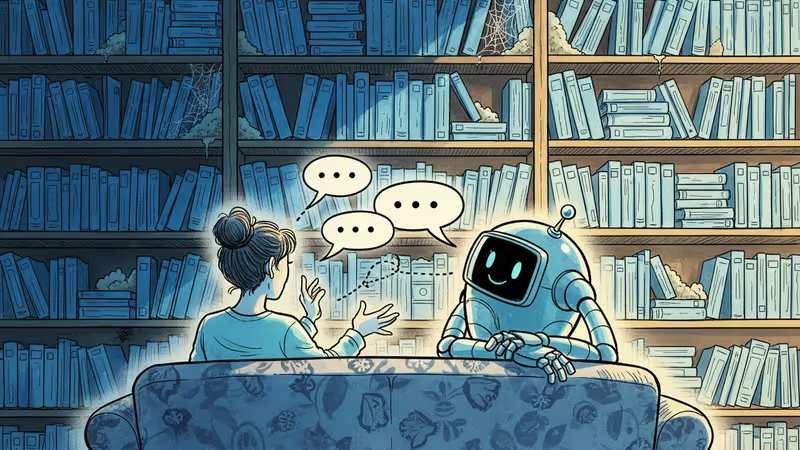
Why Google Search Is Becoming a Conversation, Not a Link List
Google is transforming search from links to AI conversations with Gemini 3 and AI Mode. What does this mean for how we find information?
When did you last click a Google link? Google is fundamentally changing how we search—replacing link lists with AI conversations.
The company has upgraded its AI Overviews with Gemini 3 and added seamless follow-up questions, creating an experience that feels more like chatting with an AI assistant than using a search engine. As Google Search VP Robby Stein puts it: "A quick snapshot when you need it, and deeper conversation when you want it."
From Search to Conversation
If AI Overviews' summary leaves you wanting more, you can now jump straight into AI Mode with a simple scroll. It's like naturally transitioning from reading search results to having a chat with an AI assistant.
This isn't just a feature update—it's a fundamental shift in Google's 28-year-old search DNA. The iconic "10 blue links" approach is evolving into something that talks back, learns from your questions, and adapts its responses in real-time.
The Traffic Dilemma
This transformation raises a critical question: what happens to the websites that have built their business on Google traffic? If users get satisfying answers directly from AI without clicking through, web traffic could plummet. Publishers, especially those creating informational content, face an existential challenge.

Yet this shift also creates new opportunities. High-quality content that AI can reference becomes more valuable than ever. The winners will be those who provide unique perspectives and deep analysis rather than basic information rehashing.
Regulatory Scrutiny Ahead
Google's move toward AI-first search comes at a time when regulators are already questioning big tech's market dominance. By potentially reducing traffic to other websites while keeping users within Google's ecosystem, this could intensify antitrust concerns.
The European Union and US Department of Justice are likely watching closely. Will AI-powered search be seen as innovation or anti-competitive behavior? The answer could reshape not just Google's strategy but the entire search landscape.
The Broader AI Race
This isn't just about Google. Microsoft's Bing with ChatGPT integration and OpenAI's SearchGPT are pushing the same conversational search paradigm. We're witnessing the emergence of a new category: AI-native search engines that prioritize dialogue over discovery.
The question isn't whether search will become more conversational—it's who will define what that conversation looks like.
Authors
Related Articles

In a post-Google I/O interview, Sundar Pichai acknowledged flawed search results, real AI anxiety, and an AGI timeline that makes the label irrelevant. Here's what he said — and what it means.
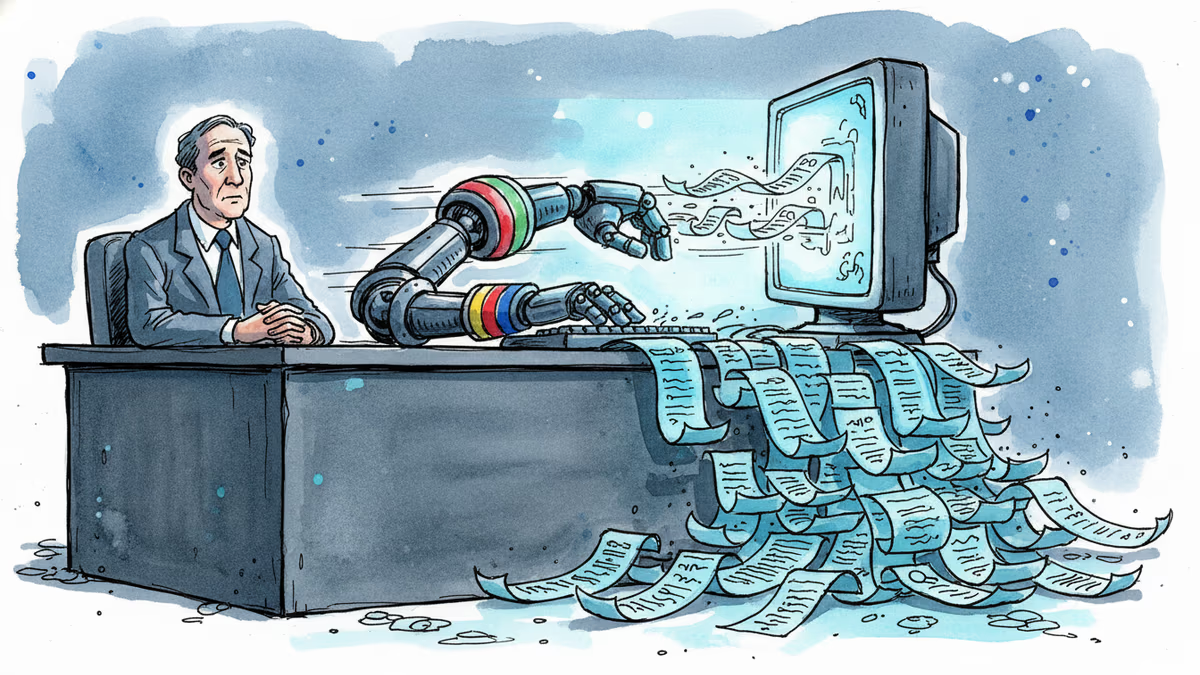
Google is building AI agents that search the web proactively, without user prompting. That's not just a product update — it's a fundamental shift in who controls the information you receive.
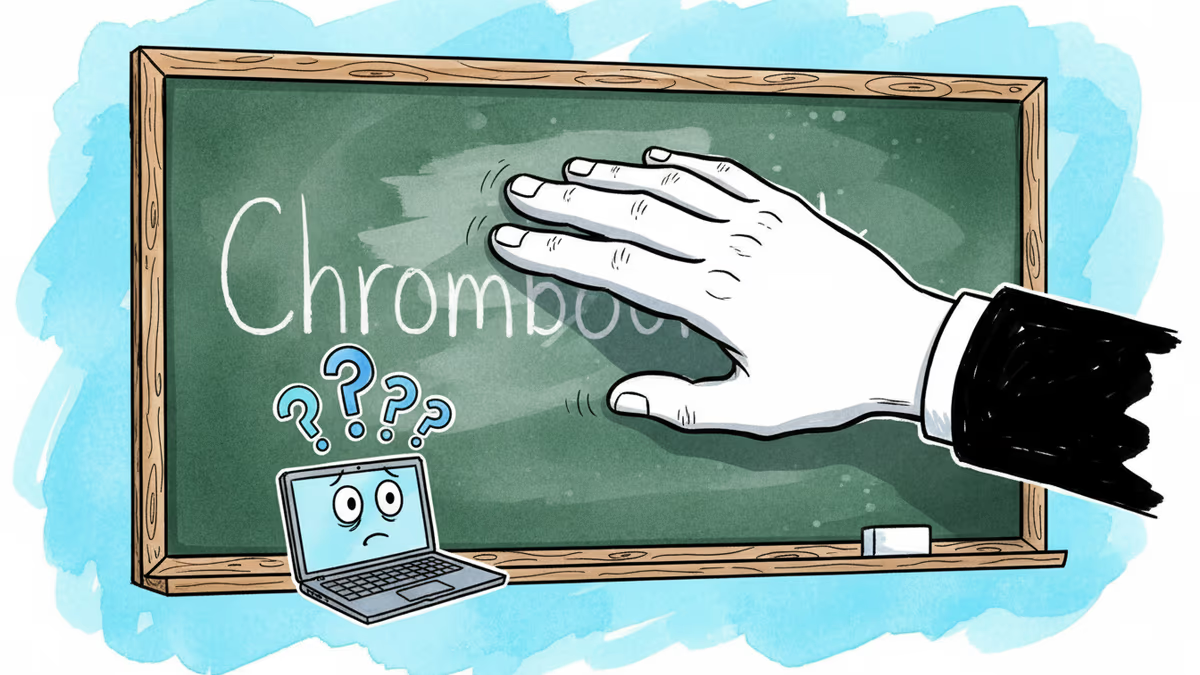
Google unveiled the 'Googlebook' platform to replace Chromebook and ChromeOS—but revealed zero hardware specs. What's the strategy, and what does it mean for users, manufacturers, and the education market?
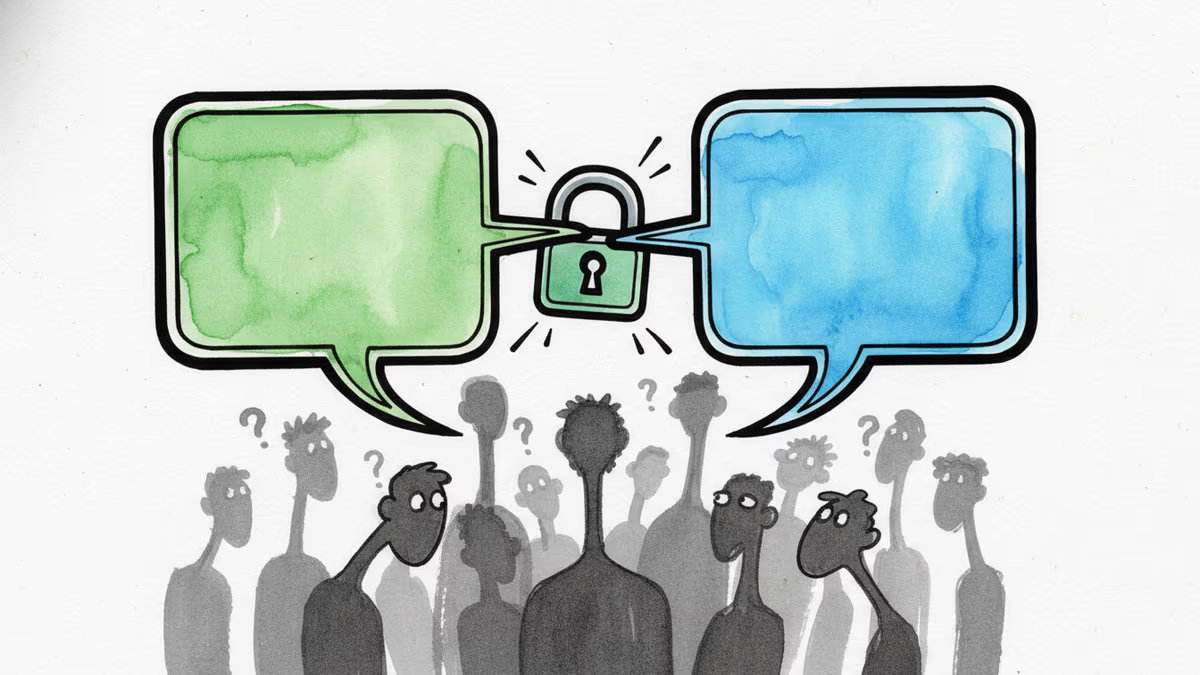
After 15 years of fragmented mobile messaging, Apple and Google are rolling out end-to-end encrypted RCS messaging between iPhones and Android devices. Here's what changed, why it took so long, and what it means for your privacy.
In a post-Google I/O interview, Sundar Pichai acknowledged flawed search results, real AI anxiety, and an AGI timeline that makes the label irrelevant. Here's what he said — and what it means.
Google is building AI agents that search the web proactively, without user prompting. That's not just a product update — it's a fundamental shift in who controls the information you receive.
Google unveiled the 'Googlebook' platform to replace Chromebook and ChromeOS—but revealed zero hardware specs. What's the strategy, and what does it mean for users, manufacturers, and the education market?
After 15 years of fragmented mobile messaging, Apple and Google are rolling out end-to-end encrypted RCS messaging between iPhones and Android devices. Here's what changed, why it took so long, and what it means for your privacy.
Thoughts
Share your thoughts on this article
Sign in to join the conversation