

Google's AI Overviews Gets Smarter, But Are We Ready for the Consequences?
Google upgrades AI Overviews to Gemini 3, promising better search results. But as AI becomes more conversational and ubiquitous, what happens to human curiosity and critical thinking?
Your next Google search might feel like chatting with a particularly well-read friend. Google has quietly upgraded its AI Overviews feature to run on the latest Gemini 3 models, promising more conversational and accurate responses to your queries. But as AI becomes the default gateway to information, we might want to pause and ask: what are we trading away?
The Upgrade Nobody Asked For (But Everyone Gets)
If you've searched for anything on Google recently, you've likely encountered AI Overviews – those AI-generated summaries that now appear at the top of nearly every search result. What started as an experimental feature has become almost inescapable, appearing on the vast majority of queries whether you want it or not.
The system previously relied on Gemini 2.5 models, which were competent but occasionally produced those viral "put glue on pizza" moments that made headlines for all the wrong reasons. Now, Google is rolling out Gemini 3 across the platform, with the promise of more nuanced, conversational responses.
The upgrade isn't a simple swap. Google says AI Overviews now intelligently selects which Gemini 3 variant to use based on your query's complexity. Simple questions about established facts might trigger Gemini 3 Flash – a lighter, faster model. Complex research queries could escalate to Gemini 3 Pro, especially for paying subscribers who get access to the more powerful reasoning capabilities.
The Invisible Hand Shaping Your Reality
Here's what Google isn't saying loudly: this upgrade represents a fundamental shift in how information reaches you. The company has essentially positioned AI as the primary filter between human curiosity and the world's knowledge. When you search for "climate change effects," you're no longer getting a list of sources to evaluate – you're getting AI's interpretation of those sources, presented as authoritative truth.
This matters more than it might seem. Traditional search results, for all their flaws, preserved the messy reality of information: conflicting sources, varying perspectives, the need to synthesize and think critically. AI Overviews streamlines this process, but at what cost?

The conversational upgrade makes this even more subtle. When AI responds in natural language, it feels like getting advice from an expert rather than consuming processed information. That psychological shift could make users less likely to question the response or seek additional sources.
The Global Knowledge Bottleneck
From a broader perspective, Google's move reflects a concerning trend: the centralization of information interpretation. While the company processes searches in dozens of languages and serves billions of users globally, the AI models making these interpretations are trained primarily on English-language sources and reflect the biases embedded in their training data.
For users in non-Western countries or those seeking information on culturally specific topics, this could mean receiving responses filtered through a distinctly American or European lens. The conversational nature of Gemini 3 might make these biases less obvious but more influential.
Meanwhile, content creators and publishers face an existential question. If AI Overviews satisfies most users' information needs directly in the search results, why would anyone click through to the original sources? This could accelerate the ongoing crisis in digital journalism and independent content creation.
The Convenience Trap
For consumers, the immediate benefits are undeniable. Getting quick, synthesized answers saves time and cognitive effort. No more scrolling through multiple results, evaluating source credibility, or piecing together information from different perspectives. AI Overviews does the heavy lifting.
But convenience often comes with hidden costs. When AI pre-digests information for us, we might be losing something essential: the skill of information literacy itself. The ability to evaluate sources, recognize bias, and synthesize conflicting viewpoints isn't just academic – it's crucial for functioning in a democratic society.
There's also the question of accountability. When AI Overviews gets something wrong, who's responsible? Google can point to its sources, but users increasingly trust the AI summary over the underlying content. This creates a peculiar situation where the most influential information source has the least direct accountability.
Authors
Related Articles

In a post-Google I/O interview, Sundar Pichai acknowledged flawed search results, real AI anxiety, and an AGI timeline that makes the label irrelevant. Here's what he said — and what it means.
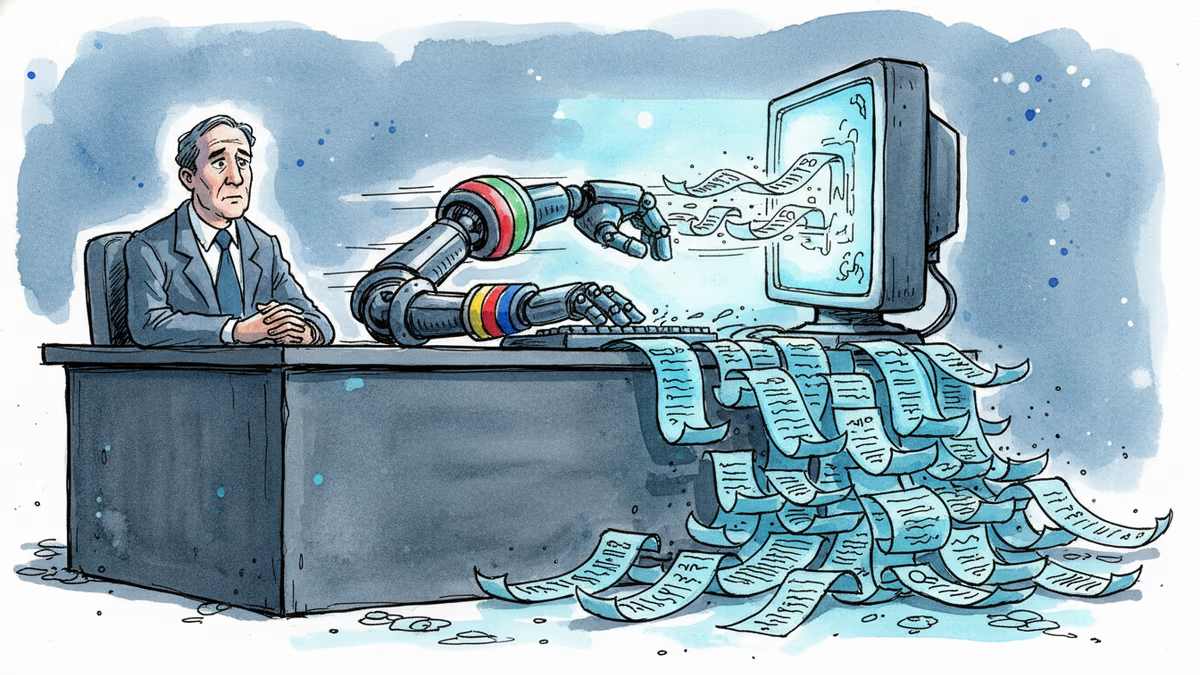
Google is building AI agents that search the web proactively, without user prompting. That's not just a product update — it's a fundamental shift in who controls the information you receive.

Google unveiled the 'Googlebook' platform to replace Chromebook and ChromeOS—but revealed zero hardware specs. What's the strategy, and what does it mean for users, manufacturers, and the education market?
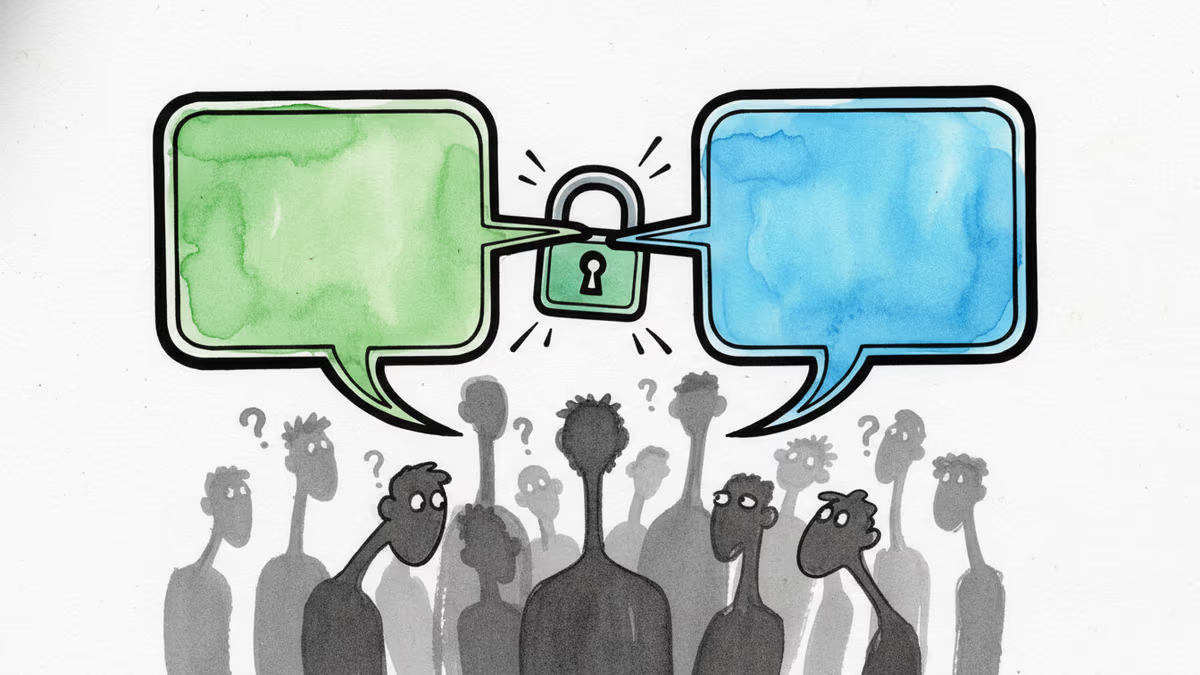
After 15 years of fragmented mobile messaging, Apple and Google are rolling out end-to-end encrypted RCS messaging between iPhones and Android devices. Here's what changed, why it took so long, and what it means for your privacy.
In a post-Google I/O interview, Sundar Pichai acknowledged flawed search results, real AI anxiety, and an AGI timeline that makes the label irrelevant. Here's what he said — and what it means.
Google is building AI agents that search the web proactively, without user prompting. That's not just a product update — it's a fundamental shift in who controls the information you receive.
Google unveiled the 'Googlebook' platform to replace Chromebook and ChromeOS—but revealed zero hardware specs. What's the strategy, and what does it mean for users, manufacturers, and the education market?
After 15 years of fragmented mobile messaging, Apple and Google are rolling out end-to-end encrypted RCS messaging between iPhones and Android devices. Here's what changed, why it took so long, and what it means for your privacy.
Thoughts
Share your thoughts on this article
Sign in to join the conversation