
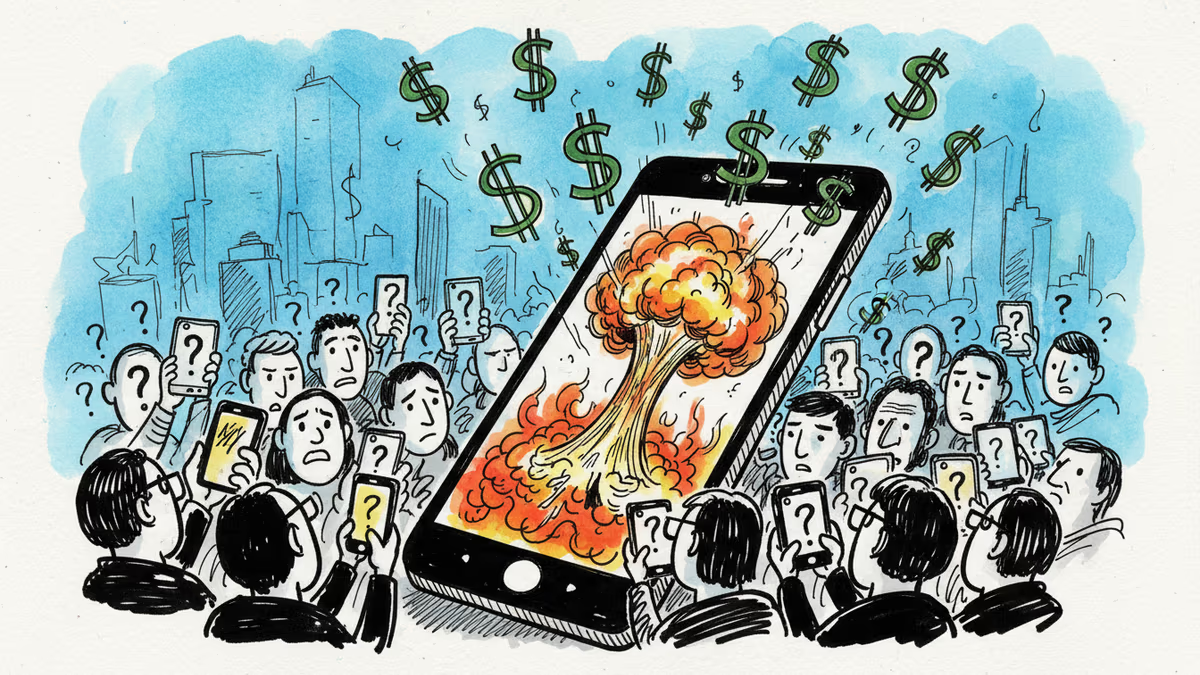
Millions Viewed Fake War Footage on X Within Hours of Iran Strike
Disinformation flooded X immediately after Israel-Iran attacks, with false content earning millions of views and potential revenue for premium users spreading misleading information.
4.4 Million Views for a Video That Wasn't Real
Minutes after Donald Trump announced the Israel-Iran "major combat operation" early Saturday, X transformed into a disinformation factory. A video claiming to show ballistic missiles over Dubai racked up 4.4 million views—except it actually showed Iranian missiles fired at Tel Aviv in October 2024.
This wasn't an isolated incident. WIRED's analysis of hundreds of X posts reveals a disturbing pattern: the most viral content about the attacks was often completely false, and almost all of it came from blue check mark accounts—users who pay for X's premium service.
The Economics of Lies
Here's what makes this different from past disinformation waves: under Elon Musk's monetization model, premium users can earn money based on engagement. More views equal more revenue, regardless of whether the content is true.
A video claiming to show an Israeli fighter jet shot down by Iranian air defenses spread across dozens of accounts, with one post garnering 3.5 million views. No credible reports confirm any Israeli jets were downed, but the false narrative kept spreading—and potentially earning money.
An account claiming expertise in open source intelligence posted explosion footage with the caption: "6 Iranian Hypersonic Missiles hit the Indian-invested Israeli Haifa port." The 64,000-view post used footage from a July attack in Damascus, Syria.

AI Enters the Information War
Tehran Times, aligned with Iran's government, shared what appears to be an AI-generated image claiming "an American radar in Qatar was completely destroyed." While drone attacks did target US facilities in Bahrain, the Qatar claim remains unverified—yet the synthetic imagery looked convincing enough to fool thousands.
A pro-Trump account posted "before and after" images of Iran's Supreme Leader Ali Khamenei's palace, viewed 365,000 times. The "after" photo appeared genuine, but the "before" image actually showed the Ruhollah Khomeini Mausoleum on the opposite side of Tehran.
Community Notes: Too Little, Too Late?
X's Community Notes system does flag some false content, but the corrections often arrive after millions have already seen the misinformation. More problematically, flagged posts remain live on the platform—they're corrected, not removed.
This pattern isn't new under Musk's ownership. X became a disinformation hotbed during the early days of the Israel-Hamas war and more recently during anti-immigration protests in LA. Each major breaking news event seems to overwhelm the platform's ability to maintain information integrity.
The Verification Paradox
The blue check mark once signaled credibility. Now it simply indicates someone pays $8 monthly for premium features and potential revenue sharing. This creates a perverse incentive: controversial or sensational content—even if false—can be more profitable than accurate reporting.
Meanwhile, traditional news outlets scramble to verify information while social media users consume and share content at lightning speed. The economic incentives favor speed and engagement over accuracy.
Authors
Related Articles
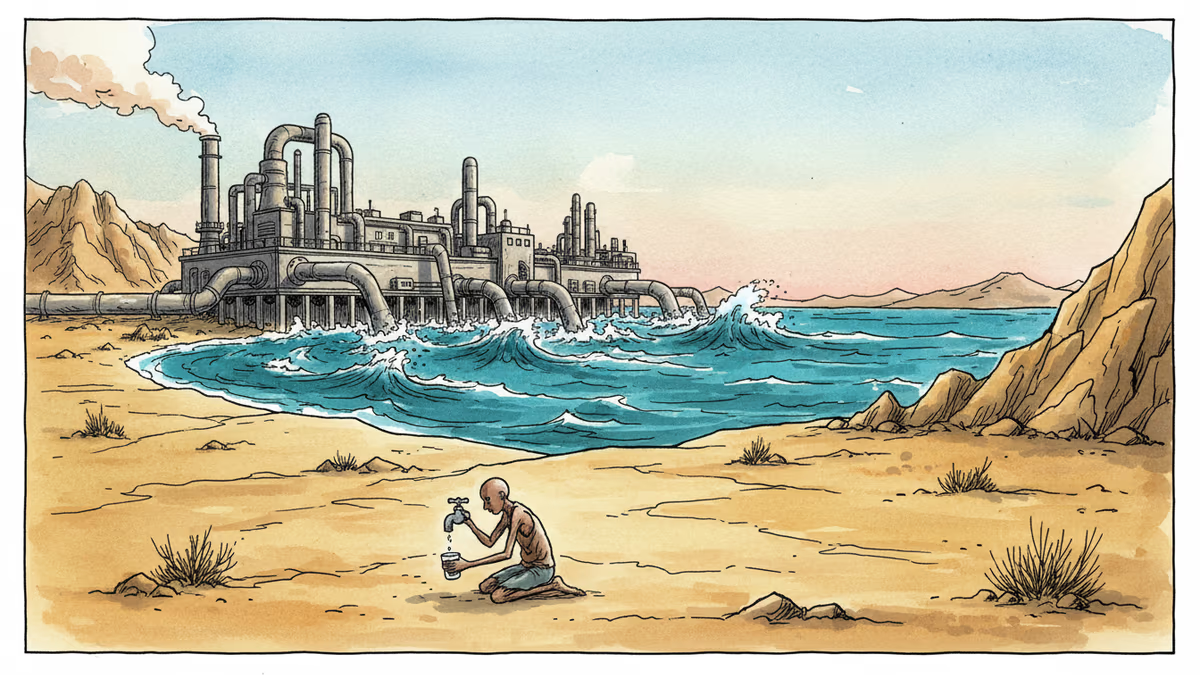
Qatar gets 99% of its drinking water from the sea. As the Middle East prepares to spend $25 billion expanding desalination capacity, this once-niche technology is becoming critical global infrastructure.
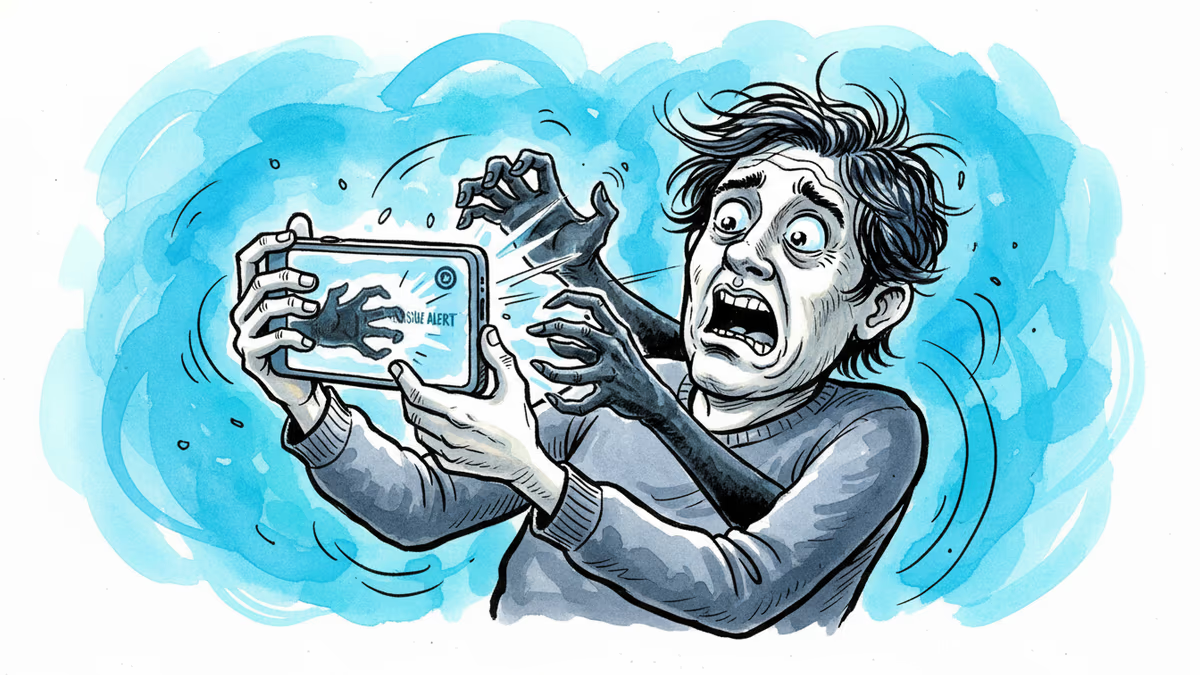
Fake shelter apps, death threats by text, and silent infrastructure attacks. The Iran-Israel-US cyber conflict is reshaping what war looks like in 2026.

As the Strait of Hormuz closure traps 1,900 vessels, abandoned seafarers reveal a structural flaw at the heart of global trade—no single authority is responsible when things go wrong.

Iran has fired 1,700+ drones and 360 missiles at the UAE in a month. Dubai's expat tech community isn't leaving — and some are doubling down. What this tells us about geopolitical risk pricing in 2026.
Qatar gets 99% of its drinking water from the sea. As the Middle East prepares to spend $25 billion expanding desalination capacity, this once-niche technology is becoming critical global infrastructure.
Fake shelter apps, death threats by text, and silent infrastructure attacks. The Iran-Israel-US cyber conflict is reshaping what war looks like in 2026.
As the Strait of Hormuz closure traps 1,900 vessels, abandoned seafarers reveal a structural flaw at the heart of global trade—no single authority is responsible when things go wrong.
Iran has fired 1,700+ drones and 360 missiles at the UAE in a month. Dubai's expat tech community isn't leaving — and some are doubling down. What this tells us about geopolitical risk pricing in 2026.
Thoughts
Share your thoughts on this article
Sign in to join the conversation