
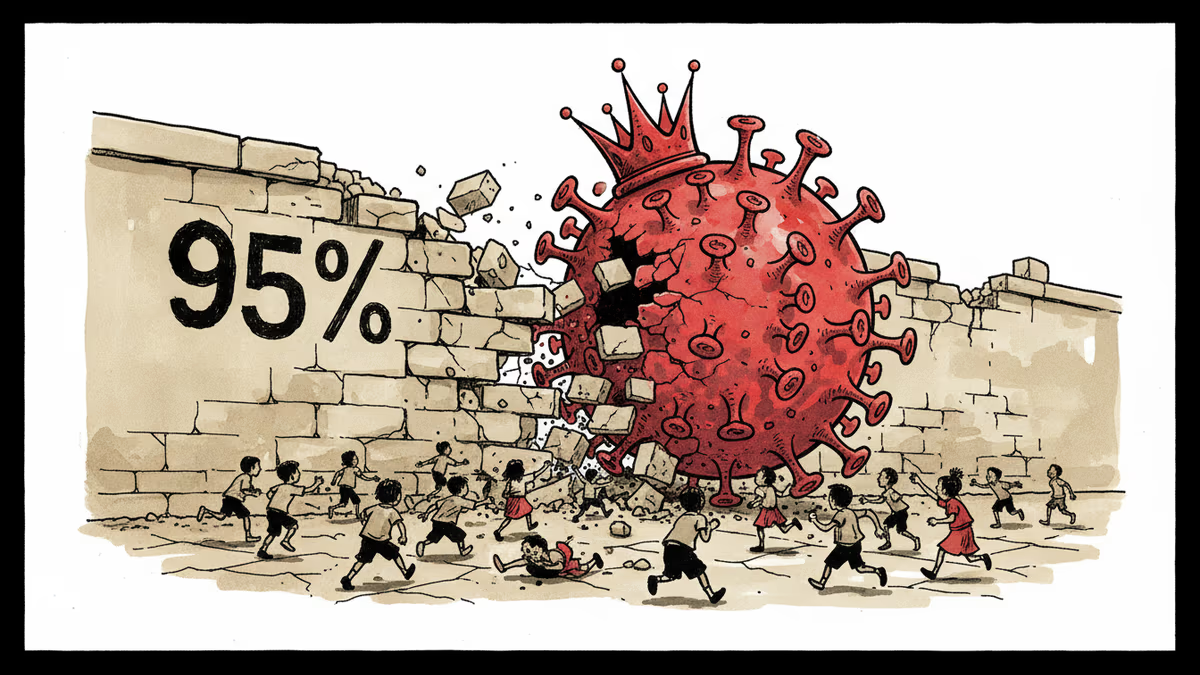
When 95% Becomes 58%: The Measles Comeback Story
Vaccination rates plummet across London and US states as measles outbreaks surge. What happens when herd immunity collapses and childhood diseases return?
One in Five Kids Needed Hospital Treatment
In Enfield, a northern London borough, 34 children have contracted measles since January. Most are under 11 years old. One in five required hospitalization.
It's not just London. Since October, 962 measles cases have been confirmed across South Carolina. Large outbreaks—with more than 50 confirmed cases—are underway in four US states. Smaller clusters are popping up in another 12 states.
The common thread? Most of these children weren't fully vaccinated.
The 95% Rule That's Being Broken
To prevent measles outbreaks, vaccination rates need to hit 95%. It's not a suggestion—it's mathematical reality. Below that threshold, the virus finds enough unprotected hosts to spread.
But that protective wall is crumbling. In South Carolina, MMR vaccination rates among kindergartners dropped from 94% in 2020-2021 to 91% in 2024-2025. Some schools have plummeted to just 20% coverage, according to state epidemiologist Linda Bell.
London tells a similar story. Fewer than 70% of children receive both MMR doses by age five. In some boroughs, it's as low as 58%. Last month, the UK lost its measles elimination status alongside Spain, Austria, Armenia, Azerbaijan, and Uzbekistan.
Measles Is Just the Beginning
Dr. Anne Zink, an emergency medicine physician and clinical fellow at Yale School of Public Health, sees measles as a canary in the coal mine. "The highly contagious measles could be a bellwether for other vaccine-preventable diseases," she warns.
The signs are already there. In 2022, a man in New York was paralyzed by polio—the first case in the US in nearly a decade. It happened in an area with low polio vaccination rates. "Polio is primarily asymptomatic," Zink explains, "but for those who do get symptoms, it can be life-threatening."

Then there's hepatitis B, which Zink finds even more concerning. "It lives on surfaces for a long period of time, and if you're not vaccinated against it and you're exposed as a kid, you're at really high risk of developing liver cancer and death."
Zink knows this firsthand. As Alaska's former chief medical officer, she witnessed how the state once had the world's highest rate of childhood liver cancer caused by hepatitis B in the 1970s. Universal newborn vaccination eliminated the virus's spread—an achievement now at risk.
Even Vitamin Shots Are Being Refused
The vaccine hesitancy has spread beyond vaccines to basic medical interventions. Parents are now refusing vitamin K shots for newborns—a simple injection that prevents severe bleeding. Refusal rates have jumped from 2.9% in 2017 to 5% recently.
"I can't tell you how many pediatric doctor friends have told me about caring for kids in the ICU with bleeding into their brain because they didn't get vitamin K at birth," Zink says. "That can kill kids or cause lifelong, devastating, stroke-like symptoms."
The trend has reached policy levels. Last month, the US Centers for Disease Control and Prevention approved changes to childhood vaccination recommendations, no longer recommending hepatitis B vaccine for all newborns. The chair of the CDC's vaccine advisory panel has questioned broad vaccine recommendations for polio.
The Ripple Effect Across Healthcare
Healthcare workers are watching nervously as parents question not just vaccines, but medical authority itself. Pediatricians report spending increasing amounts of time addressing vaccine concerns rather than focusing on other aspects of child health.
The economic implications are staggering. Before the measles vaccine was introduced in 1963, the disease killed approximately 2.6 million people annually worldwide. The WHO estimates that measles vaccination has prevented almost 59 million deaths since its introduction.
Now, as vaccination rates decline, healthcare systems are bracing for the return of diseases they thought were conquered. Emergency departments that haven't seen a measles case in years are refreshing protocols. Pediatric ICUs are preparing for complications they hoped never to see again.
The Agency Problem
What makes this particularly heartbreaking for healthcare providers is the victims' lack of choice. "Seeing kids who don't have the agency to make decisions about vaccination being so sick from vaccine-preventable diseases is one of the most challenging things about practicing medicine," Zink reflects.
Children can't choose their vaccination status—that decision lies with their parents. Yet they bear the consequences of adult choices, sometimes with their lives.
Authors
Related Articles
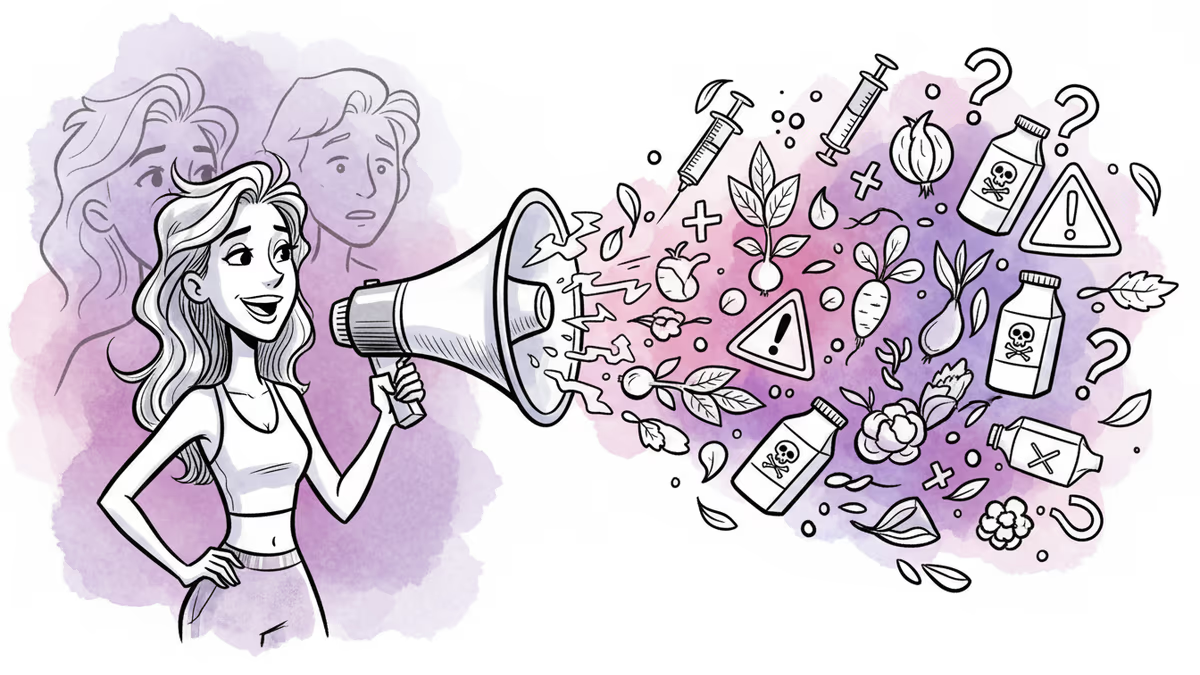
The journey from promoting healthy living to spreading medical misinformation reveals a troubling pattern in how selective science and algorithmic amplification create dangerous echo chambers.
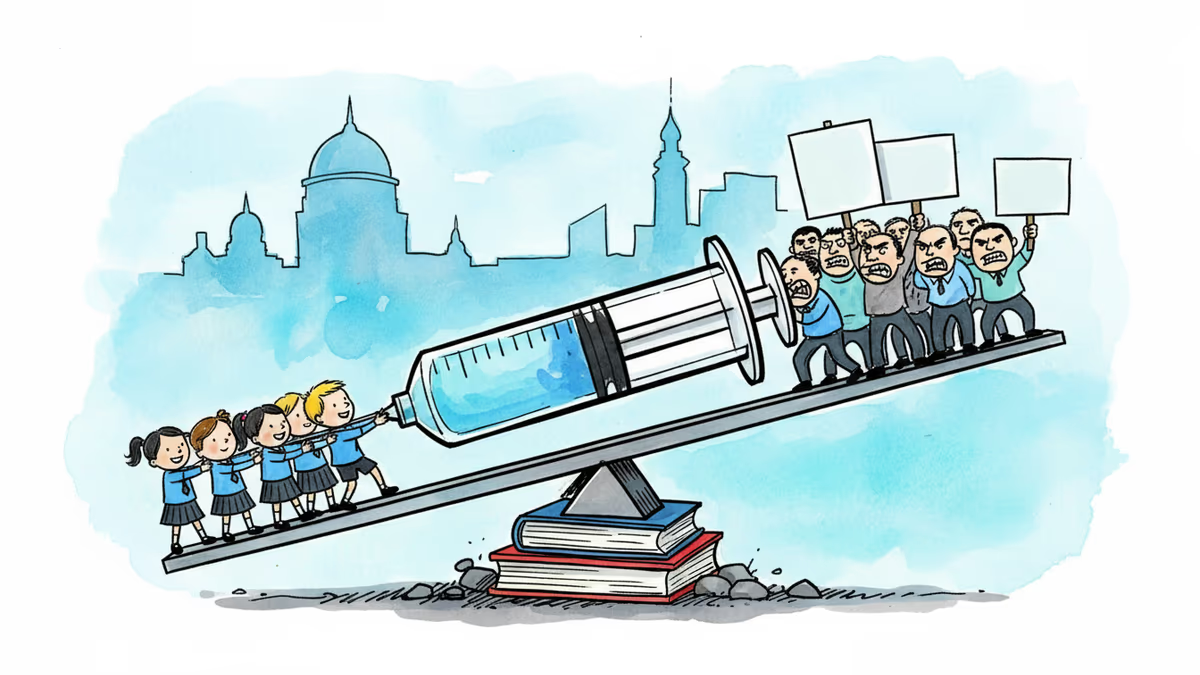
RFK Jr.'s nomination as HHS Secretary sparks unprecedented legal challenge from 15 states over childhood vaccination policies. What this means for public health and global disease prevention.

Deputy Health Secretary Jim O'Neill's controversial vaccine policy changes and longevity research investments spark debate across public health communities.
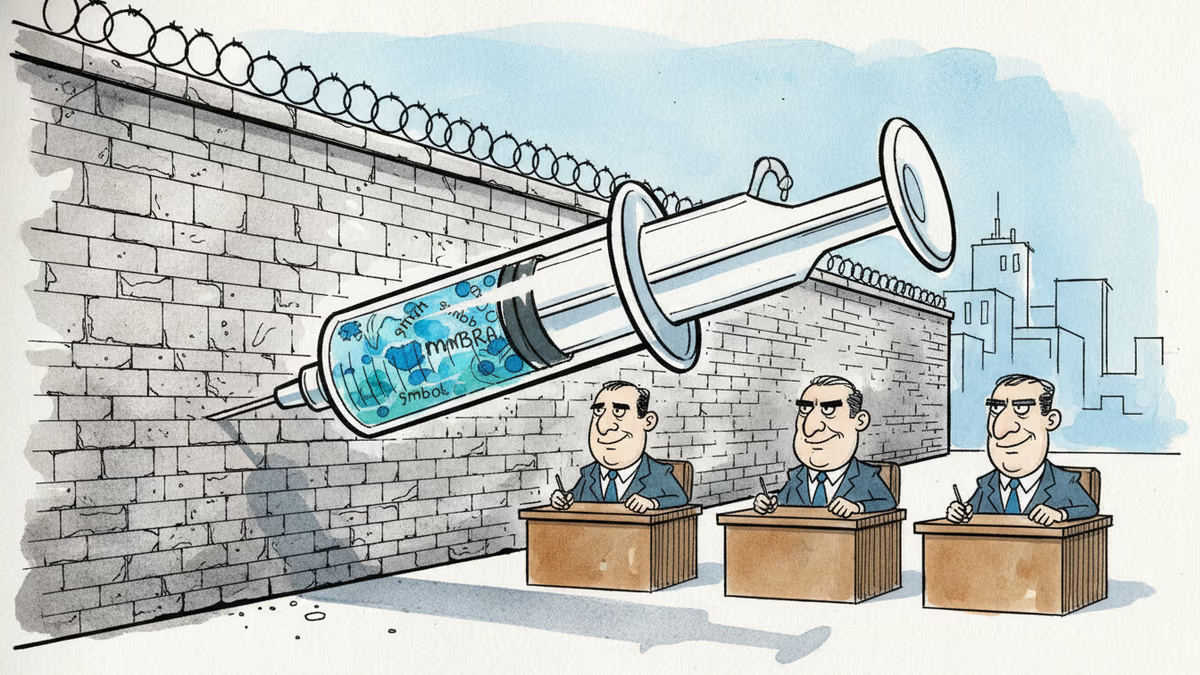
FDA refuses to review Moderna's mRNA flu vaccine application, marking a shift in vaccine policy under RFK Jr's leadership
The journey from promoting healthy living to spreading medical misinformation reveals a troubling pattern in how selective science and algorithmic amplification create dangerous echo chambers.
RFK Jr.'s nomination as HHS Secretary sparks unprecedented legal challenge from 15 states over childhood vaccination policies. What this means for public health and global disease prevention.
Deputy Health Secretary Jim O'Neill's controversial vaccine policy changes and longevity research investments spark debate across public health communities.
FDA refuses to review Moderna's mRNA flu vaccine application, marking a shift in vaccine policy under RFK Jr's leadership
Thoughts
Share your thoughts on this article
Sign in to join the conversation