
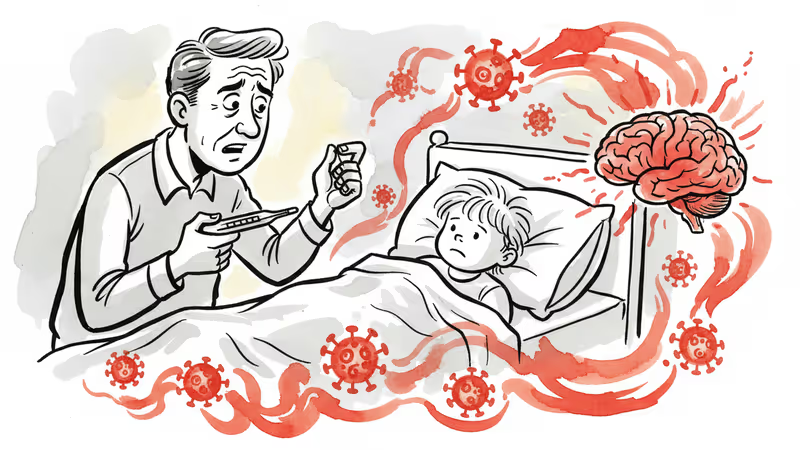
Children Develop Brain Inflammation as Measles Outbreak Surges to 876 Cases
South Carolina measles outbreak reaches 876 cases with children developing serious brain complications. Vaccination rates spike 72% amid growing health concerns.
What started as a handful of measles cases in October has exploded into 876 infections across South Carolina, with some children now developing a life-threatening complication that can permanently damage their brains.
State epidemiologist Linda Bell revealed Wednesday that several children in the outbreak have developed encephalitis—brain inflammation that can lead to seizures, deafness, and intellectual disability. It's a stark reminder of why measles was once called a childhood killer.
When the Brain Becomes a Battlefield
Encephalitis strikes within 30 days of measles infection, occurring when the virus directly invades brain tissue or triggers an immune response that inflames the brain. The statistics are sobering: 10 to 15 percent of children who develop measles encephalitis die.
"Anytime you have inflammation of the brain, there can be long-term consequences, things like developmental delay and impacts on the neurologic system that can be irreversible," Bell warned during a media briefing.
The state has recorded 19 measles-related hospitalizations, including cases of pneumonia, which affects about one in 20 children with measles and remains the leading cause of measles deaths in children. Several pregnant women exposed to the virus required immune globulin treatments to prevent potential miscarriage or preterm birth.

A Ticking Time Bomb in Young Brains
Perhaps most terrifying is a rare condition called subacute sclerosing panencephalitis (SSPE), which can emerge 7 to 10 years after apparent recovery from measles. The virus lies dormant in the brain before slowly destroying brain tissue. Last September, Los Angeles reported the death of a school-age child from SSPE—originally infected as an infant before being old enough for vaccination.
SSPE affects an estimated two in 10,000 people who contract measles, turning what seemed like a recovered case into a delayed death sentence.
Fear Drives Vaccination Surge
The outbreak's severity has sparked a vaccination rush. South Carolina administered over 7,000 more MMR vaccine doses in January 2026 compared to January 2025—a 72 percent increase. In Spartanburg County, the outbreak's epicenter, vaccinations jumped 162 percent with over 1,000 additional doses.
Bell called January "the best month for measles vaccination during the outbreak." Yet this reactive approach highlights a troubling pattern: parents often wait for crisis before protecting their children.
The outbreak reflects a broader national trend. The U.S. recorded 2,267 measles cases in 2025—the highest in 30 years—driven by declining vaccination rates nationwide. With 700 of South Carolina's 876 cases reported since January 1st, 2026 could mark another devastating year.
Authors
Related Articles
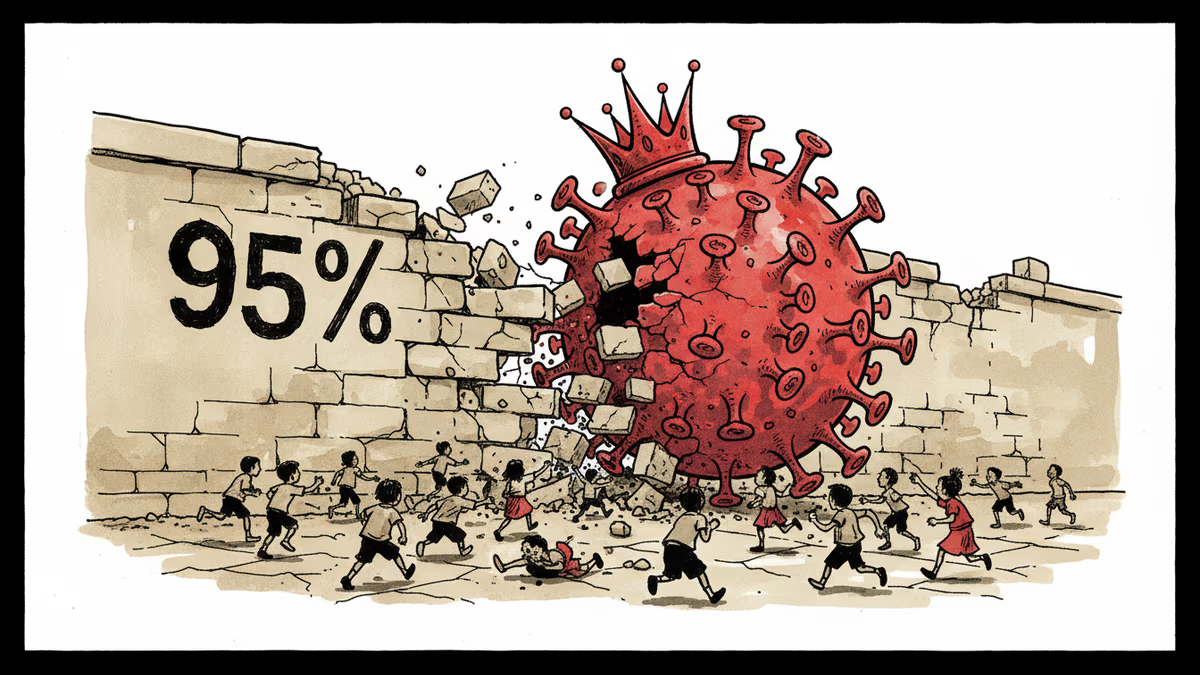
Vaccination rates plummet across London and US states as measles outbreaks surge. What happens when herd immunity collapses and childhood diseases return?
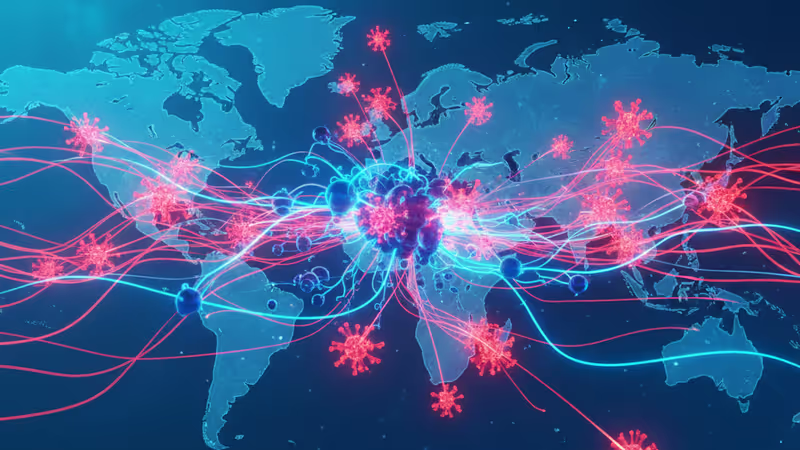
The South Carolina measles outbreak 2026 hits a grim milestone with 310 total cases. 99 new infections were reported in 72 hours as officials struggle with tracing.

Five stories from late September, traced to where the paper trail stops: Korea's export record, Nvidia's Hugging Face 8-K, a US-China AI channel, the UN on AI, and rising births.

Huawei's CANN is open source under a license barring software for non-Ascend chips. Inside China's second CUDA, and the two links still outside it: pre-training compute and 5nm capacity.
Vaccination rates plummet across London and US states as measles outbreaks surge. What happens when herd immunity collapses and childhood diseases return?
The South Carolina measles outbreak 2026 hits a grim milestone with 310 total cases. 99 new infections were reported in 72 hours as officials struggle with tracing.
Five stories from late September, traced to where the paper trail stops: Korea's export record, Nvidia's Hugging Face 8-K, a US-China AI channel, the UN on AI, and rising births.
Huawei's CANN is open source under a license barring software for non-Ascend chips. Inside China's second CUDA, and the two links still outside it: pre-training compute and 5nm capacity.
Thoughts
Share your thoughts on this article
Sign in to join the conversation