
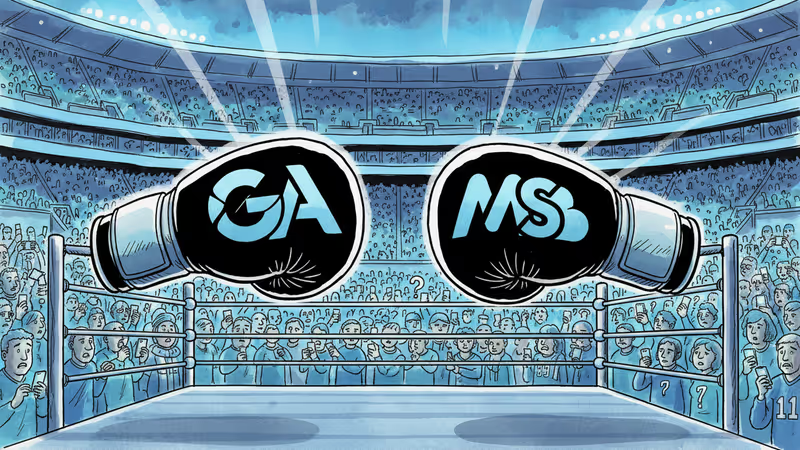
Anthropic vs OpenAI: The Super Bowl Ad That Sparked an AI Ethics War
Anthropic's Super Bowl ad claiming 'honest AI' triggered a sharp response from OpenAI's Sam Altman, exposing deeper philosophical divides in the AI industry about safety versus utility.
A Super Bowl ad just turned into the most public AI industry feud yet. Anthropic's campaign promoting "honest AI" struck a nerve with OpenAI CEO Sam Altman, who fired back on X calling it "clearly dishonest" and typical of Anthropic's "doublespeak."
The Subtle Jab That Wasn't So Subtle
Anthropic didn't mention OpenAI or ChatGPT by name in their Super Bowl spot, but the message was crystal clear. The ad positioned their AI assistant Claude as the trustworthy alternative in a market where other AI systems might mislead or manipulate users.
Founded in 2021 by former OpenAI researchers who reportedly left over disagreements about AI safety and the company's mission, Anthropic has consistently positioned itself as the more cautious, safety-first alternative to its former employer's rapid commercialization approach.
The timing wasn't accidental. OpenAI had just announced major partnerships and product launches in January, riding high on ChatGPT's mainstream success. Anthropic's Super Bowl investment—likely costing several million dollars—signals they're ready to challenge OpenAI not just in boardrooms, but in living rooms across America.
Altman's Swift Counterpunch

Altman's response was unusually direct for a CEO known for measured public statements. "We would obviously never run ads in the way Anthropic depicts them," he wrote. "We are not stupid and we know our users would reject that."
This isn't just wounded pride talking. Altman's reaction reveals how sensitive OpenAI has become to criticism about AI safety and transparency. The company has faced mounting pressure from regulators, researchers, and users about ChatGPT's tendency to "hallucinate" false information and its potential for misuse.
The Battle for AI's Soul
What we're witnessing goes beyond typical Silicon Valley rivalry. This is a fundamental disagreement about AI's future: Should AI systems prioritize being helpful and capable, even if that means occasional errors? Or should they prioritize being safe and honest, even if that limits their usefulness?
OpenAI's philosophy has been "move fast and deploy," believing that real-world usage is the best way to improve AI systems. Anthropic advocates for "constitutional AI"—systems trained with explicit principles about helpfulness, harmlessness, and honesty.
For consumers, this philosophical divide has real implications. OpenAI's approach has given us powerful tools like ChatGPT and GPT-4, but also controversial moments like Bing's early chatbot meltdowns. Anthropic'sClaude is often praised for being more careful and transparent about its limitations, but some users find it less creative or helpful.
And perhaps more importantly: in a world where AI systems shape our decisions, our creativity, and our understanding of truth itself, who gets to define what "honest AI" even means?"
Authors
Related Articles
Anthropic shipped Claude Sonnet 5, its mid-tier agent model, on June 30. Behind the 'Opus-class power, budget price' headline sits a tokenizer catch and a three-horse race that's only half real. Here's what developers should actually run the numbers on.
Samsung and SK unveiled a chip and AI investment package worth thousands of trillions of won on June 29. The headline number swings wildly by outlet, but the real contest isn't capital — it's water and power.

A small but growing group of developers has gone all-in on AI coding agents like Claude Code and OpenClaw. History suggests the rest of us won't be far behind.
Viral videos show 2026 graduates jeering executives who praise AI at commencement ceremonies. It's not just rudeness — it's a signal about who pays for technological optimism.
Anthropic shipped Claude Sonnet 5, its mid-tier agent model, on June 30. Behind the 'Opus-class power, budget price' headline sits a tokenizer catch and a three-horse race that's only half real. Here's what developers should actually run the numbers on.
Samsung and SK unveiled a chip and AI investment package worth thousands of trillions of won on June 29. The headline number swings wildly by outlet, but the real contest isn't capital — it's water and power.
A small but growing group of developers has gone all-in on AI coding agents like Claude Code and OpenClaw. History suggests the rest of us won't be far behind.
Viral videos show 2026 graduates jeering executives who praise AI at commencement ceremonies. It's not just rudeness — it's a signal about who pays for technological optimism.
Thoughts
Share your thoughts on this article
Sign in to join the conversation