

No Code, No Problem: Gizmo Turns Anyone Into an App Creator
Gizmo lets users create interactive mini-apps with just text prompts. With 600K downloads in 6 months, it's blurring the lines between content consumption and creation.
"Make me a puzzle game." That's all it takes. No coding bootcamp, no computer science degree, no months of learning syntax. Just one simple sentence, and you've got yourself an interactive app.
Gizmo, a new platform from startup Atma Sciences, is making app creation as easy as posting a tweet. In less than six months, it's racked up 600,000 downloads, with 235,000 coming in December alone—a 312% growth rate from October to December.
Scroll Like TikTok, Play Like a Game
At first glance, Gizmo looks like any other social feed. Vertical layout, endless scroll, familiar like and comment buttons. But here's where it gets interesting: you don't just watch these mini-apps, you play them.
Each post in your feed is an interactive experience. Poke the screen, swipe, tap, draw, drag—whatever the creator dreamed up. These aren't traditional games but digital toys: interactive puzzles, animated memes, art pieces, or anything else someone's imagination can conjure.
The New York-based startup behind Gizmo raised $5.49 million in seed funding from First Round Capital and others. Co-founders Rudd Fawcett and Brandon Francis, along with CEO Josh Siegel and CTO Daniel Amitay, are keeping quiet about their next moves—they declined multiple interview requests, with investors saying the team "isn't ready for press yet."
AI Turns Ideas Into Code
Here's where Gizmo gets clever. Instead of forcing users to learn "vibe coding" or programming languages, it lets you describe your idea in plain English. Want a maze game? Just type it out. The AI handles the heavy lifting—generating code, rendering visuals, and making sure everything runs smoothly.

In testing, the platform quickly coded a mini quiz, though it needed tweaking when the title got cut off at the top. The beauty lies in this iterative process: create, test, adjust, share. No technical barriers, just pure creativity.
Unlike platforms like Rooms, which introduced the Lua programming language for advanced users, Gizmo keeps things prompt-based and accessible. It's democratizing app creation in a way that feels genuinely inclusive.
The Economics of Micro-Creativity
With roughly half of Gizmo's downloads coming from the U.S., according to Appfigures data, we're seeing early signs of a new creator economy. But this isn't about viral videos or sponsored posts—it's about interactive experiences that blur the line between content and games.
For developers, this represents both opportunity and disruption. Why spend months building a mobile game when users can create engaging experiences in minutes? For venture capitalists, it raises questions about the future of app stores and traditional software development.
The platform also introduces interesting moderation challenges. AI and human reviewers vet each creation for safety, but as the platform scales, maintaining quality while preserving creative freedom will become increasingly complex.
Beyond the Hype Cycle
Gizmo's rapid growth mirrors other platforms that caught lightning in a bottle—TikTok, Clubhouse, BeReal. But sustainable success depends on solving the engagement puzzle: how do you keep users creating and playing when the novelty wears off?
The answer might lie in Gizmo's remix culture. Users can take existing creations and modify them, creating a collaborative ecosystem that feels more like Wikipedia than Instagram. This could foster the kind of community-driven innovation that keeps platforms relevant long-term.
Authors
Related Articles
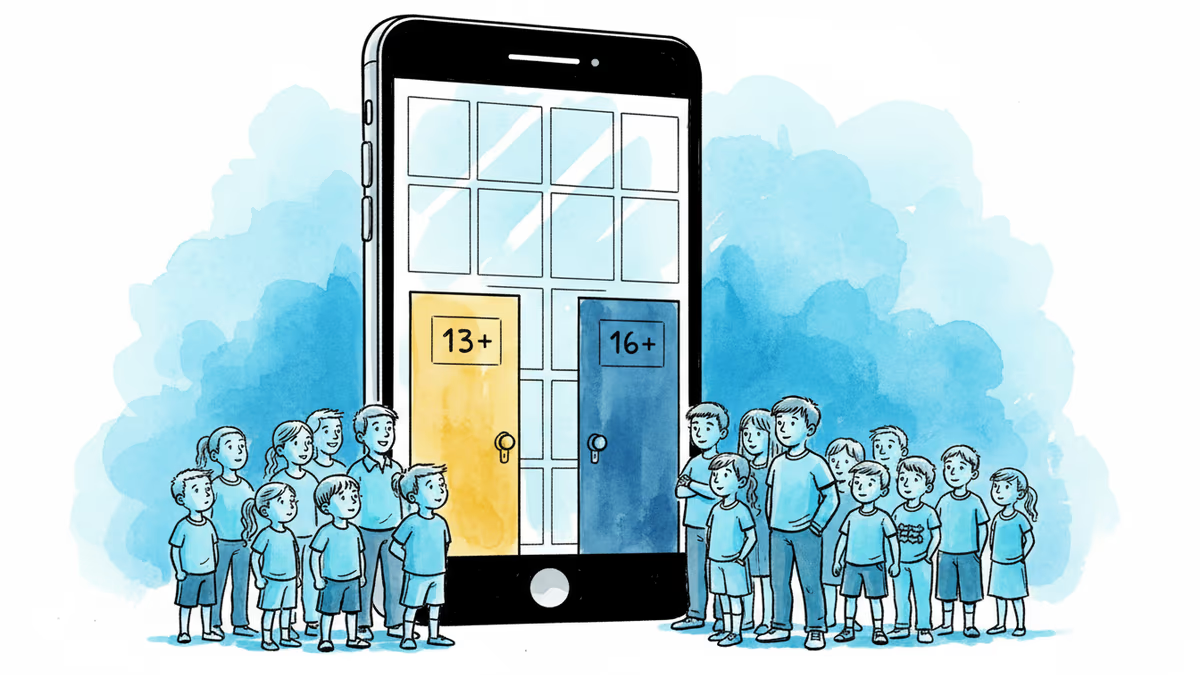
Indonesia introduces age-tiered social media restrictions, allowing 13+ for low-risk platforms and 16+ for high-risk ones. How does this compare to Australia's blanket ban?
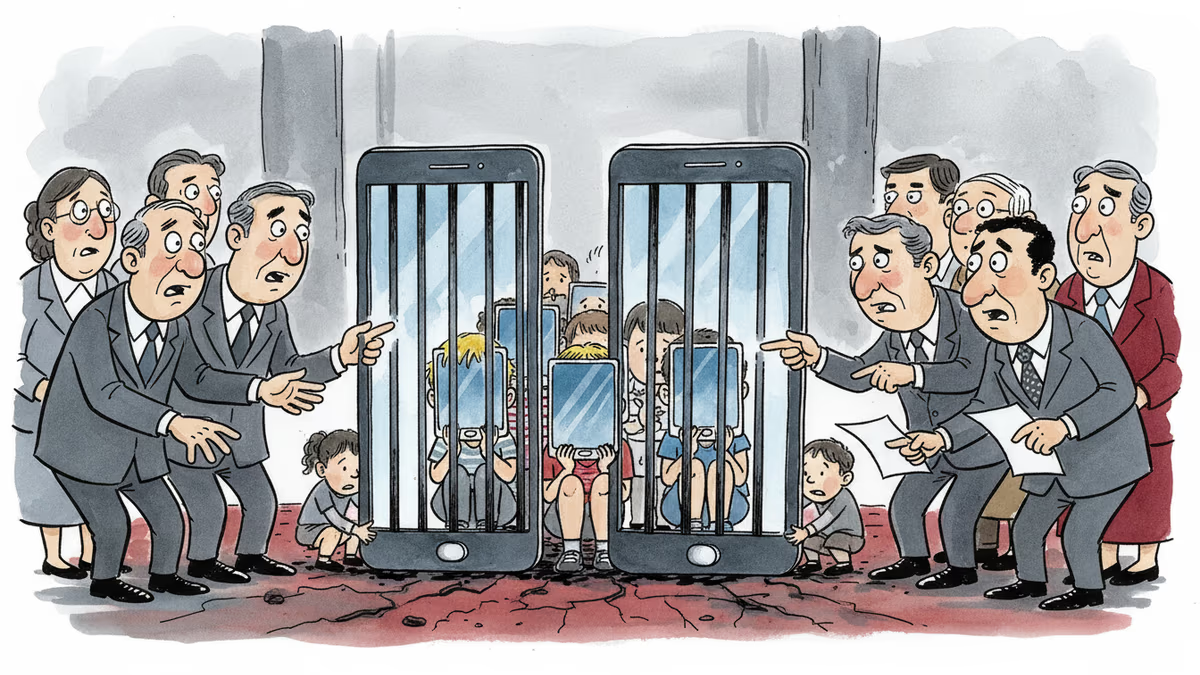
From Australia's $34M fines to France's parliamentary vote, 10 countries are restricting teen social media access. A global experiment in digital parenting begins.
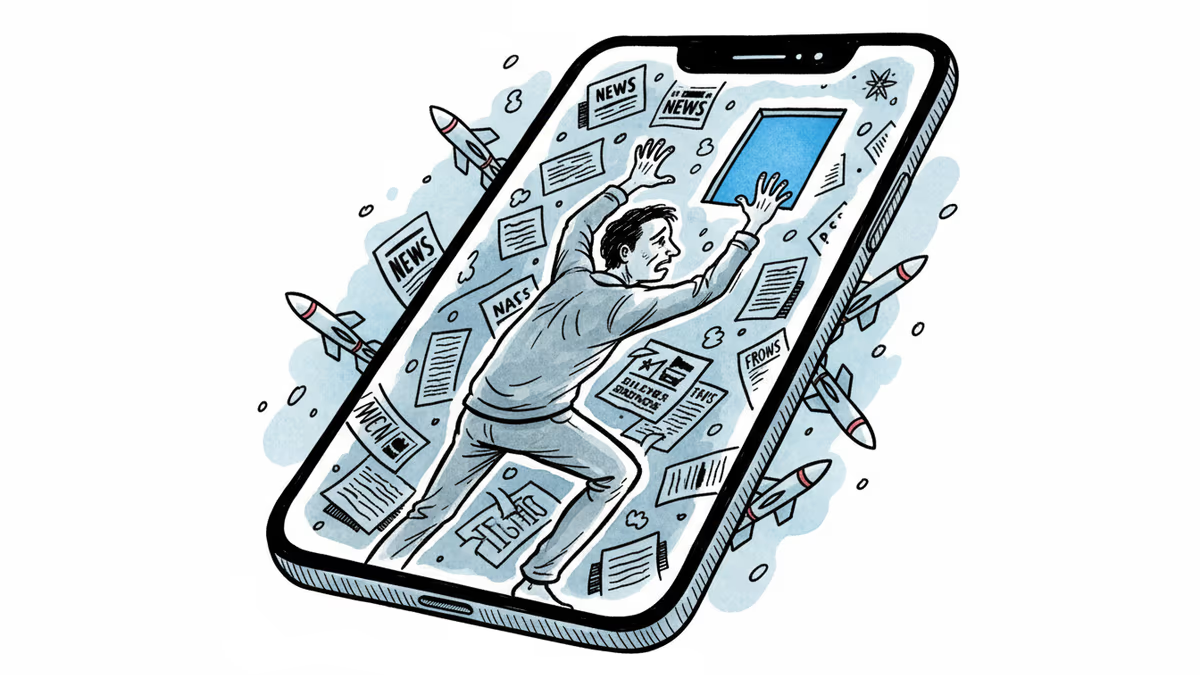
Middle East missile strikes trigger global doomscrolling epidemic. Neuroscience reveals why we can't stop scrolling through bad news and how to break free.

Instagram's new suicide search alerts for parents raise questions about whether surveillance-based solutions truly protect teens or simply push their struggles underground.
Indonesia introduces age-tiered social media restrictions, allowing 13+ for low-risk platforms and 16+ for high-risk ones. How does this compare to Australia's blanket ban?
From Australia's $34M fines to France's parliamentary vote, 10 countries are restricting teen social media access. A global experiment in digital parenting begins.
Middle East missile strikes trigger global doomscrolling epidemic. Neuroscience reveals why we can't stop scrolling through bad news and how to break free.
Instagram's new suicide search alerts for parents raise questions about whether surveillance-based solutions truly protect teens or simply push their struggles underground.
Thoughts
Share your thoughts on this article
Sign in to join the conversation