
The Three-Year Pregnancy Prep: When Optimization Meets Motherhood
Gen Z women are spending 6 months to 3 years preparing for pregnancy like marathon training. Inside the 'zero trimester' wellness industry targeting fertility anxiety.
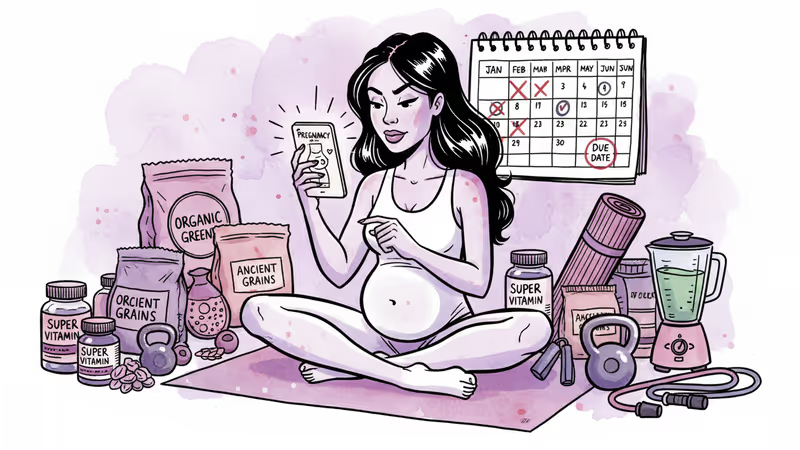
Three years. That's how long Esther Rohr spent preparing her body for pregnancy. The 26-year-old wedding photographer swapped out synthetic workout clothes, nonstick pans, and WiFi routers. She endured a "brutal" year of keto diets and six to eight supplements daily to lower her mercury levels—all before ever trying to conceive.
Rohr doesn't have fertility issues. She just wanted to give her future baby "the best chance at a healthy start in life."
Training for Pregnancy Like a Marathon
Social media has turned pregnancy preparation into a full-contact sport. The hashtag #preconception appears in 106,000 Instagram posts, while #pregnancyprep tags 36,000 more. Individual TikTok "prep" videos rack up millions of views.
Kaylie Stewart announced to her 1 million TikTok followers that she's "training for pregnancy like it's a marathon." Influencer Alexandra Radway preaches that "healthy pregnancy isn't chance—it's choice," recommending everything from brazil nuts for "egg health" to watching sunrises for antioxidants equivalent to "2,500 brazil nuts."
This isn't your mother's prenatal vitamin routine. Today's pregnancy prep includes pelvic floor Pilates, cellular healing diets, OligoScans for heavy metal detection, and swapping LED bulbs for incandescents to protect circadian rhythms. The preparation period—dubbed the "zero trimester"—can stretch 6 to 12 months or longer.
The Business of Fertility Anxiety
Behind the wellness content lies a thriving industry. From grass-fed butter to nontoxic cookware, the product recommendations seem endless. Influencers offer courses, coaching, and curated shopping lists to anxious women willing to invest thousands in optimization.

Radway, a functional nutritional therapy practitioner, started posting after her own difficult first pregnancy led her to get certified in holistic health. Her second pregnancy was "a complete 180," and she felt a "divine calling" to share her methods. Her Instagram account has become a hub for women seeking control over an inherently uncertain process.
The timing isn't coincidental. Women are having children three years later than their mothers did—if at all. One in five women experience infertility, while three-quarters of Gen Z report fertility anxiety. This generation grew up with unlimited access to infertility stories, egg-freezing articles, and environmental toxin warnings.
When Wellness Meets Reproductive Rights
The pregnancy prep obsession coincides with America's reproductive rights rollback. Seventeen states have total abortion bans or prohibit the procedure after six weeks, making life-saving care difficult to access. In this environment, extreme preparation becomes a way to assert control over an increasingly precarious reproductive landscape.
Sophie Payne, a UK-based wellness influencer, represents this mindset. After premature ovarian failure and multiple miscarriages, she turned to functional medicine and lifestyle changes. "We're just a bit tired of it," she says of women not getting helpful answers about their health.
The appeal is understandable: if you can't control healthcare access or economic stability, at least you can control your morning routine and supplement stack.
The Optimization Trap
But experts worry about the psychological toll. The "zero trimester" concept suggests pregnancy begins before conception, extending the period of maternal responsibility and potential guilt. If something goes wrong, did you prepare enough? Take the right supplements? Avoid the wrong foods?
The irony is stark: in an era of declining fertility rates, we're making pregnancy preparation more complex and anxiety-inducing than ever. The wellness industry profits from women's fears while potentially creating new ones.
Meanwhile, basic reproductive healthcare remains inaccessible for many. Prenatal care varies wildly by location and insurance coverage. Paid parental leave is still not guaranteed. The focus on individual optimization deflects from systemic healthcare failures.
Authors
Related Articles
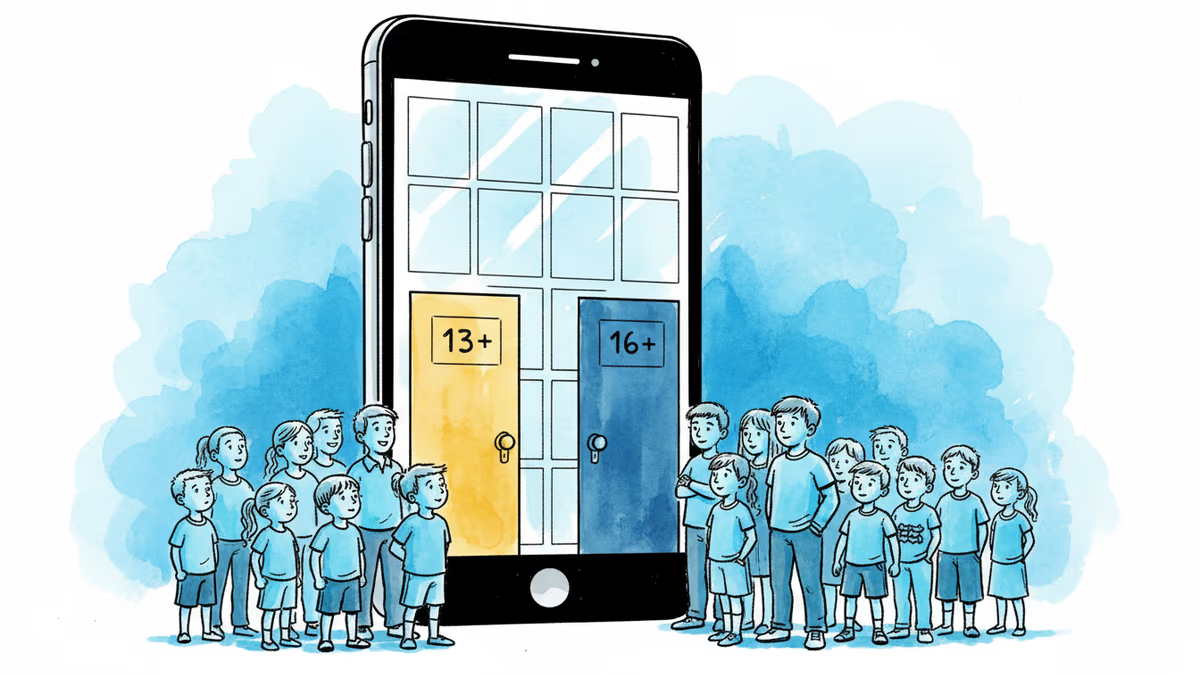
Indonesia introduces age-tiered social media restrictions, allowing 13+ for low-risk platforms and 16+ for high-risk ones. How does this compare to Australia's blanket ban?
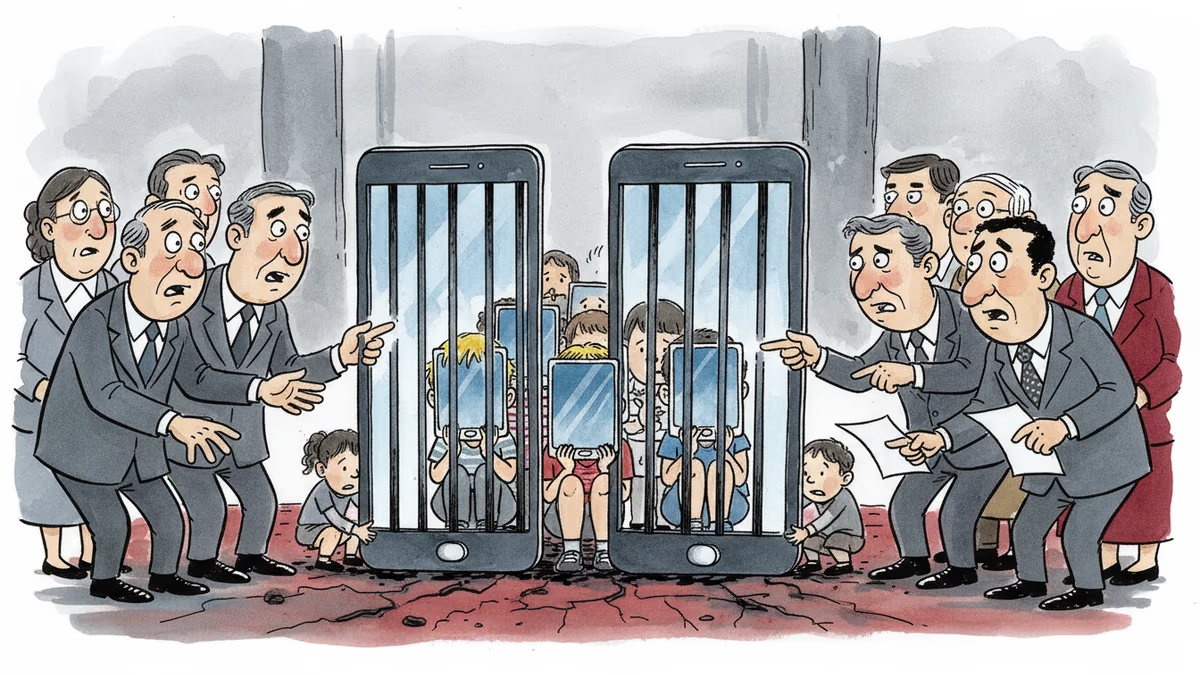
From Australia's $34M fines to France's parliamentary vote, 10 countries are restricting teen social media access. A global experiment in digital parenting begins.
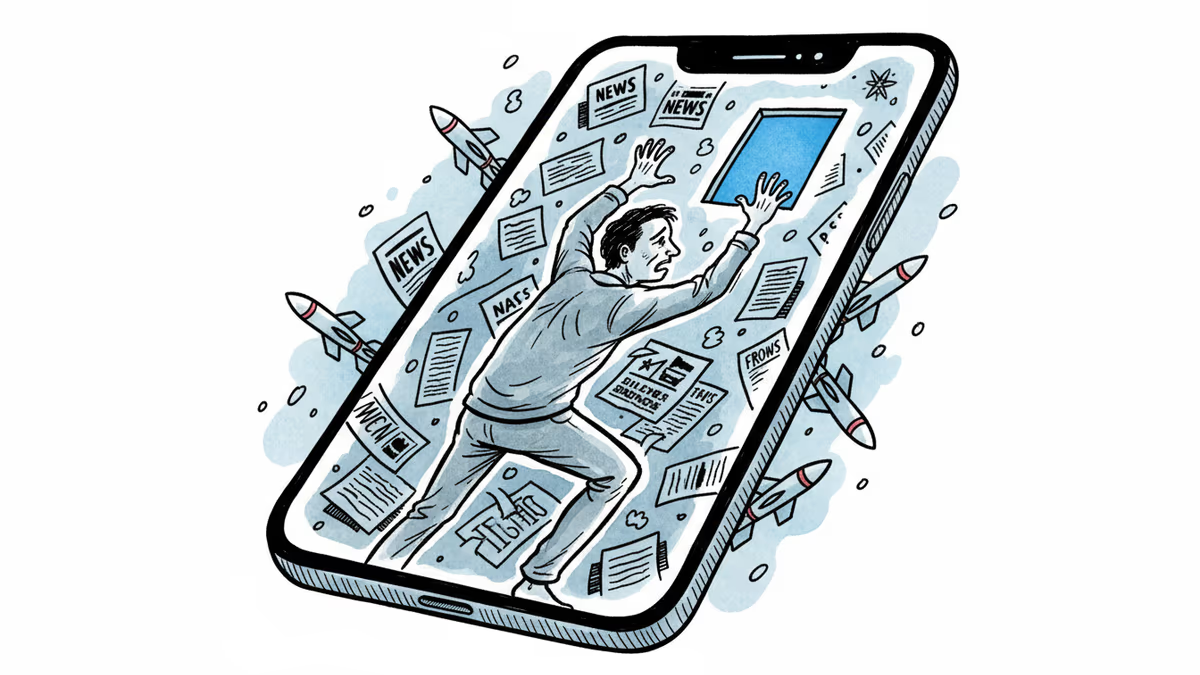
Middle East missile strikes trigger global doomscrolling epidemic. Neuroscience reveals why we can't stop scrolling through bad news and how to break free.
Instagram's new suicide search alerts for parents raise questions about whether surveillance-based solutions truly protect teens or simply push their struggles underground.
Indonesia introduces age-tiered social media restrictions, allowing 13+ for low-risk platforms and 16+ for high-risk ones. How does this compare to Australia's blanket ban?
From Australia's $34M fines to France's parliamentary vote, 10 countries are restricting teen social media access. A global experiment in digital parenting begins.
Middle East missile strikes trigger global doomscrolling epidemic. Neuroscience reveals why we can't stop scrolling through bad news and how to break free.
Instagram's new suicide search alerts for parents raise questions about whether surveillance-based solutions truly protect teens or simply push their struggles underground.
Thoughts
Share your thoughts on this article
Sign in to join the conversation