
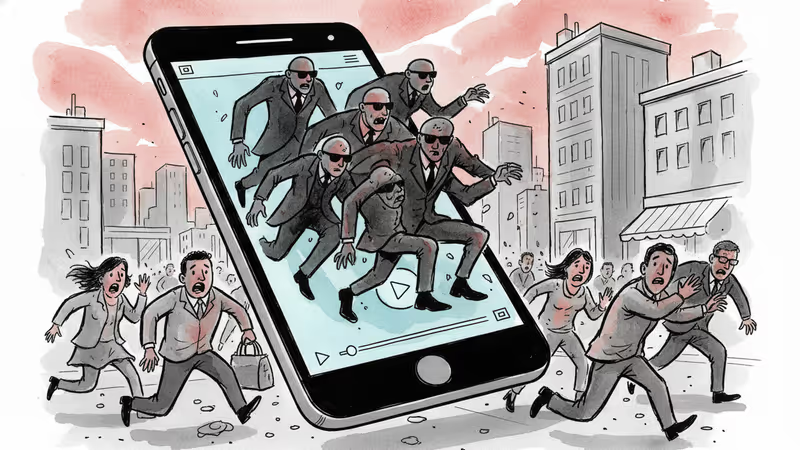
When a YouTube Vlog Triggered Federal Occupation and Deaths
How a 23-year-old YouTuber's false claims led to federal occupation of Minneapolis and two civilian deaths, exposing the deadly consequences of algorithmic misinformation.
A 23-year-old YouTuber's vlog just triggered a federal occupation of Minneapolis that left two residents dead. If this sounds like dystopian fiction, it's not—it's the terrifying reality of how algorithmic amplification can turn baseless claims into deadly consequences.
From Screen to Streets
Nick Shirley, a roving content creator with a smartphone and an agenda, posted a YouTube video making unfounded allegations of fraud at daycares operated by Minneapolis's Somali American community. But Shirley wasn't just targeting right-wing viewers—he was playing to another audience entirely: the algorithm.
The video contained all the ingredients that YouTube's recommendation system craves: outrage, controversy, and emotional triggers. Within days, the baseless claims had spread far beyond Shirley's initial audience, eventually reaching federal authorities who responded with devastating force.
Federal immigration agents descended on Minneapolis in what can only be described as an occupation. In the ensuing chaos, two civilians lost their lives. A piece of unverified content had literally become a matter of life and death.
The Algorithm's Deadly Logic
This tragedy exposes the fundamental flaw in how social media platforms operate. YouTube, TikTok, and Facebook optimize for engagement, not truth. Their algorithms don't distinguish between legitimate journalism and inflammatory speculation—they simply push whatever keeps users scrolling.
The Verge describes Shirley as an "influencer," but that term has become dangerously broad. It now encompasses anyone who can game the system for views, regardless of their qualifications or accountability. These digital provocateurs wield unprecedented power without the editorial oversight or professional standards that govern traditional media.
The Minneapolis case represents a new category of violence: algorithmic amplification leading to state-sanctioned force. It's not just about "fake news" anymore—it's about how platforms' business models incentivize the very content that can trigger real-world harm.

The Accountability Gap
Who bears responsibility when a viral video leads to federal occupation and civilian deaths? The answer isn't simple, but it's urgent.
Shirley clearly crossed ethical lines by spreading unverified claims about vulnerable communities. But focusing solely on individual bad actors misses the systemic issues at play. Platforms like YouTube profit from controversial content while maintaining they're neutral distributors of information.
Federal authorities also failed catastrophically by acting on unverified social media claims without proper investigation. Their response reveals how unprepared government institutions are for the information chaos of the digital age.
Meanwhile, the Somali American community in Minneapolis—already marginalized—became collateral damage in this toxic ecosystem of algorithmic amplification and institutional overreaction.
Beyond Content Moderation
Traditional solutions like fact-checking and content removal feel inadequate when faced with the scale and speed of this problem. By the time misinformation is identified and flagged, it may have already triggered irreversible consequences.
The real issue lies deeper: in the fundamental design of algorithmic systems that prioritize engagement over accuracy. Until platforms restructure their recommendation engines to account for potential real-world harm, we'll continue seeing cases where digital content triggers physical violence.
Some experts advocate for "friction"—deliberately slowing down the spread of potentially harmful content. Others call for algorithmic transparency, requiring platforms to explain how their systems work. But these measures face resistance from companies that view their algorithms as trade secrets.
The question isn't whether platforms should do more to stop harmful content. It's whether our current approach to online speech is compatible with public safety in an algorithmic age.
Authors
Related Articles
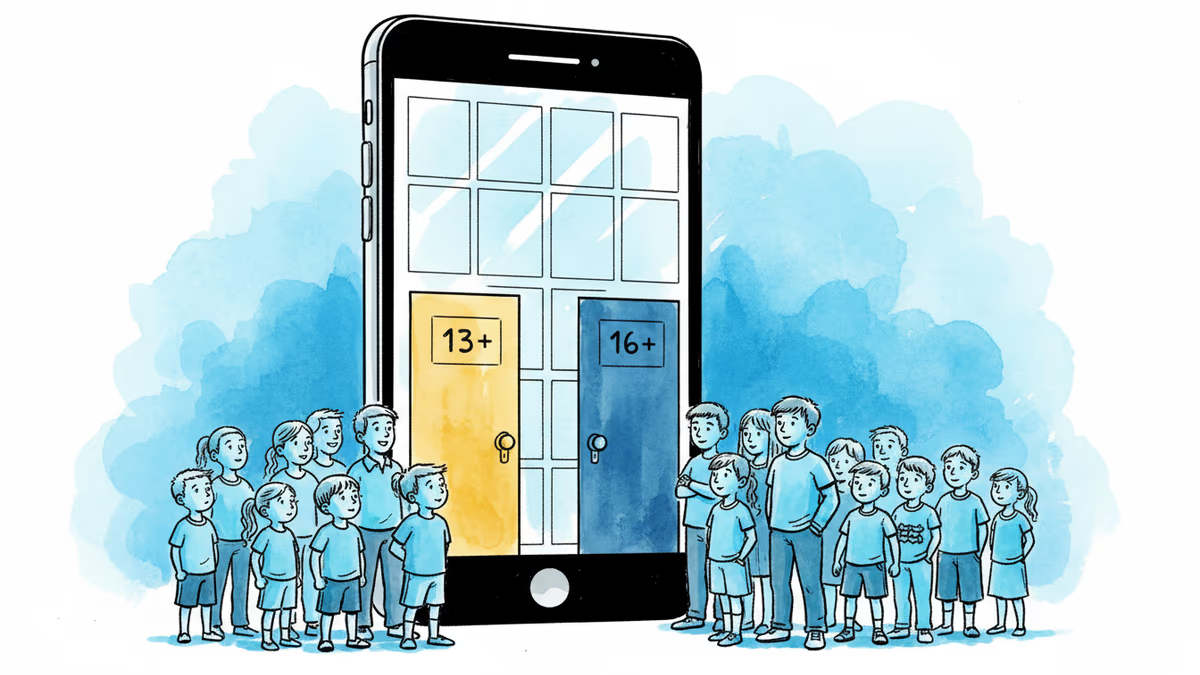
Indonesia introduces age-tiered social media restrictions, allowing 13+ for low-risk platforms and 16+ for high-risk ones. How does this compare to Australia's blanket ban?
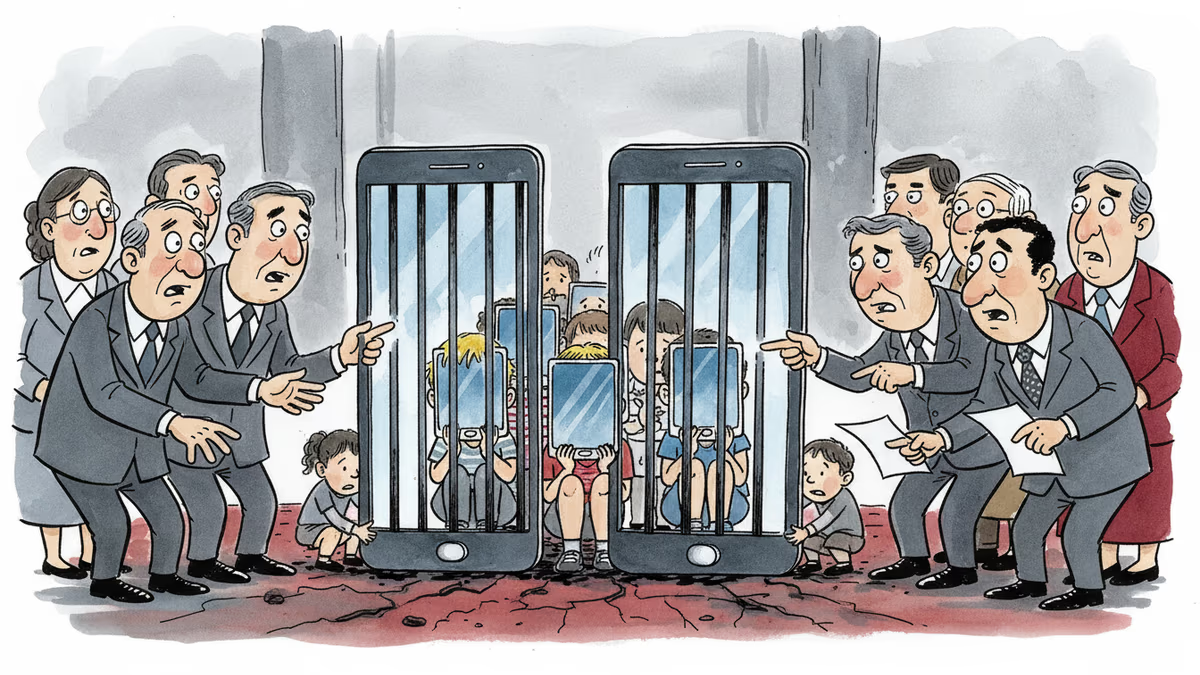
From Australia's $34M fines to France's parliamentary vote, 10 countries are restricting teen social media access. A global experiment in digital parenting begins.
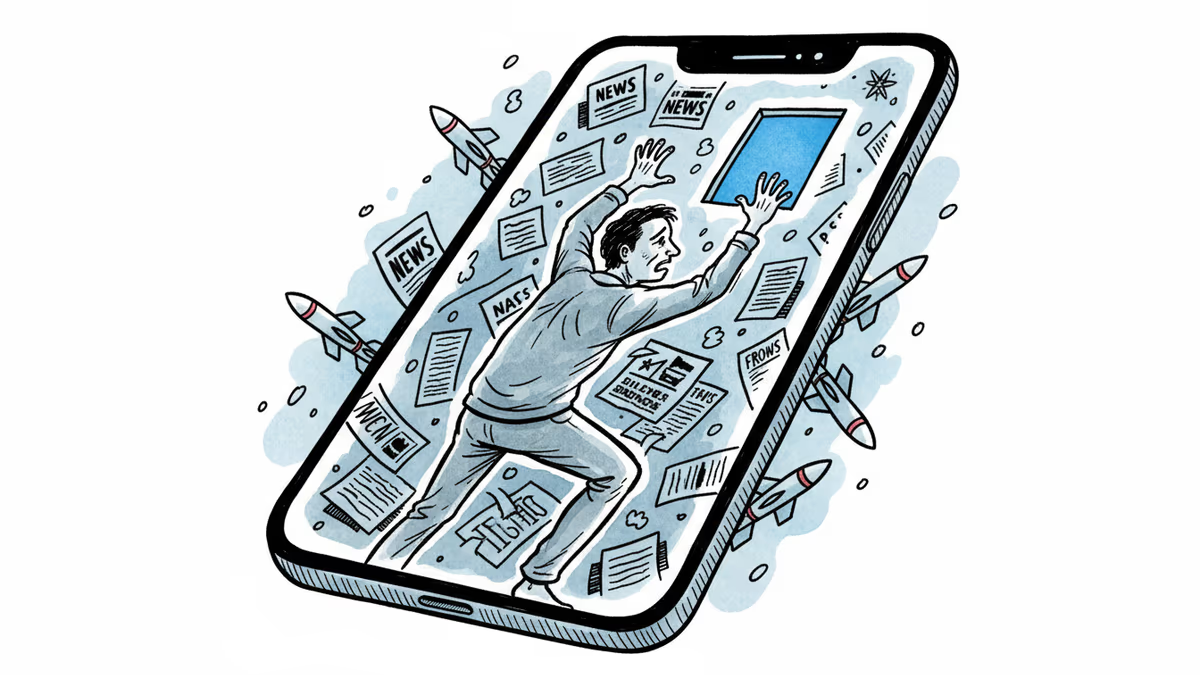
Middle East missile strikes trigger global doomscrolling epidemic. Neuroscience reveals why we can't stop scrolling through bad news and how to break free.
Instagram's new suicide search alerts for parents raise questions about whether surveillance-based solutions truly protect teens or simply push their struggles underground.
Indonesia introduces age-tiered social media restrictions, allowing 13+ for low-risk platforms and 16+ for high-risk ones. How does this compare to Australia's blanket ban?
From Australia's $34M fines to France's parliamentary vote, 10 countries are restricting teen social media access. A global experiment in digital parenting begins.
Middle East missile strikes trigger global doomscrolling epidemic. Neuroscience reveals why we can't stop scrolling through bad news and how to break free.
Instagram's new suicide search alerts for parents raise questions about whether surveillance-based solutions truly protect teens or simply push their struggles underground.
Thoughts
Share your thoughts on this article
Sign in to join the conversation