
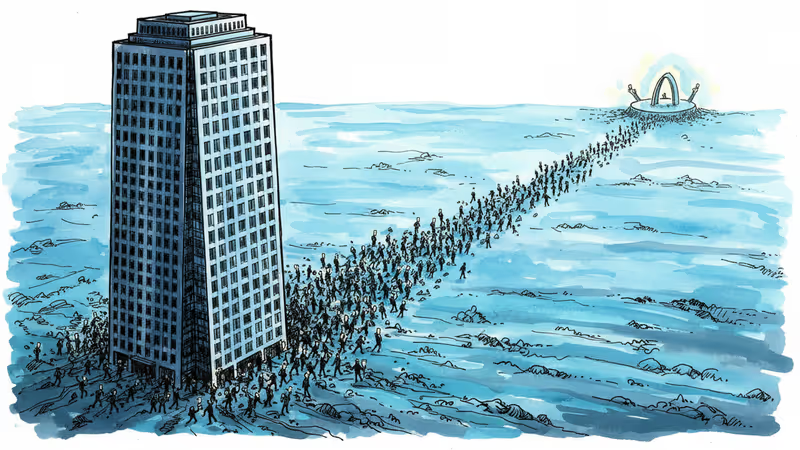
Users Flee to 'Censorship-Free' UpScrolled After TikTok Deal
Palestinian-backed social platform UpScrolled sees 40,000 new users in days as TikTok ownership deal sparks censorship fears. Servers crashed from sudden user influx.
40,000 new users in just a few days. That's what happened to UpScrolled, a tiny social media platform, after TikTok's U.S. deal was announced last week.
The numbers tell the story: within hours of the acquisition announcement, UpScrolled saw such a massive influx that its servers crashed. By Monday, the app ranked in the top 10 free apps on Apple's App Store and No. 2 among social networking apps. The platform, which launched just last July, now approaches 150,000 users.
"You all showed up so fast our servers tapped out," UpScrolled posted on Instagram. "We're a tiny team building an alternative to the platforms that stopped listening to you."
The Censorship Exodus
The sudden migration wasn't random. Under the new deal, three managing investors—Oracle Corp., private equity firm Silver Lake Management, and Abu Dhabi-based MGX—control 50% of TikTok's new U.S. entity. Almost immediately, #TikTokCensorship began trending across platforms, with users claiming the app was suppressing content about Palestine and the fatal shooting in Minneapolis by federal immigration officers.
Issam Hijazi, UpScrolled's Palestinian-Australian founder, watched this unfold from his unique vantage point. "People thought, okay, that's it, we're not going to be on TikTok anymore," he told Rest of World. "Content moderation on TikTok is gonna change. It has already changed."
The evidence was mounting: pro-Palestinian creators reported receiving warnings, seeing their reach suppressed, and facing increased content moderation. While this had been happening for months, users noticed the intensity ramping up in recent days.
Building an Alternative
UpScrolled isn't just another social media clone. Backed by the Tech for Palestine incubator, it supports text posts, photos, short-form videos, and stories while promising "no censorship" and "no shadowbans." But what does that actually mean?

"We moderate anything that is illegal," Hijazi explained. "Like, you cannot sell drugs. But if you want to speak about Palestine, or something else, you're free to do it." The key difference, he argues, is transparency and equal treatment. "As long as it's legal, it can exist on our platform."
This philosophy stems from personal experience. Hijazi worked for big tech companies until October 7, 2023, when the Israeli offensive began following Hamas's attack. "I lost family members in Gaza, and I didn't want to be complicit," he said. "I found this gap in the market, with a lot of people asking why there is no alternative to the Big Tech platforms."
The Algorithm Question
What's particularly interesting is what UpScrolled deliberately doesn't do. Unlike major platforms that use sophisticated algorithms to maximize engagement and screen time, Hijazi's team has chosen a different path.
"We're not employing algorithms just for the sake of keeping you hooked on the platform," he explained. "It's not because we don't know how: it is very easy to design the algorithms to do that. But I don't want to do that because I know the effect it can have on people, mentally, especially the younger generation."
This design choice reflects a broader philosophy about what social media should be. Instead of treating users as products to be sold to advertisers, UpScrolled positions itself as a platform where people "want to feel seen" rather than addicted.
The Challenge Ahead
Of course, many alternative social platforms have failed spectacularly. Remember Parler? Truth Social? Mastodon's brief moment? Hijazi acknowledges this reality with refreshing honesty: "I'll be lying to you if I tell you I know the answer."
But he's betting on something bigger than just platform features. "There's a global shift, there is an awakening, and people are looking for alternatives," he said. The current user base—primarily from the U.S., followed by Europe, UK, and Australia—suggests he might be onto something.
The real test will come as UpScrolled scales. Can a "no censorship" platform maintain that promise when faced with truly problematic content? How will it handle the inevitable pressure from app stores, payment processors, and governments? And perhaps most crucially: will users stick around once the initial anger about TikTok fades?
Authors
Related Articles
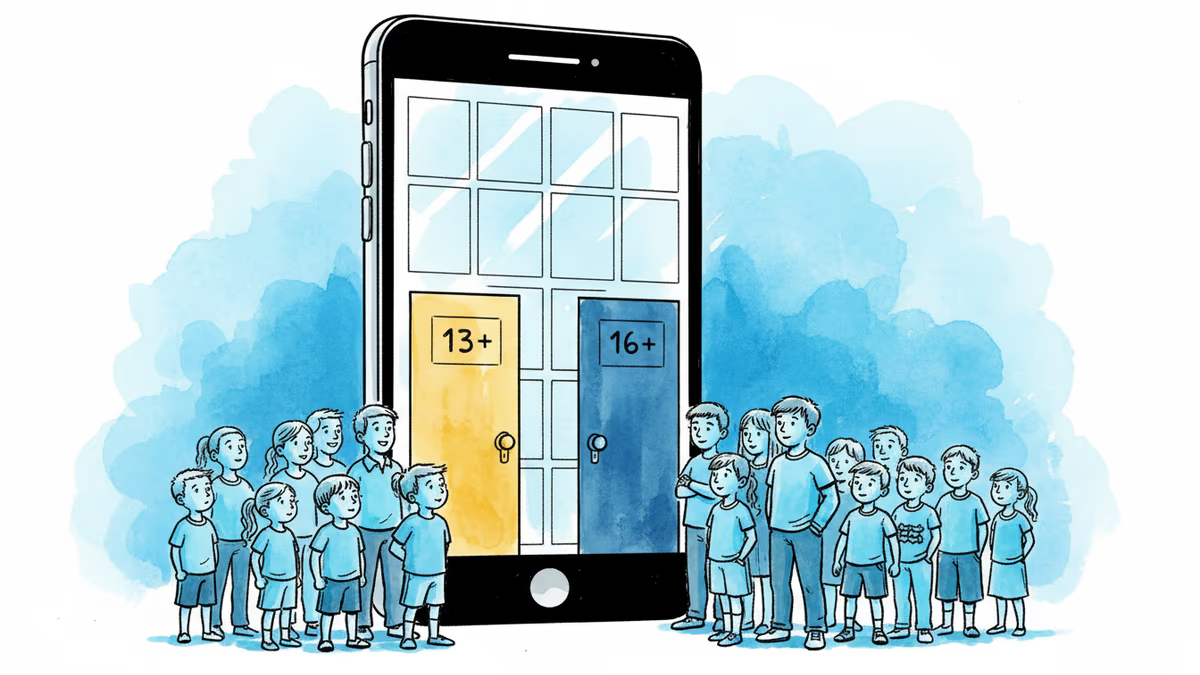
Indonesia introduces age-tiered social media restrictions, allowing 13+ for low-risk platforms and 16+ for high-risk ones. How does this compare to Australia's blanket ban?
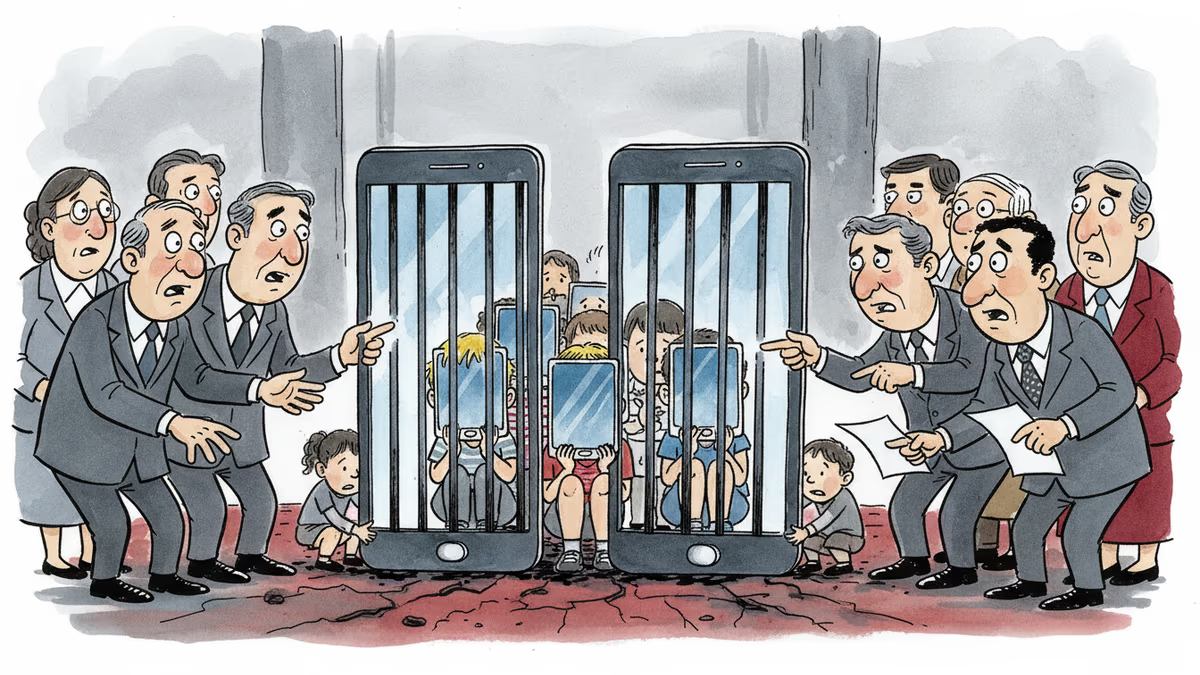
From Australia's $34M fines to France's parliamentary vote, 10 countries are restricting teen social media access. A global experiment in digital parenting begins.
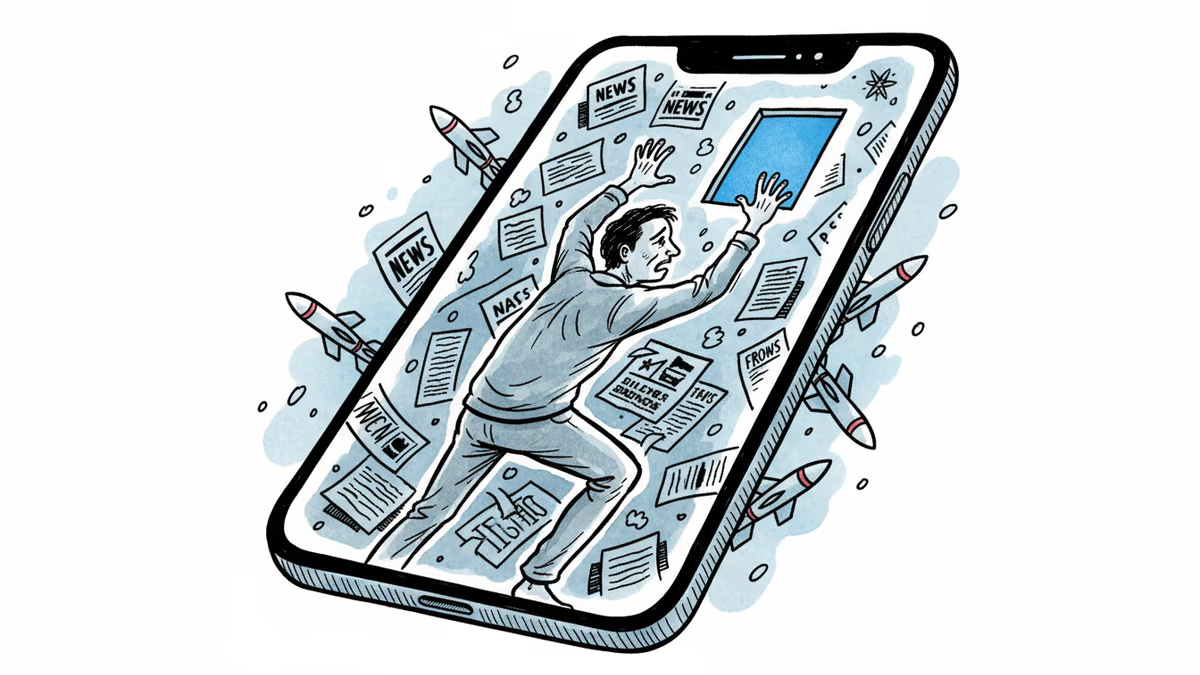
Middle East missile strikes trigger global doomscrolling epidemic. Neuroscience reveals why we can't stop scrolling through bad news and how to break free.
Instagram's new suicide search alerts for parents raise questions about whether surveillance-based solutions truly protect teens or simply push their struggles underground.
Indonesia introduces age-tiered social media restrictions, allowing 13+ for low-risk platforms and 16+ for high-risk ones. How does this compare to Australia's blanket ban?
From Australia's $34M fines to France's parliamentary vote, 10 countries are restricting teen social media access. A global experiment in digital parenting begins.
Middle East missile strikes trigger global doomscrolling epidemic. Neuroscience reveals why we can't stop scrolling through bad news and how to break free.
Instagram's new suicide search alerts for parents raise questions about whether surveillance-based solutions truly protect teens or simply push their struggles underground.
Thoughts
Share your thoughts on this article
Sign in to join the conversation