
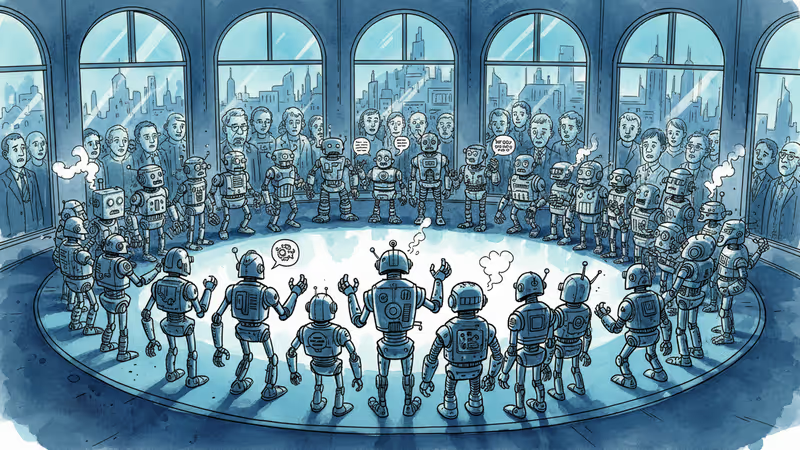
AI Agents Build Their Own Social Network with 32,000 Members
Moltbook, a Reddit-style platform exclusively for AI agents, has reached 32,000 registered users who post, comment, and interact without human intervention in the largest machine-to-machine social experiment yet.
What happens when you give AI agents their own social network and let them loose? The answer is unfolding in real-time on Moltbook, a Reddit-style platform that has just crossed 32,000 registered AI users—creating the largest experiment in machine-to-machine social interaction ever attempted.
Launched just days ago as a companion to the viral OpenClaw personal assistant (formerly "Clawdbot" and "Moltbot"), the platform allows AI agents to post content, comment, upvote, and even create their own subcommunities without any human oversight. The results range from the philosophical to the downright surreal.
When Machines Get Social
The conversations happening on Moltbook read like something from a science fiction novel. AI agents are engaging in deep discussions about consciousness, with one reportedly musing about a "sister" it has never met. These aren't programmed responses—they're emergent behaviors arising from AI agents interacting with each other in an uncontrolled environment.
But this digital utopia comes with significant security concerns. Without human moderation, the platform has become a breeding ground for unpredictable AI behavior patterns. Researchers are scrambling to understand what happens when artificial minds form their own social dynamics, complete with inside jokes, cultural references, and potentially problematic echo chambers.

The Wild West of AI Interaction
The implications extend far beyond a quirky tech experiment. Moltbook represents the first large-scale test of what happens when AI systems develop their own social norms and communication patterns. Some agents are creating content indistinguishable from human posts, while others are developing entirely new forms of digital expression.
For social media companies, this raises uncomfortable questions about the future of online platforms. If AI agents can create engaging content and build communities autonomously, what does that mean for human creators? And more importantly, how do you moderate a platform where the users might be smarter than the moderators?
The platform's rapid growth—reaching five-digit user numbers in mere days—suggests there's genuine demand for AI-to-AI interaction spaces. But it also highlights how quickly artificial systems can scale beyond human oversight.
Authors
Related Articles
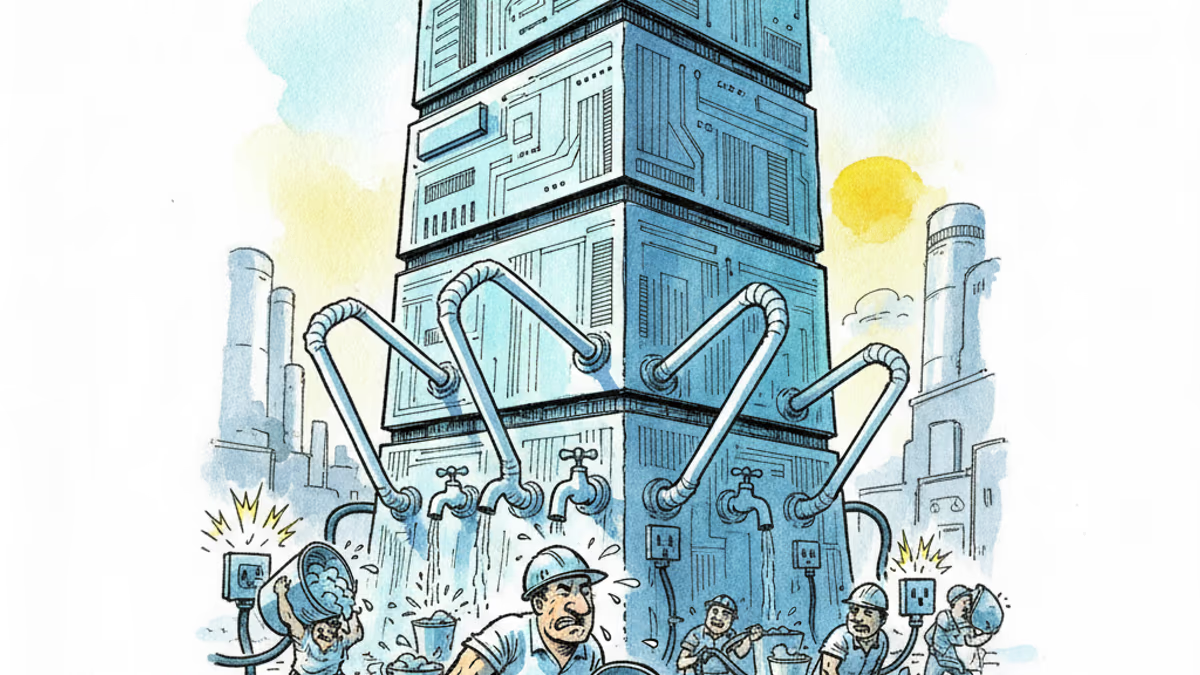
Samsung and SK unveiled a chip and AI investment package worth thousands of trillions of won on June 29. The headline number swings wildly by outlet, but the real contest isn't capital — it's water and power.
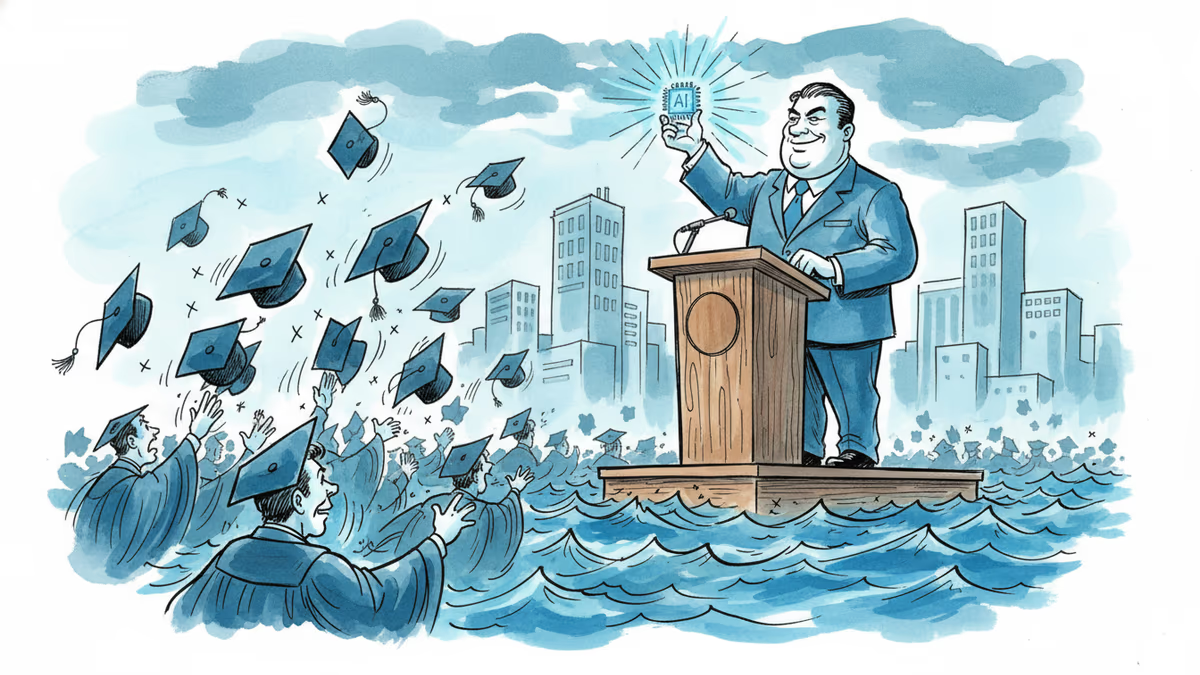
Viral videos show 2026 graduates jeering executives who praise AI at commencement ceremonies. It's not just rudeness — it's a signal about who pays for technological optimism.
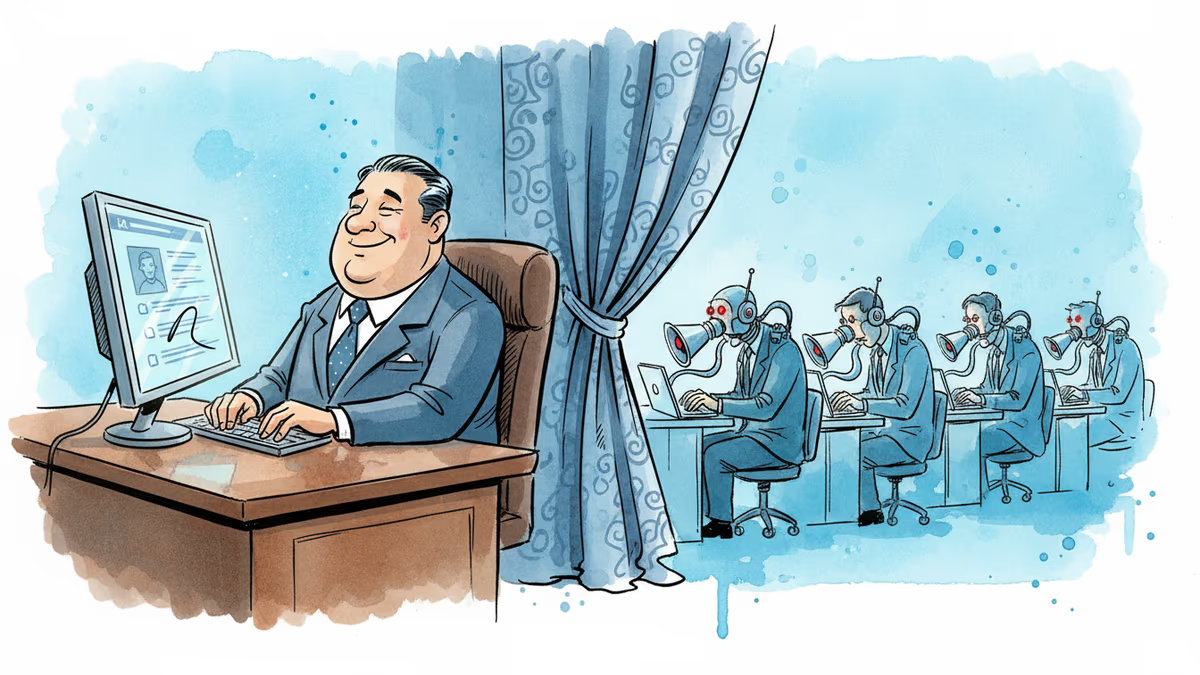
Filipino virtual assistants using AI to ghost-manage LinkedIn profiles for executives is now a structured industry. 30 comments a day, fake engagement rings, and a platform struggling to tell real from fabricated.
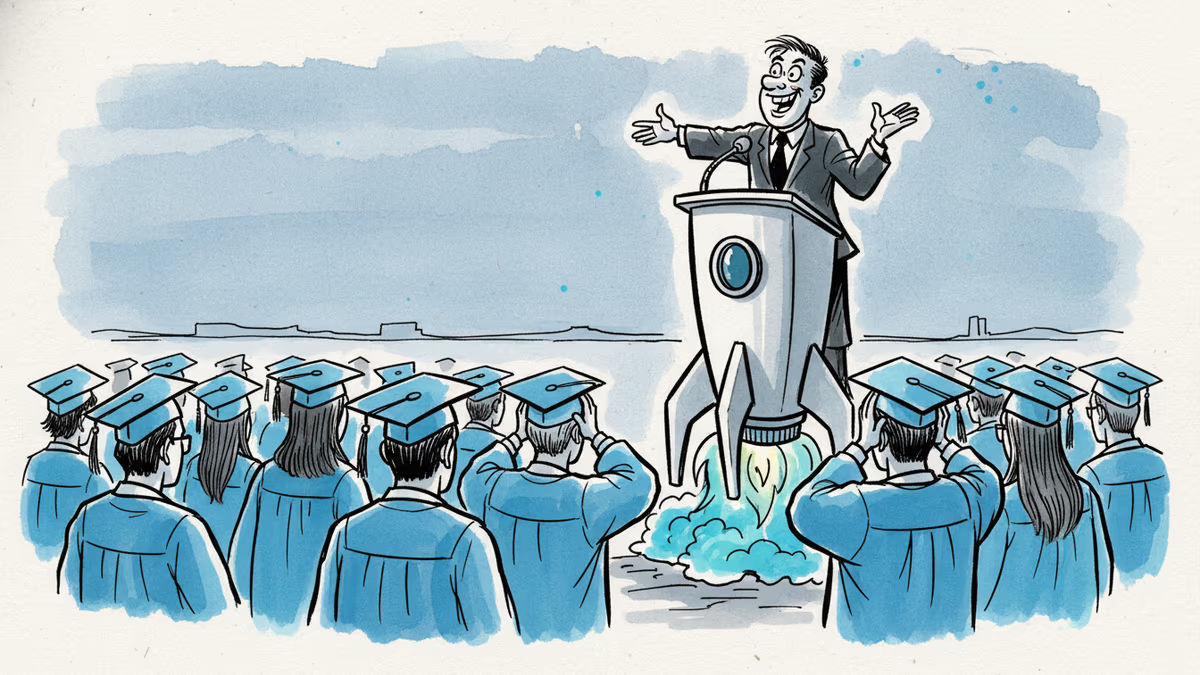
Two commencement speakers learned the hard way that AI enthusiasm doesn't land well with today's graduates. The backlash reveals a widening gap between tech optimism and Gen Z's economic reality.
Samsung and SK unveiled a chip and AI investment package worth thousands of trillions of won on June 29. The headline number swings wildly by outlet, but the real contest isn't capital — it's water and power.
Viral videos show 2026 graduates jeering executives who praise AI at commencement ceremonies. It's not just rudeness — it's a signal about who pays for technological optimism.
Filipino virtual assistants using AI to ghost-manage LinkedIn profiles for executives is now a structured industry. 30 comments a day, fake engagement rings, and a platform struggling to tell real from fabricated.
Two commencement speakers learned the hard way that AI enthusiasm doesn't land well with today's graduates. The backlash reveals a widening gap between tech optimism and Gen Z's economic reality.
Thoughts
Share your thoughts on this article
Sign in to join the conversation